Short answer: Fly into Francisco Bangoy International (DVO) - about 1h 50m from Manila or 1h 05m from Cebu. Davao's practical advantage is one PAGASA states directly: typhoons generally track north-westward and largely spare Mindanao, so flights here are disrupted less often than to almost anywhere else in the country. Samal Island is a fifteen-minute ferry from the city.
Trip.comHotels in Mindanao
Compare live prices via Travelpayouts — targeted for this guide.
Search on Trip.comA getting-there guide for Davao: the routes, the ferry, and why the weather matters less. Figures from our route table, last checked 9 August 2026.
| Route | Time | Notes | Checked |
|---|
| Manila to Davao (MNL-DVO) | ~1h 50m | Direct | 2026-08-09 |
| Cebu to Davao (CEB-DVO) | ~1h 05m | Direct | 2026-08-09 |
| Davao to Samal Island | ~15 min | Frequent ferries | 2026-08-09 |
| Airport to city centre | ~20-30 min | Taxi / ride-hail | 2026-08-09 |
How this guide was built
Our route table lists Manila-Davao at approximately 1h 50m and Cebu-Davao at about 1h 05m. The wider point comes from PAGASA's own climate page, which states that typhoons originate near the Marianas and Carolines and move north-westward, sparing Mindanao from most direct hits.
That is the national weather agency's framing rather than a marketing claim, and for a traveller it converts into something concrete: fewer cancelled flights and fewer lost days than an itinerary through the eastern Visayas or northern Luzon.
The airport, and getting into the city
Francisco Bangoy International sits north-east of the centre, roughly 20 to 30 minutes by taxi or ride-hailing depending on traffic. Davao's traffic is real but nothing like Manila's, so that estimate holds more reliably than a Manila equivalent would.
The airport takes domestic flights from the major hubs and some regional international services, which makes Davao a genuine entry point for Mindanao rather than somewhere you reach only via Manila.
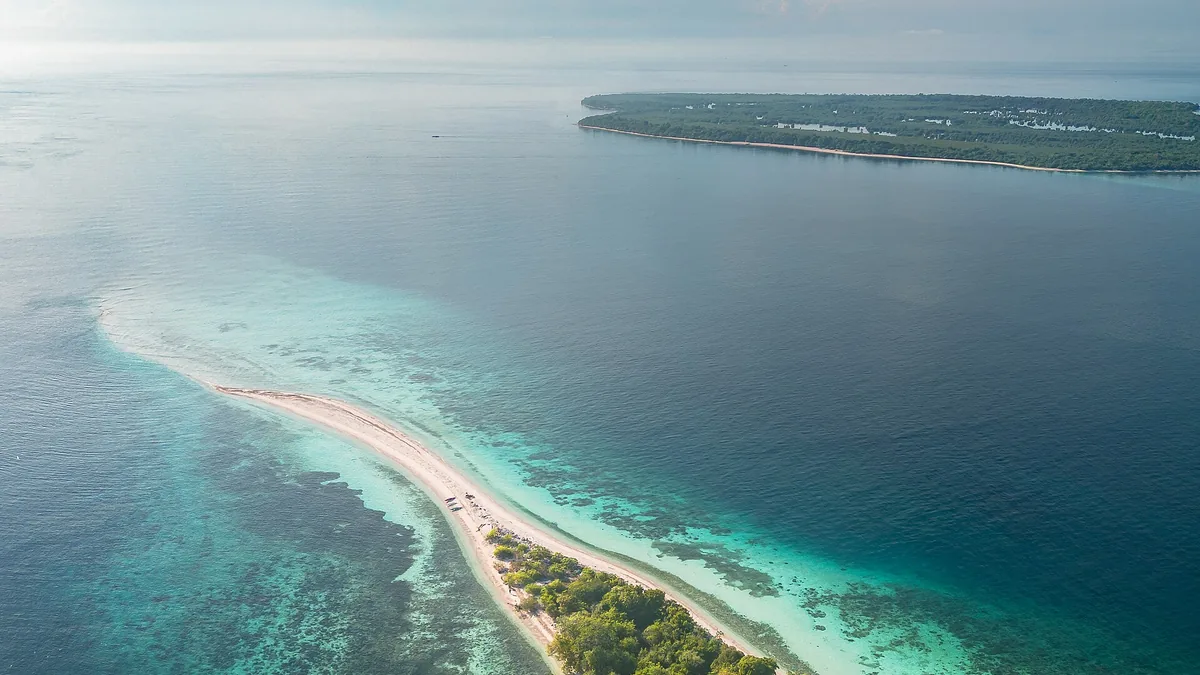
Samal Island, fifteen minutes offshore
Ferries cross to Samal in about fifteen minutes and run frequently through the day, so the island works as a day trip or as a base. The terminal is in the Lanang area north-east of the centre.
Because the crossing is short and sheltered, it stays accessible in weather that would stop an open-sea transfer elsewhere in the country - the same pattern that makes Davao reliable generally.
Where to stay, and why it depends on your plan
Downtown near Roxas Avenue puts you close to the markets and the night food stalls. Lanang toward the north-east is where the larger resorts and the Samal ferry terminal sit.
For a three-day trip downtown works: close to the eagle centre road, the markets and the crossing. If your plan is mostly Samal, staying on the island is calmer and removes the daily ferry.
Onward to Mount Apo
Mount Apo is 2,954 metres, the highest point in the Philippines, and climbing it is a two-to-four-day expedition needing permits and a registered guide. Routes start from Kidapawan, Digos or Kapatagan rather than from Davao itself.
Arrange it through a licensed operator well before arriving - the permit process is not something to begin on the day, and the trailheads are a drive from the city.
Security advisories, stated plainly
The question comes up because of Mindanao's reputation. Davao City itself has a strong reputation for public order and is routinely one of the more orderly large cities in the country.
Advisories for other parts of Mindanao are real and vary by province. Check your own government's current advice for specific areas rather than treating the island as one place - blanket warnings covering all of Mindanao are the commonest error in travel writing about the region.
What most guides get wrong about getting to Davao
The first error is routing everything through Manila. Cebu-Davao is about 1h 05m and avoids the four-terminal transfer problem entirely.
The second is listing Mount Apo as a day trip from the city. It is a multi-day trek from trailheads outside Davao.
The third is repeating region-wide security warnings without distinguishing Davao from areas under specific advisories.
Why routing through Cebu often beats Manila
Cebu to Davao is about 1h 05m against 1h 50m from Manila, and it avoids NAIA's four separate terminals entirely - the transfer that causes most missed domestic connections in the country.
For a trip combining the Visayas with Mindanao, Cebu is the natural pivot. It has more onward alternatives than any other airport if something is cancelled.
Getting around the city
Ride-hailing and taxis both work well and traffic is manageable by Philippine standards. Jeepneys cover the city cheaply if you know the routes.
Distances are real - the Philippine Eagle Centre is outside the city and Eden Nature Park is up in the hills - so a half-day per attraction is the sensible planning unit rather than trying to stack them.
The durian rule at the airport
Durian is banned from aircraft and from most hotel rooms, and the signs are not decorative. The smell persists for hours and cleaning fees follow.
Eat it at Bankerohan market instead, where it is cheapest and freshest and someone will open it properly. Vacuum-packed durian products and Davao's single-origin chocolate travel fine and are the sensible things to bring home.
Onward within Mindanao
Davao is the natural entry point for the region: buses run north toward Butuan and Surigao, west toward General Santos, and the roads are in reasonable condition by Philippine standards.
Surigao is also the jumping-off point for the Siargao ferry, which makes an overland Davao-to-Siargao route possible if you would rather not fly - though it is a long day and the direct Cebu flight is far quicker.
What the small inventory tells you
Our Davao listings are modest compared with Cebu or Palawan, and that is informative rather than a gap in coverage. Davao is a large working city that is not primarily a tourist destination - fewer touts, fewer packaged tours, more ordinary urban life.
For a visitor that cuts both ways: less is arranged for you, and what you find is not staged. Combined with the weather reliability, it makes Davao the most forgiving place in the country to arrive at short notice and work things out on the ground.
When to arrive, and the one busy week
Davao has no season you need to avoid on weather grounds, which is unusual. The one week that fills the city is August, when the Kadayawan harvest festival brings street dancing and floral floats.
Book ahead for those dates. Otherwise arrival timing here is a matter of convenience rather than risk - which is precisely what makes Davao the easiest major destination in the country to reach at short notice.
Frequently asked questions
How long is Manila to Davao?
Approximately 1h 50m direct; Cebu to Davao is about 1h 05m.
Does Davao get typhoons?
Rarely. PAGASA notes storms track north-westward and largely spare Mindanao, which makes flights here more reliable.
How do I get to Samal Island?
Ferries cross in about fifteen minutes from the Lanang area and run frequently.
How far is the airport from the centre?
Roughly 20 to 30 minutes by taxi or ride-hailing.
Can I climb Mount Apo from Davao?
Not as a day trip. It is a two-to-four-day trek with permits and a guide, starting from Kidapawan, Digos or Kapatagan.
Is Davao safe?
Davao City has a strong public-order reputation. Check current per-province advice for other parts of Mindanao.
Book tours, hotels & stays in Davao City
Top tours
Top hotels
Top stays