Short answer: Okikawa Maru is the only major Coron wreck an Open Water diver should book - its deck sits at 10 to 16 metres. Akitsushima lies on its port side at 35 metres and needs Advanced Open Water. Irako runs 33 to 42 metres with real current and overhead sections, and wants a deep speciality plus wreck training on top.
Trip.comHotels in Philippines
Compare live prices via Travelpayouts — targeted for this guide.
Search on Trip.comFor certified divers choosing a Coron itinerary before they fly, and for anyone told that any wreck here is fine for any diver. Depths and access notes last checked 30 July 2026 against operator dive-site briefings and published wreck surveys. Recreational limits quoted are the standard agency ones - 18 m at Open Water, 30 m at Advanced, 40 m with a deep speciality.
| Wreck | Depth range | Length | Realistic minimum | What makes it hard |
|---|
| Okikawa Maru | 10-26 m (deck 10-16 m) | 160 m | Open Water | Tidal range moves the deck depth |
| Akitsushima | Rests at ~35 m | 118 m | Advanced Open Water | Depth, portside lie, overhead sections |
| Irako | 33-42 m | 125 m | Advanced + deep speciality | Current, access points, narcosis depth |
| Other Coron Bay wrecks | 14-46 m | Varies | Depends on the site | Penetration lines, silt-out risk |
| Barracuda Lake | Surface to ~35 m | Not a wreck | Open Water, good buoyancy | Thermocline, brackish density shift |
Every wreck in that table went down in the same event: the United States Navy air raid on Japanese shipping anchored in Coron Bay on 24 September 1944. That is why the depths cluster - it was one anchorage, not a decade of accidents.
Match the wreck to the card in your wallet
Coron is sold as a wreck destination in the singular, which hides the fact that its wrecks span 14 to 46 metres. The gap between the shallowest and the deepest is the gap between a relaxed second dive and a dive that is outside recreational limits without extra training.
Work backwards from your certification rather than forwards from the photographs. An Open Water diver has a 18-metre limit and one wreck that genuinely fits it. An Advanced diver has 30 metres and gains Akitsushima. A diver with a deep speciality has 40 metres and gains Irako, and even then the current is a separate question from the depth.
Reputable Coron operators check logbooks and will refuse a booking. Treat a shop that does not ask as information about the shop.
Okikawa Maru is the wreck to book first
At 160 metres she is the largest wreck in Coron Bay, and she is also the friendliest. The hull sits between 10 and 26 metres and the main deck rises to 10 to 16 metres depending on the tide, which puts a long, structured swim well inside Open Water limits.
That tidal variation is worth planning around. The same deck can be at 10 metres on one slack and 16 on another, and on the deeper end of that range an Open Water diver spends air faster and gets a shorter dive. Ask which tide your boat is diving, not just which wreck.
Okikawa also rewards divers who stay outside. There is enough structure, coral growth and fish life on the exterior that skipping penetration costs you very little - which is not true of every wreck here.
Where Advanced Open Water stops being enough
Akitsushima is the only true warship in the bay, a 118-metre seaplane tender lying on her port side at around 35 metres with the aircraft crane still recognisable. She is a legitimate Advanced dive and she is also the point where the arithmetic tightens: at 35 metres, no-decompression time is short, gas consumption is high, and the interesting parts are the overhead ones.
The honest framing is that Advanced Open Water gets you to Akitsushima, but it does not by itself get you inside her. Penetration in an overhead environment is a distinct skill with a distinct course, and the silt inside a 1944 hull does not forgive a fin kick. Divers who want the interior should arrive with wreck training already done rather than plan to acquire it in a single week.
Irako and the case for a deep speciality before you fly
Irako is the wreck experienced divers come to Coron for, and the one most often booked by people a certification short. She lies between 33 and 42 metres - the deep end is past the recreational 40-metre ceiling - and she is exposed to current in a way the sheltered wrecks are not.
Three factors stack here. Depth brings narcosis into play for many divers. Current makes descent and ascent lines non-optional and makes a missed line expensive. And the access points into the hull are tighter than on Okikawa, so an inside route needs planning rather than curiosity.
If Irako is the reason for the trip, do the deep speciality at home, arrive current, and give yourself two or three warm-up dives in the bay first. A shop that lets you dive Irako on day one as your first dive in a year is not doing you a favour.
Barracuda Lake is a skills test, not a novelty stop
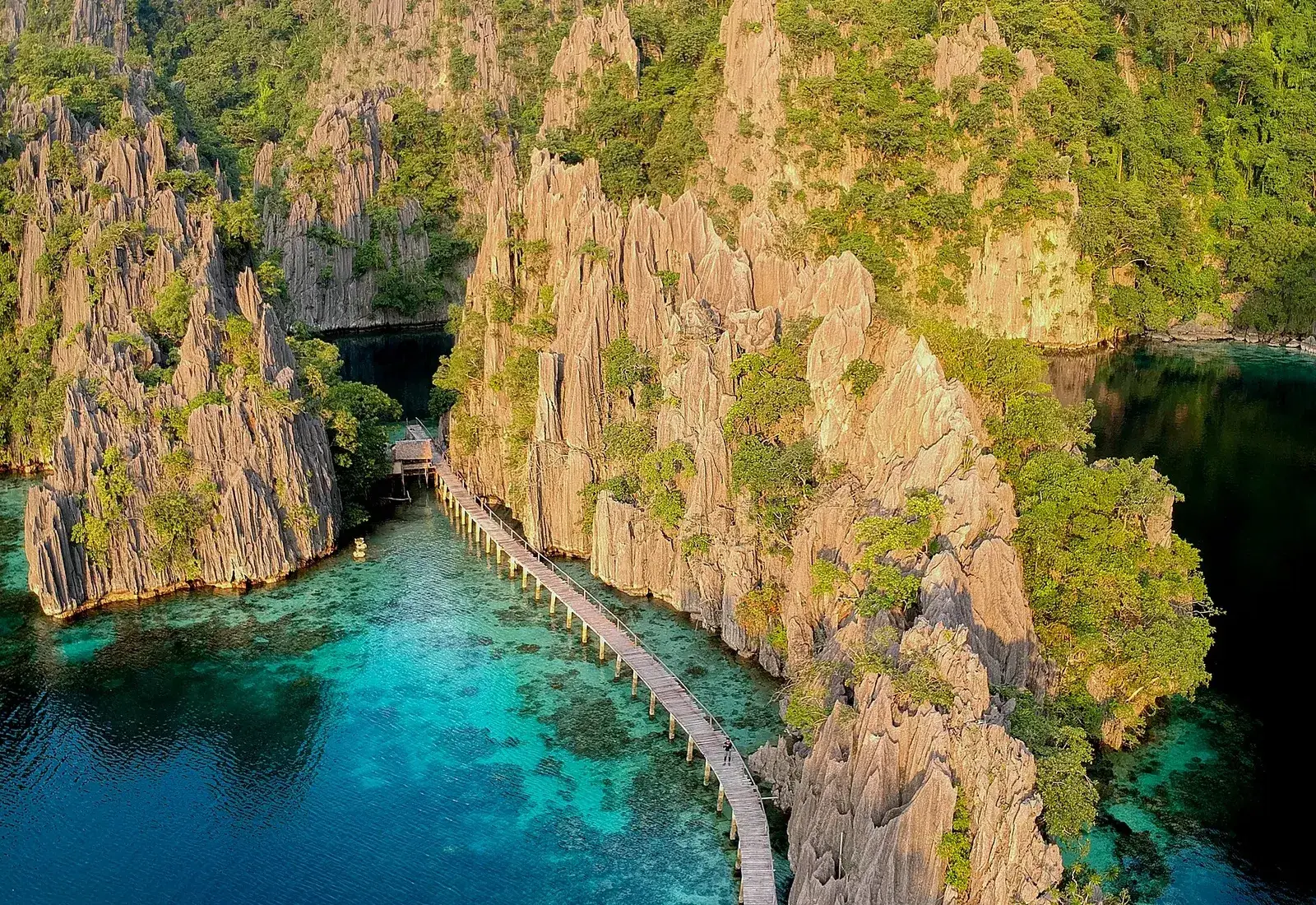
Barracuda Lake is not a wreck and it is not an easy dive dressed up as one. It is a brackish lake reached by a short climb with your kit, and it stacks layers of fresh, brackish and saline water at different temperatures. Passing through the thermocline, water temperature climbs sharply and the density under you changes, so a diver trimmed for the top layer is suddenly not trimmed at all.
It is the best buoyancy diagnostic in Coron. Divers who come up saying it was strange usually mean they spent the dive fighting their own weighting. Book it after a couple of bay dives, not as your first wet dive of the trip.
What most guides get wrong about Coron wreck diving
The first mistake is the phrase you will read everywhere: that Coron is suitable for all levels. It is suitable for all levels in the sense that there is something for an Open Water diver to do. It is not suitable in the sense implied, which is that a newly certified diver can dive the famous wrecks. They cannot dive Irako, and they should not be inside Akitsushima.
The second is the widespread claim that Coron requires technical diving. That is equally wrong in the other direction and it puts people off a destination where the largest wreck in the bay tops out at 10 metres. Coron spans recreational and technical - the wrecks are not one category.
The third is treating penetration as an intensity setting rather than a qualification. Guides describe swimming through engine rooms and corridors as though the difference between that and an exterior tour is confidence. It is training, redundant gas and line skills. The wrecks have been down since 1944 and the silt inside them has had that long to settle.
Frequently asked questions
Can an Open Water diver dive the Coron wrecks?
One of them, realistically. Okikawa Maru has a deck at 10 to 16 metres, inside the 18-metre Open Water limit. Akitsushima at 35 metres and Irako at 33 to 42 metres are beyond it.
Do I need technical certification for Coron?
Not for most of the bay. Depths run 14 to 46 metres, so Advanced Open Water plus a deep speciality covers the recreational range including Irako's shallower sections. Technical training only matters for the deepest wrecks and long penetrations.
Which Coron wreck is the biggest?
Okikawa Maru at roughly 160 metres, which is also the shallowest of the major wrecks. Akitsushima is 118 metres and Irako about 125 metres.
Why are all the wrecks from the same date?
They were sunk together in the United States Navy air raid on Japanese shipping in Coron Bay on 24 September 1944. One anchorage, one attack, which is why the wrecks sit within a short boat ride of each other.
Is Barracuda Lake worth doing?
Yes, but treat it as a buoyancy challenge. The thermocline brings a sharp temperature rise and a density change around the halocline, and divers weighted for the surface layer often struggle below it. Dive it after a couple of bay dives.
Book tours, hotels & stays in Coron Wreck
Top tours
Top hotels
Top stays