Contents
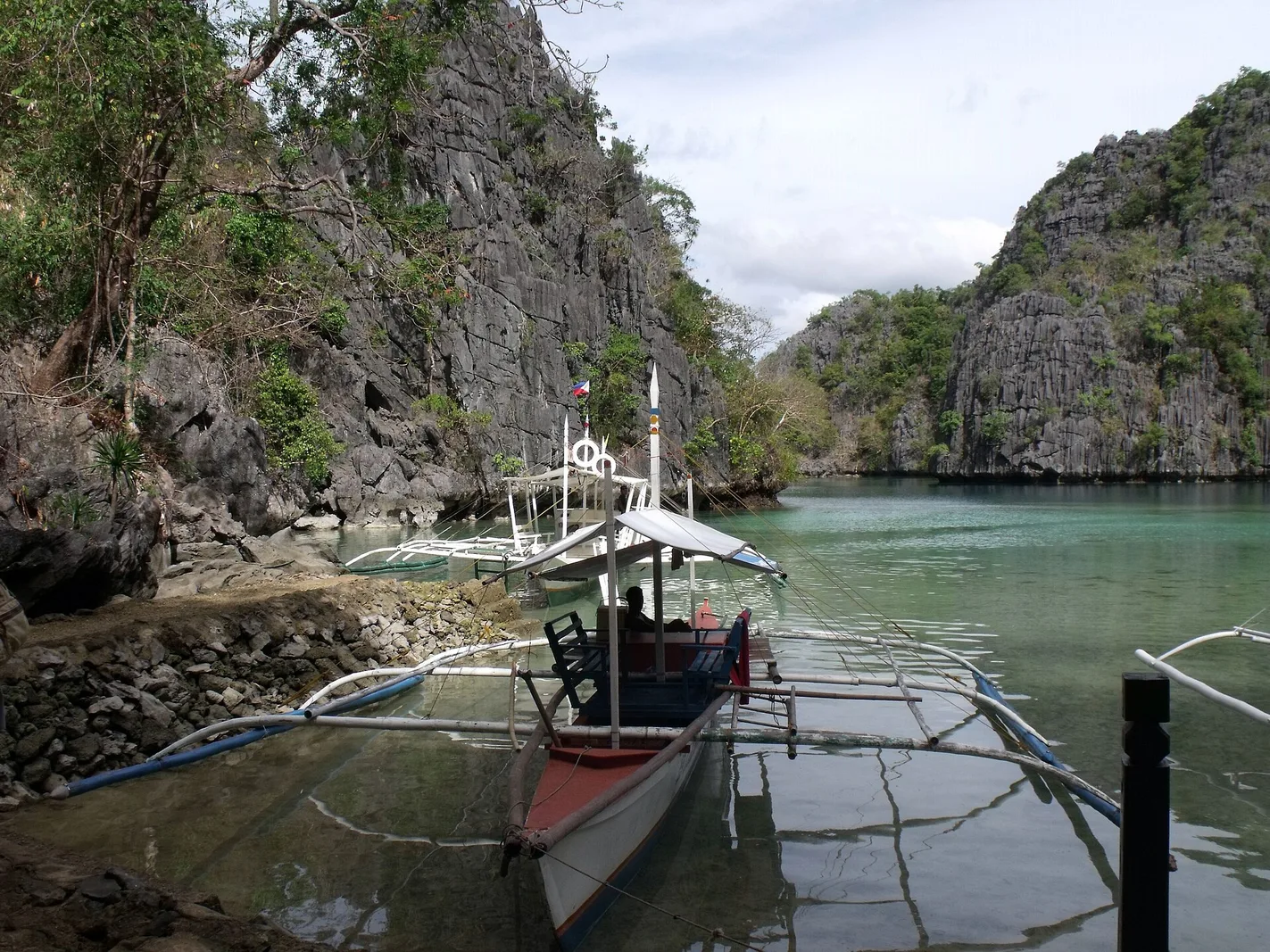
Coron, on the northern tip of Palawan's Calamianes archipelago, packs more raw scenery into a single bangka (outrigger boat) day than almost anywhere in the Philippines. The "Ultimate Tour" is the shorthand local operators use for a long-format island-hopping route that strings together seven of the area's signature sites in one full day on the water. This guide explains exactly what those stops are, the genuine history beneath them, the karst geology that built them, the Tagbanua people who own the land, and the practical fees, seasons, and caveats you need to plan well.
Hotels in Philippines
Compare live prices via Travelpayouts — targeted for this guide.
What the "Ultimate Tour" Actually Is
There is no single licensed product called the Ultimate Tour. It is a popular combination route sold by accredited Coron boat operators that merges the most-requested lakes, lagoons, reefs, and one shallow shipwreck into a single roughly 7 a.m. to 4 p.m. itinerary. The classic seven-stop version covers Kayangan Lake, Barracuda Lake, Twin Lagoon, the Skeleton Wreck, plus a snorkel reef (often CYC or Coral Garden), Siete Pecados marine park, and a beach lunch stop such as Banol or Atwayan. Itineraries vary by tide, weather, and crowd management, so confirm the exact stop list when you book.
Why it gets combined into one day
The headline sites cluster tightly around Coron Island and its neighbors, so a fast bangka can hit them in sequence. The trade-off is pace: peak-season boats race between sites to beat the crowds, so you get a sampler rather than a slow soak. If you want unhurried time at Kayangan or Barracuda, a private charter is worth the premium.
The Seven Stops in Detail
Kayangan Lake
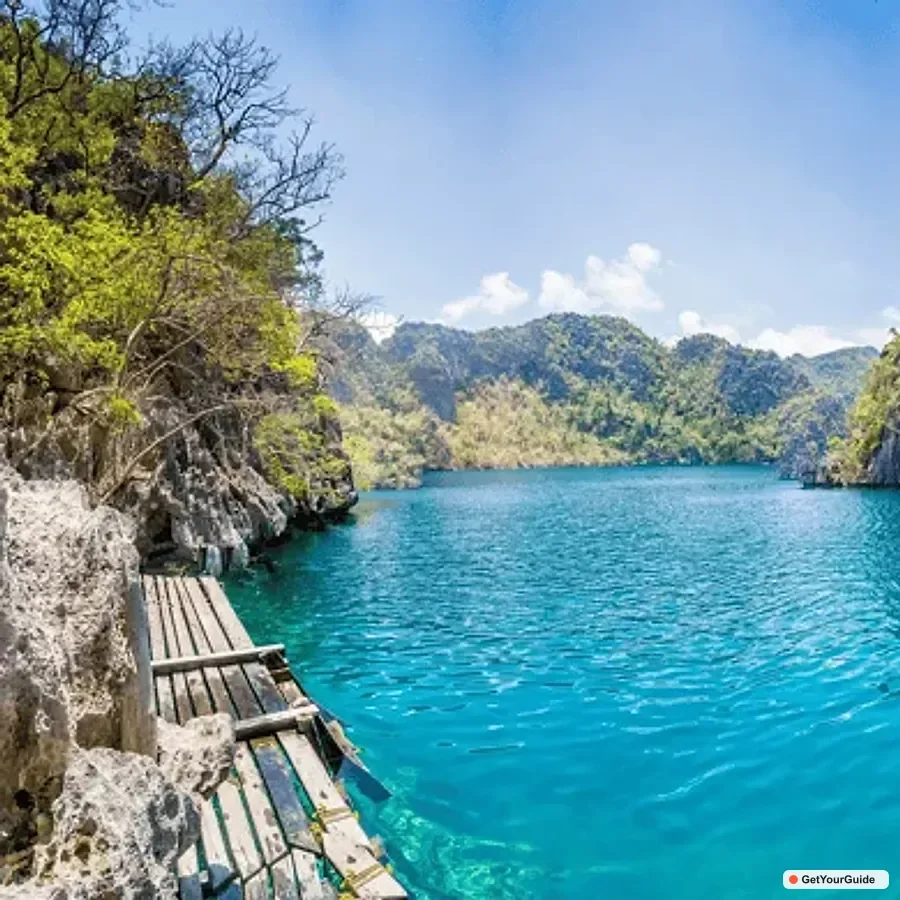
Kayangan is the most photographed lake in the Philippines, reached by a short but steep limestone staircase that opens onto the postcard viewpoint over Coron Bay. The lake itself is a brackish mix of fresh and seawater, startlingly clear, ringed by jagged karst. It sits inside the Tagbanua ancestral domain, and the community caps numbers and enforces rules here precisely because it is sacred and ecologically fragile. Sunscreen is restricted to protect water quality.
Island hopping in Philippines
Hand-picked experiences in Philippines — book on Trip.com with instant confirmation.
Barracuda Lake
Barracuda Lake is a thermocline marvel and a world-famous technical-diving and free-diving site. Stacked layers of fresh, brackish, and saltwater create abrupt temperature jumps that can swing from the mid-20s to well above 30 degrees Celsius as you descend, with a shimmering blur where layers meet. Sheer rock walls plunge into the depths. Snorkelers on the day tour float the surface; the deeper structure is the realm of divers.
Twin Lagoon
Twin Lagoon is two emerald-water pools separated by a limestone wall. At high tide you swim through a low gap beneath the rock; at low tide you climb a small ladder over it. As at Kayangan, a sharp warm-cold contrast where fresh groundwater meets seawater is part of the experience. It is one of the most striking framed-by-cliffs swims in the country.
The Skeleton Wreck
The Skeleton Wreck is a small Japanese supply or cargo vessel lying in shallow water near Coron Island, accessible to snorkelers because its hull sits only a few meters down at the shallow end before sloping deeper. Coral has colonized the frame, drawing reef fish. It is the gateway snorkel introduction to Coron's far more serious deep wreck-diving legacy.
The reef, marine park, and beach stops
The remaining stops round out the day: a coral snorkel site such as CYC (Coral Eye Center) or Coral Garden; Siete Pecados, a protected marine park named for its seven islets and known for healthy hard and soft coral; and a beach lunch on white sand like Banol or Atwayan where the boat crew typically grills a fresh seafood, chicken, and rice spread.
The Real History: A Japanese Fleet on the Seabed
Coron's reputation as a world-class wreck-diving destination is built on a single dramatic date: 24 September 1944. On that day, US Navy carrier aircraft launched a long-range strike against a Japanese fleet sheltering in the waters around Coron and Busuanga. Multiple vessels, mostly auxiliary, supply, and freighter ships, were sunk in the bays and channels.
Wrecks such as the Irako, Okikawa Maru, Olympia Maru, Kogyo Maru, and the East Tangat gunboat now rest at depths ranging from snorkel-shallow to advanced technical levels. Because many settled in protected, relatively shallow water, Coron became one of the most accessible WWII wreck-diving sites on Earth. The day-tour Skeleton Wreck is the shallow, snorkeler-friendly taste of this submerged history; the major wrecks require certified scuba and often advanced or wreck-penetration training.
Tagbanua Heritage and the 1998 Ancestral Domain Title
Coron Island is not generic public land. It is the ancestral home of the Tagbanua, one of the oldest indigenous peoples in the Philippines. In 1998, the Tagbanua of Coron secured a Certificate of Ancestral Domain Title (CADT) over the island and its surrounding waters, a landmark case in Philippine indigenous-rights history under the framework of the Indigenous Peoples' Rights Act (IPRA, Republic Act 8371, 1997).
This is why Kayangan and Twin Lagoon carry community-managed entrance fees, why certain areas remain entirely off-limits to outsiders as sacred sites, and why visitor numbers and behavior are regulated. The fees you pay are not arbitrary tourist taxes; they fund the community that legally owns and stewards the land. Treat the rules, especially sunscreen restrictions and no-go zones, as a condition of being a respectful guest. To go deeper on Philippine culture and responsible travel, browse our destination guides.
Geology: How the Calamianes Karst Was Built
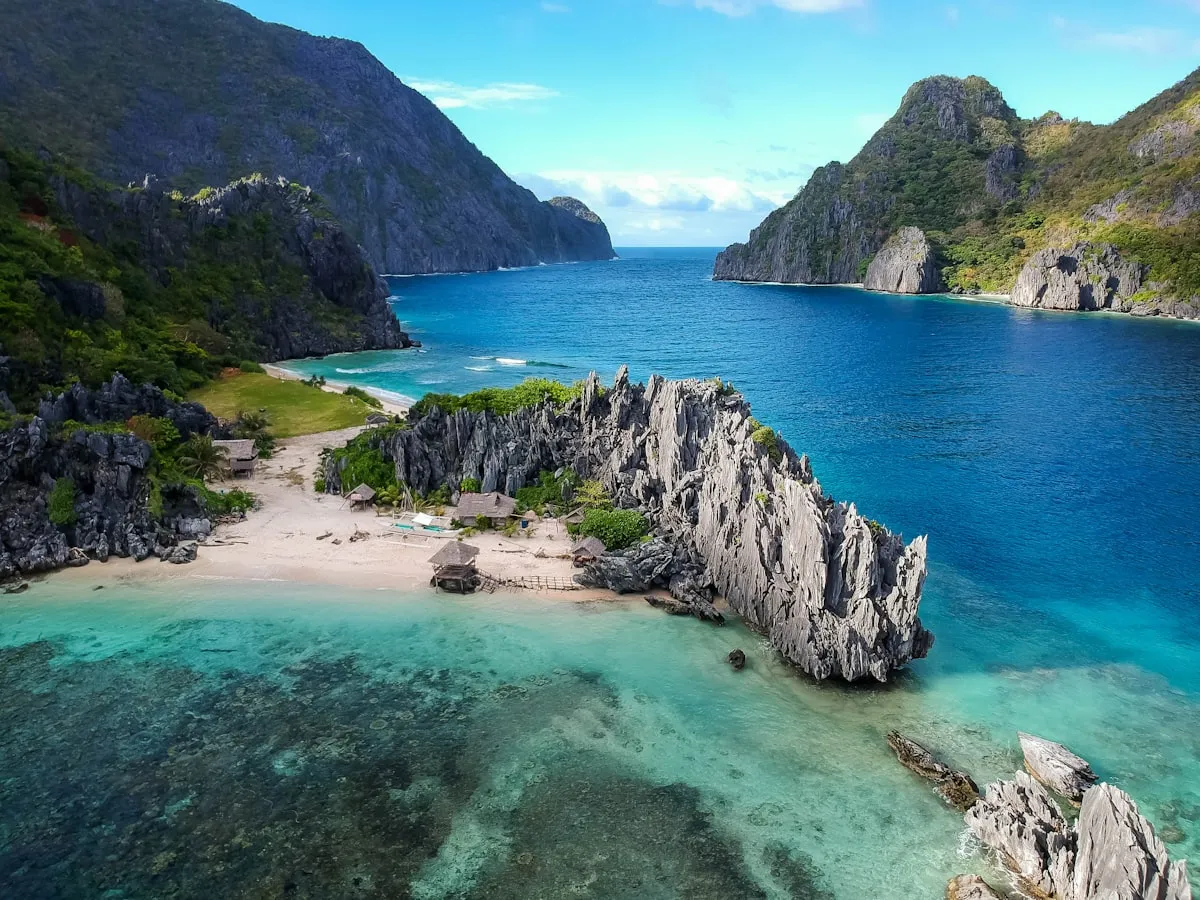
Coron's surreal cliffs are karst, ancient marine limestone, uplifted and then sculpted over millions of years by rainwater and the slightly acidic dissolution of carbonate rock. The result is the dramatic, fluted, gray-and-green spires that frame every lagoon. The lakes themselves are partly drowned karst basins connected to the sea through subterranean fractures, which is exactly why they show that fresh-over-salt thermocline layering. It is a living textbook of tropical limestone geomorphology, and it is fragile: the same porous rock that makes the scenery means pollutants travel easily into groundwater and lakes.
Practical How-To and Real Fees (PHP)
Getting there
Most travelers fly into Francisco B. Reyes Airport (USU) in Busuanga, then take a roughly 30 to 45 minute van transfer to Coron town. Alternatively, ferries connect Coron to El Nido and Manila. Compare your options with our ferry vs flight breakdown, and check live routes on the flights page before locking dates.
Typical costs
Prices shift, so treat these as ranges. A joining (shared) Ultimate Tour commonly runs in the region of PHP 1,500 to 2,500 per person including lunch, snorkel gear, and the boat. Private charters run higher, often PHP 6,000 and well up depending on group size and boat. On top of the tour price you pay site fees collected on the day:
- Kayangan Lake entrance: typically around PHP 200 to 300.
- Twin Lagoon entrance: typically around PHP 100 to 200.
- Barracuda Lake entrance: typically around PHP 100 to 200.
- Coron environmental / terminal fees: small per-head charges added by operators.
Bring enough cash in pesos; Coron's ATMs are limited and frequently out of service, and site fees are cash only. For a fuller picture of trip budgeting, see our expenses planner.
What to bring
Reef-safe (or no) sunscreen because chemical sunscreen is restricted at the lakes, a rash guard for sun and rock protection, water shoes for the limestone steps, a dry bag, a refillable water bottle, and cash. Bring a snorkel mask you trust even though gear is usually provided. A waterproof phone case earns its keep here.
Seasons, Weather, and Honest Caveats
When to go
The reliably dry, calm window is roughly December to May, with the clearest water and most consistent boat days. The habagat (southwest monsoon) and typhoon season, broadly June to November, brings heavier rain, rougher seas, and reduced visibility. Plan around it with our best time to visit guide and the latest weather outlook before you commit to non-refundable bookings.
Real risks to plan for
- Ferry and boat suspensions. When the coast guard raises warnings during storms or strong habagat swells, ferries and island-hopping boats are suspended, sometimes for days. Build buffer days into your itinerary, especially if you have a fixed onward flight.
- Crowds. Kayangan in peak season can be shoulder-to-shoulder by mid-morning. An early start or a private boat that front-loads the popular sites makes a real difference.
- Physical demands. The Kayangan staircase is steep and the Twin Lagoon swim or ladder requires basic comfort in deep water. None of it is extreme, but it is not effortless either.
- Ethical wildlife and reef care. Do not touch or stand on coral, do not chase or feed fish, and do not collect shells or rocks. The reefs at Siete Pecados and the snorkel sites recover slowly from careless contact.
Conclusion
The Coron Ultimate Tour earns its name because it compresses an extraordinary range of experiences, sacred indigenous lakes, thermocline diving water, cliff-framed lagoons, a WWII shipwreck, and living reef, into a single day on a bangka. But the magic is inseparable from its context: the Tagbanua people who have stewarded this land for centuries and secured their 1998 ancestral domain title, the Japanese fleet that went down on 24 September 1944, and the slow geology that carved the karst. Travel here in the dry season, carry cash for community fees, respect every rule about sunscreen and sacred zones, and you will not just see Coron, you will understand why it matters.

Real local stays (book direct)
Hand-picked homestays and guesthouses — book direct, no markup.
Popular activities (book instantly)
Island hopping, canyoneering, whale sharks — real Klook/GetYourGuide options.
Plan your Philippines trip