Imagine standing at the top of a limestone cliff, the South China Sea shimmering in every direction, a freshwater lake of impossible clarity directly below you, and somewhere beneath that lake, the rusting hulks of twelve Japanese warships swallowed by the ocean in a single catastrophic afternoon in September 1944. That is Coron — not just a beach destination, not just a diving destination, but a place where every single day delivers something you genuinely did not believe was possible until you saw it with your own eyes.
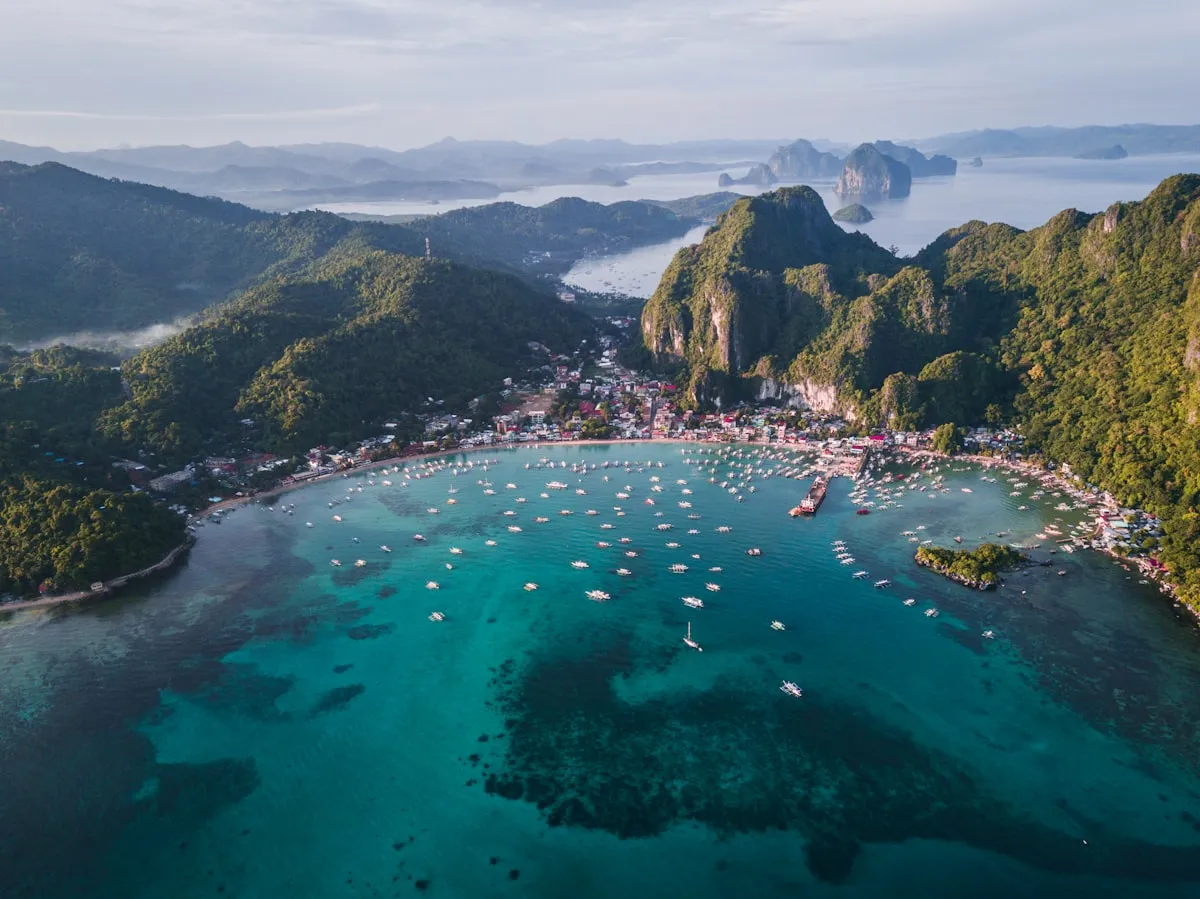
Coron, Palawan Complete Travel Guide: Lakes, Wrecks & Island Paradise
Trip.com
Search on Trip.comHotels in Philippines
Compare live prices via Travelpayouts — targeted for this guide.
Coron is the second-most visited destination in Palawan after El Nido, and arguably the more dramatic of the two. Where El Nido dazzles with turquoise lagoons and limestone towers, Coron layers those same landscapes over a skeleton of wartime history, volcanic geology, and freshwater science that makes every snorkel stop feel like a discovery rather than a postcard. The karst towers are steeper here. The lakes are stranger. And there are wrecks, twelve of them, right there under the surface.
This complete guide covers everything: how to get here, where to sleep, which island-hopping tour to prioritize, which wrecks to dive, the bizarre joy of giraffes against a Philippine island backdrop, and why you should not skip the 722 steps up Mount Tapyas at golden hour.
Getting to Coron
Fly from Manila — The Fast Option
The quickest and most popular route is a direct flight from Manila to Francisco B. Reyes Airport (also called Busuanga Airport, airport code USU) in northern Palawan. The flight takes roughly one hour. Cebu Pacific and Philippine Airlines both serve this route, with fares ranging from PHP 2,500 to PHP 6,000 return depending on how far in advance you book. From the airport, a shared van transfer to Coron town takes about 45 minutes and costs PHP 150–250 per person. Book as far out as possible — seats on this route fill quickly during peak season (December through April), and prices spike dramatically within 2 weeks of departure.
Trip.com
See all tours in Philippines on Trip.comIsland hopping in Philippines
Hand-picked experiences in Philippines — book on Trip.com with instant confirmation.
Bangka from El Nido — The Epic Option
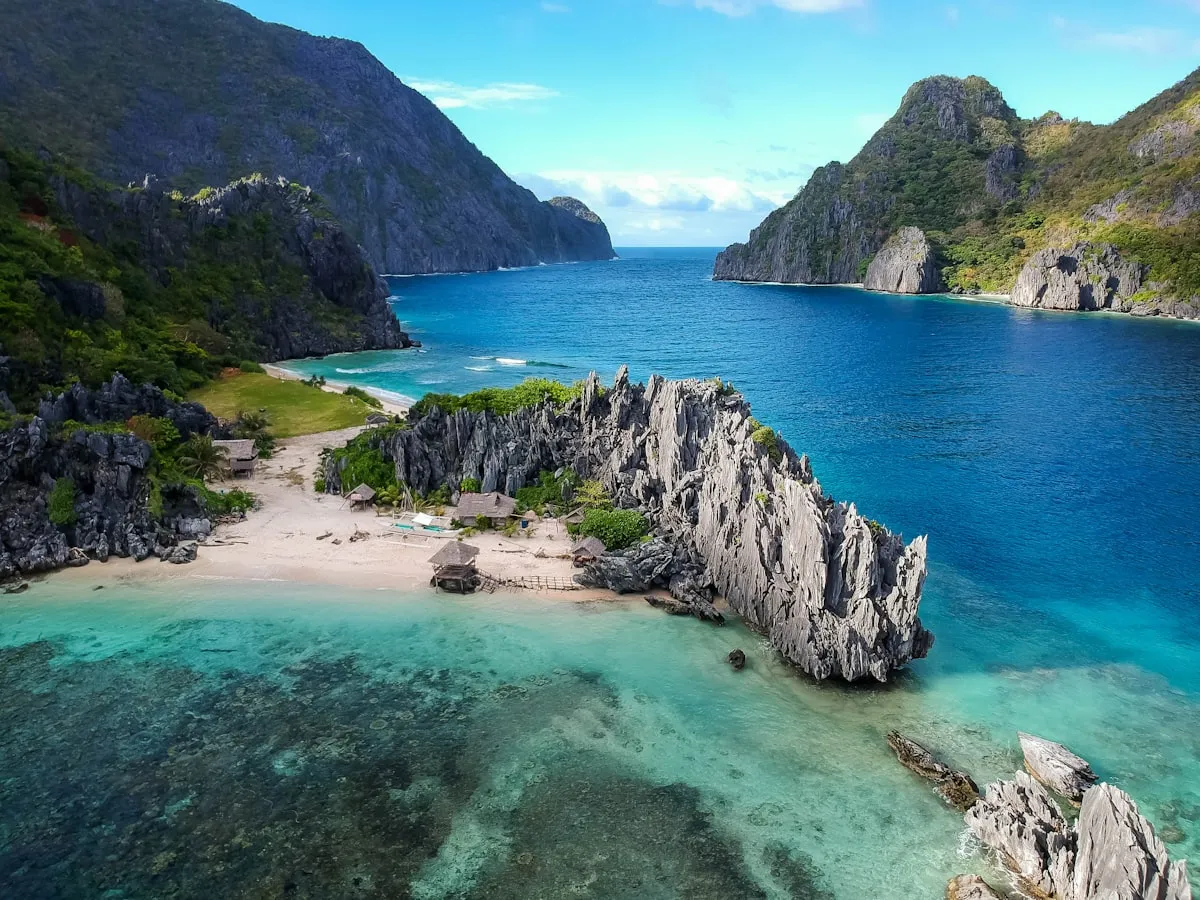
If you are doing the classic Palawan loop — fly into Puerto Princesa, work your way up through El Nido, continue to Coron — the traditional route is an 8-hour island-hopping bangka ride between El Nido and Coron. This is not a fast transfer; it is a full day on a traditional wooden outrigger boat, stopping at uninhabited islands, passing through channels between limestone cliffs, with lunch served on a remote beach. The experience itself is worth the journey. Cost: PHP 1,200–1,800 per person. Boats depart from both ends at around 7:00 AM. Available year-round subject to sea conditions — this route gets suspended during rough weather, so build a buffer day into your itinerary.
Fast Boat from El Nido — The Newer Option
A newer service runs speedboat transfers between El Nido and Coron in approximately 3.5 hours for around PHP 2,500–3,000 per person. This is a proper speedboat, not a bangka — significantly more comfortable on choppy days and less likely to be cancelled in moderate swells. If you are short on time or get seasick easily, this is the better choice. The scenic payoff is less than the full bangka day, but you still pass through some stunning stretches of northern Palawan coastline.
Where to Stay in Coron
Coron Town — Budget and Mid-Range
Most travellers stay in Coron town itself, which sits on the main island of Busuanga and serves as the logistical hub for all tours and dive operations. Guesthouses and mid-range hotels here run PHP 800–3,000 per night depending on season. You get the widest choice of restaurants, dive shops, and tour operators on your doorstep. The downside is that the town waterfront is functional rather than beautiful — you are here to sleep, eat, organise tours, and leave early for the water.
Island Resorts — Quieter and More Scenic
A growing number of resorts are scattered across the smaller islands around Coron — on Culion, Busuanga island's outer bays, and purpose-built island resort properties. Prices range from PHP 4,000 to PHP 15,000 per night and usually include boat transfers to and from the mainland. These properties offer the waking-up-over-the-water experience and dramatically better immediate swimming, but you are dependent on the resort's own tour scheduling rather than being able to walk to any dive shop you want.
Island Hopping Tour A: The Classic Lakes Tour
If you only have one day of island hopping in Coron, this is the day. Tour A — the lakes tour — is consistently ranked among the top experiences in the entire Philippines. The combination of geological oddity, visual drama, and underwater clarity is difficult to match anywhere else in Southeast Asia.
Kayangan Lake
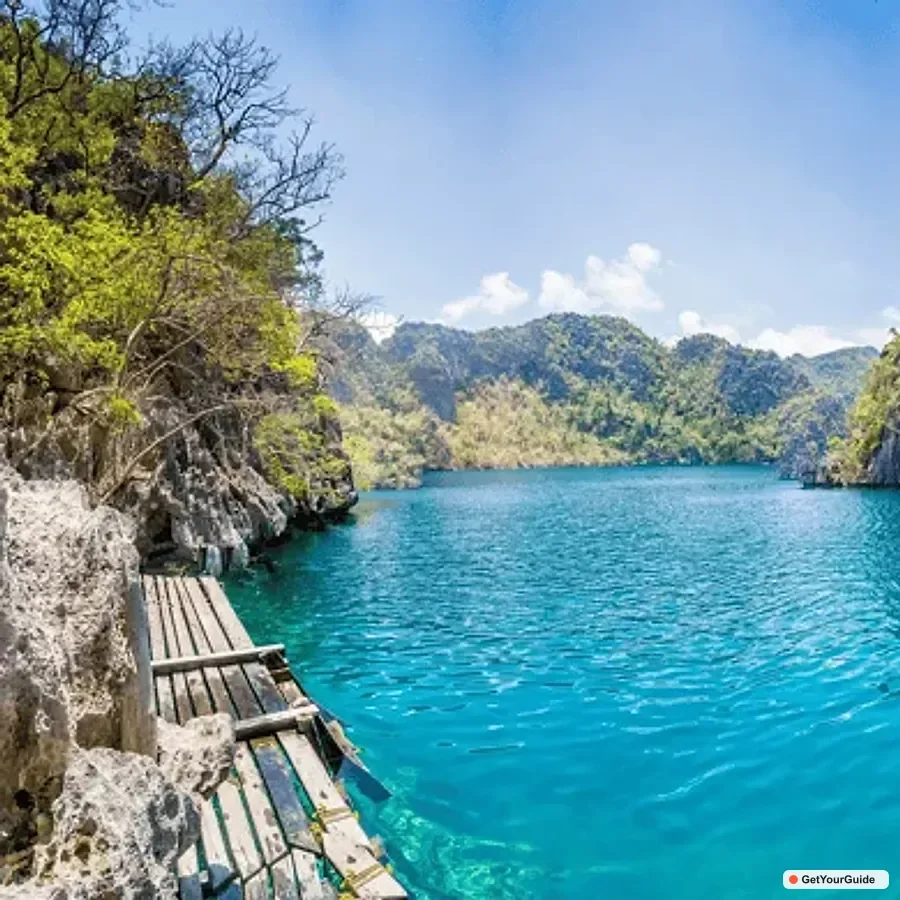
This is the centrepiece — the image you have already seen in every Coron guide and every Philippine tourism poster. A 30-step staircase climbs through the limestone cliffs to a viewpoint that looks down over Coron Bay on one side and the lake itself on the other. Then you descend and swim in water that is absurdly, almost unnervingly transparent — visibility up to 15 metres even without a mask, the rocky bottom clearly visible beneath you. Kayangan Lake has been repeatedly cited as the cleanest lake in the Philippines and is one of the cleanest freshwater bodies in Asia. Entrance fee: PHP 200. Arrive early (before 9:00 AM) to beat tour boat congestion.
Barracuda Lake
Barracuda Lake is the geologically stranger of the two lakes and the more rewarding for divers and curious snorkellers. The lake sits in a flooded volcanic formation, and as you descend through it you pass through a thermocline — a distinct layer where warm freshwater (38°C at the surface) meets cooler saltwater below. You can feel the temperature change against your skin as you descend. The visual effect underwater is surreal: a shimmer layer where the two water bodies meet, like looking through wavy glass. Divers love this lake for its uniqueness; snorkellers can experience the thermocline from the surface. Entrance fee: PHP 350.
Twin Lagoon
Twin Lagoon consists of two connected bodies of water separated by a limestone wall with a narrow cave passage at the base — only passable at low or medium tide. You swim (or pull yourself along a rope) through the dark cave tunnel and emerge into the second lagoon, which is ringed on all sides by sheer grey-white limestone and is completely calm regardless of conditions outside. The colour contrast between the emerald outer lagoon and the more turquoise inner one is striking. Entrance fee: PHP 200.
Skeleton Wreck
Most full-day lakes tours include a stop at Skeleton Wreck — a Japanese vessel sunk so shallow that its rusted skeleton breaks the surface and is clearly visible from above without even putting on a mask. Snorkellers can easily free-dive to the hull. No entrance fee. This wreck is a gentle introduction to Coron's underwater history before you commit to a full dive tour.
Tour A: Logistics and Costs
Most operators charge PHP 1,800–2,500 per person for a private boat Tour A, including bangka hire, the captain, lunch (usually grilled fish, rice, and vegetables cooked on the boat), snorkelling gear, and entrance fees. Confirm what is included before booking — some operators quote without entrance fees, which adds another PHP 750 on top. Private boats (4–12 people) leave from the Coron town pier from 7:30–8:00 AM and return around 4:00–5:00 PM.
Island Hopping Tour B: Beaches and Sandbars
Tour B is the beach-focused alternative and suits travellers who want more time to lie on white sand and less time swimming through cave passages. Stops typically include Banol Beach (sheltered cove, good snorkelling), Pass Island (sandbar, mangroves, picnic area), and CYC Beach (a crescent of sand with a small reef offshore). Scenically gorgeous, particularly for photography, but less dramatically unique than Tour A. Consider doing both tours on consecutive days if your schedule allows.
WWII Wreck Diving
In September 1944, American aircraft caught a large Japanese supply convoy in Coron Bay and sank the entire fleet in a single coordinated attack. Twelve vessels went to the bottom. Nearly eighty years later they are still there, encrusted with coral and sea life, at depths ranging from 15 to 43 metres — perfectly accessible for recreational divers and an extraordinary encounter with mid-twentieth century history.
Okikawa Maru
The largest wreck in Coron. A 160-metre Japanese oil tanker lying at 15–43 metres, completely covered in hard and soft coral. The upper sections are accessible to Open Water divers; the deeper sections reward Advanced certification. The scale of the vessel underwater is genuinely awe-inspiring.
Olympia Maru
A Japanese cargo ship at 23–38 metres with multiple swim-through sections inside the hold. Visibility is typically excellent. The holds still contain industrial cargo — wooden crates, machinery — creating a time-capsule effect. One of the most popular Coron wrecks for its penetration diving opportunities.
Kogyo Maru
A smaller cargo vessel at 18–30 metres with engineering equipment — winches, motors, mechanical components — still visible and relatively intact throughout the wreck. Excellent for photography. The shallower profile makes this accessible to newer divers.
Akitsushima
A Japanese seaplane tender — the ship carried and serviced flying boats during the war. Sits at 27 metres midship with the propeller and stern at 40 metres. Mooring winches and anti-aircraft gun emplacements are still visible. One of the more interesting wrecks historically for those who want to understand what the ship actually did, not just what it looks like now.
Wreck Diving: Logistics and Costs
A standard fun dive on the Coron wrecks costs PHP 1,500–2,000, including full equipment hire and a divemaster guide. Dive shops are clustered around Coron town pier — quality varies, so look for PADI-certified operations with maintained equipment and good reviews. A two-dive morning is the standard format. If you are not yet a diver, a Discover Scuba program (resort course) at a Coron dive shop costs around PHP 3,500–4,500 and gets you safely onto a wreck in one day. With twelve named wrecks in the bay, dedicated divers regularly plan week-long Coron trips and still do not run out of new dives.
Malcapuya, Banana Island, and Bulog Dos
For travellers primarily interested in beaches rather than geology or history, the outer islands north and west of Coron town deliver the postcard fantasy: fine white sand, turquoise water clear to the bottom, complete quiet. Malcapuya Island is consistently rated one of the best white sand beaches in all of Palawan. Banana Island (so named for its crescent shape) has excellent snorkelling on a healthy reef immediately offshore. Bulog Dos is a small sandbar island that floods at high tide — arrive at low tide for the full effect. Entrance fees run PHP 300–500 per island. These are typically combined into an outer-island day tour and are farther from Coron town, so expect a longer boat ride.
Calauit Game Preserve and Wildlife Sanctuary
This is Coron's most surreal experience and the one most travellers do not know about until someone tells them. In 1976, Ferdinand Marcos ordered the relocation of indigenous Tagbanua people from Calauit Island and replaced them with African savanna animals — giraffes, zebras, waterbuck, bushbuck, impala, and Calamian deer — as part of a wildlife conservation project. The African animals thrived. They are still there.
Visiting Calauit means watching a giraffe eat leaves in front of a backdrop of Philippine islands and South China Sea. The cognitive dissonance is extreme and wonderful. Up close, the giraffes are comfortable around humans and will eat from your hand. The zebras roam free alongside native Philippine deer. Entrance fee: PHP 500. Getting there requires a boat from Coron town — approximately PHP 2,500 for a private hire — and the trip takes 1.5–2 hours each way, so plan a full day. Some tour operators bundle Calauit with a beach stop at Malcapuya on the return.
Mount Tapyas: 722 Steps to Sunset
Above Coron town, a concrete staircase climbs 722 steps to the summit of Mount Tapyas, where a large illuminated cross marks the highest point and a 360-degree view of the entire Coron Bay, the island-dotted sea, and the limestone ranges spreads out in every direction. The climb takes 20–35 minutes depending on fitness and heat. Do it in the late afternoon and arrive for the final 30 minutes before sunset — the light on the limestone towers and the colour of the bay at dusk is the single best free experience in Coron. Bring water. The steps are steep in places and there is no shade. Entry is free, all day, every day.
Eating in Coron Town
Lolo Nonong BBQ is the institution. Open since what feels like forever, this simple grill restaurant near the public market serves fresh seafood — squid, fish, prawns — grilled over charcoal at honest prices (PHP 200–400 for a meal with rice and drinks). Arrive hungry and point at whatever is on the grill. Lines form in the evening.
La Sirenetta is a reliable Italian-Filipino restaurant popular with European divers who need a pasta break between wreck dives. Good pizza, solid carbonara, reasonable prices for a tourist-area restaurant (PHP 350–600 for a main course). The kind of place that keeps a diver crowd fed and happy.
Coron Public Market is where locals eat breakfast — fresh seafood, fried rice, and grilled bangus (milkfish) from stalls open from 5:00 AM. A full breakfast costs PHP 50–100. This is genuinely good, genuinely cheap, and gives you a look at Coron town before the tour boats leave the pier.
Budget Planning
Coron is slightly more expensive than Siargao or Bohol, primarily because every activity requires a boat and fuel costs are real. A realistic daily budget for a mid-range traveller:
- Accommodation: PHP 1,000–2,000 (guesthouse or mid-range hotel in town)
- Island hopping tour: PHP 1,800–2,500 (per person including lunch and fees)
- Meals: PHP 500–800 (3 meals with drinks)
- Miscellaneous (entrance fees, snacks, transport): PHP 300–500
Total: roughly PHP 3,600–5,800 per day. On a tight budget you can compress this to PHP 3,000 by staying in a dormitory, joining shared boats instead of private hire, and eating at the market. On a comfortable mid-range budget, PHP 5,000/day is a reasonable planning figure. Wreck diving days cost more due to equipment hire — budget PHP 2,000–3,000 extra on dive days.
Best Time to Visit Coron
Coron sits on the western side of Palawan, facing the South China Sea, which means it is directly exposed to the southwest monsoon (habagat). The sea conditions that matter for island hopping and diving are most reliable from October through May. Peak season is December through April — beautiful weather, calm seas, predictable visibility, but higher prices and more tourists on the lakes.
June through September brings rougher conditions. Island hopping is often suspended or redirected to more sheltered spots. Wreck diving can still happen on calm mornings, but multi-day planning around weather becomes more complicated. First-time visitors and those with inflexible schedules should target November through March for the most consistent experience. Budget travellers willing to tolerate occasional rough-weather days can find good value in October, when conditions are improving but peak-season prices have not fully kicked in.
Frequently Asked Questions
How many days do you need in Coron?
Three to four days is the sweet spot for most travellers. Day one: Tour A (lakes). Day two: wreck diving or Tour B (beaches). Day three: outer islands (Malcapuya, Banana Island) or Calauit. Day four: buffer for weather delays, a second dive, or Mount Tapyas and a slow morning at the market before your flight home. If you are a dedicated diver planning to cover all twelve wrecks, plan for five to seven days. Coron does not reward rushing — the best moments here are the slow, early-morning ones when the bay is still and the light is low.
Do I need to be a diver to enjoy Coron?
Absolutely not. The island-hopping tours — Kayangan Lake, Barracuda Lake, Twin Lagoon — are the most iconic Coron experiences and all are snorkel-accessible. Skeleton Wreck is visible from the surface. Barracuda Lake's thermocline is noticeable even to non-divers at surface level. The beaches, Calauit Wildlife Sanctuary, and Mount Tapyas require no water skills whatsoever. That said, if you have ever considered learning to dive, Coron is genuinely one of the best places on Earth to do your first dive — the visibility is extraordinary and the wrecks are extraordinary, and the dive shops here are experienced with nervous beginners.
Is Coron or El Nido better?
They are different enough that the question is almost unfair. El Nido is more polished, with a wider range of accommodation and restaurants, and the Big and Small Lagoon system in Bacuit Bay is world-class. Coron is rawer, stranger, and more historically layered — the wreck diving has no equivalent in El Nido, and Kayangan and Barracuda lakes are genuinely unique geological features. If you can only do one, choose based on whether you are a diver (Coron wins) or primarily interested in lagoon scenery and beach bars (El Nido edges ahead). If you have the time, do both — the El Nido to Coron bangka route is one of the great Philippine travel experiences and connects them naturally.
Are the WWII wrecks safe to dive?
The Coron wrecks are well-established recreational dive sites that have been visited by hundreds of thousands of divers over the past 40 years. They are not technical or cave dives — the main wrecks are accessible to Open Water certified divers at recreational depths. Exercise standard wreck-diving caution: do not penetrate enclosed spaces without a guide, check your air before entry, and stay aware of your depth. PADI dive shops in Coron will brief you thoroughly before any wreck dive. Dive with a reputable shop with qualified instructors and maintained equipment, and the experience is as safe as any other recreational dive site.
What is the entrance fee situation for Coron islands?
Almost every notable site in Coron charges an entrance fee, and these are separate from your tour boat cost. The major ones: Kayangan Lake PHP 200, Barracuda Lake PHP 350, Twin Lagoon PHP 200, CYC Beach PHP 100, Banol Beach PHP 100, Calauit Wildlife Sanctuary PHP 500. These fees go to the local government and the indigenous Tagbanua community, who hold traditional rights over many of the lakes and coves. Paying them is non-negotiable and non-optional — local rangers are present at each site. Budget PHP 750–1,200 per person per tour day for entrance fees alone, and confirm with your tour operator whether fees are included in their quoted price before you book.
Coron in One Sentence
Coron is the place where freshwater lakes with thermoclines sit inside limestone cliffs directly above a graveyard of Japanese warships, and somehow that combination is exactly as extraordinary as it sounds.
Book the early bangka. Climb the steps at sunset. Look down at Kayangan from the cliff before you swim in it. And if you have ever wanted to see a giraffe eating leaves with the South China Sea behind it — Calauit is waiting.

PANA.PH Editorial Team
Philippines travel desk
The PANA.PH travel desk researches, books and re-checks Philippines travel logistics — fares, ferry schedules, government fees and permit rules — and publishes what it can verify.
🏡 Real local stays (book direct)
Hand-picked homestays and guesthouses — book direct, no markup.
Browse all local stays →
🌊 Popular activities (book instantly)
Island hopping, canyoneering, whale sharks — real Klook/GetYourGuide options.
View all activities →