Contents
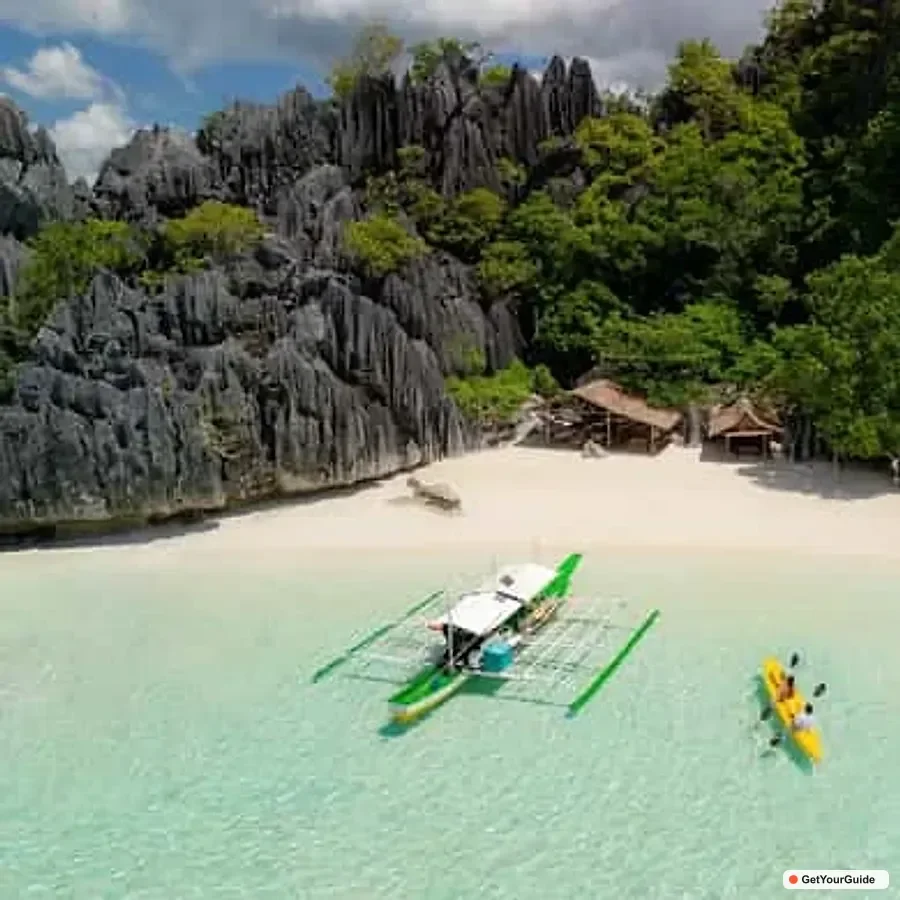
There is a moment, somewhere on your first morning in Coron, when the boat cuts its engine and you look down into water so clear that the limestone seems to fall away beneath you into impossible blue. This is the northern tip of Palawan, where jagged black karst cliffs rise straight out of a turquoise sea and hidden lagoons open like secret rooms behind walls of rock. Most people come here for a day or two and leave wishing they had stayed longer. A four-day private island-hopping trip, with your own banca, your own guide, lunch grilled on the boat, and transfers handled door to door, is the way you give Coron the time it actually deserves.
Hotels in Philippines
Compare live prices via Travelpayouts — targeted for this guide.
What makes the private version special is not luxury for its own sake. It is the freedom to linger. You decide when to jump in, when to eat, when to chase the light. You skip the crowded midday rush at the famous spots by arriving early or late, and you reach places the big group boats simply do not have time for.
The geology that built a wonderland
Coron's drama is written in limestone. The towering grey-black cliffs you weave between are ancient coral reef and marine sediment, laid down over millions of years and then lifted and folded into the sharp karst formations that define Coron Island and Calauit's neighbours. Rain and seawater slowly dissolved the soft limestone, carving caves, sinkholes, and the steep-walled lagoons that the area is famous for. Some of these basins became cut off from the open sea and filled instead with rainwater and seeping groundwater.
That geology is the secret behind Coron's most surreal feature: meromictic lakes. In places like Kayangan and Barracuda, a layer of cooler freshwater floats over warmer, saltier water below, and the two barely mix. Swim down a metre or two and you feel the temperature change and see the water shimmer where the layers meet. The lakes sit in cracks and collapsed caverns in the karst, ringed by cliffs and fed partly by the sea through underground channels, which is why they rise and fall gently with the tides.
Tours & activities in Philippines
Hand-picked experiences in Philippines — book on Trip.com with instant confirmation.
Day by day: what you actually see and do
Day one: the icons
Most itineraries open with the postcard stops so you understand what all the fuss is about. Kayangan Lake is the one you have seen on every poster of the Philippines: a short but steep climb up a stone staircase delivers the classic viewpoint over a cliff-walled cove, then a descent to the lake itself, where you swim in glassy, brackish water past pale limestone walls. Nearby, Twin Lagoon is reached by ducking under a low rock arch (or over it via a wooden ladder at high tide) into a hidden second lagoon where cold freshwater and warm seawater swirl together in visible ribbons.
Day two: shipwrecks and coral
Coron Bay is one of the world's great wreck-diving and snorkelling sites. In September 1944, US carrier aircraft attacked a fleet of Japanese supply and auxiliary ships sheltering here, and several sank in the shallow, sheltered waters. Today wrecks like the Skeleton Wreck lie close enough to the surface that even snorkellers can float above their coral-encrusted hulls and watch fish stream through the openings. On a private boat your guide can time these stops for calm water and good light, and certified divers can arrange deeper wreck dives.
Day three: reefs, sandbars, and quiet beaches
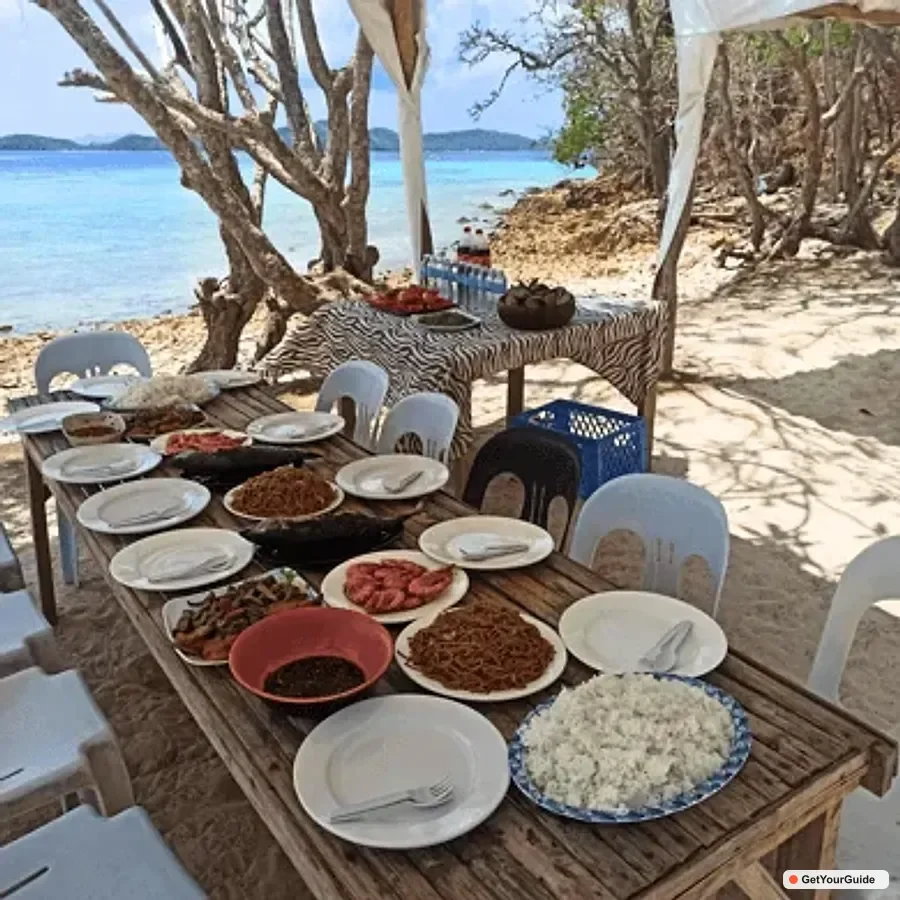
This is the day the private format pays off most. Siete Pecados is a cluster of small islands protected as a marine park, with a vivid, easily accessible reef of hard and soft corals and reef fish. CYC Beach, Banol, Malcapuya, and Bulog offer powder sand and shade for a long, slow lunch. Many trips grill fresh fish, squid, pork, and local vegetables right on the boat, served with rice and ripe mango while you dry off in the sun.
Day four: hot springs, viewpoints, and farther reaches
With four days you can spread out. Maquinit Hot Spring, near Coron town, is a rare saltwater thermal pool fed by the same volcanic-influenced geology, best enjoyed near sunset. Energetic travellers climb Mount Tapyas, a stairway of hundreds of steps to a cross and a sweeping view over the bay and town. A private boat also makes the longer run toward the Calamian outer islands realistic, trading the busy core sites for emptier sand and water.
Whose islands these are
Coron Island itself is the ancestral domain of the Tagbanua, one of the oldest indigenous peoples of the Philippines. They hold legal stewardship over the island and its lakes, which is why you pay community entrance fees at sites like Kayangan and why certain lakes and coves are off-limits or sacred. Far from being a formality, this is conservation that works: Tagbanua management has helped keep the water famously clear and the reefs alive. Treat the fees as part of the experience and the rules as the reason Coron still looks the way it does.
Practical tips from someone who has done the rounds
- Best time to go: the dry season, roughly late November through May, brings the calmest seas and clearest water. March to May is hottest and busiest. The wet season can still deliver good days but boat trips are weather-dependent.
- Beat the crowds: the single biggest advantage of a private boat is timing. Hit Kayangan and Twin Lagoon right at opening or in the late afternoon and you may have near-empty water that day boats never see.
- What to bring: reef-safe sunscreen (some marine parks restrict regular sunscreen), a rash guard for sun and rock protection, water shoes for the rocky climbs and shorelines, a dry bag, and cash in pesos for entrance fees, which are usually separate from the tour price.
- How strenuous: generally easy to moderate. The main effort is short steep staircases at Kayangan and Mount Tapyas. Snorkelling spots are calm, but you should be comfortable in deep water, since many of the best reefs and lagoons have no shallow footing.
- Typically included: private boat and crew, an English-speaking guide, a grilled lunch and bottled water, snorkelling gear, and hotel transfers. Entrance and environmental fees, alcohol, and dive gear are usually extra. Confirm specifics before you book.
- Responsible travel: never touch or stand on coral, do not feed fish, keep your fins clear of the reef, and carry your rubbish back to town. Reef-safe sunscreen genuinely matters here.
Why four days, and why it stays with you
A single day in Coron is a highlight reel. Four days is a story. You learn the rhythm of the tides, recognise your boat crew, find the cove you want to return to, and finally slow down enough to float on your back in a lagoon at golden hour with nowhere else to be. The limestone, the layered lakes, the sunken ships, and the people who guard these waters all come into focus. Come for the postcard. Stay long enough, on a boat that is yours, to understand why this corner of Palawan is so fiercely loved.
Good to know before you book
- Duration: typically a full day (around 8 to 10 hours including transfers), though half-day and multi-day options exist - check the listing.
- Best for: couples, families and first-time visitors.
- What is included: transport and a guide; check the listing for meals, gear and fees.
- Pickup: most tours offer hotel or central pickup; confirm your point and time when booking.
- Book through: the GetYourGuide button on this page, which shows live availability and pricing.
Frequently asked questions
How long does the Coron 4-Day Private Island Tours with Lunch & Transfers take?
Most departures run as a full day - roughly 8 to 10 hours including pickup, travel and the activities themselves - so plan to set aside the whole day. Some operators offer shorter or private versions; the exact timing for your date is shown when you book through the GetYourGuide button on this page.
What is included in the Coron 4-Day Private Island Tours with Lunch & Transfers?
Typically the price covers transport and a guide; check the listing for meals, gear and fees. Inclusions vary by operator, so always read the specific listing - it spells out exactly what is provided and what you pay for separately, such as entrance or environmental fees.
What should I bring?
Pack comfortable clothing, sunscreen, a hat, water and a little cash for fees and extras. It is also worth carrying some cash for local fees, drinks and tips, plus any personal medication, since card facilities can be limited outside the cities.
Is the Coron 4-Day Private Island Tours with Lunch & Transfers suitable for beginners or families?
It suits a wide range of travellers; ask the operator about fitness or swimming requirements if you are unsure. If you have specific concerns about age, fitness or swimming ability, message the operator before booking - they can advise on the best option for your group.
When is the best time to do this tour?
The best conditions are usually the dry season from late November to May, when seas are calmest and skies clearest. That said, the Philippines is a year-round destination, and many of these experiences run in any season - just expect the occasional shower and check the forecast for the day.
How do I get to Coron?
To reach Coron, fly into Puerto Princesa, El Nido or Coron (Busuanga) airport, then transfer by road or boat. Many tours include transfers from nearby towns or hotels, so confirm your pickup arrangement when you book so the day runs smoothly from the start.
Do I need to book the Coron 4-Day Private Island Tours with Lunch & Transfers in advance?
Yes - booking ahead is strongly recommended, especially in the dry-season peak and on weekends, when popular tours and the best operators sell out. Reserving online also locks in your spot and lets you compare timings and inclusions easily.
How much does the Coron 4-Day Private Island Tours with Lunch & Transfers cost?
Prices vary with the season, group size and exactly what is included, so we do not list a fixed figure here. Tap the GetYourGuide button on this page to see the current, accurate price and availability for your chosen date.
Can I do the Coron 4-Day Private Island Tours with Lunch & Transfers as a private or customised tour?
Many operators offer a private version of this experience for couples, families or small groups who want a flexible pace and a guide to themselves, and some can tailor the route or add stops. If a private or custom option matters to you, check the listing or message the operator before booking, as availability and prices differ from the standard shared tour.
Ready to explore Coron?
From planning to the moment you arrive, the Coron 4-Day Private Island Tours with Lunch & Transfers is one of the most rewarding ways to experience this corner of the Philippines - and booking it is simple. Use the GetYourGuide button on this page to check live availability, compare timings and secure your spot, then turn up and let the local guides handle the rest while you focus on the views, the water and the memories.

Real local stays (book direct)
Hand-picked homestays and guesthouses — book direct, no markup.
Popular activities (book instantly)
Island hopping, canyoneering, whale sharks — real Klook/GetYourGuide options.
Plan your Philippines trip