Contents
- 1Where you are: Bohol and its strange, beautiful interior
- 2The Chocolate Hills: how on earth did these form?
- 3The tarsiers: the Philippines' tiniest, most haunting primate
- 4The Loboc River cruise: lunch on the water
- 5What else you might see along the way
- 6Practical tips for a smooth day
- 7Why it stays with you
- 8Good to know before you book
- 9Frequently asked questions
- 10Ready to explore Bohol?
There is a moment, somewhere along the winding road into the heart of Bohol, when the land suddenly stops behaving the way land normally does. The flat coastal plains and coconut groves fall away, and in their place rises a sea of perfectly rounded green mounds, hundreds upon hundreds of them, marching to the horizon like something a giant scattered across the island. This is the Chocolate Hills, and seeing them for the first time is one of those rare travel moments that makes you laugh out loud at the sheer strangeness of the Earth. This classic day tour stitches together Bohol's three signature experiences -- the otherworldly hills, the saucer-eyed tarsiers clinging to forest branches, and a lazy lunch cruise down the jade-green Loboc River. It is, deservedly, the most-booked thing to do on the island, and for good reason: in a single unhurried day you get geology, biology, and slow-river Filipino hospitality all in one.
Hotels in Philippines
Compare live prices via Travelpayouts — targeted for this guide.
Where you are: Bohol and its strange, beautiful interior
Bohol is an oval-shaped island province in the Central Visayas, just southeast of Cebu and reached easily by a fast ferry into Tagbilaran or by flying into Panglao's airport. Most tours of this kind set out from the resort strip on Panglao Island or from Tagbilaran City, then climb inland toward the towns of Loboc, Bilar, Carmen, and Batuan. The drive itself is part of the show. You pass through the famous man-made mahogany forest near Bilar -- a cool, cathedral-like tunnel of densely planted trees that arch over the road -- and roll past rice paddies and small barangays where life moves at an easy pace.
The Chocolate Hills: how on earth did these form?
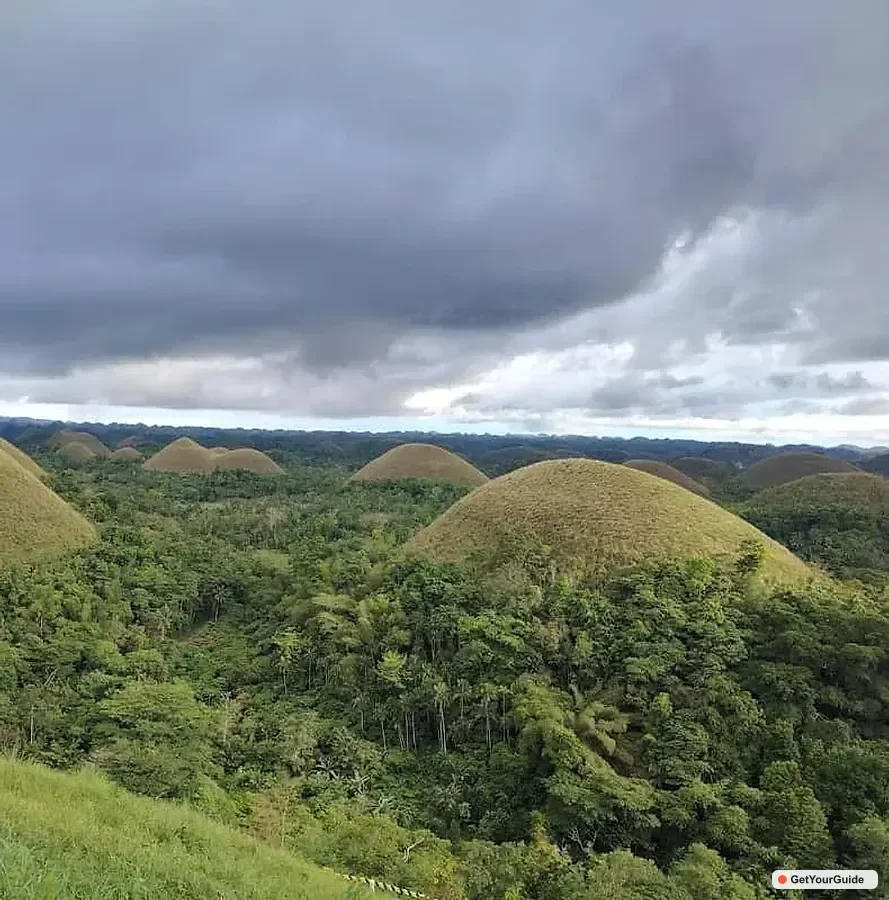
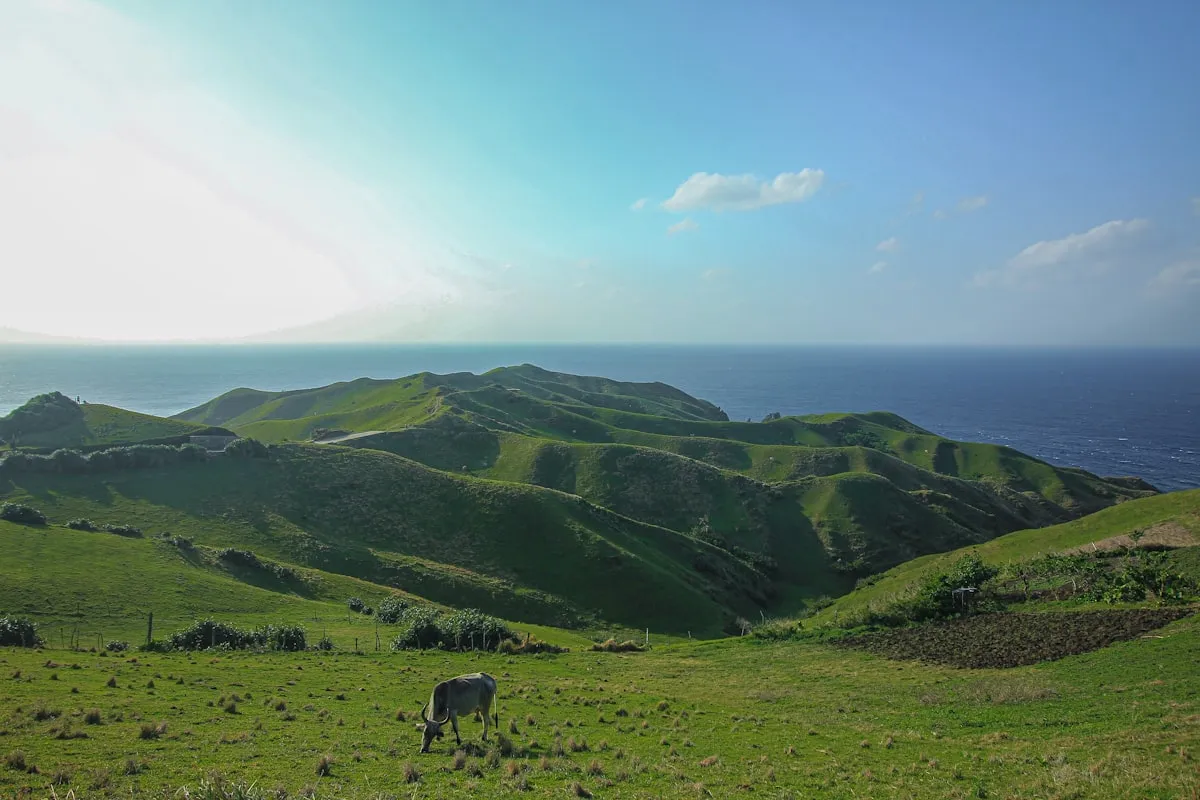
The Chocolate Hills are the headline act, and they are a genuine geological wonder. There are well over a thousand of them spread across the central towns of Carmen, Batuan, and Sagbayan -- haycock and dome-shaped mounds of remarkably uniform size, most rising somewhere between roughly 30 and 120 meters above the surrounding plain. They are a declared National Geological Monument of the Philippines and sit on the country's tentative list for UNESCO World Heritage consideration.
So what made them? The honest scientific answer is that this is classic karst country. The hills are made of marine limestone, laid down on an ancient seabed and later uplifted. Over enormous spans of time, rainwater -- which is naturally slightly acidic -- dissolved and weathered that limestone, carving the landscape into these isolated conical residual hills, with valleys and underground drainage in between. In other words, the hills are what was left behind after the surrounding rock slowly washed away. The grass that covers them turns from vivid green in the rainy season to a toasted cocoa-brown in the dry months, and that chocolate-colored summer coat is exactly how they got their name. Local Boholano legend tells a softer story -- of two warring giants who hurled rocks and sand at each other, or of a giant weeping over a lost love, his dried tears becoming the hills -- and your guide will almost certainly share a version with a grin.
Chocolate Hills tour in Philippines
Hand-picked experiences in Philippines — book on Trip.com with instant confirmation.
At the main complex in Carmen you climb a flight of steps to a viewing deck (there are usually well over 200 steps, so it is a short, brisk effort) that delivers the panoramic, postcard view stretching in every direction. It is best photographed in early morning light or late afternoon, when the low sun rakes across the mounds and throws long shadows that make every hill stand out.
The tarsiers: the Philippines' tiniest, most haunting primate
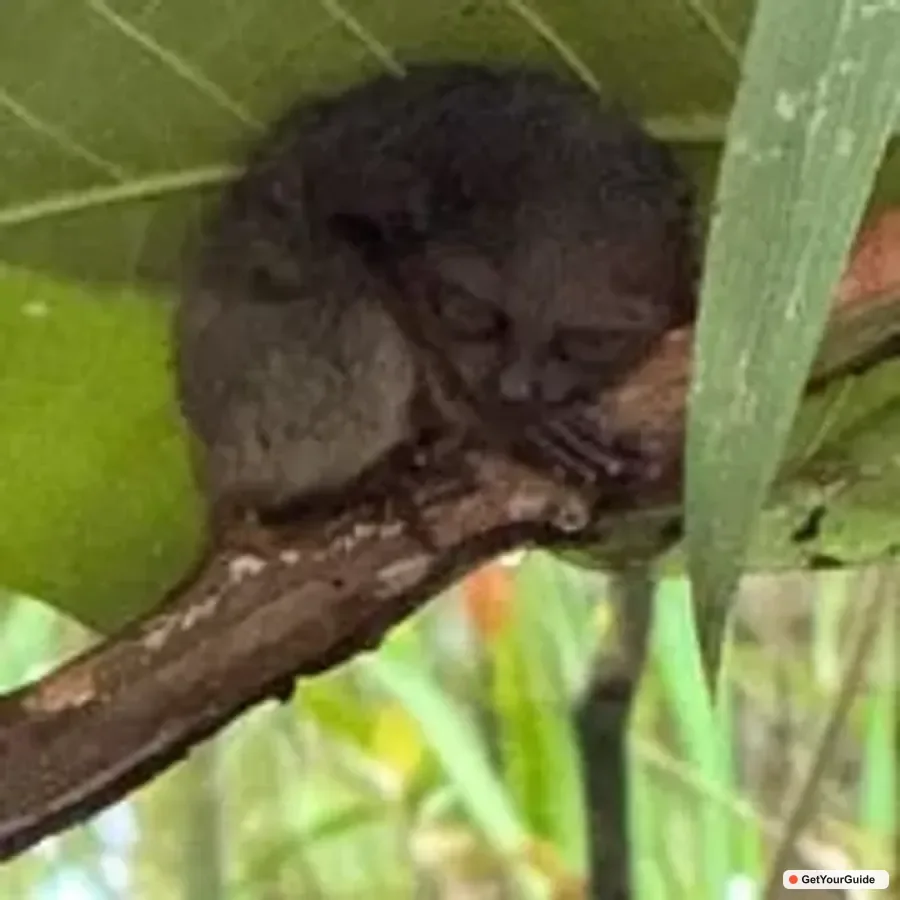
If the hills are about scale, the tarsiers are about the opposite -- you have to lean in and whisper. The Philippine tarsier is one of the world's smallest primates, an adult fitting easily in the palm of your hand, with a body only around 9 to 16 centimeters long and a long bald tail trailing behind. Its two enormous eyes are the giveaway: each eyeball is roughly the size of its brain and cannot move in the socket, so the tarsier compensates by rotating its head almost all the way around, owl-style. They are nocturnal carnivores -- among the few primates that eat almost exclusively live prey such as insects, and occasionally small lizards -- and they cling vertically to thin branches, leaping with surprising power between them.
Here is the important part, and the responsible-travel heart of this stop. Tarsiers are extremely sensitive, stress-prone animals; in poor conditions they have been known to harm themselves. Insist on visiting a genuine conservation sanctuary -- the well-known facility associated with the Philippine Tarsier Foundation near Corella, or the conservation area in Loboc -- rather than a roadside cage operation. At a proper sanctuary you walk a quiet forest trail and spotters point out tarsiers resting on branches. The rules are non-negotiable and exist for the animals' sake: no flash photography, no touching, no loud voices. Keep your phone silent and your voice to a hush, and you will be rewarded with a long, eerie stare from one of the strangest little faces in the animal kingdom.
The Loboc River cruise: lunch on the water
By midday you arrive at the Loboc River, and the tempo of the tour shifts from sightseeing to pure relaxation. The river runs a deep, mineral-rich jade green, flanked by walls of coconut palm and nipa, and the cruise is done aboard a broad floating restaurant -- essentially a covered raft lashed to a boat -- with a buffet of Filipino dishes laid out down the middle. You glide slowly upriver while you eat: think grilled fish, chicken, rice, tropical fruit, and often a live performer strumming a guitar or playing local songs.
The boat usually turns around near a small waterfall and, at one of the riverbank stops, a community cultural group performs traditional Filipino dances and music, sometimes inviting guests up to join. It is gentle, family-friendly, and unapologetically touristy in the best way. The whole thing takes roughly an hour on the water. If you would rather do it under your own power, Loboc and nearby Loay are also where you can swap the buffet boat for a stand-up paddleboard or kayak on another day -- but on this classic tour, the floating-restaurant lunch is the experience.
What else you might see along the way
Depending on the specific itinerary and traffic, day tours often fold in a few extra stops between the big three:
- The man-made forest near Bilar -- that dense, shaded corridor of mahogany trees that feels delightfully cool after the open hills.
- A viewpoint over the Loboc River, and sometimes a roadside encounter with the famous Bilar python or a butterfly conservation center.
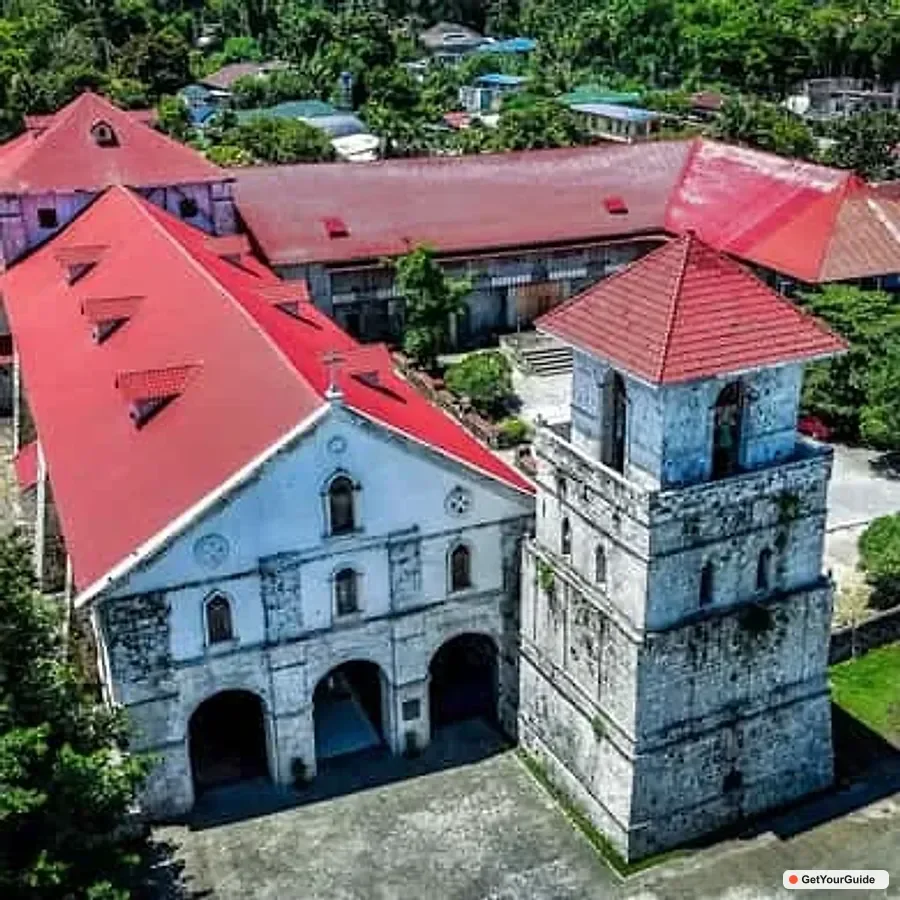
- Heritage churches -- Bohol has some of the oldest stone churches in the Philippines, several badly damaged in the 2013 earthquake and since painstakingly rebuilt, a reminder of how seismically alive this region is.
- The Blood Compact monument near Tagbilaran, marking the 1565 pact between Spanish explorer Miguel Lopez de Legazpi and local chieftain Datu Sikatuna -- a touchstone of Philippine history.
Practical tips for a smooth day
- How long: Plan for a full day, commonly around 8 to 10 hours door to door, depending on whether you start from Panglao or Tagbilaran.
- How strenuous: Easy overall. The only real effort is the staircase to the Chocolate Hills viewpoint and a short flat forest walk for the tarsiers. Suitable for most ages and fitness levels.
- Best time of day and year: Early starts beat both the midday heat and the tour-bus crowds at the hills. For the chocolate-brown color, visit in the dry season (roughly the first half of the year); in the wetter months the hills are emerald green, which is just as beautiful in a different way.
- What to wear and bring: Light, breathable clothing, a hat, sunscreen, plenty of water, and insect repellent for the tarsier forest. Comfortable shoes for the steps. Bring cash in pesos for entrance fees, tips, and souvenirs, as card acceptance inland is limited.
- What's typically included: Private or shared transport with a driver-guide, and usually the Loboc buffet lunch. Site entrance fees and the tarsier sanctuary fee are sometimes separate -- confirm when you book.
- Responsible travel: Choose tarsier sanctuaries committed to conservation, keep quiet and flash-free, never touch the animals, and take your litter with you. Your restraint directly protects a vulnerable species.
Why it stays with you
What makes this day so satisfying is its range. You stand on a hilltop dumbstruck by a landscape that looks impossible, then ten minutes later you are holding your breath over a creature small enough to sit in your palm, and you finish the day drifting down a green river with a plate of grilled fish and a guitar in the background. It is geology, biology, and easy island hospitality folded into a single unhurried loop through the middle of Bohol. Go early, go quietly where it counts, and let Bohol's strange and gentle interior do the rest.
Good to know before you book
- Duration: typically a full day (around 8 to 10 hours including transfers), though half-day and multi-day options exist - check the listing.
- Best for: couples, families and first-time visitors.
- What is included: transport, a guide and the main stops; entrance fees and lunch are sometimes extra.
- Pickup: most tours offer hotel or central pickup; confirm your point and time when booking.
- Book through: the GetYourGuide button on this page, which shows live availability and pricing.
Frequently asked questions
How long does the Chocolate Hills, Tarsiers and Loboc River Day Tour take?
Most departures run as a full day - roughly 8 to 10 hours including pickup, travel and the activities themselves - so plan to set aside the whole day. Some operators offer shorter or private versions; the exact timing for your date is shown when you book through the GetYourGuide button on this page.
What is included in the Chocolate Hills, Tarsiers and Loboc River Day Tour?
Typically the price covers transport, a guide and the main stops; entrance fees and lunch are sometimes extra. Inclusions vary by operator, so always read the specific listing - it spells out exactly what is provided and what you pay for separately, such as entrance or environmental fees.
What should I bring?
Pack comfortable shoes, sunscreen, a hat, water and small cash for entrance fees and souvenirs. It is also worth carrying some cash for local fees, drinks and tips, plus any personal medication, since card facilities can be limited outside the cities.
Is the Chocolate Hills, Tarsiers and Loboc River Day Tour suitable for beginners or families?
It is gentle and family-friendly, suitable for all ages with only light walking involved - a comfortable way to see the highlights. If you have specific concerns about age, fitness or swimming ability, message the operator before booking - they can advise on the best option for your group.
When is the best time to do this tour?
The best conditions are usually the dry season from December to May, when the Chocolate Hills turn their famous brown. That said, the Philippines is a year-round destination, and many of these experiences run in any season - just expect the occasional shower and check the forecast for the day.
How do I get to Bohol?
To reach Bohol, fly into Bohol-Panglao International Airport, or take the fast ferry from Cebu (about 2 hours). Many tours include transfers from nearby towns or hotels, so confirm your pickup arrangement when you book so the day runs smoothly from the start.
Do I need to book the Chocolate Hills, Tarsiers and Loboc River Day Tour in advance?
Yes - booking ahead is strongly recommended, especially in the dry-season peak and on weekends, when popular tours and the best operators sell out. Reserving online also locks in your spot and lets you compare timings and inclusions easily.
How much does the Chocolate Hills, Tarsiers and Loboc River Day Tour cost?
Prices vary with the season, group size and exactly what is included, so we do not list a fixed figure here. Tap the GetYourGuide button on this page to see the current, accurate price and availability for your chosen date.
Can I do the Chocolate Hills, Tarsiers and Loboc River Day Tour as a private or customised tour?
Many operators offer a private version of this experience for couples, families or small groups who want a flexible pace and a guide to themselves, and some can tailor the route or add stops. If a private or custom option matters to you, check the listing or message the operator before booking, as availability and prices differ from the standard shared tour.
Ready to explore Bohol?
From planning to the moment you arrive, the Chocolate Hills, Tarsiers and Loboc River Day Tour is one of the most rewarding ways to experience this corner of the Philippines - and booking it is simple. Use the GetYourGuide button on this page to check live availability, compare timings and secure your spot, then turn up and let the local guides handle the rest while you focus on the views, the water and the memories.

Real local stays (book direct)
Hand-picked homestays and guesthouses — book direct, no markup.
Popular activities (book instantly)
Island hopping, canyoneering, whale sharks — real Klook/GetYourGuide options.
Plan your Philippines trip