Every year, thousands of Koreans pack up for Cebu to do something that might seem counterintuitive at first glance: learn English. Not in New York. Not in London. Not in Sydney. In Cebu, Philippines — a city in the central Visayas that has, over the past two decades, quietly become one of the world's most important English language learning destinations for Korean students. The numbers back this up. Language schools in Cebu and on Mactan Island collectively enrol tens of thousands of Korean students annually, making Koreans by far the largest nationality in the city's English-as-a-Second-Language (ESL) industry.
Cebu English Language Schools: The Korean Student's Complete Guide (2026)
Trip.com
Search on Trip.comHotels in Cebu
Compare live prices via Travelpayouts — targeted for this guide.
The reasons make complete sense once you understand the economics and the pedagogy. This guide covers everything: why Cebu beats London and Sydney on value, which areas to study in, what a month costs, how the visa works, what your daily schedule looks like, what to do on weekends, and how to pick a school that will not disappoint you.
Why Cebu? The Logic Behind the Choice
The core argument for Cebu over Western English-speaking countries is simple and overwhelming: cost.
A one-month intensive English program in the United Kingdom — including tuition, shared accommodation, and a meal plan — runs roughly GBP 2,000–3,500 (approximately KRW 3,400,000–5,900,000 at current rates). Add the flight from Seoul, the UK student visa fee, and general living costs in a British city, and you are looking at KRW 5,000,000–8,000,000 for a single month of study.
Trip.com
See all tours in Cebu on Trip.comTours & activities in Cebu
Hand-picked experiences in Cebu — book on Trip.com with instant confirmation.

The same one month of intensive English in Cebu — including 6–8 hours of daily instruction (with significant 1-on-1 time), a bed in a school dormitory, three meals a day in a school cafeteria, airport pickup, and weekend activities — costs PHP 25,000–60,000. At current exchange rates, that is KRW 625,000–1,500,000. All in. You are getting a superior study ratio (more speaking hours per day than any Western group class) at roughly one-quarter to one-sixth of the cost, 3 hours 45 minutes from Incheon Airport.
There is also the climate advantage. Korean winters are cold. Cebu's average temperature sits around 27–30°C year-round. Spending January or February in Cebu instead of a grey British city is not a small thing when you are already homesick and trying to absorb a new language.
Philippine English: The Accent Question
Some Korean students ask about the Filipino English accent before enrolling. This is worth addressing. Filipino English is internationally recognised as clear, neutral, and highly intelligible — a result of the Philippines' American-era education system, which made English the medium of instruction from primary school onwards. Filipino teachers and tutors speak at a measured pace, enunciate clearly, and are accustomed to working with non-native speakers. IELTS and TOEIC preparatory programs run extensively in Cebu with strong results. Many Korean students who completed IELTS prep in Cebu have gone on to British, Australian, and American universities, demonstrating that Cebu-trained English is fully transferable.
Top English School Areas in Cebu
Lapu-Lapu City (Mactan Island)
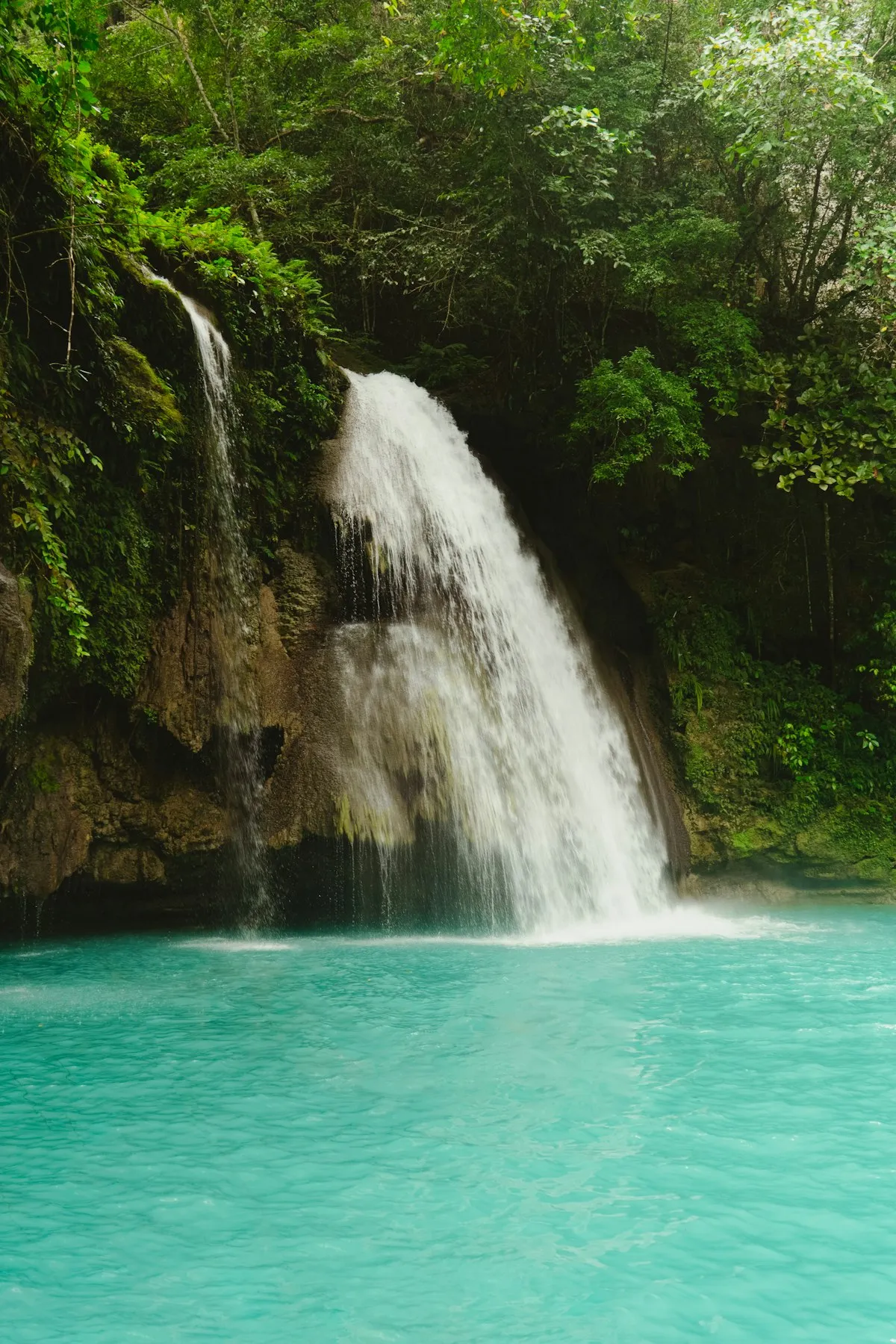
This is the original heartland of Cebu's English school industry and still has the highest concentration of schools. Mactan Island connects to Cebu via two bridges and is home to Mactan-Cebu International Airport — which means some Korean students land and reach their school in under 30 minutes without entering central Cebu at all. The schools here tend to be large (100–400 students), well-organised, with dormitories on-campus or nearby, Korean-speaking academic coordinators, and fixed weekly timetables. The area is quiet enough to study but close enough to SM Seaside and the Mactan beach strip for weekend activities.
Cebu IT Park (Lahug)
The newer hub for English schools, particularly those targeting university-age and professional students. IT Park is a 24-hour business district with malls, restaurants (including numerous Korean options), and a young, international atmosphere. Schools in IT Park tend to be smaller, with more premium facilities and a focus on business English or IELTS/TOEIC preparation. The surrounding area has convenience stores, Korean restaurants, and noraebangs that many students appreciate after study hours.
Cebu City (Banilad, Mandaue)
Several schools operate in the broader Cebu City metropolitan area, often targeting students who want to combine English study with access to the city's wider social and entertainment options. These tend to have slightly more permissive dormitory rules and attract older (university and above) students.
Program Types and Structures
1-on-1 Intensive (The Cebu Signature Program)
This is what makes Cebu unique in the global ESL market. A typical 1-on-1 intensive day includes 4–6 hours of individual instruction with a dedicated Filipino teacher, plus 2–4 hours of group classes. Total study time: 6–10 hours per day, 5 days per week. No Western school program — at any price — offers this ratio. Group classes run 4–15 students and cover conversation, grammar, pronunciation, or skills-based topics. This structure produces measurable language improvement quickly; most students see significant gains in speaking confidence within 2–3 weeks.
Semi-Intensive Program
Typically 4 hours of 1-on-1 plus 2 hours of group classes daily. Lower tuition cost, more free time, preferred by students who want a balance between study and exploration. Good for second or third Cebu trips where the student already knows the routine.
Group-Only Program
The lowest-cost option: 6–8 hours of group classes daily, no 1-on-1 instruction. More comparable to Western ESL programs but at a fraction of the price. Less popular with Korean students who specifically came for the 1-on-1 ratio advantage.
IELTS/TOEIC Preparation
Specialised programs targeting specific exam scores. Many Cebu schools have a track record with these exams and dedicated exam-prep teachers. Duration typically 4–12 weeks. Results are competitive with IELTS prep programs in Western countries at a fraction of the cost.
Costs: The Full Breakdown
Costs vary by school, program type, room type (single vs. shared), and meal plan. Here is a realistic range for 2026:
- 1-on-1 Intensive (6h/day), shared room, 3 meals: PHP 35,000–55,000/month (KRW 875,000–1,375,000)
- 1-on-1 Intensive, single room, 3 meals: PHP 45,000–70,000/month (KRW 1,125,000–1,750,000)
- Semi-intensive, shared room, 3 meals: PHP 28,000–42,000/month (KRW 700,000–1,050,000)
- Weekend excursions (school-organised): PHP 500–1,500/activity
- Personal expenses (snacks, coffee, minor shopping): PHP 5,000–15,000/month typical
- Flight from Seoul to Cebu return: KRW 150,000–400,000 depending on timing
Total all-in cost for one month in Cebu: approximately KRW 1,200,000–2,500,000 including flight, school fees, accommodation, meals, and personal spending. Compare this to GBP 3,000–5,000+ for the same month in the UK.
Visa and Immigration for Korean Students
For stays up to 30 days, Korean passport holders enter visa-free and no special arrangement is needed — a tourist visa stamp covers a short language program. For stays of 31–59 days, a tourist visa extension (PHP 3,030 for each additional month) is the practical solution and is processed at the Bureau of Immigration (BI) Cebu office. Most schools help students manage this paperwork.
For stays of 60 days or more, students have two practical options:
- Multiple tourist visa extensions: Continue extending monthly up to a total allowed stay. Simpler administratively but involves monthly BI visits.
- Student Visa (9f): Requires enrolment in a school accredited by the Commission on Higher Education (CHED), an application through the school, and BI processing. Processing takes several weeks. The school typically handles this for students who plan to stay 6 months or more. A 9f visa allows a renewable 1-year stay.
The vast majority of Korean students on 1–3 month programs simply use tourist visa extensions and never need a formal student visa.
A Typical Day at a Cebu English School
Structure varies by school, but a representative intensive day looks like this:
- 7:00 AM — Breakfast at the school cafeteria
- 8:00 AM — Group class (grammar, reading, or skills-based topic)
- 9:00 AM — 1-on-1 session 1 (conversation, pronunciation)
- 10:00 AM — 1-on-1 session 2 (writing or IELTS practice)
- 11:00 AM — Group class (discussion or debate)
- 12:00 PM — Lunch
- 1:00 PM — 1-on-1 session 3
- 2:00 PM — 1-on-1 session 4
- 3:00 PM — Group activity (English games, drama, or presentation)
- 4:00 PM — Self-study or optional tutoring
- 6:00 PM — Dinner
- Evening — Free time, quiet hour, or school-organised social activities
Many schools have an "English Only" policy in school facilities — speaking Korean inside the building is discouraged or prohibited during study hours. This is intentional and effective; it forces students to use English for everyday interactions, accelerating the learning curve significantly.
Weekends in Cebu
This is where the Philippines delivers something no Western English program can: extraordinary weekend activities within 30–120 minutes of the school.
- Island hopping (Hilutungan, Nalusuan, Olango): PHP 700–1,200 per person on a school group trip
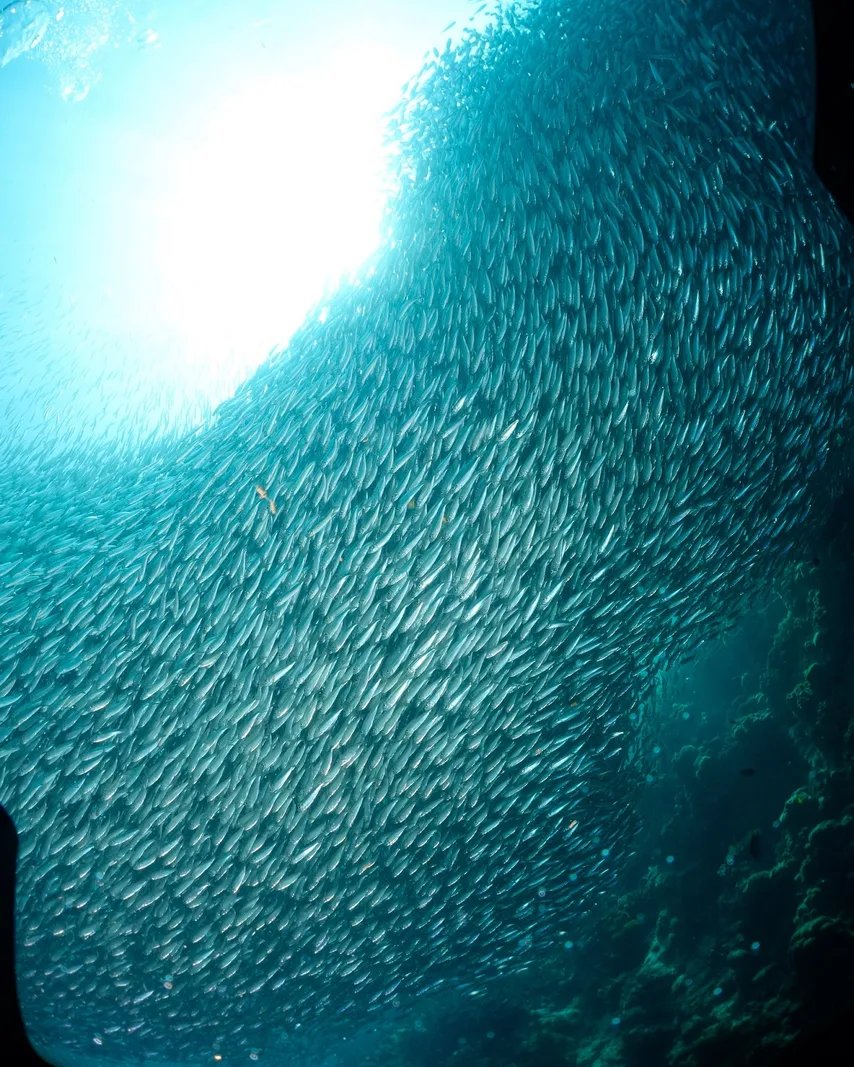
- Scuba diving (Malapascua, Moalboal, Mactan Marine Sanctuary): PHP 1,200–2,000 for a fun dive including equipment
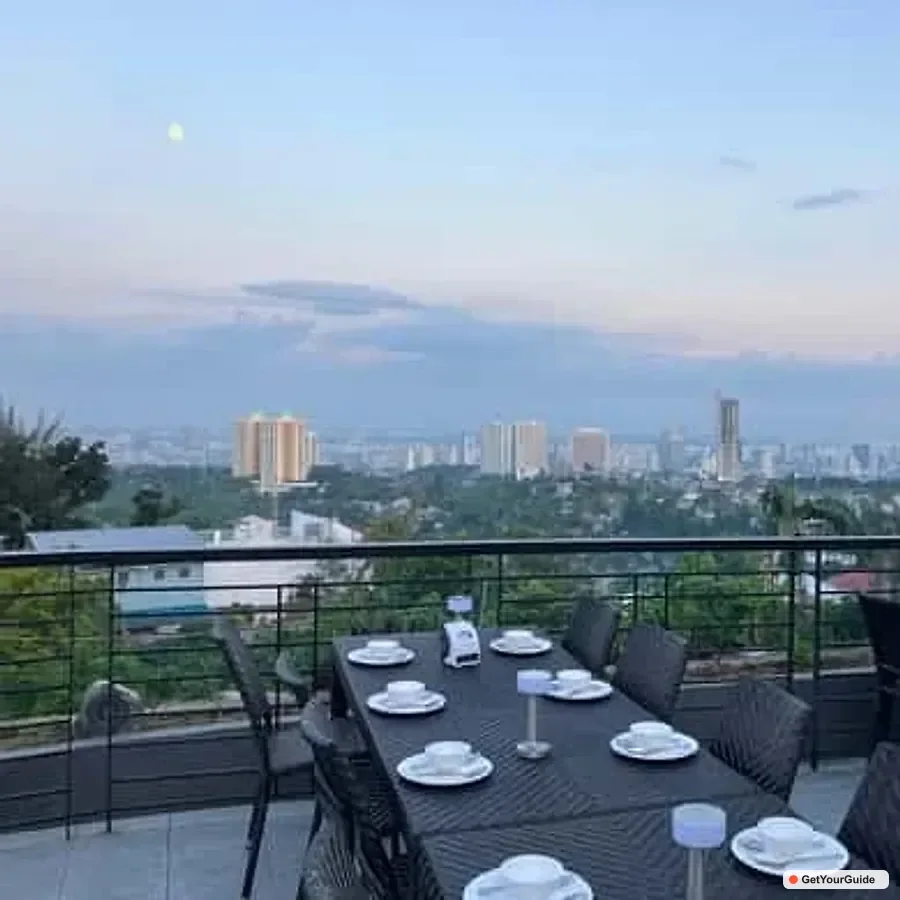
- Kawasan Falls canyoneering: PHP 1,100–1,500 per person, a half-day adventure
- Whale shark watching (Oslob): PHP 1,000 for the experience, roughly 2.5 hours south of Cebu City
- SM Seaside City Cebu, Ayala Center Cebu: Full Korean-style mall experience with Korean restaurant options
Schools typically organise weekend activities with group rates and transportation included. Students who prefer independent exploration can use Grab (rideshare) or the school's advice to arrange their own trips.
The Korean Community in Cebu
Cebu has the largest Korean expat community in the Philippines outside of Manila. The area around IT Park and Mactan Island has Korean BBQ restaurants, Korean convenience store imports, Korean bakeries, Korean churches, and Korean-speaking real estate agents. Koreans who want to feel entirely at home off-campus have no difficulty doing so. The flip side is that some students spend too much time in Korean-language comfort zones and undermine the English immersion they came for — the English-Only policy at school exists precisely to counteract this tendency. The schools know this dynamic well and structure their programs accordingly.
How to Choose a Reputable School
With hundreds of English schools in Cebu, quality varies significantly. Key criteria:
- CHED accreditation: Schools registered with the Commission on Higher Education are operating legally and have met baseline requirements. Ask for their accreditation number.
- Korean review sites: Cebu English school reviews are extensively documented on Korean platforms including Naver blogs and specific ESL review communities. Search the school name in Korean before booking.
- Teacher credentials: Filipino teachers at reputable schools hold education degrees (BSEd or similar). Ask about teacher qualifications. Avoid schools that cannot provide clear answers.
- Teacher-to-student ratio: For 1-on-1 programs, verify that dedicated teacher time is actually 1-on-1 and not shared with another student simultaneously.
- Trial period: Some schools offer a 1-week trial enrollment. This is valuable — a week tells you whether the teaching quality, dormitory, and food match what was advertised.
- Dormitory inspection: If visiting Cebu before enrolling, ask to see the dormitory and cafeteria. A school that refuses is a red flag.
Frequently Asked Questions
Is it better to study English in Cebu or in a Western country?
For pure value — hours of English instruction per won spent — Cebu is not close. You get more 1-on-1 teaching hours, lower total cost, proximity to Korea, and a warm climate. The trade-off is cultural immersion in an English-native society, which Western countries offer and Cebu does not. If cultural exposure to English-speaking Western culture is part of your goal, a Western program has value. If your goal is rapid English skill improvement at manageable cost, Cebu is the clear choice for most Korean students.
How much English improvement can I expect in one month?
Results depend heavily on your starting level and effort. Students who maintain the English-Only policy, use their 1-on-1 hours actively, and engage socially in English during evenings consistently report significant gains in speaking fluency and confidence. Measurable TOEIC score improvements of 50–100 points in 4–8 weeks are realistic for students at intermediate level. At beginner level, one month is enough to achieve basic conversational function. At advanced level, gains are more nuanced but pronunciation and natural fluency improve noticeably.
Are English schools in Cebu safe for young Korean students?
Yes, with appropriate school selection. Established schools with dormitories have curfews, security staff, and organised activities that create a structured and safe environment. Many Korean middle school and high school students attend Cebu programs supervised by school staff. The Lapu-Lapu City and IT Park areas are among the safest in Cebu for foreigners. Students should use Grab for transport rather than unlicensed taxis, avoid displaying expensive items, and follow school rules about curfew and off-campus behaviour.
Can I get a refund if I need to leave early?
Refund policies vary by school. Most reputable schools offer partial refunds for unused weeks if proper notice is given (typically 7–14 days). Medical emergencies are usually treated more flexibly. Read the enrollment contract carefully before paying. Korean-language contracts or bilingual contracts are common at major schools — if the school provides only an English contract, have a Korean speaker review it or ask the Korean coordinator to explain each clause.
What should I pack for a month in Cebu?
Light clothing only — shorts, t-shirts, and one light jacket for air-conditioned classrooms (AC in Philippine buildings is aggressively cold). Reef-safe sunscreen (SPF 50+) is essential and much cheaper to bring from Korea than to buy at tourist prices in Cebu. A power adapter (the Philippines uses American-style flat two-pin sockets — compatible with Korean electronics). Your Korean bank card for ATM access. Basic medications — Korean pharmacy standards are familiar; not all brands are available in Cebu. A good English dictionary app. The school will provide study materials; you do not need to bring textbooks.

PANA.PH Editorial Team
Philippines travel desk
The PANA.PH travel desk researches, books and re-checks Philippines travel logistics — fares, ferry schedules, government fees and permit rules — and publishes what it can verify.
🏡 Real local stays (book direct)
Hand-picked homestays and guesthouses — book direct, no markup.
Browse all local stays →
🌊 Popular activities (book instantly)
Island hopping, canyoneering, whale sharks — real Klook/GetYourGuide options.
View all activities →