Seven volcanoes. One island. A landmass smaller than Singapore. And almost nobody goes there.
Camiguin Island Guide: The Philippines' 'Island Born of Fire' (Volcanoes, Waterfalls & Sunken Cemetery)
Trip.com
Search on Trip.comHotels in Philippines
Compare live prices via Travelpayouts — targeted for this guide.
Camiguin (pronounced Kam-ee-GHEEN) is the kind of place that makes you feel like a genuine discoverer — the traveler who found the thing before the Instagram crowd did. Technically, it has been "discovered." Practically, you will walk onto a white-sand sandbar at sunrise and have it completely to yourself. You will soak in volcanic hot springs at night and share them with six locals and nobody else. You will ask the guesthouse owner what's good to eat and he'll send you home with a bag of fresh lanzones from his garden. That is Camiguin.
The numbers are genuinely staggering for a place this small: 7 volcanoes (one of them active), 4 major waterfalls, 1 underwater cemetery submerged by a volcanic eruption in 1871, 1 brilliant white sandbar that appears to float in the middle of the sea, and approximately zero resort developments. It has the highest density of volcanoes per square kilometre of any island on Earth. It also has some of the best freshwater swimming in the Philippines, a cultural festival that turns the whole island into a fruit-scented carnival, and seafood that hasn't been marked up for foreign palates.
This is your complete guide to Camiguin. Go before the word gets out.
Trip.com
See all tours in Philippines on Trip.comVolcano tour in Philippines
Hand-picked experiences in Philippines — book on Trip.com with instant confirmation.
Getting to Camiguin
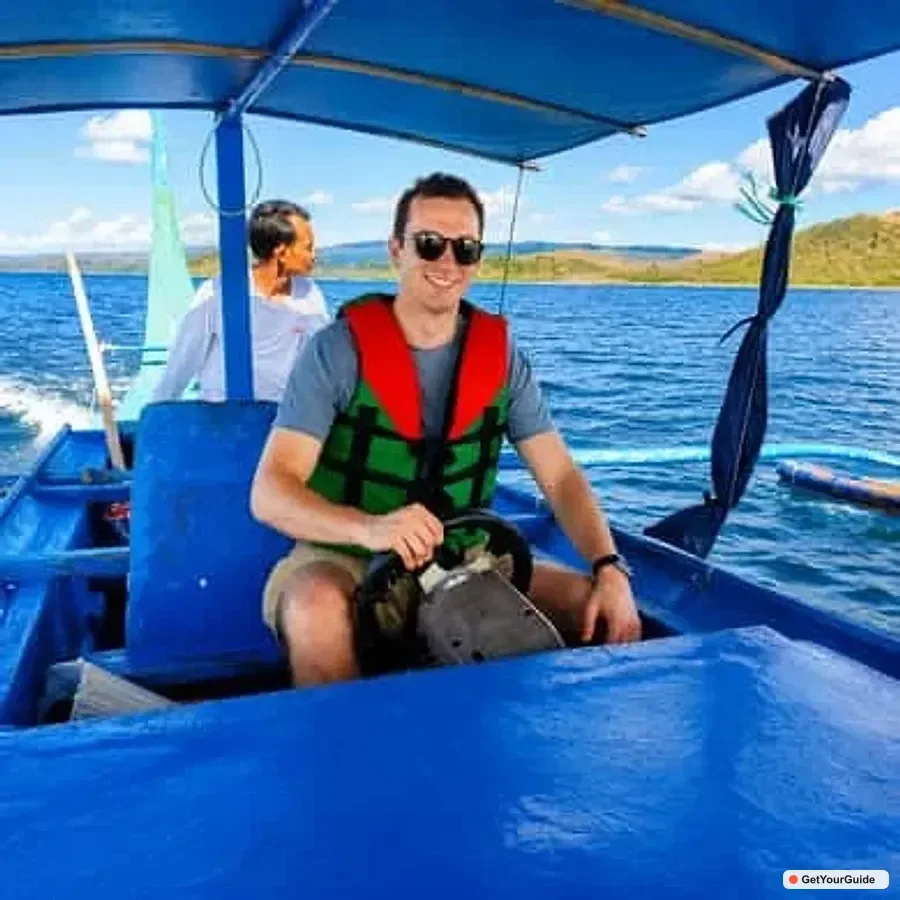
Getting to Camiguin takes a little effort — which is exactly why it's still undiscovered. There are two main routes:
From Cebu: Fly Direct
The fastest option is a direct flight from Cebu (Mactan-Cebu International Airport) to Camiguin Airport in Mambajao. The flight takes about 1 hour and costs roughly PHP 2,500–5,000 return depending on timing and how far in advance you book. The catch: flights are limited — typically operated by smaller carriers and not daily. Check Cebu Pacific and Philippine Airlines for current schedules, and book well in advance. The airport in Mambajao is tiny and charming; you walk across the tarmac and are in town within five minutes.
From Cagayan de Oro: Bus + Ferry (The Scenic Route)
This is the traveler's route, and honestly the better experience. From Cagayan de Oro (CDO), take a 2-hour bus to Balingoan port in Misamis Oriental — buses leave regularly from CDO's Agora terminal, costs around PHP 80–120. At Balingoan, catch the ferry to Benoni port on Camiguin — the crossing takes about 1 hour and costs approximately PHP 180–200. Total cost: around PHP 280–320, total time around 3–3.5 hours. The ferry ride itself is gorgeous: Camiguin rises dramatically out of the Bohol Sea, its volcanic peaks wreathed in cloud, looking exactly like what it is — an island born of fire.
From Benoni port, tricycles take you to Mambajao town (the main hub) for PHP 50–80. The whole island is only 64 kilometres in circumference — nothing is far from anything.
When to Go
The dry season runs November through May, with December through April being peak sunshine. Sea conditions are calm, waterfalls are flowing (but not dangerously so), and scooter touring around the island is a joy.
That said, the single best time to visit Camiguin is the last week of October, during the Lanzones Festival. The whole island smells like lanzones fruit. There are street parades, cultural shows, and free tastings on every corner. It's the best grassroots festival in Mindanao and it draws enough visitors to feel festive but not enough to feel crowded. If you can align your trip with this week, do it.
June through September is wetter, but Camiguin's positioning north of Mindanao generally shields it from the worst of the southwest monsoon. It's no guarantee — check PAGASA before you go — but it remains one of the more accessible Philippine islands during habagat season.
Getting Around: The One-Day Scooter Circuit
The single best thing you can do in Camiguin is rent a scooter and circuit the entire island. The loop road is 64 kilometres of winding coastal highway with volcanic peaks on one side and the Bohol Sea on the other. It is, without exaggeration, one of the most beautiful drives in the Philippines. Rent a scooter in Mambajao for PHP 400–500 per day, fill the tank (it'll cost you PHP 150), and give yourself a full day. You can do the circuit in 6 hours of riding; allow 8–10 if you stop at everything below.
What to Do: The Essential Camiguin Circuit
1. Sunken Cemetery
This is the one. A massive cross stands in the ocean, about 50 metres offshore — the only visible marker of a cemetery that sank beneath the sea after Mount Vulcan Daan erupted in 1871. Beneath the surface, tombstones and coral-encrusted crosses sit in about 5 metres of water. It is eerie, beautiful, and unlike anything else in the Philippines. Entrance fee: PHP 50. Rent a glass-bottom boat to drift over the graves for PHP 200 — worth every peso. Snorkeling over the sunken cemetery (if conditions allow) is an unforgettable experience.
2. White Island Sandbar
An uninhabited arc of powder-white sand that appears to float in the middle of the Bohol Sea, with no trees, no facilities, and no permanent structures. Just sand and sea in every direction, with Camiguin's volcanic silhouette behind you. A bangka from the mainland takes 15 minutes and costs PHP 150–200 roundtrip. Go at sunrise or sunset when the light turns everything gold and the sandbar is completely empty. There is nowhere to buy water, so bring your own.
3. Katibawasan Falls
A 70-metre single-drop waterfall crashing into a natural cold-water pool surrounded by tropical forest. This is the postcard waterfall of Camiguin — dramatic, accessible (a 10-minute walk from the road), and genuinely refreshing to swim in. Entrance: PHP 50. Arrive early to beat the school groups that sometimes visit midday.
4. Ardent Hot Springs
Volcanic hot springs fed directly by geothermal heat from the mountains above. The pools range from warm to seriously hot — locals soak here nightly, and the atmosphere after dark, with steam rising through the jungle, is magical. Entrance: PHP 100. Go at night if you can; the combination of cool mountain air and hot volcanic water is one of the great simple pleasures of Philippine travel.
5. Tuasan Falls
Less visited than Katibawasan, Tuasan Falls is Camiguin's hidden waterfall — quieter, wilder, with a longer walk through bamboo forest to reach the cascade. The swimming hole at the base is deeper and colder than Katibawasan. If you want a waterfall largely to yourself, come here.
6. Mantigue Island
A 45-minute bangka ride from the eastern shore takes you to Mantigue Island, a tiny forested island ringed by one of the best house reefs in northern Mindanao. Snorkeling here is exceptional — clear water, healthy coral, and regular sea turtle sightings. Bangka roundtrip: PHP 300. Bring snorkel gear or rent it in Mambajao the night before. There's a small entrance fee of around PHP 30 at the barangay outpost.
7. Old Volcano Crater Walk
Camiguin's interior is a tangle of volcanic cones. The remains of the Old Volcano (Vulcan Daan, the one that sank the cemetery in 1871) can be explored on foot — a short trail leads up through secondary forest to the overgrown crater rim. It's not a strenuous climb, but the volcanic landscape is fascinatingly alien: black rock, steam vents, and mossy old-growth forest reclaiming what the eruption left behind.
The Volcanoes: Mount Hibok-Hibok
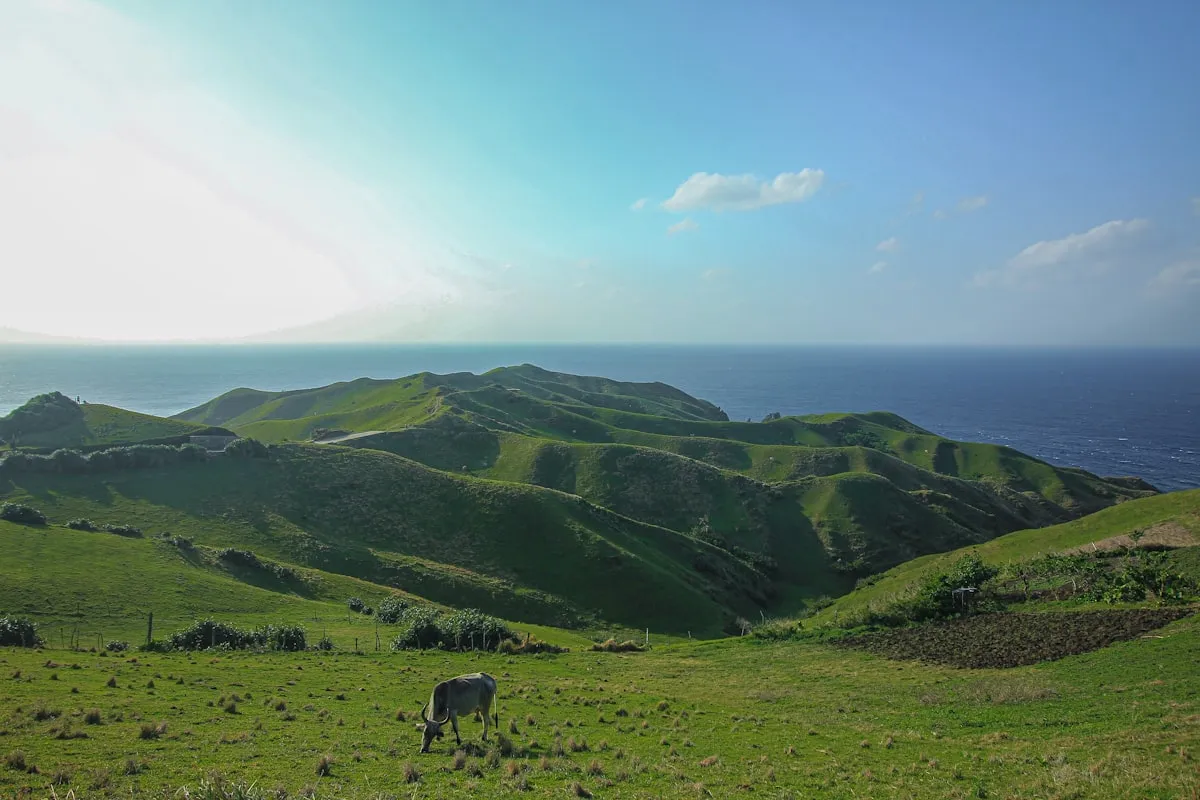
Seven volcanic cones crowd the island, making Camiguin's topography look like a crumpled piece of paper. The most significant is Mt. Hibok-Hibok, an active stratovolcano that last erupted in 1953, killing hundreds and leaving lava fields that are still visible today. At 1,552 metres, it dominates the island's skyline.
Hiking Hibok-Hibok is possible — it's a challenging 6–8 hour roundtrip through montane forest to a crater lake at the summit — but permits are required from the Philippine Institute of Volcanology and Seismology (PHIVOLCS) and from the local DENR office in Mambajao. Register early; the number of daily climbers is limited. A local guide is mandatory and can be arranged in Mambajao for around PHP 500–800. The view from the summit on a clear day — the Bohol Sea in every direction, Mindanao on the horizon, five other volcanic cones below you — is one of the great mountain views in the Philippines.
Lanzones Festival: The Best Reason to Visit in October
Lanzones (Lansium domesticum) is a small, sweet, translucent tropical fruit that Camiguin grows better than almost anywhere in the Philippines. The trees cover the island's hillsides, and in October, they fruit simultaneously — the whole island smells faintly of the fresh, grape-like scent of ripe lanzones.
The Lanzones Festival, held during the last week of October, is Camiguin's annual celebration of its most famous crop. Streets in Mambajao fill with parades, with participants in costumes made entirely of lanzones fruit. Cultural dances, live music, street food stalls, and — most importantly — free lanzones tastings everywhere you turn. Local families set out baskets of fruit outside their houses and wave passing strangers over to eat. It is the most generous, unpretentious festival in Mindanao. Accommodation in Mambajao books up fast in this week — reserve a month ahead at minimum.
Food: What to Eat on Camiguin
Camiguin's food culture is built around three things: the lanzones fruit (best eaten fresh, straight off the tree), pastel de Camiguin (a soft, sweet bun with a rich filling — the island's signature pasalubong and best bought from the original Lim's Bakery in Mambajao), and fresh seafood hauled daily from the Bohol Sea.
Mambajao's public market is the best place to eat cheaply — grilled fish (PHP 80–150), sinuglaw (grilled pork and raw fish kinilaw hybrid), and fresh lumpia all appear at breakfast and lunch. For sit-down meals, the guesthouses and small restaurants along the main road cook simple Filipino food at honest prices — expect to pay PHP 150–250 for a full meal with rice. Budget absolutely nothing for expensive dining; it doesn't exist here.
Where to Stay
Accommodation on Camiguin is concentrated in and around Mambajao town, the island's capital and transport hub. Options range from budget guesthouses (PHP 600–900/night for a fan room) to mid-range beachfront cottages (PHP 1,200–2,000/night with air-conditioning and sea views). There are no international hotel chains and no luxury resorts — the highest-end options are small boutique guesthouses with swimming pools that run PHP 2,500–3,500/night.
This is not a weakness; it's the point. Staying at a family-run guesthouse in Camiguin means the owner recommends the right fishing boat captain, the guesthouse cook makes you breakfast with lanzones from the garden, and someone's nephew is available with a scooter at 6am for the sunrise run to White Island. Book ahead during the Lanzones Festival week; outside that window, walk-in rooms are usually available.
Budget: What It Costs
Camiguin is among the most affordable island destinations in the Philippines. A realistic daily budget:
- Budget traveler (dorm/fan room, market food, scooter shared): PHP 1,200–1,800/day
- Mid-range (private aircon room, restaurant meals, own scooter): PHP 2,000–3,000/day
- Comfortable (best guesthouse, island boat trips, guide): PHP 3,500–5,000/day
At mid-range, a 4-day Camiguin trip — including the ferry from CDO, accommodation, all activities (hot springs, waterfalls, White Island, Sunken Cemetery, Mantigue Island), scooter rental, and food — should cost around PHP 10,000–13,000 total. For context, that's roughly what you'd pay for two nights at a mid-range Boracay hotel.
Why Camiguin Is Different
There is a specific quality that Camiguin has — and Boracay, Palawan, and Siargao have largely lost — which is the feeling that the place exists for the people who live there, not for you. The vendors at the market are not performing friendliness for tourist tips; they are just friendly. The tricycle driver who gives you his number isn't running a hustle; he's being helpful because that's how people are here. The family at the guesthouse feeds you extra rice without being asked.
Camiguin has not been optimized for tourism. The roads are not lined with dive shops and smoothie bars. There is no strip of overpriced beachfront restaurants. The hot springs at Ardent don't have a pool bar or a cocktail menu. What it has instead is an island that still belongs to its people — and visitors get to share it, briefly, on those terms. That is rarer than any volcano or waterfall.
Combine With: Cagayan de Oro White Water Rafting
If you're routing through CDO anyway (ferry connection), add a half-day of white water rafting on the Cagayan de Oro River. The river runs through a dramatic gorge with Grade 3–4 rapids — challenging enough to be a genuine adrenaline experience, manageable enough for first-timers with a guide. Most CDO rafting operators charge PHP 800–1,200 per person for the 2-hour run, including equipment, guide, and transfer. It pairs perfectly with a Camiguin trip: raft in the morning, catch the afternoon ferry to Benoni, arrive on the island by evening. Several CDO operators also offer overnight packages that combine the raft with a Camiguin extension — worth asking about.
Frequently Asked Questions
How do I get to Camiguin from Manila?
There's no direct Manila–Camiguin service. The most common route is Manila → Cebu (1.5 hours, frequent flights from PHP 1,500) → Camiguin (1 hour, limited flights, PHP 2,500–5,000). Alternatively: Manila → Cagayan de Oro (1.5 hours, from PHP 1,800) → Balingoan bus (2 hours) → ferry to Benoni (1 hour). The CDO route is cheaper and has more flight options; the ferry leg is scenic. Allow a full travel day from Manila either way.
Is Camiguin safe for solo travelers?
Yes — Camiguin is consistently cited as one of the safest destinations in the Philippines, including for solo female travelers. The island is small, the community is tight-knit, and there is effectively no organized tourist-targeting crime. Normal precautions apply (don't leave valuables on the beach, lock your scooter), but the vibe is genuinely relaxed and welcoming. The scooter circuit is ideal for solo exploration; you're never more than a few kilometres from a barangay with mobile signal and helpful locals.
Can I swim at the Sunken Cemetery?
Snorkeling over the Sunken Cemetery is generally permitted when sea conditions allow. The water is shallow (3–6 metres over the cemetery grounds) and visibility is often good. A glass-bottom boat is the easier option for non-swimmers or when chop makes snorkeling uncomfortable. There is no scuba diving specifically on the cemetery site — the main dive sites are off Mantigue Island and along the northern reef wall. Check with local dive operators in Mambajao for current conditions.
When is the Lanzones Festival?
The Lanzones Festival takes place during the fourth week of October each year, typically running Thursday through Sunday. The exact dates shift slightly year to year — check the Camiguin Tourism Office or the Camiguin provincial government's official social media pages for confirmed dates. The street parade is the centrepiece event, usually held on Saturday. Accommodation books up 3–4 weeks in advance during festival week; don't leave it to the last minute.
What is the best way to get around Camiguin?
Scooter rental is the definitive answer: PHP 400–500 per day, available from several rental shops in Mambajao. The 64km island circuit is manageable in a full day and gives you complete freedom to stop at waterfalls, hot springs, and viewpoints on your own schedule. Tricycles are available for hire if you prefer not to ride (negotiate per-trip or for a full-day tour, roughly PHP 1,500–2,000 for an all-day tricycle guide). Habal-habal (motorcycle taxis) are cheap for single-destination hops. There is no public bus service circling the island.
Is Camiguin worth visiting if I only have two days?
Absolutely — two days is actually the ideal length for a first visit. Day one: morning scooter circuit (Sunken Cemetery, Katibawasan Falls, Ardent Hot Springs), afternoon at White Island, night soak at the hot springs. Day two: Mantigue Island snorkeling in the morning, Tuasan Falls in the afternoon, pastel shopping and market lunch before the ferry back to Balingoan. Two days lets you hit every major sight without rushing, and leaves you wanting to come back for the volcano, the festival, and everything you didn't quite get to. Which is, in Camiguin's case, the entire point.
The Bottom Line
Camiguin is the Philippines as it used to be before it got famous. The volcanoes are real, the cemetery is actually underwater, the hot springs are genuinely volcanic, and the people will give you fruit from their garden if you stop and say hello. There are no beach clubs. There is no Instagrammable infinity pool. There is a 70-metre waterfall with no queue, a sandbar you can have to yourself at sunrise, and an entire island that hasn't yet learned to be jaded by visitors.
Go. Soon. Before the word gets out.

PANA.PH Editorial Team
Philippines travel desk
The PANA.PH travel desk researches, books and re-checks Philippines travel logistics — fares, ferry schedules, government fees and permit rules — and publishes what it can verify.
🏡 Real local stays (book direct)
Hand-picked homestays and guesthouses — book direct, no markup.
Browse all local stays →
🌊 Popular activities (book instantly)
Island hopping, canyoneering, whale sharks — real Klook/GetYourGuide options.
View all activities →