Short answer: Come between November and April. The amihan wind blows from the northeast then, which leaves White Beach on the west side calm and swimmable - and turns Bulabog on the east into one of Asia's better kitesurfing venues. From June to October the habagat reverses it: White Beach gets the weather and boats often shift from Cagban to Tambisaan port.
Trip.comHotels in Boracay
Compare live prices via Travelpayouts — targeted for this guide.
Search on Trip.comA seasonality guide for Boracay: which months, which side of the island, and what it costs. Prices from our own inventory of 49 bookable trips. Last checked 9 August 2026.
| Period | Conditions | Best for | Checked |
|---|
| December - February | Cool dry, amihan, peak season | Everything; busiest and dearest | 2026-08-09 |
| March - May | Hot dry, amihan easing | Calmest water, hottest days | 2026-08-09 |
| June - October | Habagat, wet season | Lowest prices, weather risk | 2026-08-09 |
| November | Transition to amihan | Good value shoulder | 2026-08-09 |
How this guide was built
Seasons here follow PAGASA's official definition rather than a marketing calendar: the wet season runs June to November and the dry season December to May, with the dry half splitting into a cool-dry period from December to February and a hot-dry one from March to May.
Boracay sits in the western Visayas, where the two monsoons matter more than the rain totals. Our inventory shows what that means commercially: the kiteboarding lesson at PHP 2,500 exists because of a wind that only blows half the year, while the island-hopping boats at PHP 1,500-1,850 run year-round but relocate when the sea state changes.
What PAGASA also makes explicit is that typhoons generally track north-westward from the Pacific, which spares Mindanao from most direct hits - the single most useful fact for anyone choosing between a northern and a southern destination in the second half of the year.
Amihan: November to April, and why it is the answer
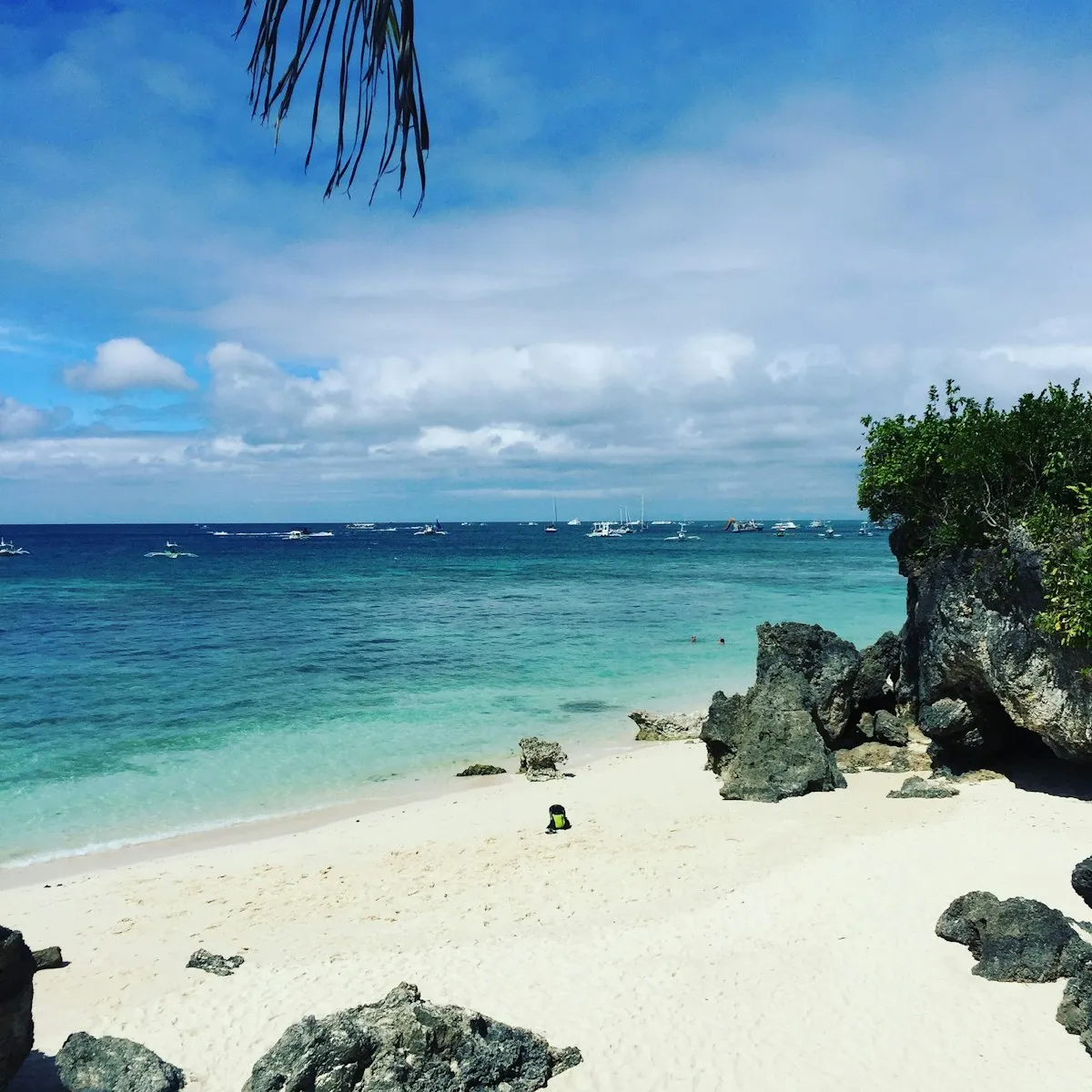
The amihan is the northeast monsoon - cooler, drier air pushing down from the northeast. Because White Beach faces west, the island's main strip sits in the lee of it: calm, flat water and reliable sun.
This is why almost every "best time" answer for Boracay is these months. It is also why they are the most expensive: December to February is peak season and accommodation prices reflect it.
Habagat: June to October, and what actually changes
The habagat is the southwest monsoon, and it puts the weather onto White Beach directly. Days are not uniformly wet - the pattern is usually bright mornings and heavy afternoon downpours rather than constant rain - but the sea on the west side gets choppy and seaweed washes in.
The practical consequence people are not told: boats from Caticlan often shift from Cagban port to Tambisaan on the east side, which changes your arrival transfer. Nobody mentions this at booking, and it is worth asking.
Bulabog is the other island
Bulabog beach, on the east side, is the mirror image. When White Beach is calm under the amihan, Bulabog has the wind - which is exactly what kitesurfers and windsurfers want, and why the season there runs roughly November to April.
If you are coming to kite, you want the months everyone else comes for the calm water, and you will be on the opposite shore from them. If you are coming to swim, avoid Bulabog in those months entirely.
Storms, and the boat that strands you
Boracay sits in the typhoon belt and the risk concentrates in the wet season, peaking roughly July to October. Direct hits are not annual, but a system passing anywhere nearby suspends boats - and since the island is reached only by boat, a suspension strands you either on the mainland or on the island.
Check PAGASA bulletins before travelling in the second half of the year, and build a spare day around the crossing if your flight home is tight.
What the seasons do to prices
Activity prices in our inventory are broadly stable across the year - 16 of 49 Boracay products sit at PHP 1,850 regardless of month, and the floor stays at PHP 185 for the fire dancing show and PHP 400 for a budget beach day.
What moves is accommodation, and it moves sharply. The December-to-February peak is the expensive window; June to October is where the real savings are, if you accept the weather risk.
Holy Week and the Christmas peak
Two dates fill the island beyond ordinary peak season. Holy Week - moveable, usually late March or April - is when the Philippines travels domestically, and Boracay is a primary destination. Christmas and New Year are the other.
Both mean full flights, full resorts and higher prices. If your dates are flexible and you want the amihan without the crowds, aim for late January, early February or the second half of November.
Reading the calendar by wind direction
December-February: the classic window. Cool by Philippine standards, dry, calm on White Beach. Busiest and dearest.
March-May: still dry, increasingly hot - the hot-dry season in PAGASA's terms. Water at its calmest; April brings Holy Week crowds.
June-August: habagat arrives. Cheaper, greener, wetter, with afternoon storms and choppier west-side sea.
September-October: wettest and the heart of typhoon risk. Lowest prices of the year for a reason.
November: the transition. Often the best value of all - the wind is turning, prices have not caught up.
The one-beach myth behind every "best time" answer
The commonest error is describing the wet season as washed out. The habagat pattern is typically bright mornings and heavy afternoon rain, not all-day drizzle, and plenty of boat days still run.
The second is treating the island as having one beach. White Beach and Bulabog have opposite conditions in the same week, and a guide that names a single "best time" without saying which shore is answering half the question.
The third is omitting the port switch. Arriving under habagat and finding your boat goes to Tambisaan rather than Cagban changes your transfer, and it surprises people every year.
What the seaweed season actually looks like
During the habagat months, seaweed washes onto stretches of White Beach and is cleared each morning by resort and municipal crews. Photographs of a weed-strewn shore usually show it before that clearance rather than a permanent state.
It is a real inconvenience rather than a ruined holiday, and it is concentrated on the west-facing sand. If the pristine-beach photograph is the point of the trip, that is another argument for the amihan months.
Frequently asked questions
What is the best month to visit Boracay?
Late January or February - amihan conditions with calm water on White Beach, just past the Christmas peak.
Is Boracay worth visiting in the rainy season?
Yes if you accept the risk. Mornings are often clear, prices are the lowest of the year, and activity prices barely move - the PHP 1,850 median holds year-round.
What is amihan and habagat?
Amihan is the northeast monsoon, roughly November to April, which calms White Beach. Habagat is the southwest monsoon, roughly June to October, which reverses it.
When is kitesurfing season in Boracay?
Roughly November to April at Bulabog beach on the east side - the same months that make White Beach calm.
When are typhoons most likely?
Peak risk is roughly July to October. Check PAGASA before travelling and keep a spare day around the boat crossing.
Which months are cheapest?
June to October for accommodation. Tour prices hold steady all year.
Book tours, hotels & stays in Boracay
Top tours
Top hotels
Top stays