Bohol Chocolate Hills and Countryside Tour - Guide
PH
PANA.PH · Philippines travel teamPublished June 30, 2026 · 11 min read
Overview
Bohol is one of the few places in the Philippines where a single road trip can take you from an open-air salt farm to a geological wonder that looks like it was drawn by a child, then into a forest where the world's smallest primate watches you with dinner-plate eyes, and finally onto a river broad enough to drift down on a bamboo raft. The Bohol Chocolate Hills and Countryside Tour strings these moments together in a logical loop that starts and ends in Carmen or the Abraham Bohol area, covering the island's Central and Lower Bohol landscapes in roughly eight to nine hours. It is not a beach day - it is a land tour, and it rewards travelers who want to understand the island rather than simply sit beside it.
The Chocolate Hills - Geology and Scale
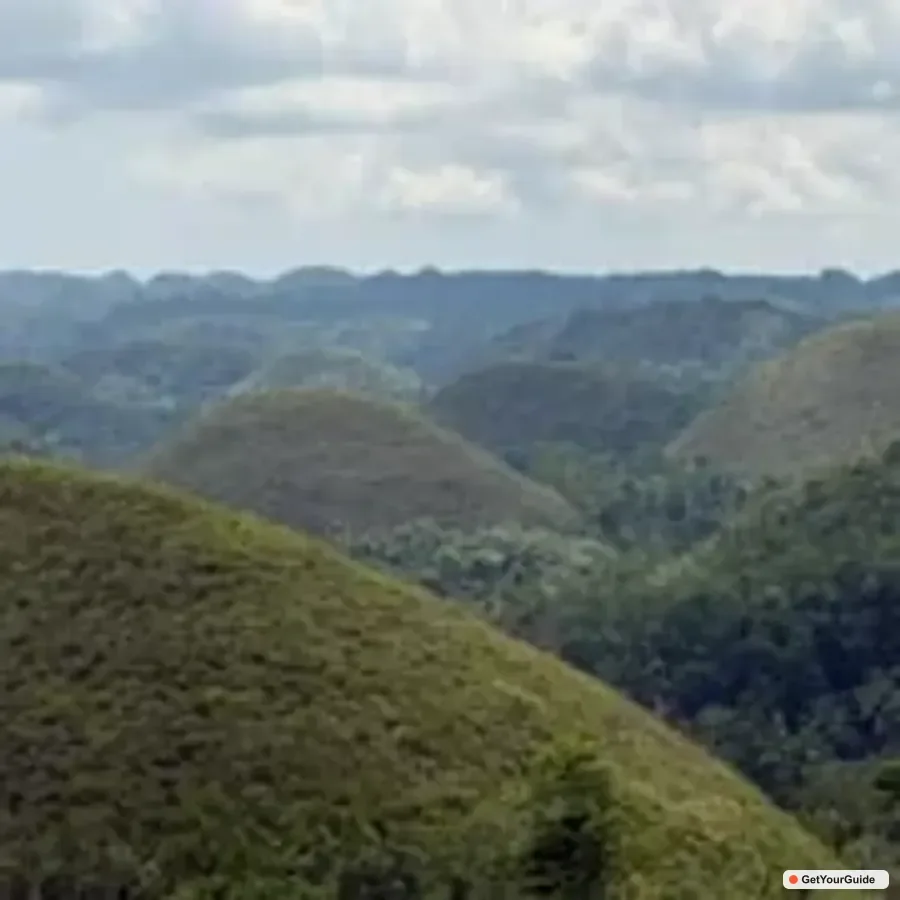
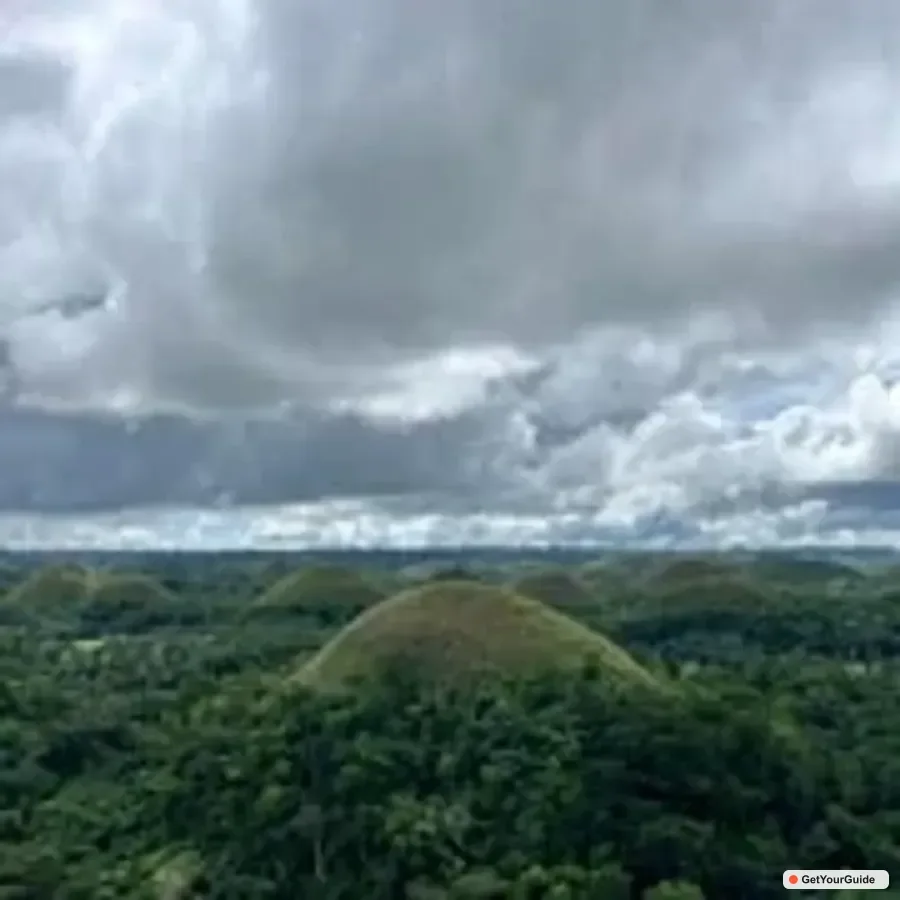
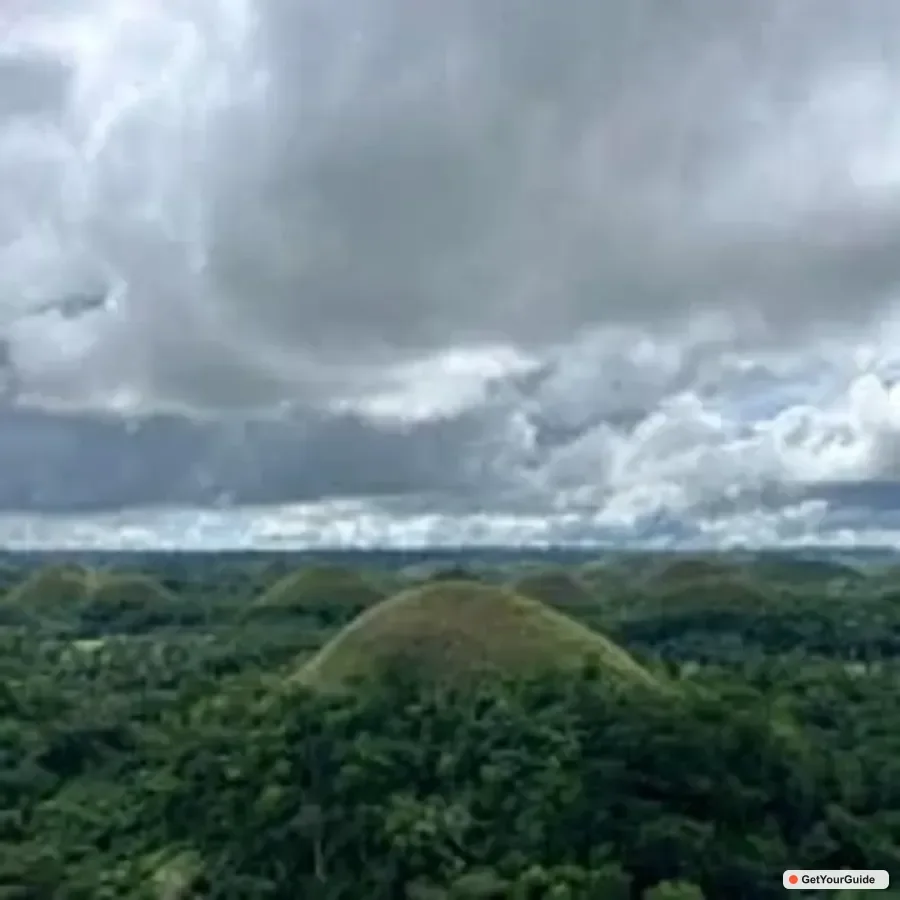
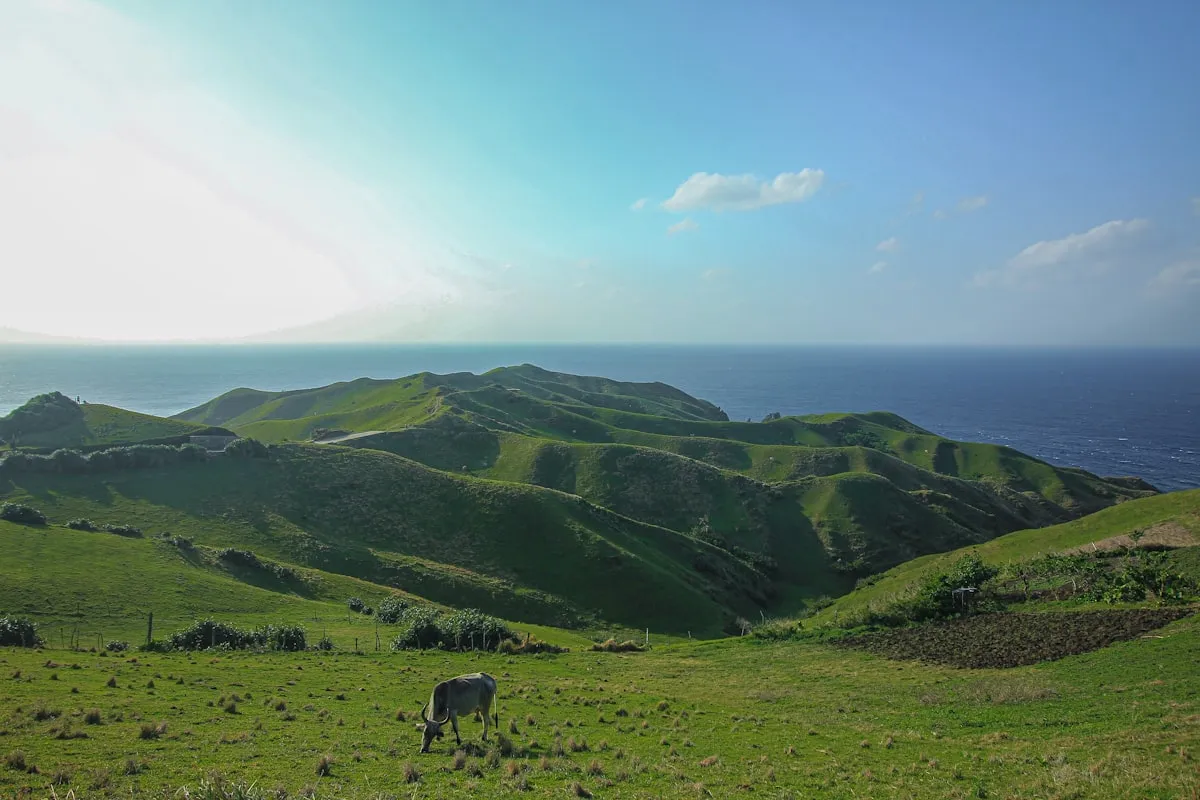
The official Chocolate Hills Complex sits in the municipality of Carmen, roughly 55 kilometers inland from Tagbilaran City. Here, 1,268 near-symmetrical cone-shaped mounds rise from the flat valley floor, the tallest reaching around 120 meters. Their origin remains a genuine point of scientific discussion - the leading hypothesis is that they are the eroded remnants of marine limestone karst formations, uplifted over millions of years as the Philippine tectonic plate shifted northward. Rain and chemical weathering dissolved the softer rock and left the harder limestone peaks behind, each capped with grass rather than trees because the thin, dry soil cannot support forest. During the dry season, from November through May, that grass turns chocolate brown, giving the hills their name. In the wet season they are vivid green, which is arguably more dramatic but less iconic.
The main viewpoint at the Carmen Chocolate Hills Complex requires a climb of roughly 214 steps to a terrace that puts you level with the upper third of the surrounding cones. From there the hills roll toward the horizon in every direction - the effect is disorienting in the best way, because the human eye expects hills to vary in size and shape, and these emphatically do not. A two-hour window at this stop gives you time to walk the terrace, take photographs in different light, and browse the small stalls selling local peanut brittle and dried mangoes at the base.
Connecting several stops on the countryside loop is a two-kilometer stretch of highway between Bilar and Loboc that passes through a dense plantation of Philippine mahogany (Swietenia macrophylla), planted as a reforestation project decades ago. The canopy meets overhead and blocks the sun completely, turning the road into a green tunnel even at midday. The standard photo stop here lasts about ten minutes, but the forest is worth a slower walk if time permits - the air temperature drops noticeably under the canopy, and the silence is striking after the noise of the main highway.
Tarsiers - Encounter on Their Terms
The Philippine tarsier (Carlito syrichta) is endemic to the southern Philippines and is among the smallest primates on Earth, with a head-body length of around 10 to 15 centimeters. Its eyes are fixed - it cannot rotate them - so it rotates its entire head, owl-like, to track movement. Bohol's most responsible tarsier viewing happens at the Philippine Tarsier Sanctuary in Corella, run by the Philippine Tarsier Foundation, where animals live in a semi-wild forested enclosure and guides keep visitor numbers low. The Chocolate Hills countryside loop typically includes a 30-minute stop here.
The tarsiers are genuinely wild animals resting in their preferred vegetation rather than caged exhibits. They are nocturnal, so daytime visits find them sleeping with eyes half-closed on thin branches. The sanctuary rules exist for good reason: tarsiers are acutely stress-sensitive, and captivity or loud environments can cause them to self-harm. Do not use flash photography, do not make sudden movements, and follow the guide's instructions on minimum approach distance. A quiet, patient visitor will almost always find two or three individuals within two meters of the marked paths.
Loboc River - Three Hours on the Water
The Loboc River flows westward across the central lowlands of Bohol before emptying into Panguil Bay near the town of Loay. It is wide, slow-moving, and shaded by dense riparian vegetation - bamboo, banana, and broad-leafed trees that arch over the banks. The countryside tour includes stand-up paddleboarding and kayaking on the river, with three hours allocated for water activities. The paddleboarding is flat-water and manageable for first-timers, though the current picks up slightly toward the midpoint of the tour route. Kayaks are available for those who prefer a seated option.
The river's banks are lined with traditional fishing communities, and it is common to see bancas (outrigger fishing boats) moving between villages. The water itself is generally clear in the upper sections near Loboc town - the old Loboc Church, a 17th-century Spanish colonial structure that survived the 2013 Bohol earthquake with partial damage, is visible from the riverbank at the put-in point and is worth a brief look before you launch.
Baclayon Church - History in Coral Stone
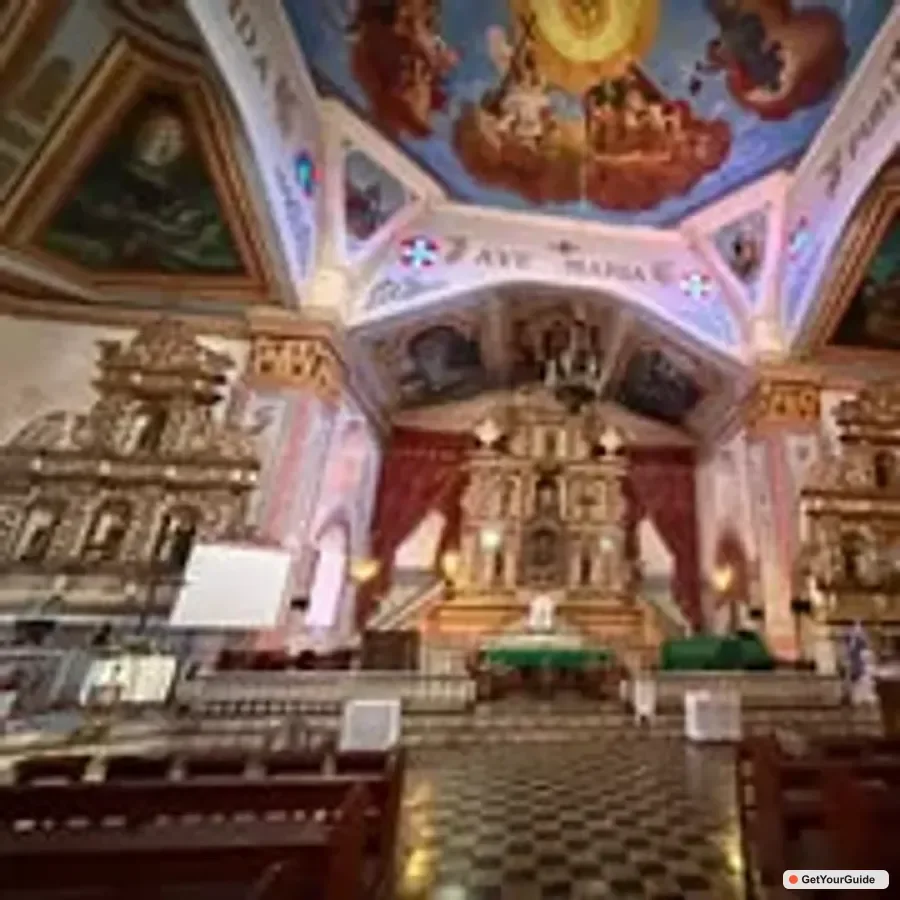
The tour closes with a stop at the Parish of the Immaculate Conception in Baclayon, one of the oldest stone churches in the Philippines. Construction began in 1596 using coral stones quarried from the nearby coastline and bound with a mortar reportedly mixed with egg whites - a common technique in Spanish colonial architecture across the archipelago. The church was severely damaged by the 7.2-magnitude earthquake that struck Bohol in October 2013, collapsing the bell tower and cracking the main facade, but reconstruction has been ongoing and the structure remains an active parish. The adjacent museum holds a small collection of religious artifacts, old vestments, and historical documents relevant to the Augustinian mission in the Visayas.
Best Time to Go
The Bohol countryside tour runs year-round, but the experience varies meaningfully by season. The dry season, from November to May, delivers the famous brown Chocolate Hills and the most reliable weather for river activities. March and April offer the driest, clearest days but also the highest tourist volumes at Carmen. The wet season, from June to October, brings greener hills and emptier roads, though heavy rainfall can make the Loboc River turbid and the Carmen steps slippery. The salt farm stop, included as a hidden gem component of this tour, is most active in the summer months when evaporation rates are highest and salt workers are harvesting.
Practical Tips
What to Bring
Quick-dry clothes and a change of shirt for the river section - you will get wet paddleboarding
Reef-safe or biodegradable sunscreen; the Loboc River feeds a marine-protected coastline
Water shoes or sandals with a heel strap for the river and the Carmen steps
Cash in Philippine pesos for the small vendors at Carmen and the Baclayon museum entrance fee
Conditions and Pacing
The Carmen viewpoint stairs are steep and unshaded - they take roughly five to eight minutes to climb at a steady pace. Visitors with knee problems or limited mobility may find the descent harder than the ascent; there are rest platforms at intervals. The tour pacing is generally comfortable, with natural breaks built in at each stop, but the combination of outdoor heat, physical activity on the river, and a full day of transit adds up. Eating a proper breakfast before departure and staying hydrated throughout matters more than most visitors expect.
Etiquette and Sustainability
At the tarsier sanctuary, silence and slow movements are not optional courtesies - they are the difference between a healthy animal and a distressed one. At Baclayon Church, the site is still an active place of worship, so modest dress (covered shoulders and knees) is appropriate. On the Loboc River, avoid disturbing the riverside vegetation and do not leave waste on the water or the banks. The river communities depend on clean water for fishing and daily use.
Who This Tour Suits
The Bohol Chocolate Hills and Countryside Tour is well-suited to first-time visitors to the island who want geographic and cultural depth in a single day. It works for families with children old enough to manage the Carmen stairs and basic paddleboarding, for couples looking to combine outdoor activity with heritage sites, and for independent travelers who want a structured frame for their first Bohol experience before going off on their own. It is not the right choice for anyone whose priority is beaches - that is a separate trip to Panglao Island. But for anyone willing to spend a day looking at Bohol from the inside out, this route covers the island's most distinctive and irreplaceable ground.
Good to know before you book
Duration: typically a full day (around 8 to 10 hours including transfers), though half-day and multi-day options exist - check the listing.
Best for: couples, families and first-time visitors.
What is included: transport, a guide and the main stops; entrance fees and lunch are sometimes extra.
Pickup: most tours offer hotel or central pickup; confirm your point and time when booking.
Book through: the GetYourGuide button on this page, which shows live availability and pricing.
Frequently asked questions
How long does the Bohol Chocolate Hills and Countryside Tour take?
Most departures run as a full day - roughly 8 to 10 hours including pickup, travel and the activities themselves - so plan to set aside the whole day. Some operators offer shorter or private versions; the exact timing for your date is shown when you book through the GetYourGuide button on this page.
What is included in the Bohol Chocolate Hills and Countryside Tour?
Typically the price covers transport, a guide and the main stops; entrance fees and lunch are sometimes extra. Inclusions vary by operator, so always read the specific listing - it spells out exactly what is provided and what you pay for separately, such as entrance or environmental fees.
What should I bring?
Pack comfortable shoes, sunscreen, a hat, water and small cash for entrance fees and souvenirs. It is also worth carrying some cash for local fees, drinks and tips, plus any personal medication, since card facilities can be limited outside the cities.
Is the Bohol Chocolate Hills and Countryside Tour suitable for beginners or families?
It is gentle and family-friendly, suitable for all ages with only light walking involved - a comfortable way to see the highlights. If you have specific concerns about age, fitness or swimming ability, message the operator before booking - they can advise on the best option for your group.
When is the best time to do this tour?
The best conditions are usually the dry season from December to May, when the Chocolate Hills turn their famous brown. That said, the Philippines is a year-round destination, and many of these experiences run in any season - just expect the occasional shower and check the forecast for the day.
How do I get to Bohol?
To reach Bohol, fly into Bohol-Panglao International Airport, or take the fast ferry from Cebu (about 2 hours). Many tours include transfers from nearby towns or hotels, so confirm your pickup arrangement when you book so the day runs smoothly from the start.
Do I need to book the Bohol Chocolate Hills and Countryside Tour in advance?
Yes - booking ahead is strongly recommended, especially in the dry-season peak and on weekends, when popular tours and the best operators sell out. Reserving online also locks in your spot and lets you compare timings and inclusions easily.
How much does the Bohol Chocolate Hills and Countryside Tour cost?
Prices vary with the season, group size and exactly what is included, so we do not list a fixed figure here. Tap the GetYourGuide button on this page to see the current, accurate price and availability for your chosen date.
Can I do the Bohol Chocolate Hills and Countryside Tour as a private or customised tour?
Many operators offer a private version of this experience for couples, families or small groups who want a flexible pace and a guide to themselves, and some can tailor the route or add stops. If a private or custom option matters to you, check the listing or message the operator before booking, as availability and prices differ from the standard shared tour.
Ready to explore Bohol?
From planning to the moment you arrive, the Bohol Chocolate Hills and Countryside Tour is one of the most rewarding ways to experience this corner of the Philippines - and booking it is simple. Use the GetYourGuide button on this page to check live availability, compare timings and secure your spot, then turn up and let the local guides handle the rest while you focus on the views, the water and the memories.