Bohol is the kind of island that rewards you for slowing down. While the rest of the Visayas chases beaches, this teardrop-shaped province in the Central Philippines hides a stranger, older landscape inland: a sea of grassy domes that turn cocoa-brown in the dry season, jungle rivers fringed with nipa palm, and the wide-eyed gaze of one of the smallest primates on Earth. Spread the experience across two days and you get the best of both worlds, a countryside loop through Bohol's geological oddities one day, and a boat slipping out to coral reefs and white sandbars the next. This is the rhythm a proper Best of Bohol adventure is built around.
Best of Bohol 2-Day Countryside & Island Adventure - Guide
Trip.com
Search on Trip.comHotels in Philippines
Compare live prices via Travelpayouts — targeted for this guide.
Your gateway is usually Tagbilaran City on Bohol's southwest coast, or the gleaming Panglao airport just across the bridge. From there the interior opens up fast. Within an hour of leaving the coast you are climbing into the limestone heart of the island, and the landscape starts doing things you will not see anywhere else in the country.
Day One: The Countryside Loop
The Chocolate Hills, and how they really formed
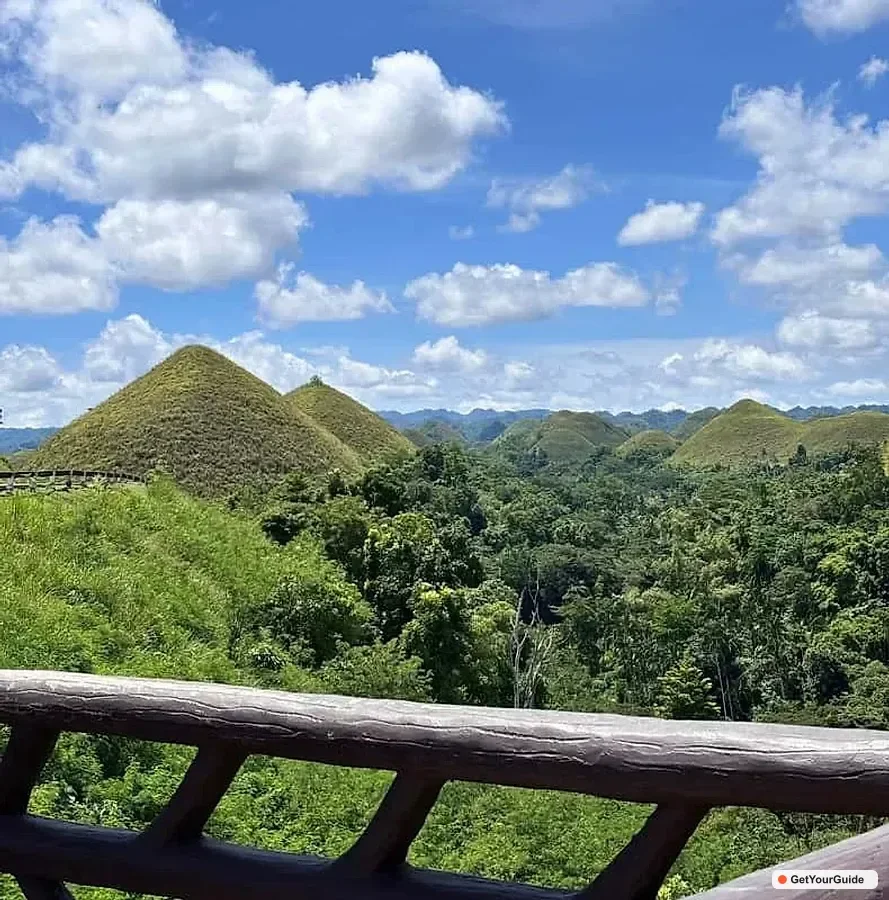
The Chocolate Hills are Bohol's signature, and standing at the Carmen viewing deck you understand the hype. More than a thousand near-symmetrical mounds roll out to the horizon, each one a rounded haycock of grass-covered limestone. In the wet months they are green; come the dry season the grass browns and they look, genuinely, like a field of chocolate drops, which is where the name comes from.
The geology is the interesting part. These are not volcanic. They are weathered marine limestone, ancient coral and shell that was laid down underwater, uplifted by tectonic movement, then sculpted over a very long time by rainwater. Rain is mildly acidic and slowly dissolves limestone along its cracks and joints. Over millennia that dissolution carved out the valleys between the hills and left the more resistant cores standing as cones. Geologists call this kind of terrain karst, and the Chocolate Hills are one of the most striking examples of conical karst on the planet. There are well over a thousand of them, often quoted in the region of 1,200 to 1,700, scattered across the central towns of Carmen, Batuan, and Sagbayan. Filipino folklore tells it differently, with stories of feuding giants hurling stones or a heartbroken giant weeping, and locals will happily share both versions.
Trip.com
See all tours in Philippines on Trip.comTours & activities in Philippines
Hand-picked experiences in Philippines — book on Trip.com with instant confirmation.
The Philippine tarsier
A short drive away you meet the island's most famous resident. The Philippine tarsier is a tiny nocturnal primate, small enough to sit in your palm, with enormous fixed eyes, each one larger than its brain, and a long tail it uses for balance. Those eyes cannot rotate in their sockets, so the tarsier swivels its head almost all the way around to track prey, which is entirely insects and small creatures it hunts at night. It is an ancient lineage, a living link to primates from tens of millions of years ago.
Choose where you see it carefully. The reputable place is the sanctuary run as a genuine conservation effort, where the animals live in a protected forest patch and you walk quiet trails to spot them resting on branches. Tarsiers are extremely sensitive to stress, noise, and being handled, and have been known to harm themselves in captivity, so do not pick the roadside cages that let you hold them for a photo. Keep your voice down, do not use flash, and let the guides position you.
The Loboc River and the man-made forest
Lunch is often a floating restaurant on the Loboc River, a calm emerald waterway that winds through jungle and limestone. A bamboo-and-pontoon boat carries you upstream past riverside villages while you eat a buffet of grilled fish, lechon, rice, and fruit, sometimes with local musicians or a children's choir performing along the banks. It is touristy, yes, but the river itself is lovely and the slow drift through that green corridor is a real pause in the day.
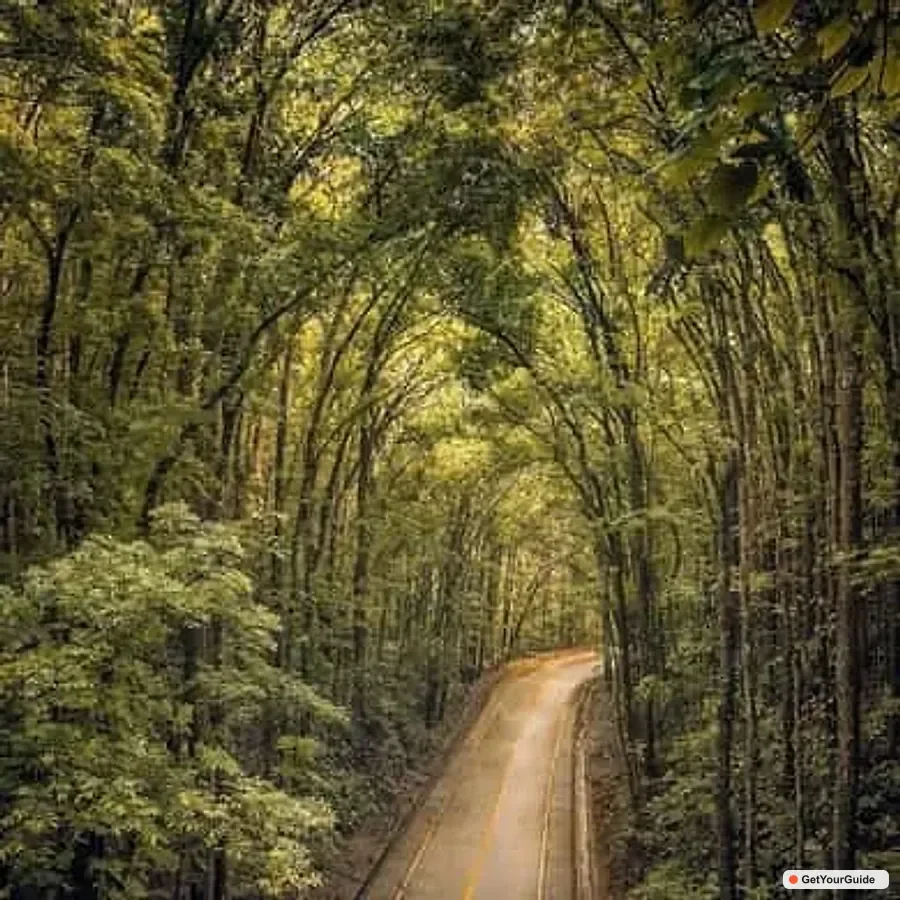
On the road between attractions you pass the Bilar man-made forest, a dense, cathedral-like stretch of mahogany trees planted decades ago in a reforestation drive. The canopy closes overhead and the temperature drops noticeably as you drive through. Other countryside stops often folded into the loop include the Baclayon Church area, one of the oldest stone churches in the country, the Blood Compact monument marking the 1565 friendship pact between the Spanish and a local datu, and the Tarsier Butterfly garden or a python sanctuary depending on the operator.

Day Two: Island Hopping off Panglao
The second day trades the interior for the sea. Most island-hopping trips launch early, often before sunrise, from Alona Beach on Panglao Island, because the marine life and the light are both best in the morning.
Dolphins, reefs, and a sandbar
- Dolphin watching in the channel near Pamilacan Island, where pods of spinner and bottlenose dolphins are commonly seen riding the bow wave at dawn. Sightings are wild and never guaranteed, but the odds in the early hours are good.
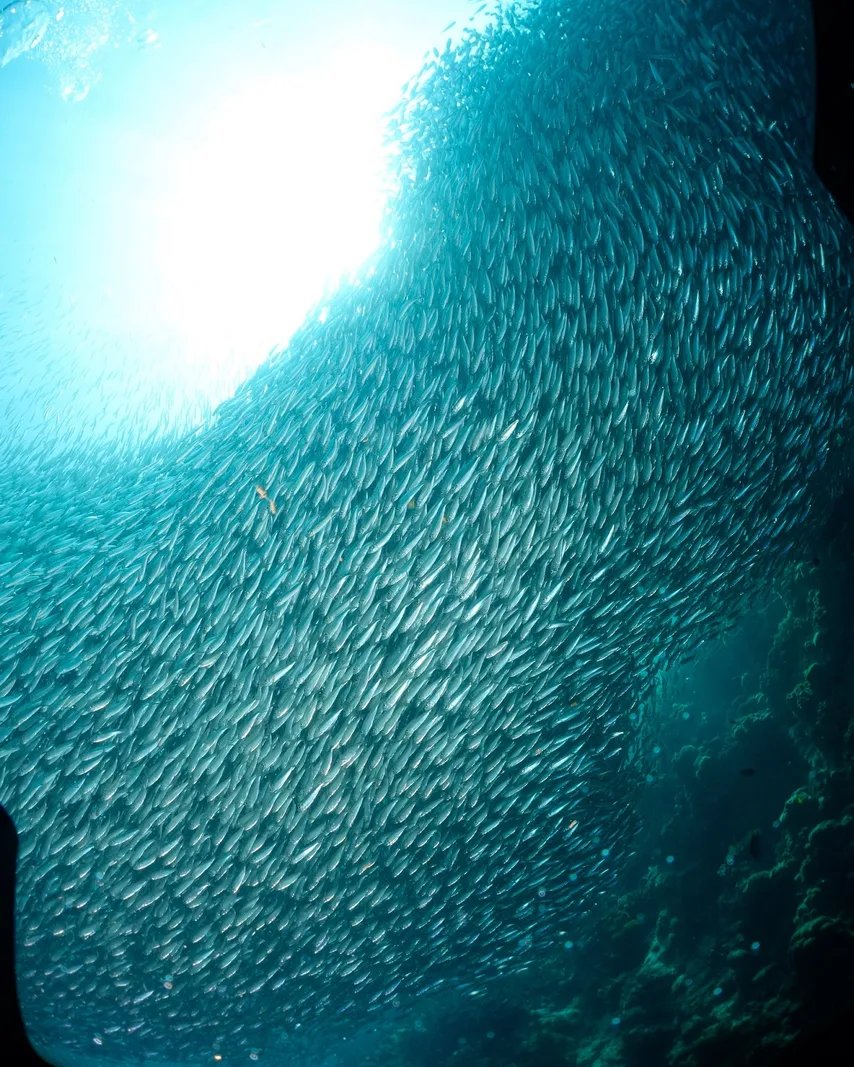
- Snorkeling at Balicasag Island, ringed by a protected marine sanctuary with a genuine coral wall that drops away into deep blue. You drift over schools of jacks, sea turtles grazing on the reef, and clouds of reef fish. Because it is a sanctuary, boats and snorkelers are managed and you usually transfer to a small paddle boat for the swim.
- Virgin Island, a long white sandbar that appears and disappears with the tide, fringed by shallow turquoise water and small stalls selling sea urchin and fresh shellfish.
Balicasag's reef sits on the edge of the Bohol Sea, part of the Coral Triangle, the most biodiverse marine region on Earth, which is why the turtle and fish life here is so reliably good.
A word on Oslob, and ethics
You will see whale-shark tours advertised everywhere, and it is worth being clear: the famous whale-shark swimming is in Oslob, which is on Cebu island, not Bohol, and reaching it means a long detour. More importantly, many marine biologists criticize the Oslob operation because the sharks are hand-fed to keep them in the bay for tourists, which alters their natural migration and feeding behavior and risks boat-strike injuries. It is a genuine conservation debate. If you want to see big marine life responsibly, the wild dolphin watching off Pamilacan and the protected reef at Balicasag are the kinder choices, and they belong to Bohol's own waters.
Practical Tips
- Best time to go: The dry season, roughly December to May, gives calmer seas for island hopping and the classic brown Chocolate Hills, with March to May the brownest. The green hills of the wet season are beautiful too, but afternoon downpours and rougher water can disrupt boat days.
- Time of day: Start the island day at dawn for dolphins, clear water, and to beat the heat. Tackle the countryside loop in the morning as well, since the Chocolate Hills deck gets hot and hazy by midday.
- What to bring: Reef-safe sunscreen, a hat, water, and quick-dry clothes for the boat day. For the countryside, comfortable shoes and modest cover for the old churches. Bring small peso cash for entrance fees, the sandbar stalls, and tips.
- How strenuous: Mostly easy. The countryside is a vehicle tour with short walks and a few staircases at the viewing deck. Island hopping involves getting in and out of boats and some open-water snorkeling, so basic swimming comfort and a life vest help.
- Typically included: Air-conditioned transport and a driver-guide for the countryside, the Loboc lunch cruise, the island-hopping boat with snorkel gear, and marine sanctuary or environmental fees, though exactly what is bundled varies by operator, so confirm before booking.
- Responsible travel: Choose the conservation-focused tarsier sanctuary, never hold the animals, do not touch coral or stand on the reef, and skip the fed-shark detour.
Why Two Days Is the Sweet Spot
Bohol packs an unusual amount of variety into a small island, and a single day forces you to choose between its two best selves. Two days lets the land and the sea breathe. You spend one day among hills that were once a seabed and a primate older than almost any other, and the next drifting over living coral as turtles glide beneath you. Few places in the Philippines stitch geology, wildlife, history, and reef into one easy loop quite like this, and by the time the boat turns back toward Panglao on that second afternoon, salt-tired and sun-warmed, you understand why people come back to Bohol again and again.
Good to know before you book
- Duration: typically a full day (around 8 to 10 hours including transfers), though half-day and multi-day options exist - check the listing.
- Best for: couples, families and first-time visitors.
- What is included: transport, a guide and the main stops; entrance fees and lunch are sometimes extra.
- Pickup: most tours offer hotel or central pickup; confirm your point and time when booking.
- Book through: the GetYourGuide button on this page, which shows live availability and pricing.
Frequently asked questions
How long does the Best of Bohol 2-Day Countryside & Island Adventure take?
Most departures run as a full day - roughly 8 to 10 hours including pickup, travel and the activities themselves - so plan to set aside the whole day. Some operators offer shorter or private versions; the exact timing for your date is shown when you book through the GetYourGuide button on this page.
What is included in the Best of Bohol 2-Day Countryside & Island Adventure?
Typically the price covers transport, a guide and the main stops; entrance fees and lunch are sometimes extra. Inclusions vary by operator, so always read the specific listing - it spells out exactly what is provided and what you pay for separately, such as entrance or environmental fees.
What should I bring?
Pack comfortable shoes, sunscreen, a hat, water and small cash for entrance fees and souvenirs. It is also worth carrying some cash for local fees, drinks and tips, plus any personal medication, since card facilities can be limited outside the cities.
Is the Best of Bohol 2-Day Countryside & Island Adventure suitable for beginners or families?
It is gentle and family-friendly, suitable for all ages with only light walking involved - a comfortable way to see the highlights. If you have specific concerns about age, fitness or swimming ability, message the operator before booking - they can advise on the best option for your group.
When is the best time to do this tour?
The best conditions are usually the dry season from December to May, when the Chocolate Hills turn their famous brown. That said, the Philippines is a year-round destination, and many of these experiences run in any season - just expect the occasional shower and check the forecast for the day.
How do I get to Bohol?
To reach Bohol, fly into Bohol-Panglao International Airport, or take the fast ferry from Cebu (about 2 hours). Many tours include transfers from nearby towns or hotels, so confirm your pickup arrangement when you book so the day runs smoothly from the start.
Do I need to book the Best of Bohol 2-Day Countryside & Island Adventure in advance?
Yes - booking ahead is strongly recommended, especially in the dry-season peak and on weekends, when popular tours and the best operators sell out. Reserving online also locks in your spot and lets you compare timings and inclusions easily.
How much does the Best of Bohol 2-Day Countryside & Island Adventure cost?
Prices vary with the season, group size and exactly what is included, so we do not list a fixed figure here. Tap the GetYourGuide button on this page to see the current, accurate price and availability for your chosen date.
Can I do the Best of Bohol 2-Day Countryside & Island Adventure as a private or customised tour?
Many operators offer a private version of this experience for couples, families or small groups who want a flexible pace and a guide to themselves, and some can tailor the route or add stops. If a private or custom option matters to you, check the listing or message the operator before booking, as availability and prices differ from the standard shared tour.
Ready to explore Bohol?
From planning to the moment you arrive, the Best of Bohol 2-Day Countryside & Island Adventure is one of the most rewarding ways to experience this corner of the Philippines - and booking it is simple. Use the GetYourGuide button on this page to check live availability, compare timings and secure your spot, then turn up and let the local guides handle the rest while you focus on the views, the water and the memories.

PANA.PH Editorial Team
Philippines travel desk
The PANA.PH travel desk researches, books and re-checks Philippines travel logistics — fares, ferry schedules, government fees and permit rules — and publishes what it can verify.
🏡 Real local stays (book direct)
Hand-picked homestays and guesthouses — book direct, no markup.
Browse all local stays →

🌊 Popular activities (book instantly)
Island hopping, canyoneering, whale sharks — real Klook/GetYourGuide options.
View all activities →