Short answer: January is Baguio's coldest month, with minima around 15 degrees Celsius and recorded lows near 10. Panagbenga 2026 runs five weeks from 1 February to 8 March, with the Grand Streetdance Parade on 28 February and the Grand Floral Float Parade on 1 March. Those two days draw well over 140,000 spectators into the city.
Trip.comHotels in Philippines
Compare live prices via Travelpayouts — targeted for this guide.
Search on Trip.comFor travellers timing a Baguio trip around temperature, rain or the festival calendar, and for anyone deciding whether to deliberately avoid the crowds. Festival dates and climate pattern last checked 30 July 2026; check PAGASA normals for the underlying 30-year averages rather than a single year's readings.
| Period | Conditions | Crowd driver | Verdict |
|---|
| January | Coldest of the year, minima around 15C | New Year tail, then quiet | Best for the cold, worst for warmth |
| 1 Feb - 8 Mar | Cool and dry | Panagbenga, five weeks | Go for the festival or avoid entirely |
| 28 Feb - 1 Mar | Cool and dry | Grand parades, 140,000+ spectators | Peak congestion, book far ahead |
| Mid-March to April | Warm and dry by Baguio standards | Summer capital season, Holy Week | Busiest non-festival period |
| May | Warming, rain building | End of school holidays | Reasonable compromise |
| June to September | Wettest stretch, fog common | Low season | Cheapest, greenest, least reliable |
| October to December | Cooling, drying out | Christmas build-up in December | Best all-round window |
Baguio by month: temperature, rain and crowd load
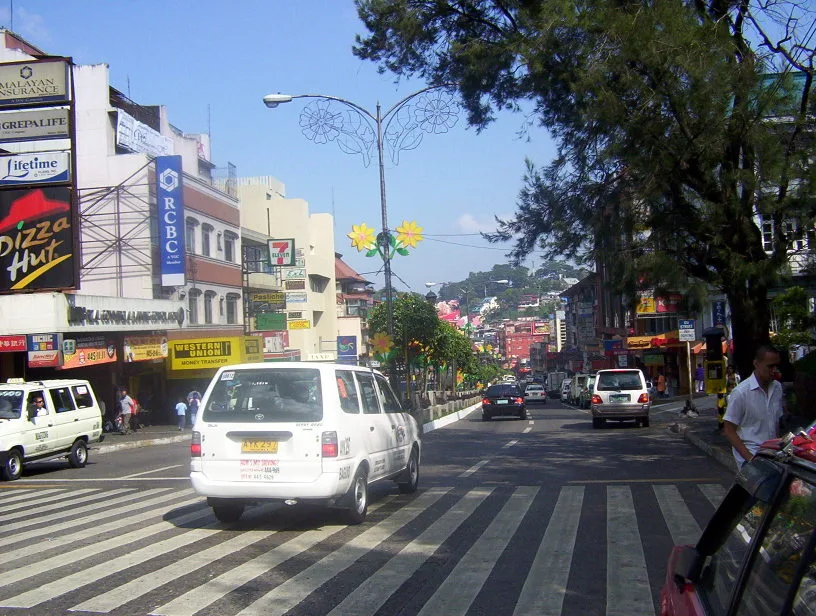
Baguio sits around 1,500 metres up in Benguet, and the altitude rather than the latitude is what makes it work. That produces a city with a genuinely different climate from the lowlands, and a visitor calendar driven by two separate forces - the weather, and the Philippine holiday schedule.
The weather half is straightforward. The cool dry stretch runs from around November through February. March to May warms up while staying dry, which is precisely why Baguio became the summer capital. June to September is the wet season, when fog sits in the city for days and the mountain roads are at their least forgiving.
The crowd half is less intuitive and matters more, because Baguio's road network was not built for the volume that arrives on a long weekend. October and November are the quiet, pleasant window that most itineraries skip.
The coldest mornings arrive in January, not December
Visitors consistently expect December to be the cold month because it is the month of Christmas and the lowland comparison is starkest then. January is colder. It is the low point of the year for Baguio's minimum temperatures, with typical minima around 15 degrees Celsius and occasional readings dropping near 10.
Those figures are not dramatic in absolute terms, but they land on a city where heating is essentially absent and accommodation is built for ventilation rather than insulation. A January night in a budget Baguio room is colder indoors than the number suggests, and travellers arriving from Manila with lowland clothing feel it.
For the underlying data rather than a single cold snap, PAGASA's climatological normals give 30-year averages, and the climate overview explains where Baguio's pattern sits in the national picture.
Panagbenga turns February into a different city
Panagbenga is not a weekend. The 2026 edition, the 30th staging, runs five weeks from 1 February to 8 March, opening with the Grand Opening Parade on 1 February and closing with Session Road in Bloom from 2 to 8 March.
The two days that matter for planning are the Grand Streetdance Parade on Saturday 28 February and the Grand Floral Float Parade on Sunday 1 March. Recent editions have drawn more than 140,000 spectators to the grand parades, into a city centre organised around a single main road.
Session Road in Bloom is the underrated part of the festival - the main commercial street closed to traffic and given over to stalls for a week. It delivers a good share of the atmosphere with a fraction of the parade-day crush, and it runs after most day-trippers have gone home. The Philippine Information Agency publishes the confirmed schedule each year.
Holy Week and the long-weekend gridlock
Outside the festival, Baguio's congestion is driven by the Philippine holiday calendar rather than by the weather. Holy Week is the single heaviest period, and the school summer break from roughly March to May keeps the city busy throughout.
The mechanism is the road. Kennon Road and Marcos Highway carry the traffic up from the lowlands, and both are mountain roads subject to closure after heavy rain or landslides. When one is restricted, the other absorbs everything, and a four-hour drive from Manila becomes eight.
Anyone who can choose their dates should avoid Holy Week and any Philippine long weekend outright. The city is genuinely pleasant on an ordinary Tuesday in October and genuinely unpleasant on Easter Saturday, and the difference is entirely crowd volume.
Where the climate data actually comes from
Baguio is one of the better-documented Philippine stations, and there is no need to rely on aggregator sites that recycle each other's numbers. PAGASA maintains the climatological normals - long-term averages of rainfall, temperature and wind computed over 30-year periods - and publishes the Corona classification that places each part of the country in one of four rainfall regimes.
This matters because Baguio attracts more inaccurate weather writing than most Philippine destinations. Figures circulate that are plainly lowland readings attached to a mountain city, and they are repeated without a check. When a source claims a Baguio daytime average in the high twenties, it is describing somewhere else.
The city government is the reference for road conditions, festival logistics and any visitor management measures in force during peak periods.
What most guides get wrong about Baguio's cold
The first error is quoting temperatures that cannot be right. Articles regularly give Baguio a January average high near 27 degrees, which is a lowland figure. Baguio's appeal is that it does not do that - a city at 1,500 metres with pine forest is materially cooler than Manila, and the numbers should show it.
The second is compressing Panagbenga into a single weekend. It is a five-week festival, 1 February to 8 March in 2026, and travellers who book only around the grand parade dates pay peak rates for the two most crowded days while missing Session Road in Bloom entirely. Arriving for the closing week is the better-value version of the same trip.
The third is recommending March to May as the best time to visit because it is the summer capital season. That is the busiest, most expensive, most traffic-bound stretch of the year, and it is popular because Filipino families have school holidays then - not because it is when Baguio is at its best. For a visitor with flexible dates, late October and November deliver cool, dry weather with a fraction of the crowds.
Frequently asked questions
What is the coldest month in Baguio?
January, with minimum temperatures around 15 degrees Celsius and occasional readings near 10. December feels colder to visitors by association with Christmas, but January is the actual low point of the year.
When is Panagbenga 2026?
From 1 February to 8 March 2026, the 30th staging. The Grand Streetdance Parade falls on 28 February and the Grand Floral Float Parade on 1 March, with Session Road in Bloom from 2 to 8 March.
How crowded are the Panagbenga parades?
Recent editions have drawn more than 140,000 spectators to the two grand parades. Book accommodation months ahead for that weekend, or come during Session Road in Bloom instead.
When is the best time to visit Baguio?
Late October and November for cool, dry weather without crowds. March to May is popular because of Philippine school holidays, not because the weather is better, and Holy Week is the worst congestion of the year.
Is Baguio wet in the rainy season?
Very. June to September is the wettest stretch, with persistent fog and a real risk of landslides closing Kennon Road or Marcos Highway. It is the cheapest and greenest window, and the least reliable.
Book tours, hotels & stays in Baguio Weather Panagbenga When To Visit
Top tours
Top hotels
Top stays