Short answer: Two trips in Baguio are bookable in advance through us, at PHP 600 and PHP 1,200. Everything else - Burnham Park, Session Road, the Mansion - is arranged on the ground, at a tourism office or with a boat operator. Booking the fixed points ahead and sorting the rest locally is the pattern that works here. Checked 2026-08-16.
Trip.com
Hotels in Baguio
Compare live prices via Travelpayouts — targeted for this guide.
For travellers planning Baguio, Cordillera Administrative Region, who want to know what can be reserved before arrival and what cannot. Figures come from our own bookable inventory. Last checked 2026-08-16.
Bookable in Baguio through pana.ph. Checked 2026-08-16.
Trip
Category
Duration
Price
Checked
Baguio City Tour
City Tour
4 hours
PHP 600
2026-08-16
Baguio City Highland Tour — Philippines' Summer Capital
Cultural
8 hours
PHP 1,200
2026-08-16
What is actually bookable in Baguio
The table above is complete, not a selection. Both products in Baguio that can be reserved in advance through us are listed. That is the honest state of the inventory here on 2026-08-16, exported from our own booking data rather than gathered from operator websites or other listings.
Publishing a thin list rather than padding it matters, because the alternative is what most pages about places like this do: assemble a long roster of "top things to do" without saying which of them you can actually hold a place on. That distinction is the practical one. A tour you can reserve is a fixed point you can build a day around; everything else is a plan that depends on who is at the pier when you get there.
Trip.com
Tours & activities in Baguio
Hand-picked experiences in Baguio — book on Trip.com with instant confirmation.
What this does not cover: flights, accommodation, entrance fees paid in person, and any operator we do not list. Independent arrangements in the Philippines are frequently cheaper than a packaged equivalent, so treat the figures above as the price of certainty rather than as the cost of the trip.
What has to be arranged on the ground
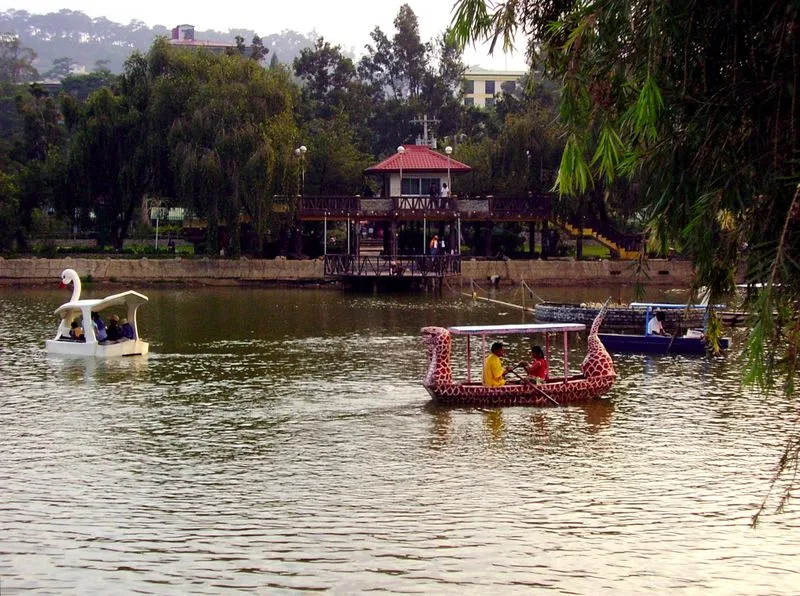
Baguio is known for Burnham Park, Session Road, the Mansion, Mines View, BenCab Museum. Only some of those has a bookable product attached, which means the larger part of a visit here is organised after you arrive.
In practice that happens in one of three places: a municipal or provincial tourism office, which is where permits and registered guides are handled; a barangay hall for sites under community management, where fees are set locally and collected on the spot; or directly with a boat operator at the pier. None of these takes a card, so the practical consequence is cash. The other consequence is timing - offices keep office hours, and a site that requires a permit cannot be visited on the morning you decide to go.
This is not a warning about disorganisation. It is how access works across most of the country outside the major resort destinations, and it is usually cheaper than the packaged alternative. It simply has to be planned for rather than discovered.
What you will pay on the ground
The table above is the part of the cost you can fix in advance. The rest arrives as a series of small local charges, and although none is large, they are collected separately and almost always in cash.
Four kinds recur across the Philippines and you should expect them in Baguio. An environmental or ecotourism fee, set by the municipality and collected at a registration desk before you reach the site. A registered guide, mandatory at many protected sites and priced per group rather than per person, which means a pair pays the same as a party of five. Boat hire, charged per boat on a published tariff by size - the single biggest reason a solo traveller pays more per head than a group. And a barangay or site fee at community-managed locations, collected on the spot.
None of this is negotiable and none of it is a scam, though it is often reported as one by visitors who did not expect it. The fees are the mechanism by which local communities fund the protection of the sites you came to see, and at places with genuine community management the connection is direct. Budget an unbudgeted margin on top of the bookable price, carry small notes, and confirm what a quoted price includes before you hand anything over.
Getting there, and what it costs in time
Access is 4 to 6 hours by bus from Manila; the airport handles limited flights. Coolest December to February; the Panagbenga flower festival runs through February.
Both facts matter more here than in a place with deep inventory, because there is less to fall back on. Where a destination sells forty products, a cancelled boat costs you one option out of many. Where it sells two, a weather day can remove the fixed point your visit was built around. Arriving with a day of slack, and treating the bookable trip as the thing you protect rather than the thing you slot in last, is what makes a short visit survive a change in conditions.
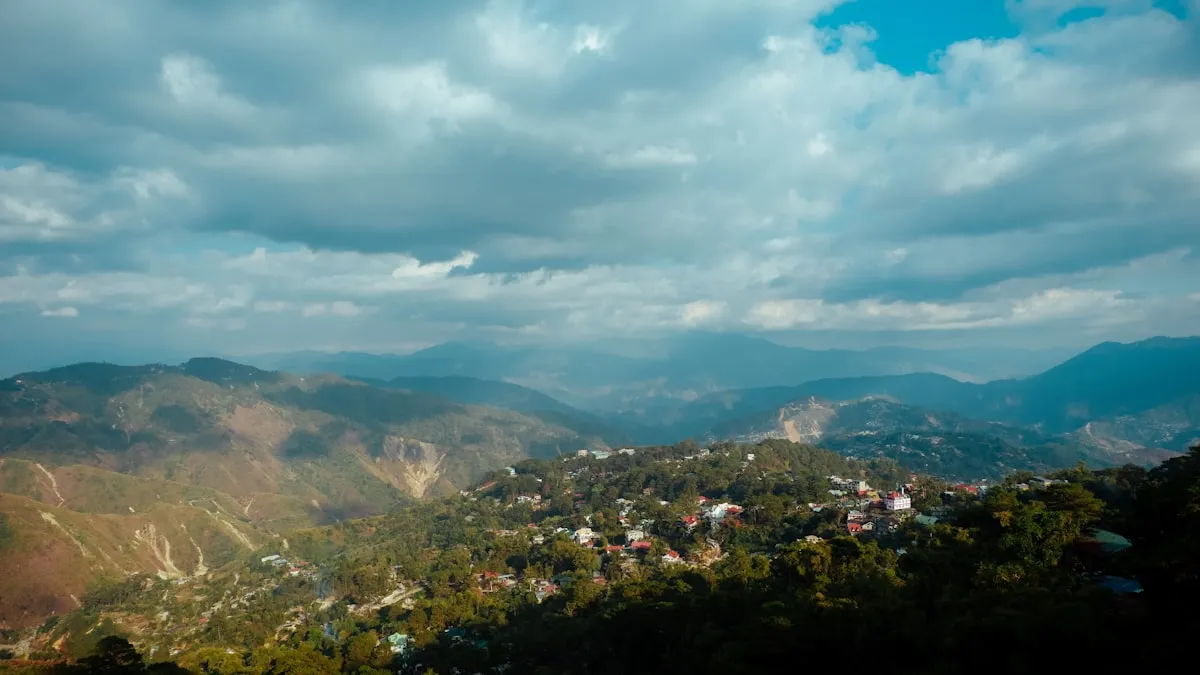
Baguio sits at about 1,500 metres and averages 18-22 degrees: cooler than the lowlands, not cold.
What most guides get wrong about Baguio
The claim to distrust is that Baguio is cold.
The Summer Capital label sets an expectation the city cannot meet. Baguio sits at about 1,500 metres and averages roughly 18 to 22 degrees - genuinely cooler than the lowlands, and a real relief in April, but not cold by any temperate standard. People arrive with winter coats and use them for photographs. The more useful warning is traffic: the city was laid out by Daniel Burnham in 1904 for a population a fraction of today's, and on a long weekend the approach roads and Session Road gridlock badly enough to consume the day you came for. Going midweek changes the city completely. The other thing worth knowing is that Baguio is a gateway rather than a destination for many visitors - Sagada, Banaue and the Cordillera interior are reached from here, and the bus north is a different journey again.
The city was planned in 1904 for a fraction of today's population, which is why long weekends gridlock.
Building a visit around this
With two bookable products at PHP 600 and PHP 1,200, the natural shape is one per day rather than both in one - the transfer time between sites, not the cost, is what limits a day here. A two-night stay is the shortest that does not feel rushed, and three is what most people wish they had booked.
The budgeting rule that holds in places like this: the bookable trips are the predictable line in your costs, and everything arranged on the ground varies with the season, the group size and how many people are sharing the boat. Boat hire in particular is usually charged per boat rather than per person, so joining an existing group at the pier changes the arithmetic completely. Carry more cash than you expect to need and treat the ATM in the nearest large town as the last one you will see.
Two: Baguio City Tour at PHP 600, and Baguio City Highland Tour — Philippines' Summer Capital at PHP 1,200. Checked 2026-08-16.
How much does Baguio cost?
The two bookable trips run PHP 600 and PHP 1,200. Everything arranged locally varies with group size, because boat hire is usually charged per boat. Checked 2026-08-16.
How do I get to Baguio?
4 to 6 hours by bus from Manila; the airport handles limited flights.
When should I go?
Broadly, coolest December to February; the Panagbenga flower festival runs through February. Check PAGASA for the current outlook before committing to anything that depends on a boat.
Do I need cash?
Yes. Tourism offices, barangay fees and boat operators in Baguio take cash, not cards. Draw what you need in the nearest large town before travelling on.
The PANA.PH travel desk researches, books and re-checks Philippines travel logistics — fares, ferry schedules, government fees and permit rules — and publishes what it can verify.