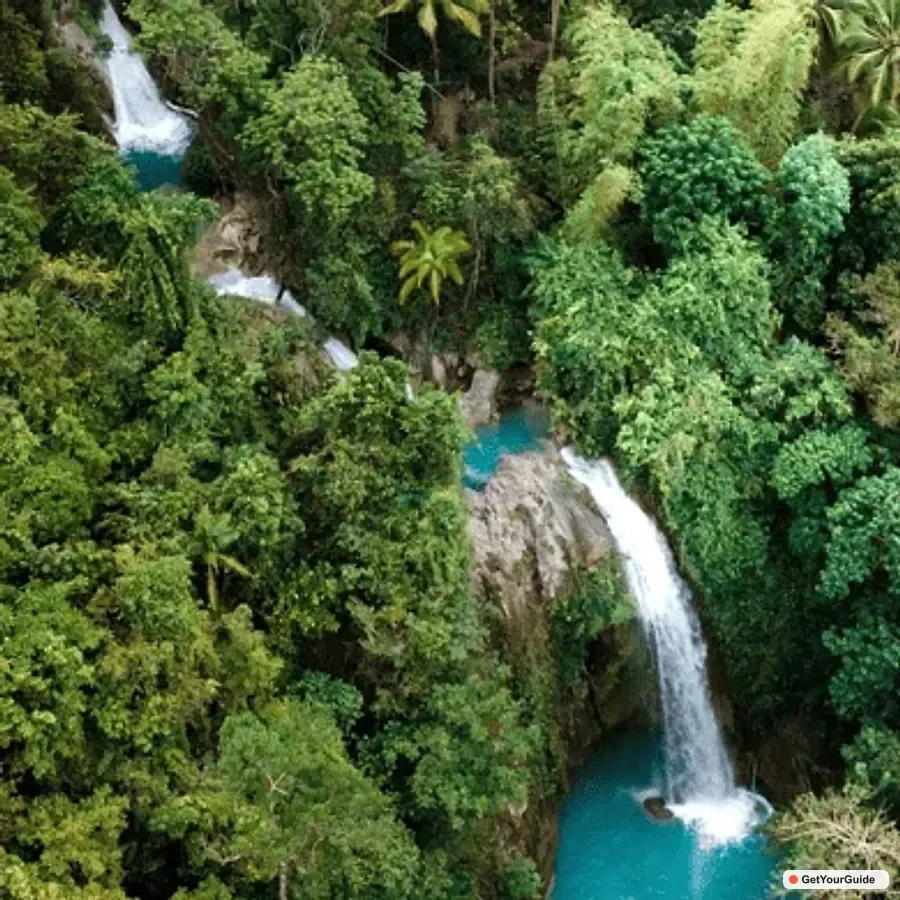
There is a stretch of the far southern Cebu coastline where the limestone mountains tip almost straight into the Tanon Strait, and where every few kilometers a river finds a crack in the rock and turns itself into a waterfall. This private day tour stitches together three of the very best of them - Aguinid, Inambakan, and Tumalog - each one completely different in character. One you climb hand over hand up the rock itself; one thunders into a deep emerald pool you can swim across; and one falls like a slow silver curtain you stand beneath in a fine, constant mist. Doing all three in a single private vehicle, with a driver who knows the back roads, is the difference between a frantic public-van scramble and a genuinely relaxed day chasing water through the jungle.
Aguinid, Inambakan & Tumalog Falls Private Tour - Guide
Hotels in Philippines
Compare live prices via Travelpayouts — targeted for this guide.
Where you are: the karst coast of South Cebu
All three falls sit at the very bottom of Cebu island, around the towns of Samboan, Ginatilan, and Oslob - roughly three to four hours by road south of Cebu City, depending on traffic out of the metro. This is classic tropical karst country. The bedrock here is uplifted coral limestone, soft and water-soluble, so over hundreds of thousands of years rainwater seeping through it has carved caves, sinkholes, and spring-fed rivers. When those underground rivers re-emerge at the surface and meet a drop in the land, you get the spectacular, often multi-tiered falls this coast is famous for.
The vivid blue-green color of the pools is not a filter. Water moving through limestone dissolves calcium carbonate, and that dissolved mineral scatters light back as turquoise. The same chemistry builds the smooth, terraced rock steps you climb at Aguinid - a natural travertine staircase, slowly deposited by the mineral-rich water itself.
Stop one: Aguinid Falls, the climbable waterfall
Aguinid, in Samboan, is unlike almost any waterfall you have visited because you do not just look at it - you climb up it. The river descends in a series of broad limestone tiers (commonly counted as five main levels), and a local guide, included as part of the standard entrance arrangement, walks you up through the flowing water itself, using natural footholds and the occasional fixed rope.
Hiking tour in Philippines
Hand-picked experiences in Philippines — book on Trip.com with instant confirmation.
The lower levels are gentle and family-friendly: shallow cascades, smooth rock, places to sit and let the current run over your shoulders. As you ascend, it gets more adventurous - narrow chutes, small pools you wade through, and sections where you press against the rock face beside the falling water. Guides will point out the natural rock formations and, at certain levels, the spot where mineral-laden water has built up curtain-like deposits. It is hands-on and a little wet-and-wild, but the guides set the pace and there are easier bypass routes if you would rather not do the steepest parts.
What to expect
- A local guide accompanies every group up the tiers - this is standard, not optional, and tips are customary.
- Water shoes or sturdy sandals with grip are strongly recommended; the travertine is smooth and can be slick.
- Bring a dry bag for your phone - you will be in and out of the water the whole climb.
Stop two: Inambakan Falls, the big plunge pool
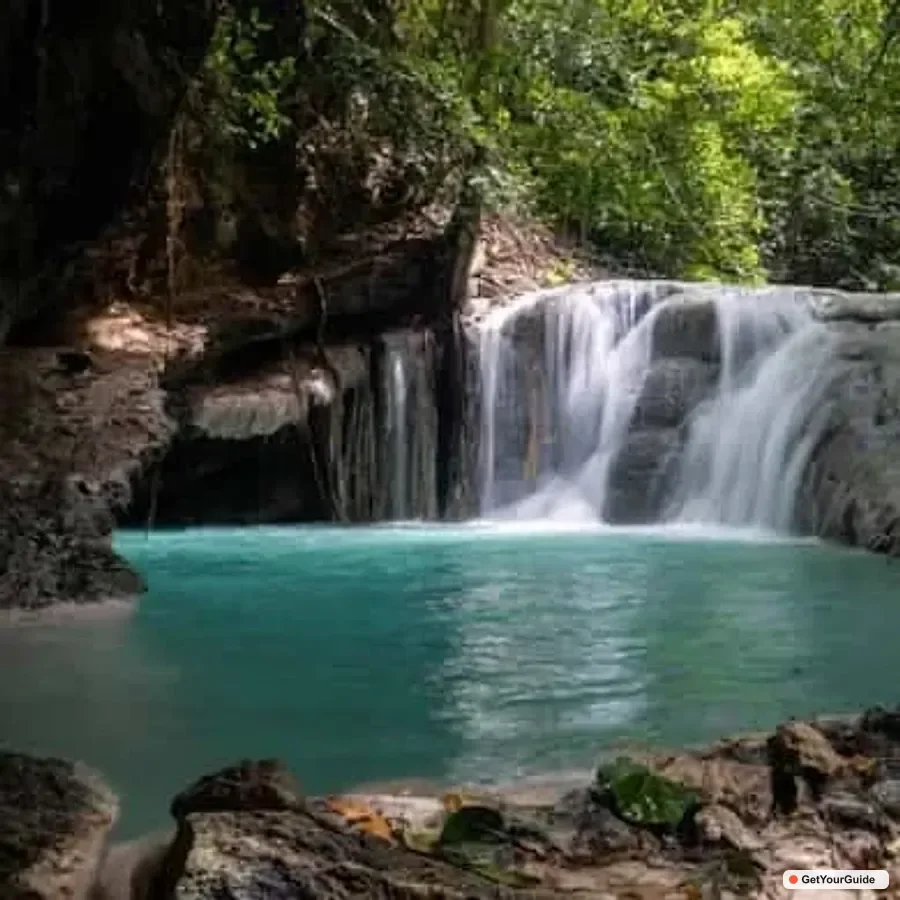
A short drive north in Ginatilan brings you to Inambakan, the most powerful of the three. Here the water drops in a tall, single main curtain into a deep, wide pool - the kind you can actually swim out into. The name comes from the Cebuano word for jumping or leaping, and on a good day the falls earn it: this is a place to swim, float, and feel the spray, surrounded by mossy cliffs and hanging vegetation.
There are upper tiers above the main fall for the more adventurous, reached by a short climb, but the main pool is the star. Because it is fed by a steady spring-and-rain river, the flow stays strong even outside the wettest months, and the surrounding amphitheater of limestone keeps the spot cool and shaded. It is the best of the three for a proper, satisfying swim.
Stop three: Tumalog Falls, the misty curtain
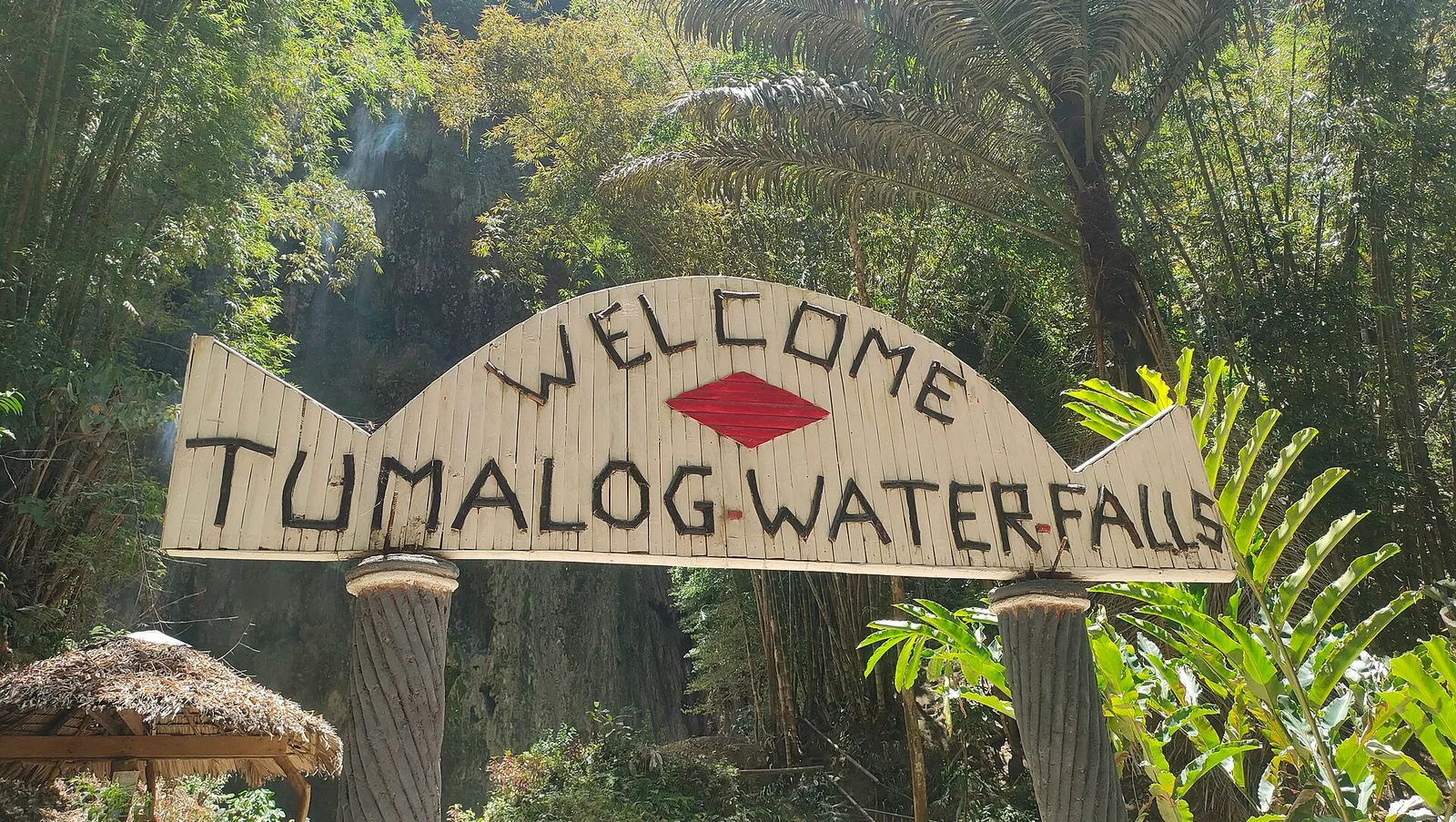
Tumalog, just above Oslob, is the most photographed and the most ethereal. Instead of one heavy plunge, dozens of thin streams pour over a wide, fern-draped overhang, breaking into a fine mist before they reach the shallow pool below. In the right light - late morning, when the sun angles into the gorge - the falling water and mist catch the rays and the whole scene seems to glow. It looks, by design of nature, like a living curtain or a tiered chandelier of water.
The pool at the base is shallow and the water cool; this is more a place to wade, photograph, and soak up the atmosphere than to swim laps. Note that Tumalog sits down a steep access road from the parking area - many visitors take a short habal-habal (motorbike) shuttle down and back up, which is typically a small extra fee paid locally. Because Tumalog is right beside Oslob, it pairs naturally with the area's other famous (and far more debated) attraction.
Culture, conservation, and the Oslob question
These falls are managed by their local barangays, and the modest entrance fees you pay at each go toward maintenance, guides, and the surrounding communities. Treat them as the shared resource they are: do not use soap or shampoo in the water, take all litter out with you, and follow guide instructions on where it is safe to climb.
Because this tour runs through Oslob, it is worth being honest about the town's whale shark interaction, which many day-trippers add on. The Oslob operation feeds wild whale sharks daily to keep them in the shallows for tourists, and marine biologists have raised real concerns that this alters the animals' natural migration and feeding behavior and risks boat-strike injuries. It is genuinely controversial. If you want to see whale sharks, more responsible, non-feeding encounter options exist elsewhere in the Philippines (such as Donsol in Sorsogon, where sharks are spotted as they naturally pass through). The waterfalls themselves carry none of this baggage - they are simply beautiful, low-impact, and worth the trip on their own.
Practical tips for the day
- Duration: Plan for a long day - roughly 10 to 12 hours door to door from Cebu City, given the three-to-four-hour drive each way. A private vehicle lets you set off early and avoid the worst heat and crowds.
- Best time of day: Arrive at Aguinid early when the water is clearest and the levels least busy; aim for Tumalog around mid-to-late morning to catch the light beams in the mist.
- Best season: The dry months (roughly December to May) give easier roads and clearer water; the rainy season delivers fuller, more dramatic flow but slicker climbs and the small risk of high water closing the upper tiers for safety.
- How strenuous: Aguinid is the most physical - wading and light scrambling up the tiers - but it scales to your comfort level. Inambakan and Tumalog involve short walks and steps. Reasonable fitness is enough; this is not a technical hike.
- What to wear and bring: Swimwear under quick-dry clothes, water shoes with grip, a dry bag, towel, reef-safe sunscreen, water, and cash in small bills for entrance fees, guides, tips, and the Tumalog habal-habal.
- Typically included: Private round-trip transport and driver; entrance fees and on-site guides are sometimes included and sometimes paid locally, so confirm exactly what your booking covers before you go.
Why it is worth it
Three waterfalls in one day could feel like a checklist, but Aguinid, Inambakan, and Tumalog are so different from one another that the day plays out like three separate adventures: the climb, the swim, and the dream. You end it tired, salted with mist, slightly sunburned in the best way, and rolling back up the coast with the Tanon Strait glowing on your right. South Cebu rewards the long drive - and a private tour is the most comfortable, flexible way to let these three rivers show you exactly what limestone, time, and falling water can build.
Good to know before you book
- Duration: typically a full day (around 8 to 10 hours including transfers), though half-day and multi-day options exist - check the listing.
- Best for: active travellers, couples and friends.
- What is included: a local guide, safety gear (helmet and life vest), entrance fees and usually transfers; lunch is often included or available nearby.
- Pickup: most tours offer hotel or central pickup; confirm your point and time when booking.
- Book through: the GetYourGuide button on this page, which shows live availability and pricing.
Frequently asked questions
How long does the Aguinid, Inambakan & Tumalog Falls Private Tour take?
Most departures run as a full day - roughly 8 to 10 hours including pickup, travel and the activities themselves - so plan to set aside the whole day. Some operators offer shorter or private versions; the exact timing for your date is shown when you book through the GetYourGuide button on this page.
What is included in the Aguinid, Inambakan & Tumalog Falls Private Tour?
Typically the price covers a local guide, safety gear (helmet and life vest), entrance fees and usually transfers; lunch is often included or available nearby. Inclusions vary by operator, so always read the specific listing - it spells out exactly what is provided and what you pay for separately, such as entrance or environmental fees.
What should I bring?
Pack quick-dry clothes, secure water shoes or sandals with grip, reef-safe sunscreen and a floating or waterproof camera. Helmets and life vests are provided and must be worn. It is also worth carrying some cash for local fees, drinks and tips, plus any personal medication, since card facilities can be limited outside the cities.
Is the Aguinid, Inambakan & Tumalog Falls Private Tour suitable for beginners or families?
It suits reasonably fit travellers who can swim and are comfortable in moving water; every cliff jump has a lower, optional alternative, so you set your own intensity. It is not designed for non-swimmers or very young children. If you have specific concerns about age, fitness or swimming ability, message the operator before booking - they can advise on the best option for your group.
When is the best time to do this tour?
The best conditions are usually the dry months of December to May, with calm seas for snorkelling and diving. That said, the Philippines is a year-round destination, and many of these experiences run in any season - just expect the occasional shower and check the forecast for the day.
How do I get to Cebu?
To reach Cebu, fly into Mactan-Cebu International Airport, then drive south (about 3 to 4 hours to the southwest coast). Many tours include transfers from nearby towns or hotels, so confirm your pickup arrangement when you book so the day runs smoothly from the start.
Do I need to book the Aguinid, Inambakan & Tumalog Falls Private Tour in advance?
Yes - booking ahead is strongly recommended, especially in the dry-season peak and on weekends, when popular tours and the best operators sell out. Reserving online also locks in your spot and lets you compare timings and inclusions easily.
How much does the Aguinid, Inambakan & Tumalog Falls Private Tour cost?
Prices vary with the season, group size and exactly what is included, so we do not list a fixed figure here. Tap the GetYourGuide button on this page to see the current, accurate price and availability for your chosen date.
Can I do the Aguinid, Inambakan & Tumalog Falls Private Tour as a private or customised tour?
Many operators offer a private version of this experience for couples, families or small groups who want a flexible pace and a guide to themselves, and some can tailor the route or add stops. If a private or custom option matters to you, check the listing or message the operator before booking, as availability and prices differ from the standard shared tour.
Ready to explore Cebu?
From planning to the moment you arrive, the Aguinid, Inambakan & Tumalog Falls Private Tour is one of the most rewarding ways to experience this corner of the Philippines - and booking it is simple. Use the GetYourGuide button on this page to check live availability, compare timings and secure your spot, then turn up and let the local guides handle the rest while you focus on the views, the water and the memories.

PANA.PH Editorial Team
Philippines travel desk
The PANA.PH travel desk researches, books and re-checks Philippines travel logistics — fares, ferry schedules, government fees and permit rules — and publishes what it can verify.
🏡 Real local stays (book direct)
Hand-picked homestays and guesthouses — book direct, no markup.
Browse all local stays →


🌊 Popular activities (book instantly)
Island hopping, canyoneering, whale sharks — real Klook/GetYourGuide options.
View all activities →