Intramuros
The walled city Spain built, Japan destroyed, and Manila is slowly remembering · Manila, Metro Manila
Photo: yeowatzup / CC BY 2.0 via Wikimedia Commons
Intramuros — meaning "within the walls" — is the original Manila, the fortified city the Spanish built in 1571 on the southern bank of the Pasig River. The walls they raised, up to 4 metres thick in places, still stand: a 4.5-kilometre perimeter of basalt and coral stone enclosing 64 hectares of churches, convents, palaces, plazas, and the dungeons of Fort Santiago where Rizal spent his last days before his execution. Most of what the Spanish built was destroyed in the Battle of Manila in 1945 — one of the most destructive urban battles of the Second World War — and what exists today is a combination of restored structures, atmospheric ruins, and new construction that uses colonial aesthetics. Intramuros is quieter than most of Manila, traffic is calmer (golf carts and bamboo bicycles are the preferred transport within the walls), and it contains the city's finest examples of Spanish-colonial architecture alongside the National Museum of Fine Arts a short walk away. It deserves more than the 2-hour tour most visitors give it.
Things to do in Intramuros
Fort Santiago
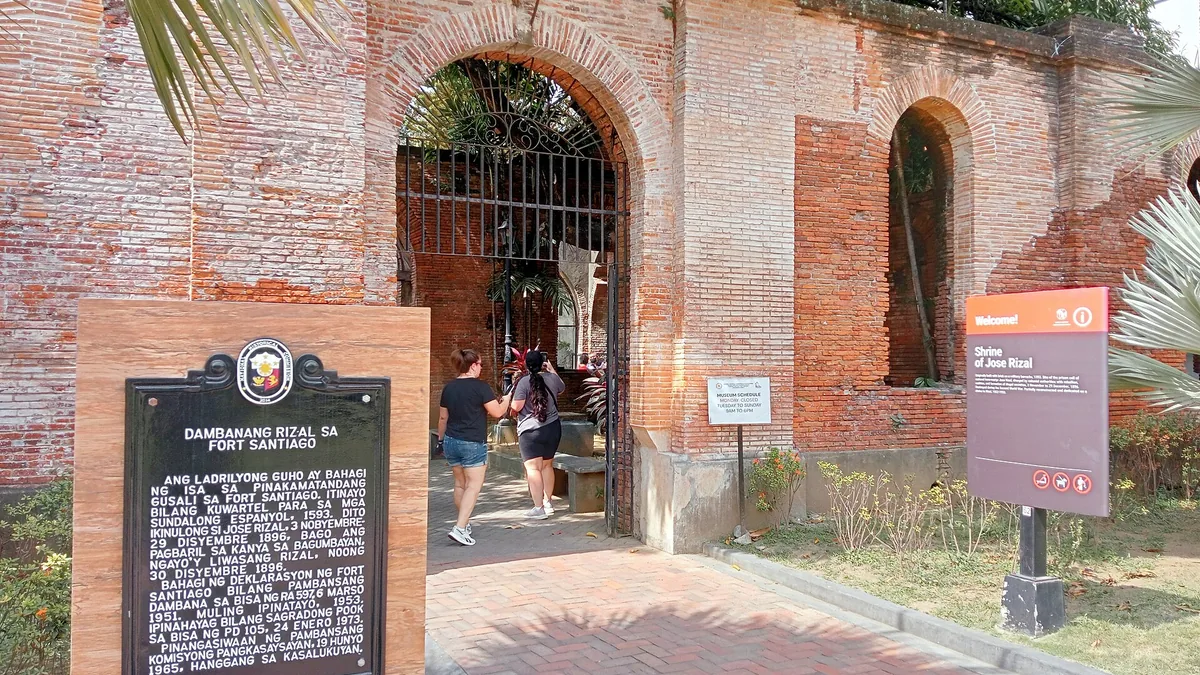
Fort Santiago is the citadel within the citadel — a 16th-century stone fortress at the northern tip of Intramuros, with a dry moat, a drawbridge entrance, and a series of inner courtyards and dungeons that served as a prison under Spanish, American, and Japanese rule. The Rizal Shrine inside the fort houses the room where José Rizal spent his final hours before his execution on December 30, 1896. Entry is PHP 75. Footprints embedded in the floor of the fort trace Rizal's last walk to the gate; the small museum is well-curated. Allow 90 minutes.
San Agustin Church
Built in 1589 and completed in its current form in 1607, San Agustin Church is the oldest stone church in the Philippines and a UNESCO World Heritage Site. The facade is one of the finest examples of Baroque architecture in Asia; the interior has trompe l'oeil ceiling paintings, carved wooden choir stalls, and a series of Augustinian paintings dating from the 17th century. The adjacent museum (San Agustin Museum, PHP 200) has vestments, relics, and religious art collected over four centuries. The church survived the 1945 battle intact because both sides used it as a hospital.
Bamboo Bicycle Tour of the Walls
The most enjoyable way to see Intramuros is from a bamboo bicycle — three-wheeled bikes assembled from bamboo that rent for PHP 150–200 per hour from the main Bambike stand near the Maestranza Bastion. The full circuit of the walls takes about 45 minutes at a relaxed pace. The rampart walk on top of the southern and western walls is accessible on foot (free) and gives views over Manila Bay and the golf course that occupies the former moat. The bamboo bike tour operators also offer guided tours with historical commentary (PHP 400–600, 90 minutes).
Casa Manila Museum
The Casa Manila Museum in Plaza San Luis Complex recreates a wealthy ilustrado household of the late Spanish colonial period — three stories of period furniture, kitchenware, religious objects, and clothing, arranged in rooms as they would have been used in the 1880s. Entry PHP 75. It is the best window into daily life in colonial-era Manila available in the city, and the building itself (a reconstruction of a destroyed colonial house) is architecturally interesting. The Plaza San Luis complex also has a few restaurants and shops.
Rizal Park (Luneta) and the National Museum Cluster
Adjacent to Intramuros (5-minute walk from the Victoria Gate), Rizal Park has the monument marking Rizal's execution site and the flame of independence. The National Museum of Fine Arts (free entry) a short walk away is one of the best art museums in Southeast Asia — 4 floors of Philippine masters including Juan Luna's Spoliarium, a 4-by-7-metre oil painting that won the gold medal at the 1884 Madrid Exposition. The National Museum of Natural History (also free) and the National Museum of Anthropology complete the cluster. Intramuros + the museum cluster makes a full day.
Dinner at Barbara's Heritage Restaurant
Barbara's, inside the Intramuros walls at the Plaza San Luis complex, is a Filipino heritage restaurant serving traditional cuisine in a colonial setting with a cultural show — kulintang music, folk dances, and occasionally a reenactment of a royal court scene. Dinner runs PHP 600–900 per person for the buffet including the show. It is tourist-oriented but the food quality is genuinely good (kare-kare, lechon, sinigang, laing) and the setting is one of the most atmospheric dining rooms in Manila.
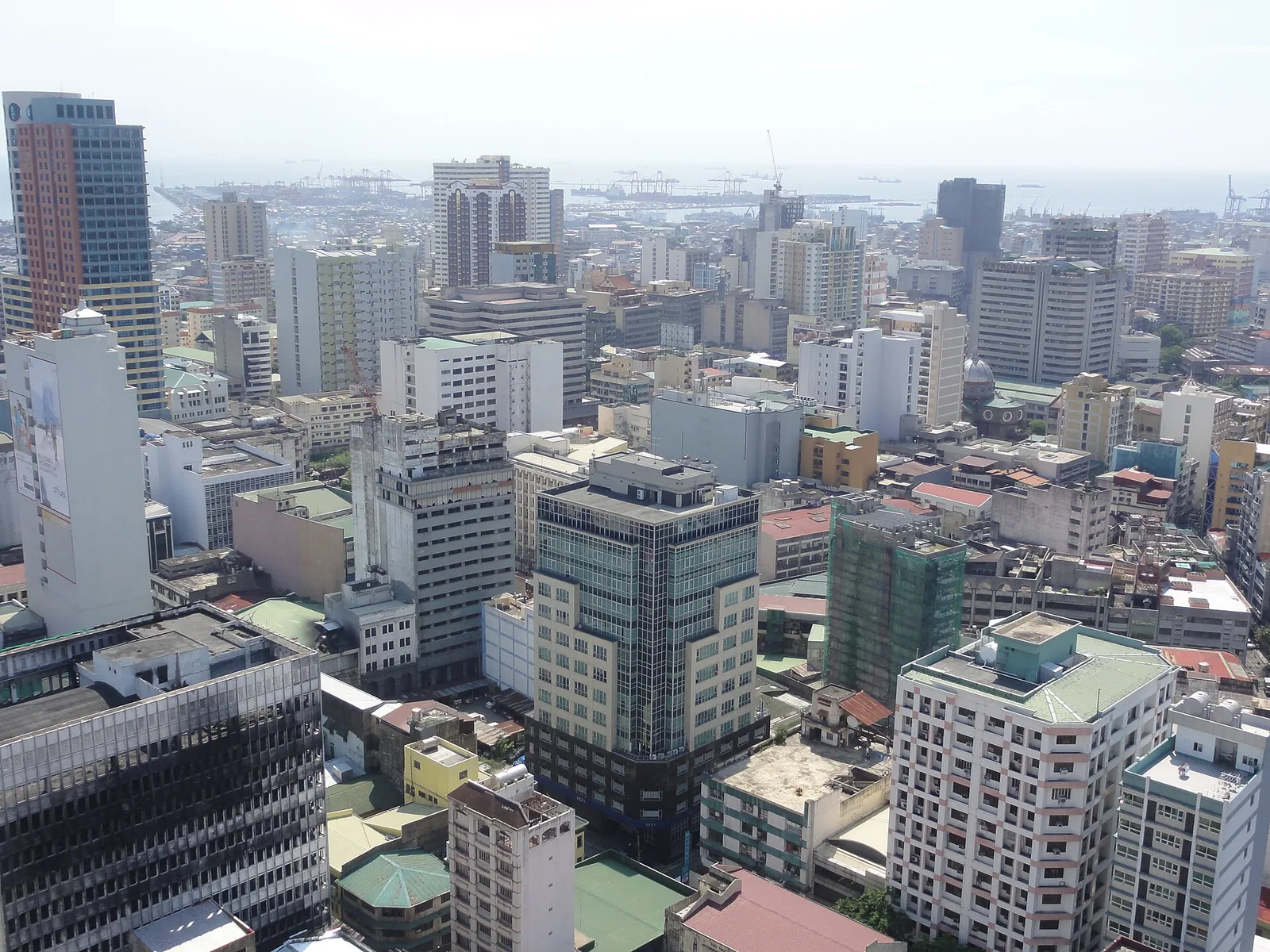
Photos of Intramuros
A visual taste of Intramuros before you go.

Photos: CEphoto, Uwe Aranas (CC BY-SA 3.0) via Wikimedia Commons
Ready to book?
Book your Intramuros trip now
Hotels, tours and transfers — compare live prices and book securely through trusted partners. Prices update daily.
Affiliate links — we earn a small commission at no extra cost to you. Prices shown are live from our partners.
🗓️ Best time to visit Intramuros
November through February is the coolest and most pleasant period for the outdoor walking tours and the wall circuit. October through May avoids the heaviest rains. The light in the late afternoon (3–5 PM) is the best for photography of the stone walls and the fort. The area can feel oppressively hot from 10 AM to 2 PM from March through May — go early or late.
✈️ How to get to Intramuros
Intramuros is in the heart of Manila — accessible from virtually anywhere in Metro Manila. From Makati or BGC: Grab (PHP 80–200 depending on traffic) or taxi. From the airport (NAIA): 20–45 minutes by Grab or taxi depending on traffic (PHP 200–400). From Ermita/Malate hotels: 5–10 minute walk or tricycle. The nearest LRT station is Central Terminal or Carriedo (LRT 1) — a 15-minute walk to the main Intramuros gate. Parking is available inside the walls (PHP 50–100/hour).
Plan your Intramuros trip
Compare hotels and tours — booked through trusted partners. Use the planner on /plan to turn this guide into a full day-by-day itinerary.
🗓️ Use this guide in your plan
Build a Intramuros trip directly. The planner combines it with real flights, stays and tours into one day-by-day itinerary.
✨ Open Trip PlannerOne of 215+ destinations covered. Explore more at /guides and /blog.
Frequently asked questions — Intramuros
How much time do I need in Intramuros?
Half a day (4–5 hours) covers Fort Santiago, San Agustin Church, and a bamboo bike circuit of the walls. A full day (7–8 hours) adds Casa Manila, Rizal Park, and the National Museum cluster. If you are specifically interested in colonial history or Philippine art, allocate the full day and a morning in the adjacent Ermita area.
Is Intramuros safe to walk around?
Inside the walls during daylight hours, yes. The walled city is well-patrolled and the primary population during the day is tourists, workers, and students from nearby schools. Evening within Intramuros is generally safe but the surrounding streets of Ermita and Sampaloc become more risky after dark. Use Grab for evening transport rather than walking to peripheral streets.
What is the best combination with Intramuros for a Manila day?
Intramuros in the morning (start at 8 AM for Fort Santiago before tour groups arrive), then the National Museum cluster from noon to 3 PM (free entry, air-conditioned), then Chinatown (Binondo) for a late lunch of famous pancit and siopao at the Old Seng Choong or Eatology. Return to your hotel by Grab. This covers the colonial, artistic, and culinary cores of old Manila in a single manageable day.
💬 Ask Locals about Intramuros
No questions about Intramuros yet — be the first to ask.
Ask the community →💡 Traveller tips for Intramuros
Local-knowledge from other travellers. Got a tip? Share it.
Loading tips…
📝 Your notes & photos for Intramuros
Loading…
First time in Intramuros?
Quick essentials so you can hit the ground running.
Standard Philippines visa-free entry. Most Intramuros sites charge PHP 50–200 entrance fees.
ATMs and GCash widely available throughout Manila. Intramuros attractions accept cash and some accept cards. Bring PHP 1,000 for entrance fees, food, and bamboo bike rental for a half-day visit.
Manila is hot — wear light clothing, a hat, and SPF 50+. Carry a water bottle; drinking water from establishments only. The old stone drainage around the walls can be uneven; watch footing in heels.
Budget PHP 800–1,500 for a half-day in Intramuros including Grab transport (PHP 150–300 round trip), Fort Santiago (PHP 75), San Agustin (PHP 200 museum), bamboo bike (PHP 150/hour), and lunch (PHP 200–400).
Follow standard Manila city awareness: keep valuables in front pockets or a chest bag, avoid displaying expensive cameras on peripheral streets, and use Grab for transport after 6 PM. The walled area itself is safer than most of Manila.
Local Stays in Intramuros
Hand-picked homestays and guesthouses — book direct with local hosts. Add them to your trip plan.
Top Experiences in Intramuros
Island hopping, diving, surfing and more — book instantly. Add them to your trip plan.
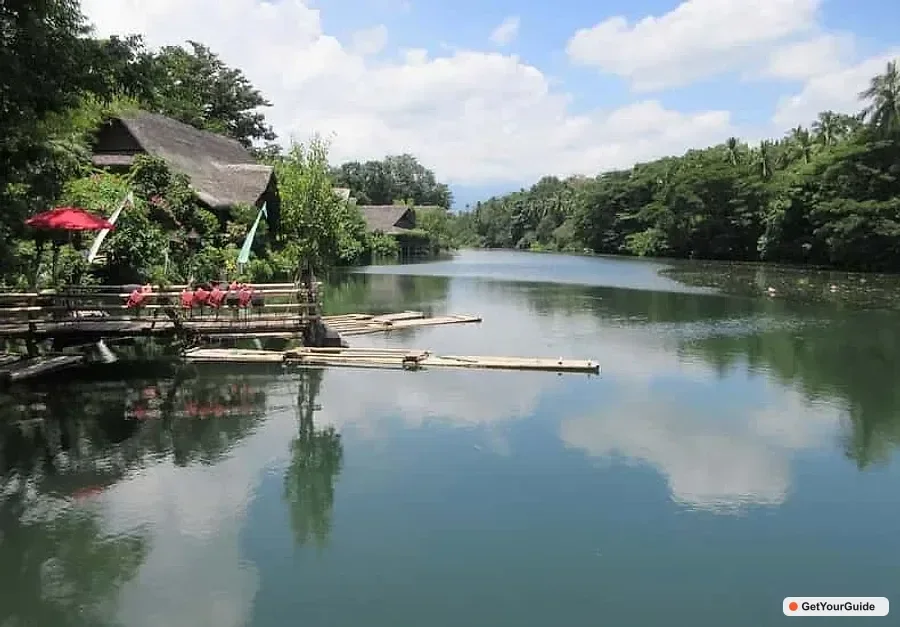
Villa Escudero Guided Day Tour from Manila
📍 Manila, Philippines · Full day
From ₱7,841
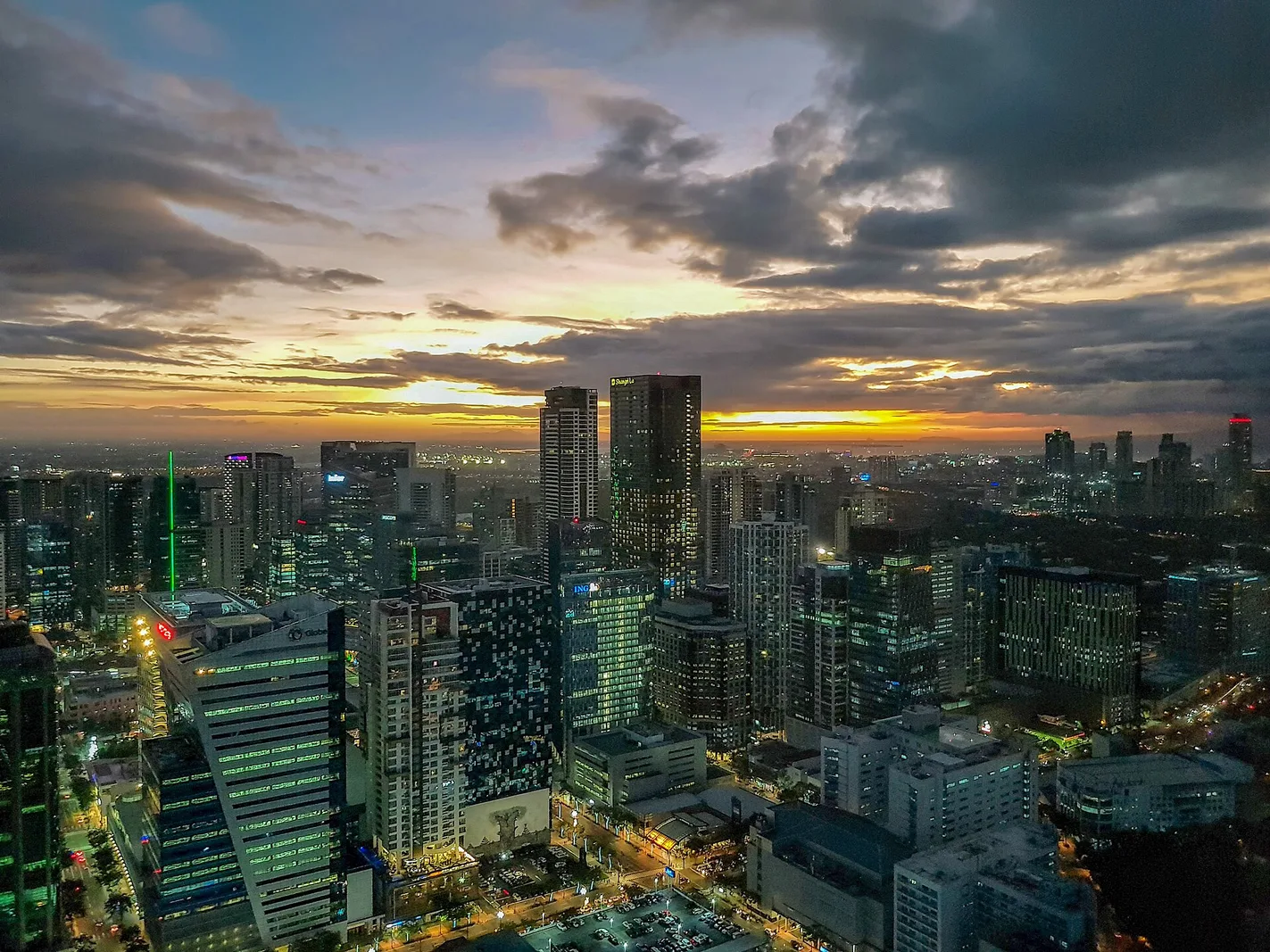
BGC Club Crawl and Party Experience
📍 Manila, Philippines · Full day
From ₱3,689

A Night in Makati: Signature Cocktails and Hidden Bars
📍 Manila, Philippines · Full day
From ₱2,306