Caramoan Peninsula
The limestone islands Survivor chose — and which most travellers still haven't found · Camarines Sur, Bicol, Luzon
Photo: JannahTepace / CC BY-SA 4.0 via Wikimedia Commons
The Caramoan Peninsula juts into the Pacific on the southeastern coast of Camarines Sur, a province most visitors pass through on the way to the Mayon Volcano in Legazpi. Those who detour here find an archipelago of karst limestone islands rising from bottle-green water — jagged, forested, uninhabited formations that look like something between Palawan and El Nido but without the infrastructure or the crowds. Several seasons of the French and Philippine versions of Survivor were filmed here, which brought the name to brief international attention, and then the difficulty of getting here (a combination of bus, boat, and rough road) filtered out the casual visitors and left a destination that remains, by Philippine standards, genuinely off the main circuit. The island-hopping here is the main event: Lahos Island with its hidden lagoon, Matukad Island with a freshwater lake reached by a rope-assisted climb, the Manlawi Sandbar that appears and disappears with the tide, and limestone formations you navigate by banca through narrow channels at low tide.
Things to do in Caramoan Peninsula
Island-Hopping: Lahos, Matukad, Manlawi
The core Caramoan experience is a banca island-hopping tour covering the signature formations. Lahos Island has a cave passage at low tide that opens into a hidden blue lagoon — you wade chest-deep through the cave in the dark to reach it. Matukad Island has a 10-minute rope-assisted scramble to a lake on top of the limestone formation — calm freshwater surrounded by jungle. The Manlawi Sandbar (Gota Beach area) is a white sandbar that extends 200m into the sea at low tide. Tours run PHP 1,200–1,800 per person from Caramoan town, covering 4–6 islands depending on the route.
Hunongan Cave
One of several cave systems accessible from Caramoan town, Hunongan Cave has cathedral-scale chambers with stalactite formations and a river section that requires wading. Entry is PHP 50–100 with a local guide (mandatory, available at the entrance). The cave is undeveloped — bring a headlamp, wear clothes you don't mind getting wet, and expect to climb, crawl, and wade through sections that no resort cave tour would permit. This is the real thing.
Cagbalinad Beach and Gota Beach
Gota Beach (accessible by boat or 4WD from Caramoan town) is the main white-sand beach backed by the Gota Village Resort — the filming base for Survivor. The beach itself is open to day visitors (PHP 150 day-use fee) and the limestone backdrop makes it one of the most scenic beaches in Bicol. Cagbalinad Beach, a 20-minute banca ride from town, is smaller and usually deserted; a good alternative if Gota's resort infrastructure feels too manicured.
Bicol Cuisine in Caramoan Town
Caramoan town is small but its restaurants and canteens serve the full roster of Bicol cuisine: laing (taro leaves in coconut milk and chillies), Bicol Express (pork, coconut cream, and bird's eye chillies), pinangat (taro parcels wrapped in leaves), and fresh seafood from the morning market. Meals at local canteens cost PHP 100–200 for a full plate. The sili (chilli) content of Bicol cooking is serious — ask for mild if you need it.
Hiking to Caramoan National Park Interior
The Caramoan National Park covers the forested interior of the peninsula. Guided hikes into the park can be arranged through the municipal tourism office (PHP 400–600 for a half-day guide). Trails lead to viewpoints over the limestone formations and the coast, through secondary rainforest with hornbills and endemic Philippine birds. The hikes are not heavily trafficked — bring water, sunscreen, and sturdy footwear.
Photos of Caramoan Peninsula
A visual taste of Caramoan Peninsula before you go.
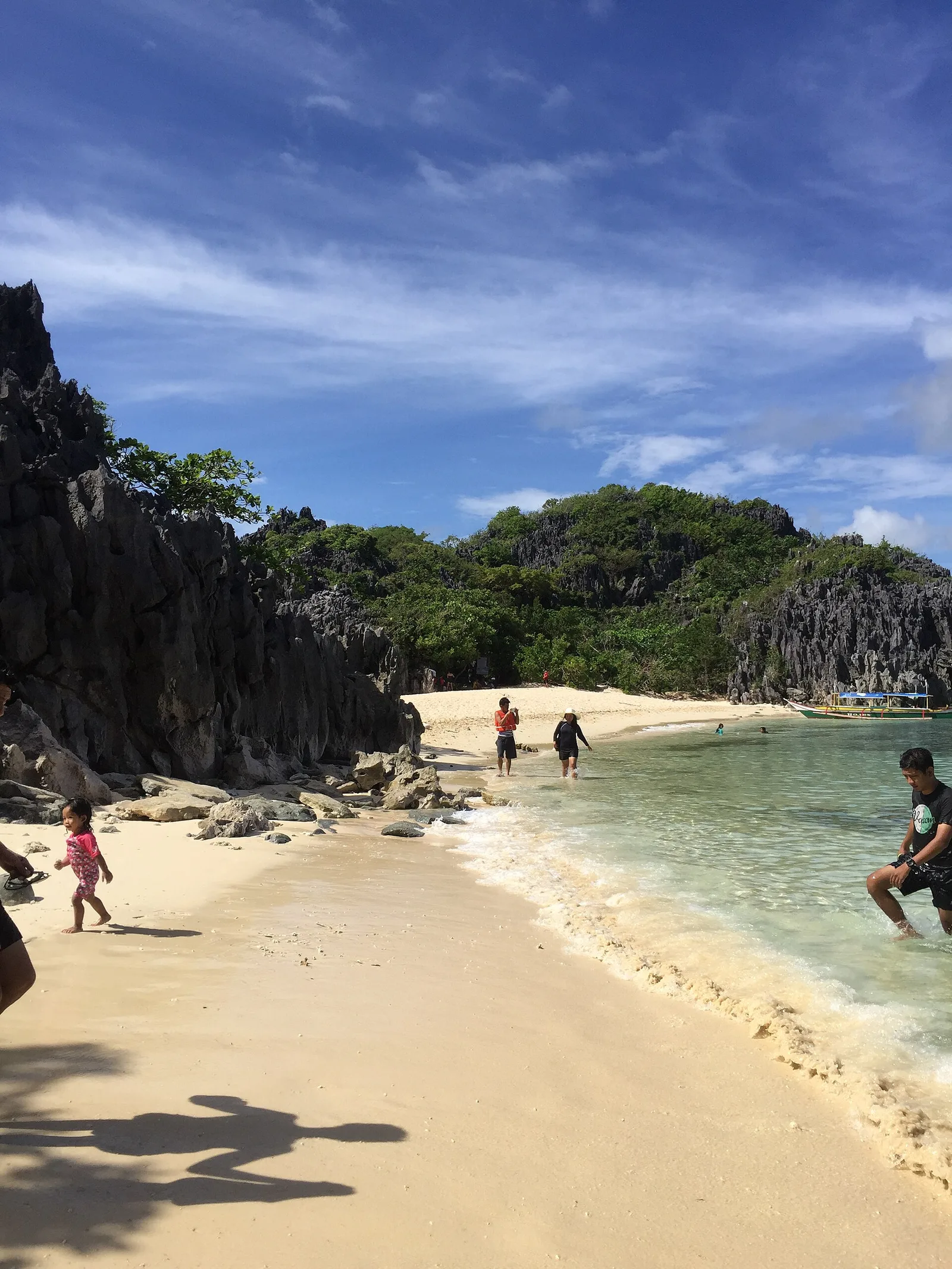
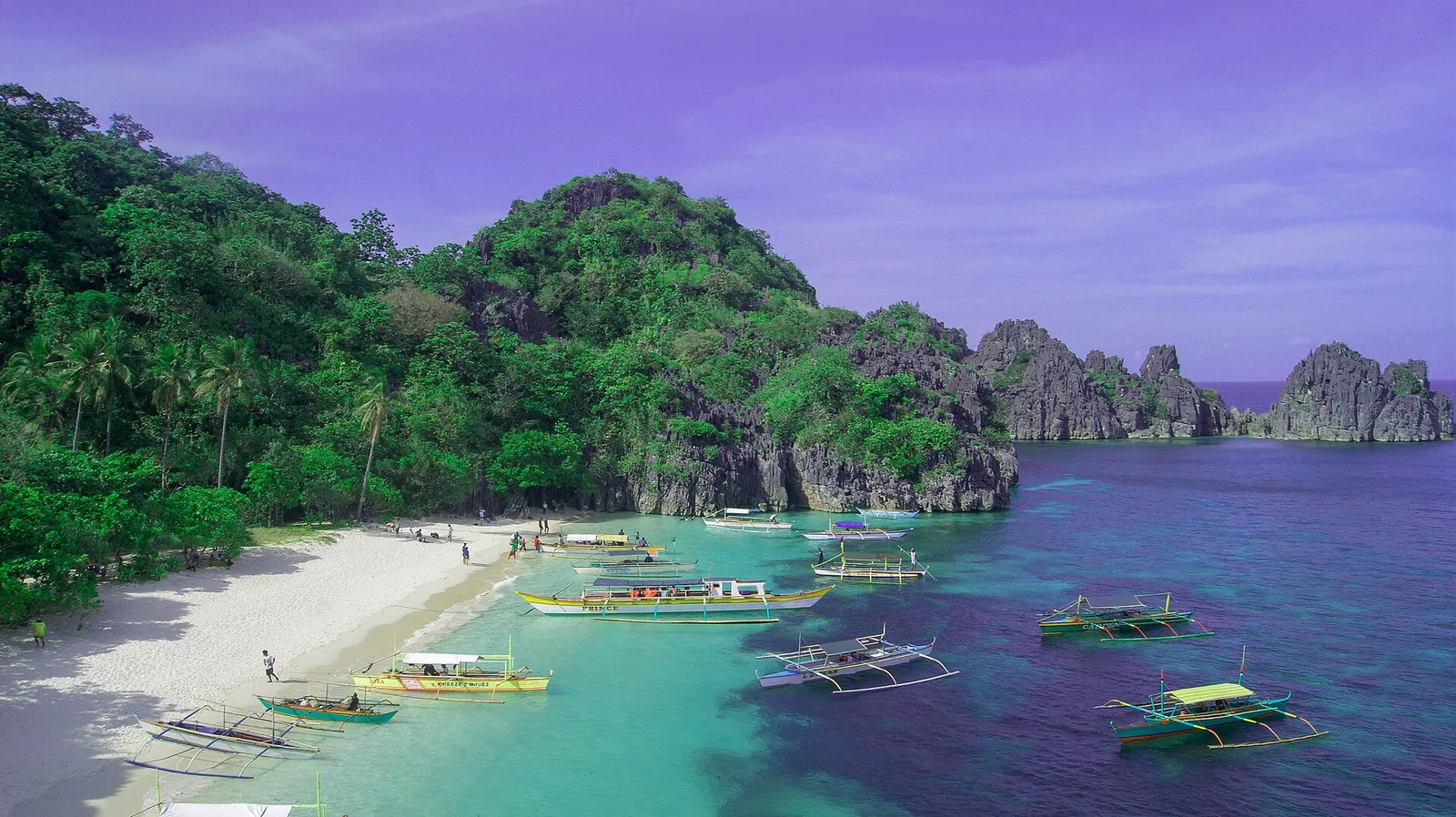
Photos: Itsmateoduh (CC BY-SA 4.0) via Wikimedia Commons · Ianpetercapocao (CC BY-SA 4.0) via Wikimedia Commons
Ready to book?
Book your Caramoan Peninsula trip now
Hotels, tours and transfers — compare live prices and book securely through trusted partners. Prices update daily.
Affiliate links — we earn a small commission at no extra cost to you. Prices shown are live from our partners.
🗓️ Best time to visit Caramoan Peninsula
November through May is the dry season and the standard window for visiting. January through April offers the calmest seas and best visibility for snorkeling. December brings holiday crowds but conditions are good. June through October is the rainy season — Caramoan is in the Pacific typhoon path and the sea can become rough; most island-hopping operations pause during bad weather. Avoid visiting during typhoon warnings.
✈️ How to get to Caramoan Peninsula
From Manila, fly to Naga City (Cebu Pacific, PHP 1,500–3,500, 1 hour 15 minutes) then take a bus or van to Sabang Port in Camarines Sur (PHP 200–300, 3 hours), then a motorboat to Caramoan town (PHP 200–300, 1 hour). Alternatively, overnight bus from Manila to Naga (8–10 hours, PHP 600–800) then the same onward route. From Legazpi City (Albay), van to Caramoan takes 3–4 hours via the mountain road through Goa. The total journey from Naga takes about 4–5 hours.
Plan your Caramoan Peninsula trip
Compare hotels and tours — booked through trusted partners. Use the planner on /plan to turn this guide into a full day-by-day itinerary.
🗓️ Use this guide in your plan
Build a Caramoan Peninsula trip directly. The planner combines it with real flights, stays and tours into one day-by-day itinerary.
✨ Open Trip PlannerOne of 215+ destinations covered. Explore more at /guides and /blog.
Frequently asked questions — Caramoan Peninsula
Is Caramoan worth the long journey?
Yes, if you have time. The limestone formations and the island-hopping quality put Caramoan in the same conversation as El Nido for geological drama, at a fraction of the price and with significantly fewer boats in your photo. The journey (4–5 hours from Naga, 6+ hours total from Manila by air and land) is the main filter that keeps crowds away. Budget at least 3 nights.
How rough is the boat crossing to Caramoan?
The Sabang–Caramoan motorboat crossing (1 hour) crosses open water and can be rough when the weather is unsettled. Small open bancas are used; in strong winds the crossing may be delayed or cancelled. The dry season (November–May) makes this crossing reliably manageable. In the wet season it can be genuinely uncomfortable or impossible during storms. The alternative mountain road route from Goa (3–4 hours by van) avoids the crossing entirely.
Where should I stay in Caramoan?
The town of Caramoan has basic guesthouses at PHP 400–800 per night for fan rooms. There are more comfortable options in the beach-adjacent barangays at PHP 1,000–2,500. Gota Village Resort (on Gota Beach, the Survivor base) offers mid-range resort accommodation but is isolated — you need a boat to get anywhere. Most travellers base in town for easier access to tour operators and transport.
💬 Ask Locals about Caramoan Peninsula
No questions about Caramoan Peninsula yet — be the first to ask.
Ask the community →💡 Traveller tips for Caramoan Peninsula
Local-knowledge from other travellers. Got a tip? Share it.
Loading tips…
📝 Your notes & photos for Caramoan Peninsula
Loading…
First time in Caramoan Peninsula?
Quick essentials so you can hit the ground running.
Standard Philippines visa-free entry. No special permits for Caramoan National Park (day-use fees collected at entry points).
Very limited ATM access in Caramoan town — bring sufficient PHP cash from Naga City. Most guesthouses, restaurants, and tour operators are cash-only. PHP 2,000–3,000 per person per day covers accommodation, meals, and island-hopping.
Dengue is present in Bicol — use DEET repellent especially in the evenings. The open sea crossing can cause motion sickness; bring tablets. Cave wading involves unknown water quality; avoid swallowing cave water.
Budget PHP 1,500–2,500/day (guesthouse PHP 500–700, meals PHP 400–500, island-hopping tour PHP 1,500 shared). Island-hopping tours are best split among a group of 4–6 to reduce per-person banca cost.
Typhoon risk in the June–October window is real — the peninsula is directly in the Pacific typhoon belt. Monitor PAGASA advisories. Island-hopping in this area is weather-dependent; be prepared for cancelled tours and extra nights if weather holds you. Don't rush the crossing in marginal conditions.
Local Stays in Caramoan Peninsula
Hand-picked homestays and guesthouses — book direct with local hosts. Add them to your trip plan.
Top Experiences in Caramoan Peninsula
Island hopping, diving, surfing and more — book instantly. Add them to your trip plan.