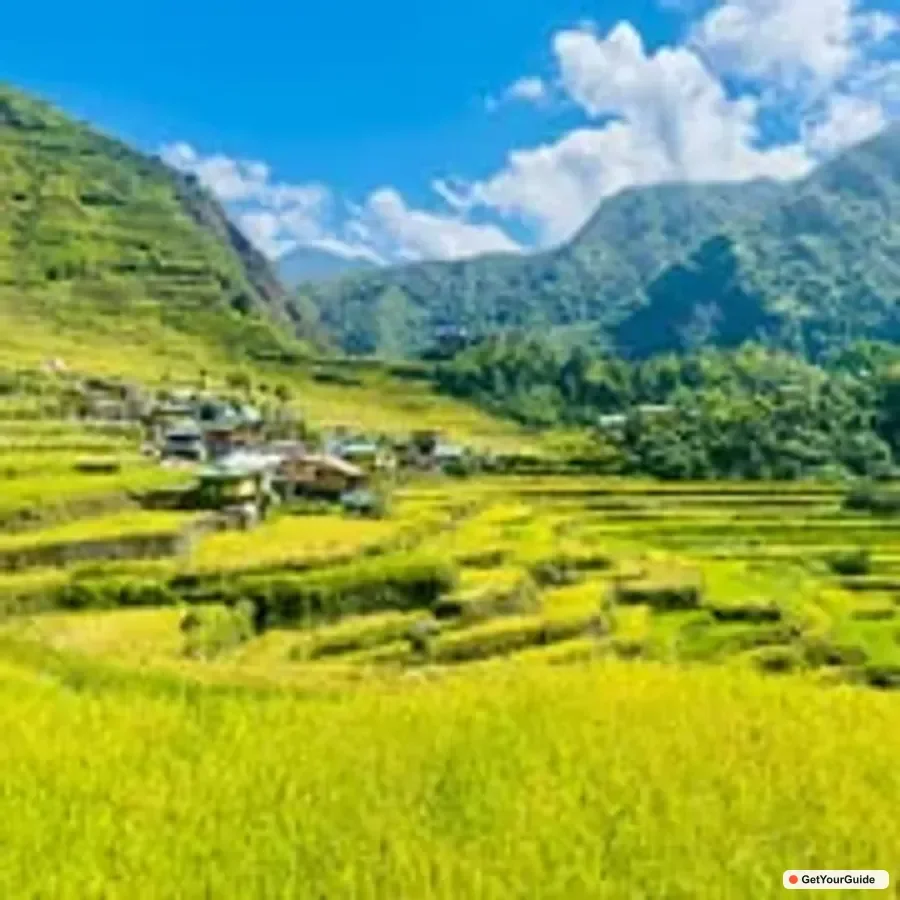
Banaue Rice Terraces
Two thousand years of hand-carved mountains — the Eighth Wonder of the World, still farming · Ifugao, Cordillera, Luzon
Photo: Erikapajama / CC BY-SA 3.0 via Wikimedia Commons
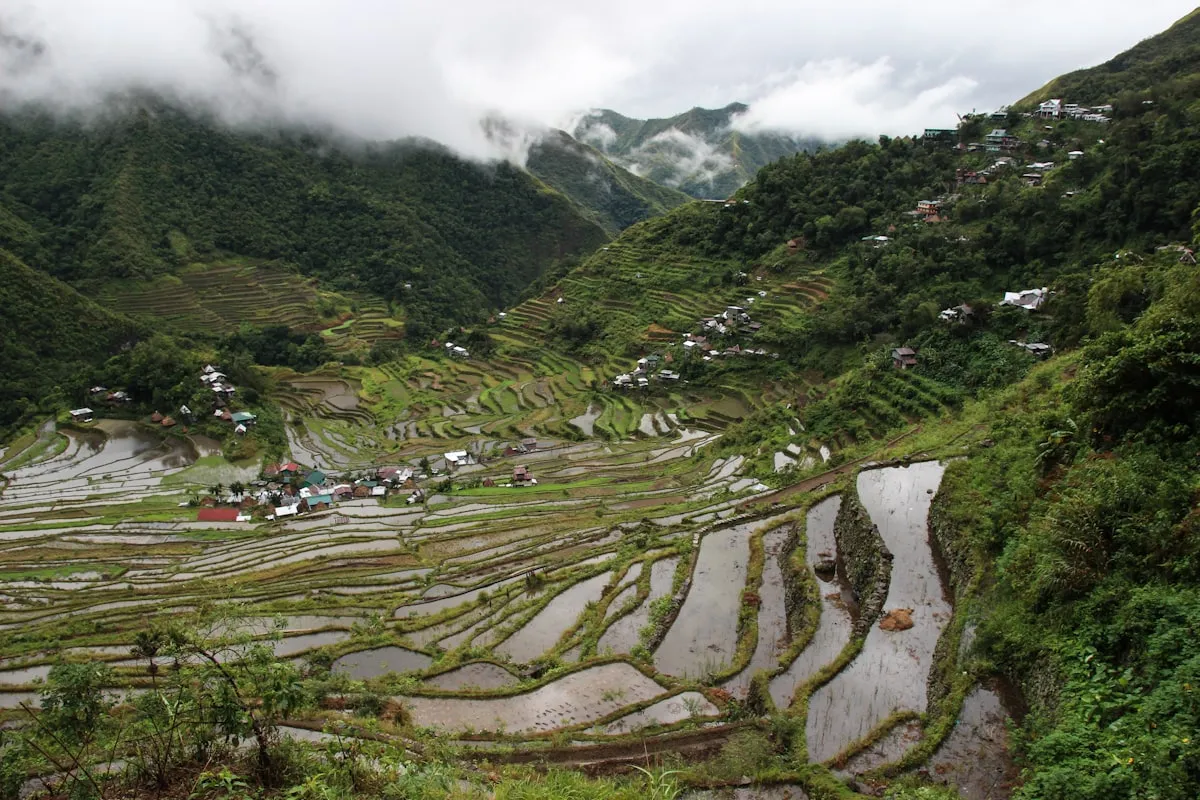
The rice terraces of Ifugao were carved into the Cordillera mountains roughly 2,000 years ago, by hand, using nothing but digging sticks, wooden tools, and an understanding of hydrology so precise that the irrigation systems they built still function today. The terraces extend across the mountains of Banaue, Batad, Bangaan, and Cambulo — a combined area estimated at over 10,000 square kilometres, rising in staircase steps from the river valleys to 1,500 metres elevation. UNESCO included them on the World Heritage List in 1995 and placed them on the List of World Heritage in Danger in 2001, due to the abandonment of traditional farming as younger Ifugao generations moved to cities. The terraces that are still actively farmed — and Batad in particular — retain the kind of visual impact that makes grown adults stop mid-sentence. The landscape is not just beautiful; it is evidence of a civilisation that solved the problem of feeding itself in mountains, and solved it so well the solution has lasted two millennia.
Things to do in Banaue Rice Terraces
Batad Amphitheatre Viewpoint and Village
Batad is the most perfectly preserved set of rice terraces in Ifugao — a bowl-shaped amphitheatre of terraces rising on three sides, with the village nestled at the bottom and a river running through the base. There is no road to Batad; the village is accessible only by a 45-minute trek from the junction on the Banaue–Bontoc highway. The main viewpoint above the village gives you the full panorama. Walk down into the village (Ifugao homestays, PHP 300–500/night) and continue to the Tappiyah Falls trail (2 hours return, strenuous, extremely rewarding — 30m waterfall into a natural pool).
Banaue Town Viewpoint (Sunrise)
The main Banaue viewpoint, 4km uphill from the town centre (tricycle PHP 80–100 one way), faces directly into the most photographed section of the terraces. Arrive before 7 AM for the best light and to beat tour group buses. The viewpoint has a small market selling Ifugao woodcarvings, blankets, and the region's distinctive hand-woven textiles. Ifugao women in traditional dress are present at the viewpoint most mornings and offer to be photographed for a small donation (PHP 50–100 is standard); ask first.
Bangaan Village Trek
Bangaan is an Ifugao village 15 minutes by tricycle from Banaue town, built on a ridge with terraces on all sides. The trail from the road down to the village takes 20–30 minutes. Unlike Batad, Bangaan sees far fewer visitors and the experience of walking through the village — passing Ifugao houses built on raised wooden posts, chickens and pigs below, old men and women weaving in doorways — is quieter and more personal. A local guide from Banaue town (PHP 300–500 for a half-day) is useful for navigating the connecting trails between Bangaan and Banaue.
Ifugao Museum and Cultural Village
The small Ifugao Museum in Banaue town houses traditional tools, clothing, weapons, and agricultural implements from the terrace-farming culture. Entry is PHP 50. The adjacent cultural village demonstrates traditional Ifugao practices including weaving, rice pounding, and the use of traditional granaries (alang). The mummification culture of the nearby Kabayan area (the Ibaloi people, not Ifugao, but within the Cordillera) produced some of the world's best-preserved ancient mummies — ask your guide about a day trip to Kabayan (3 hours from Banaue by van).
Banaue–Batad–Cambulo–Pula Circuit Trek
For serious trekkers, the multi-day circuit connecting Batad with the deeper villages of Cambulo and Pula is one of the best cultural treks in Southeast Asia. The route takes 2–3 days, passing through working terrace systems with no tourist infrastructure, staying in Ifugao community homestays (PHP 200–300/night including basic meals). A licensed Ifugao guide is mandatory (PHP 600–800/day, bookable through Banaue's municipal tourism office). The trails involve significant elevation change and are not suitable in wet season. Pack light; the terrain is uneven and steep.
Sunrise from the Viewpoint Ridge
The viewpoint ridge above Banaue town faces east; on clear mornings between November and April, the sun rises directly behind the Cordillera ridgeline and floods the terraces in low golden light for approximately 45 minutes before the landscape flattens. This is the single best photographic moment in Banaue and is worth arriving a day early to catch. The guesthouses in Banaue can arrange a tricycle to the viewpoint at 5 AM for PHP 100–150.
Photos of Banaue Rice Terraces
A visual taste of Banaue Rice Terraces before you go.
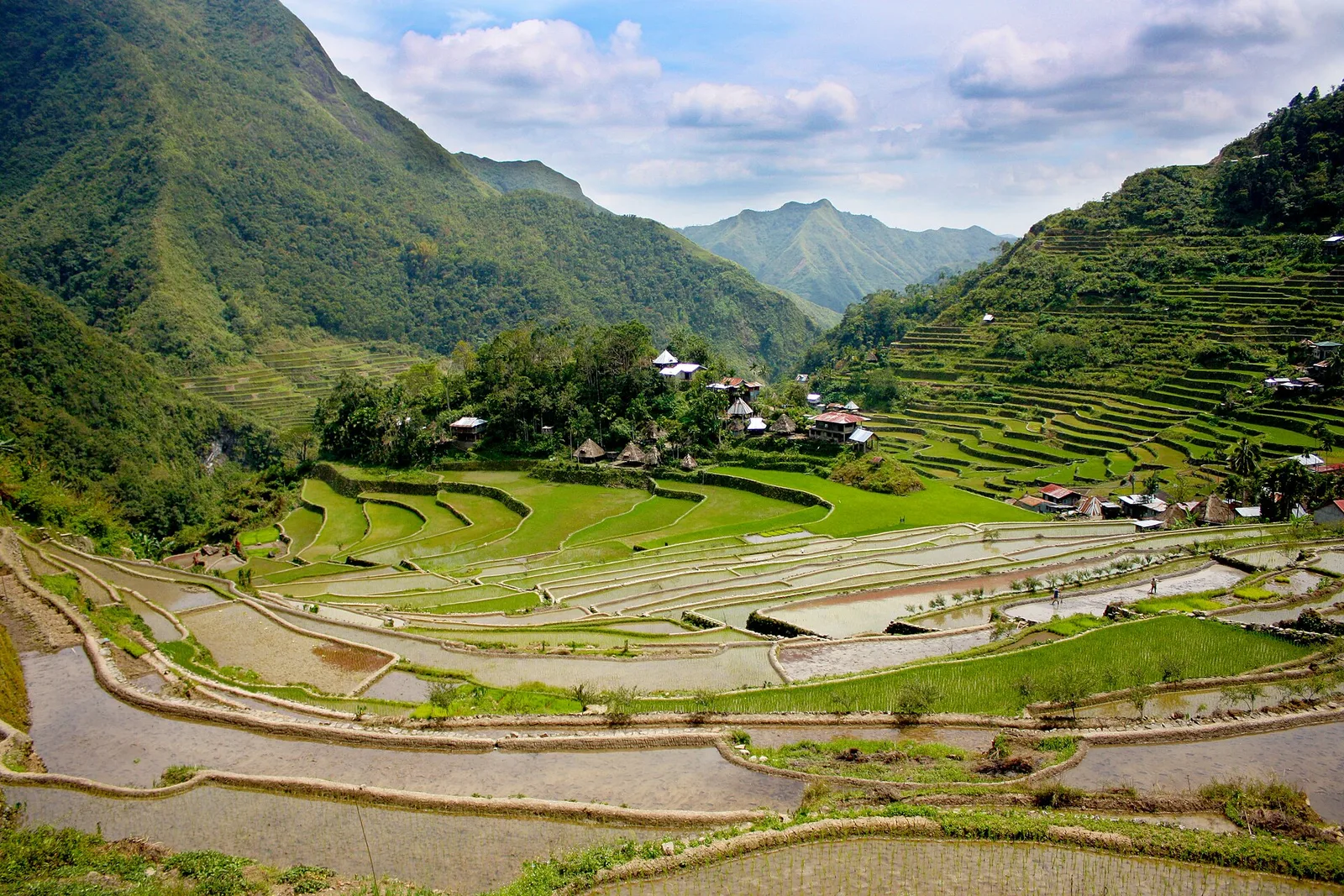
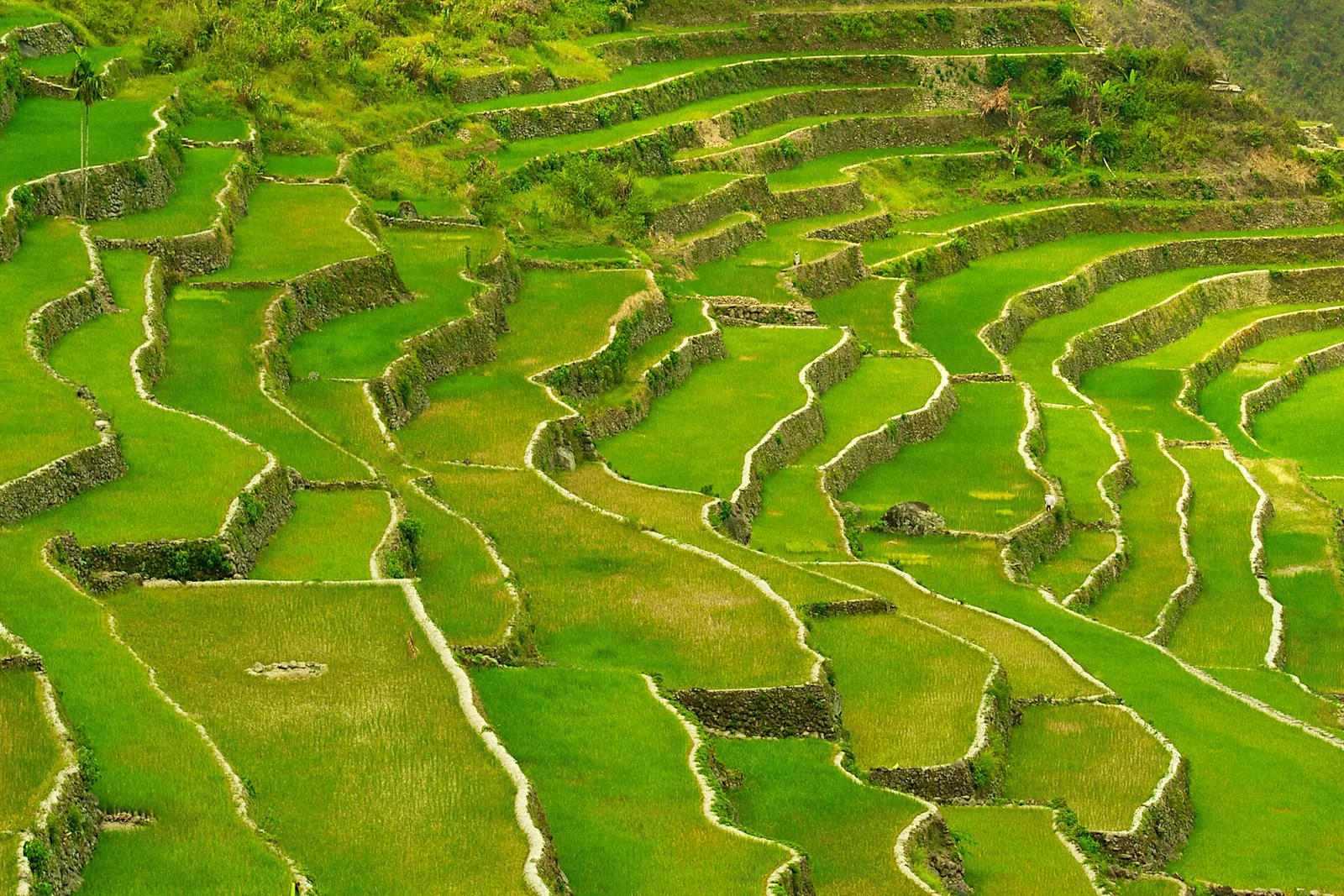
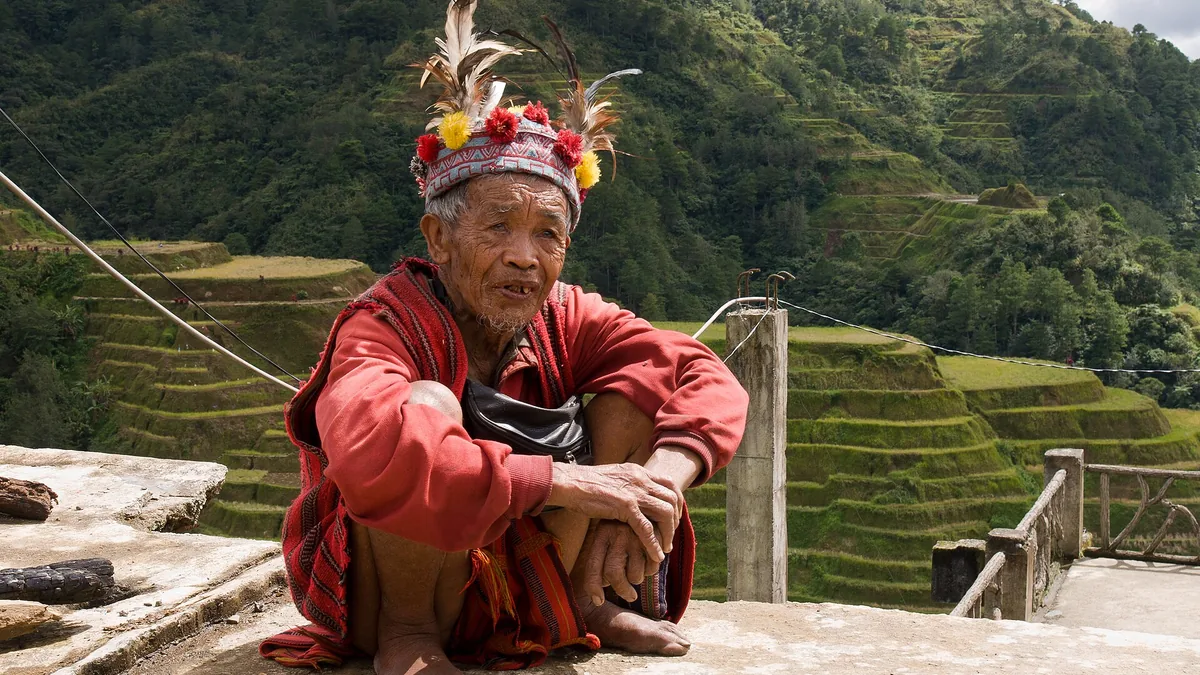
Photos: Ericmontalban (CC BY-SA 3.0) via Wikimedia Commons · M0N FEDERE MD (CC BY-SA 3.0) via Wikimedia Commons
Ready to book?
Book your Banaue Rice Terraces trip now
Hotels, tours and transfers — compare live prices and book securely through trusted partners. Prices update daily.
Affiliate links — we earn a small commission at no extra cost to you. Prices shown are live from our partners.
🗓️ Best time to visit Banaue Rice Terraces
March through May is the dry season when the terraces are bright green with young rice and trekking conditions are best. November through February is cooler and often foggy — spectacular but trekking can be slippery. June through October is the wet season and some trails become dangerous; Batad is accessible year-round but the hike is significantly harder in rain. The rice harvest (September–October in some areas, March in others depending on the terrace level) turns the paddies a deep gold.
✈️ How to get to Banaue Rice Terraces
From Manila, take a overnight bus from Cubao (Ohayami Trans, Florida Trans) to Banaue — the trip takes 9–10 hours (PHP 500–700 economy). Depart around 9–10 PM and arrive in Banaue town around 6–7 AM. Alternatively, fly to Manila then bus. From Baguio, Florida Trans buses to Banaue take 5–6 hours (PHP 300–400). From Banaue town, jeepney or tourist van to Batad junction (30 minutes, PHP 150–200 per person) then a 45-minute trek down to Batad village itself (no road access). Multi-day tours from Manila run PHP 3,500–6,000 per person including transport, accommodation, and guide.
Plan your Banaue Rice Terraces trip
Compare hotels and tours — booked through trusted partners. Use the planner on /plan to turn this guide into a full day-by-day itinerary.
🗓️ Use this guide in your plan
Build a Banaue Rice Terraces trip directly. The planner combines it with real flights, stays and tours into one day-by-day itinerary.
✨ Open Trip PlannerOne of 215+ destinations covered. Explore more at /guides and /blog.
Frequently asked questions — Banaue Rice Terraces
Is the trek to Batad difficult?
The hike from the Batad junction (on the Banaue–Bontoc highway) down to Batad village takes 30–45 minutes. The path is a stone and dirt trail that descends steeply into the bowl — it is not technically difficult but requires good grip footwear (not sandals or flip-flops). Coming back up takes 45–60 minutes and is harder. The Tappiyah Falls extension adds another 2 hours of trekking with steeper sections. Average fitness is sufficient for the junction-to-village route; the waterfall extension is more demanding.
Can I visit Banaue as a day trip from Manila?
Not really. The overnight bus from Manila arrives at 6–7 AM; to make it back on the same day you would need to board the return bus around 7–8 PM, giving you 12 hours — enough for the Banaue viewpoint and possibly Bangaan but not Batad. Most visitors stay a minimum of two nights. The journey is 9–10 hours each way; a day trip treats the travel as an afterthought. Stay at least two nights.
Is it safe to eat the food in Banaue?
Yes. The small restaurants and canteens in Banaue town serve simple but reliable Filipino food — rice with viand, tinola, pinakbet with local mountain vegetables. The local pinikpikan (a traditional Cordillera chicken dish) is worth trying. Homestay hosts in Batad and the other villages serve home-cooked food that is generally fresh and safe. Bring imodium as a precaution for stomach sensitivity to very local water.
What is the best time of year for the terrace colours?
The terraces change colour with the agricultural cycle. The most vivid green is during the young rice season (March–May in the lower terraces, May–July in the higher ones). The harvest season (September–October in some areas) turns the paddies gold. Between harvests, the terraces may be dry and brown — still impressive structurally but less visually dramatic. Ask locals at Banaue's tourism office which areas are currently in the planting or growing phase.
💬 Ask Locals about Banaue Rice Terraces
No questions about Banaue Rice Terraces yet — be the first to ask.
Ask the community →💡 Traveller tips for Banaue Rice Terraces
Local-knowledge from other travellers. Got a tip? Share it.
Loading tips…
📝 Your notes & photos for Banaue Rice Terraces
Loading…
First time in Banaue Rice Terraces?
Quick essentials so you can hit the ground running.
Standard Philippines visa-free entry. No special permits needed for Banaue, though the municipal tourism office registers trekkers as a safety measure. Registration is free.
There is one ATM in Banaue town (LandBank, sometimes out of order). Bring sufficient PHP cash from Manila or Baguio. Most homestays and guides are cash-only. PHP 2,000 per person per day covers accommodation, meals, guide fees, and transport comfortably.
Banaue sits at around 1,100–1,300 metres. Most visitors have no altitude issues at this elevation. The trekking trails can be muddy and slippery in wet season — trekking poles are useful. Leech socks are recommended for wet-season trails in the rice fields. Carry rehydration salts for strenuous treks.
Budget: PHP 1,200–2,000/day (PHP 300–500 homestay, meals PHP 200–300, guide PHP 600 split among group, transport PHP 200). The trek to Batad costs nothing beyond transport to the junction and your own legs. Having a licensed guide costs PHP 600–800 for a full day for the group (not per person).
The terraces are a UNESCO heritage site — stay on marked paths and do not walk on or across the terrace walls, which are fragile mud structures maintained by active farmers. The mountain roads to Banaue are narrow and winding; overnight buses navigate them in the dark — this is safe with experienced drivers but not for nervous passengers. Flash floods can close roads temporarily in the wet season.
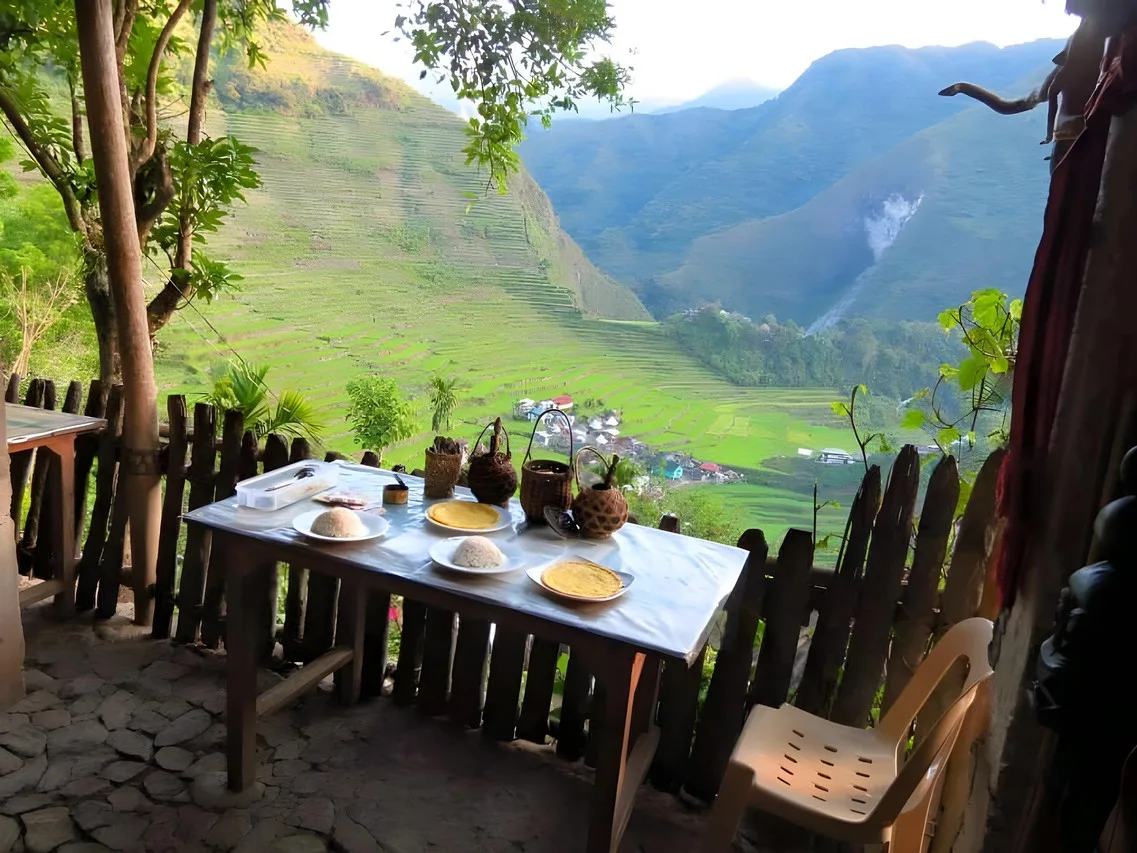
Local Stays in Banaue Rice Terraces
Hand-picked homestays and guesthouses — book direct with local hosts. Add them to your trip plan.
Top Experiences in Banaue Rice Terraces
Island hopping, diving, surfing and more — book instantly. Add them to your trip plan.