Apo Reef Natural Park
The second largest reef in the world — a live-aboard dive in the middle of the Sulu Sea · Occidental Mindoro, MIMAROPA
Photo: Dr. Dwayne Meadows, NOAA/NMFS/OPR. / Public domain via Wikimedia Commons
Apo Reef Natural Park is the largest atoll-type reef in the Philippines and the second largest contiguous reef system in the world after the Great Barrier Reef — a 34-square-kilometre platform reef in the middle of the Sulu Sea, 30 kilometres off the coast of Occidental Mindoro. It was declared a UNESCO World Heritage Site in 2009. Almost no one outside the dive world knows it exists. The reef emerges from open ocean — no land nearby, no harbour, no convenience of access — which means the only visitors it receives are divers on live-aboard boats and the occasional day-trip operator from Coron or Puerto Galera who runs the 5-hour crossing in good weather. What this isolation produces is a marine environment that is essentially undamaged by the human coastal activity that has degraded reefs throughout the Philippines. The fish biomass here is extraordinary: schooling bumphead parrotfish in the hundreds, whitetip and blacktip reef sharks on every dive, grey reef sharks on the drop-offs, tiger sharks in the pass at dusk, and intermittent whale shark and manta ray encounters that have made specific sites on Apo Reef famous among serious divers worldwide.
Things to do in Apo Reef Natural Park
Diving the Apo Reef Drop-Offs
The outer wall of Apo Reef drops from the reef flat at 5–10 metres to open ocean — a vertical wall of hard coral, seafans, and sponges descending into blue. Schooling fish in enormous numbers move along the wall: fusiliers, snapper, and jacks by the thousand. Grey reef sharks patrol the edges of the wall. White-tip reef sharks rest on the sandy bottom at 20–25m. On most dives at Apo Reef you will see more sharks than you have seen in your entire previous diving career combined. The density is not unusual for a healthy open-ocean reef; it is what the Philippines should look like everywhere.
The North Reef Bumphead Parrotfish School
The North Reef section of Apo Reef hosts a resident school of bumphead parrotfish — a species that can reach 1.3m in length, feeds on live coral by ramming it with its reinforced skull, and travels in schools of 50 to 200 animals. The sound of a bumphead school working a reef is audible underwater from 20 metres away — a grinding, crunching cacophony of coral being eaten and excreted as white sand. Encountering this school is one of the most viscerally impressive wildlife experiences in Philippine waters.
Snorkeling the Reef Flat at Low Tide
The shallow reef flat of Apo Reef, when the tide is low enough to expose the inner lagoon, allows snorkeling directly over an intact reef in 0.5–3 metres of water. The fish density in the shallows is exceptional — damselfish, surgeonfish, and parrotfish in carpet-like abundance. The live coral coverage of the reef flat is among the highest remaining in the Philippines. Non-divers on live-aboard trips can snorkel during diver surface intervals.
Night Diving at Apo Reef
Night dives at Apo Reef produce a different cast: hunting white-tip reef sharks (extremely active at night), octopus, sleeping parrotfish cocooned in mucus, and a bioluminescent plankton display when the water is moved. Live-aboard operators include night dives as standard. The isolation of the reef — no light pollution from the mainland — makes the open ocean above the reef completely dark; the star field on the surface interval is one of the benefits of diving this remote.
Photos of Apo Reef Natural Park
A visual taste of Apo Reef Natural Park before you go.
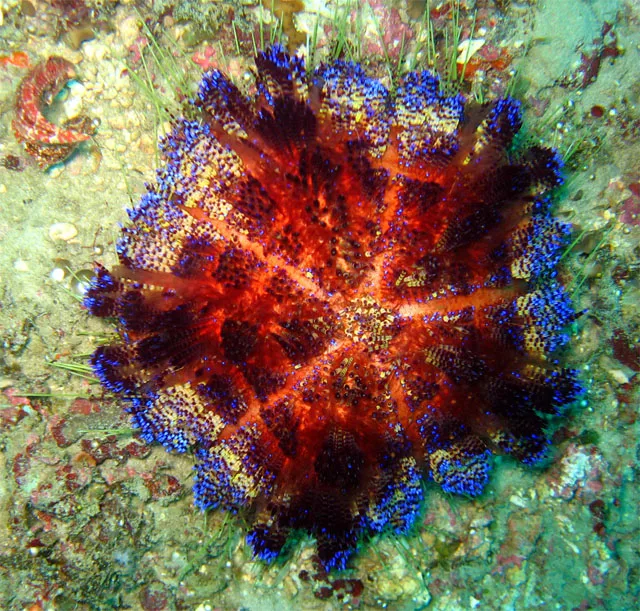
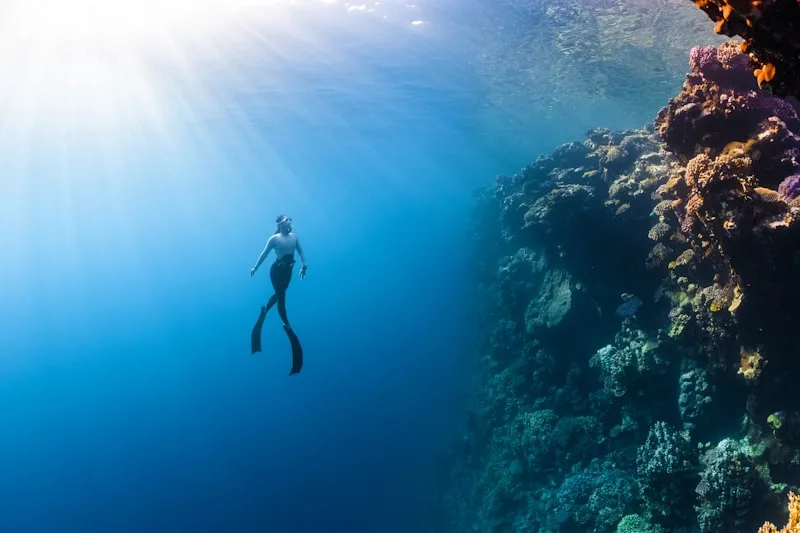


Photos: Anders Poulsen, Deep Blue (http://www.colours.dk/) (CC BY-SA 3.0) via Wikimedia Commons · en:user:Sdfisher (Public domain) via Wikimedia Commons
Ready to book?
Book your Apo Reef Natural Park trip now
Hotels, tours and transfers — compare live prices and book securely through trusted partners. Prices update daily.
Affiliate links — we earn a small commission at no extra cost to you. Prices shown are live from our partners.
🗓️ Best time to visit Apo Reef Natural Park
March through June is the best window — calm seas, good visibility (often 30m+), minimal current variability. November through February is the northeast monsoon season; the reef can still be accessed from the eastern approach but conditions are less predictable. July through October is the southwest monsoon and typhoon season — most live-aboards cancel Apo Reef departures in this period. A long live-aboard trip in April or May gives the best combination of weather, visibility, and marine life activity.
✈️ How to get to Apo Reef Natural Park
Apo Reef is not accessible independently — it requires either a live-aboard boat or an organised day trip from Sablayan in Occidental Mindoro. Live-aboards depart from Puerto Galera (3–4 hours), Coron (5–6 hours), or Manila (8–10 hours) and provide accommodation, meals, and unlimited diving during the crossing and time at the reef. Live-aboard costs run PHP 20,000–40,000 per person for a 3–4 day trip. Day trips from Sablayan: fly to San Jose, Occidental Mindoro (Air Juan, Philippines AirAsia) or take RORO ferry from Batangas, then overland to Sablayan (4–5 hours), then motorboat to the reef (2–3 hours). Day trips are possible in calm weather but exhausting; most serious diving visits use live-aboards.
Plan your Apo Reef Natural Park trip
Compare hotels and tours — booked through trusted partners. Use the planner on /plan to turn this guide into a full day-by-day itinerary.
🗓️ Use this guide in your plan
Build a Apo Reef Natural Park trip directly. The planner combines it with real flights, stays and tours into one day-by-day itinerary.
✨ Open Trip PlannerOne of 215+ destinations covered. Explore more at /guides and /blog.
Frequently asked questions — Apo Reef Natural Park
Do I need special certification to dive at Apo Reef?
Advanced Open Water certification is the standard minimum required by most live-aboards for Apo Reef — some dives go deeper than the 18m OW limit, and the currents require buoyancy control that is reliably developed by the AW level. Some operators accept OW divers on the shallower sites. Rescue Diver or Divemaster certification is preferred for the more demanding pass and deep wall sites.
Is a live-aboard necessary or can I do it as a day trip?
Live-aboard is strongly recommended. Day trips from Sablayan (the nearest town) involve a 2–3 hour open-sea crossing each way and give you 3–4 dives at the reef before the 3-hour return. The total travel time eats the day. Live-aboards give you 15–20 dives over 3–4 days, complete with good food and sleep on the reef. The difference in experience is not marginal.
What is the permit situation for Apo Reef?
The reef is a protected area under the DENR. Entry fees and permits are collected by the park rangers based at the ranger station on the reef — typically PHP 500–1,000 per diver per day, collected on arrival. Live-aboard operators include this in their quoted price. Day-trip operators from Sablayan handle the permits as part of the tour package.
💬 Ask Locals about Apo Reef Natural Park
No questions about Apo Reef Natural Park yet — be the first to ask.
Ask the community →💡 Traveller tips for Apo Reef Natural Park
Local-knowledge from other travellers. Got a tip? Share it.
Loading tips…
📝 Your notes & photos for Apo Reef Natural Park
Loading…
First time in Apo Reef Natural Park?
Quick essentials so you can hit the ground running.
Standard Philippines visa-free entry. Apo Reef entry permit (PHP 500–1,000/diver/day) collected by rangers on site.
Bring PHP cash — the ranger station takes no cards. All live-aboard costs are paid to the operator before departure. No facilities at the reef itself.
The nearest decompression chamber is in Manila or Puerto Galera (multiple hours away). Dive insurance covering hyperbaric treatment and medical evacuation is non-negotiable for remote diving. Live-aboard operators require proof of dive insurance from all guests.
Live-aboard 3–4 days: PHP 20,000–40,000 per person all-in (accommodation, meals, unlimited diving, equipment). Day trip from Sablayan: PHP 3,000–5,000 per person (transport, boat, dive guide, permits — not including accommodation).
Apo Reef is remote — emergency services are far away. Dive conservatively: no deco diving unless you have tech certification and a team, no solo diving, and surface markers on every dive. The currents can be unpredictable — always dive with a guide who dives Apo regularly.
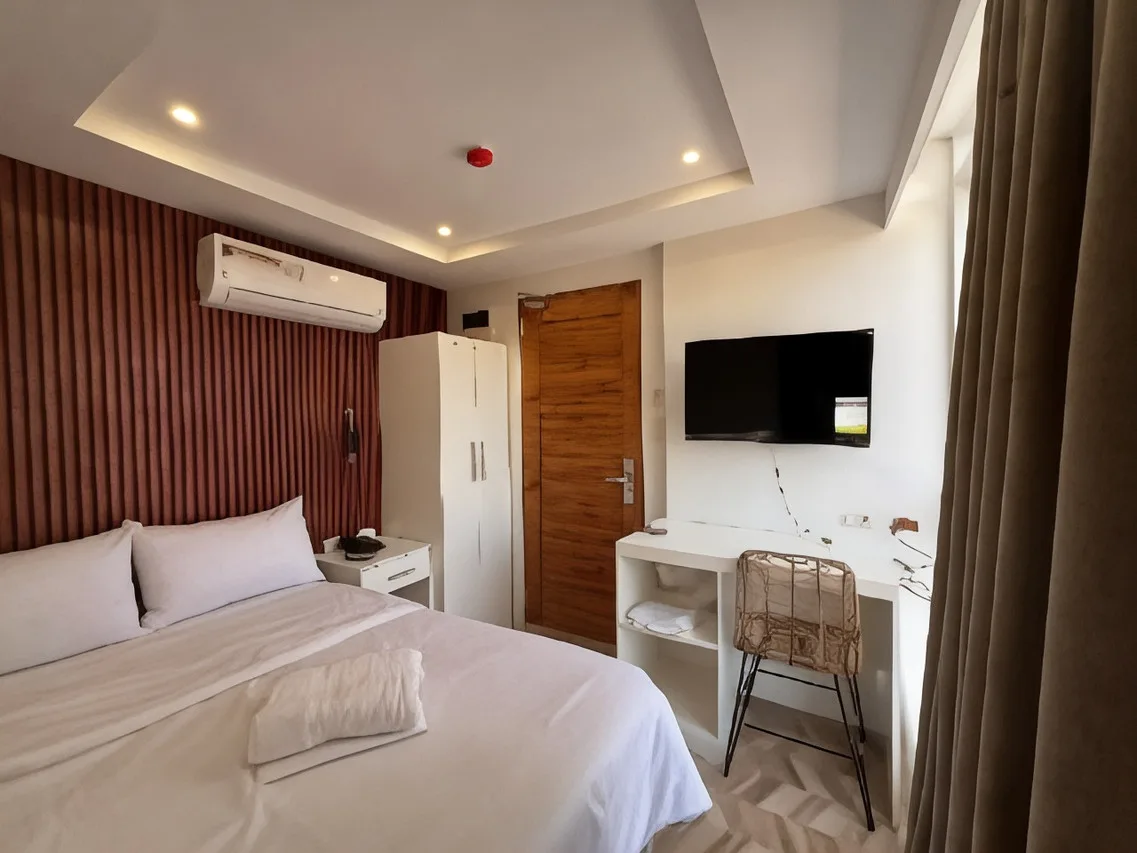
Local Stays in Apo Reef Natural Park
Hand-picked homestays and guesthouses — book direct with local hosts. Add them to your trip plan.
Top Experiences in Apo Reef Natural Park
Island hopping, diving, surfing and more — book instantly. Add them to your trip plan.