Philippine street food is a democracy. It belongs to everyone: the construction worker grabbing isaw on his way to a job site at 6am, the schoolkid spending her entire baon on kwek-kwek and fishball at the school gate, the office worker who cannot resist the taho vendor's morning call of "Taaaaho!" drifting up from the street below. And now — if you are willing — you, the visitor who just arrived and is staring at a cart of things on skewers and wondering what exactly that orange ball is.

Philippines Street Food Guide: 20 Things to Eat for Under ₱50 Each
Trip.com
Search on Trip.comHotels in Philippines
Compare live prices via Travelpayouts — targeted for this guide.
The answer is almost always: try it. Philippine street food is one of the great bargain pleasures of travel in Southeast Asia — deeply flavorful, aggressively cheap, and a far better introduction to Filipino food culture than any air-conditioned restaurant with laminated menus. Here are the 20 things you should eat, with prices, locations, and the safety notes you actually need.
The 20 Must-Try Philippine Street Foods
1. Fishball / Squidball / Kikiam — ₱10–20 per skewer
What it is: Compressed fish paste (or squid, or kikiam — a seasoned Chinese-style fish-and-vegetable roll) shaped into balls, deep-fried on a cart, and served on bamboo skewers. The ritual is to dip them in the sauce — either sweet brown sauce, sweet-spicy, or vinegar — that sits in bowls on the cart.
Where to find it: Literally everywhere. Every school gate, every LRT station entrance, every market, every street corner in any Philippine city. The cart with the big wok of oil and the skewers sticking out is unmistakable.
Trip.com
See all tours in Philippines on Trip.comFood tour in Philippines
Hand-picked experiences in Philippines — book on Trip.com with instant confirmation.

Safety note: The oil is reused heavily. The sauce bowls are communal and sit at ambient temperature all day. Eat early in the vendor's day — mid-morning rather than late afternoon — when both the oil and the sauce are fresher. Your stomach will thank you.
2. Kwek-Kwek — ₱15–25 for 3–4 pieces
What it is: Hard-boiled quail eggs coated in a vivid orange batter (made with food colouring and flour) and deep-fried until the batter puffs and crisps. Served with the same dipping sauce options as fishball.
Where to find it: Same fishball carts, often sold together. The orange colour makes them visible from 20 metres. Manila, Cebu, Davao — everywhere.
Safety note: The quail eggs are pre-boiled; the frying step fully heats them. Lower risk than items kept at ambient temperature. Eat hot, not cold.
3. Balut — ₱20–30 per egg
What it is: The most famous and most misunderstood item in Philippine food. A fertilized duck egg incubated for 14–21 days, then boiled and eaten in the shell. At 14 days (itlog na pula or "red egg" stage in some regions), it is mostly just a rich, broth-filled egg with a small embryo. At 21 days, the duckling is more developed — you will see feathers and bone. Most balut sold on the street is 16–18 days.
The ritual: Tap the narrow end of the shell, peel a small hole, drink the warm broth first (this is the best part — rich, slightly gamey, wonderful), then peel the rest and eat the yolk, whites, and embryo. Season with salt and vinegar.
Where to find it: Night markets, evening street vendors who carry a basket of warm eggs. The vendor calls "Balut! Balut!" in the evening. Quiapo in Manila, Colon Street in Cebu, and virtually any provincial town market.
Safety note: Eat it hot. A freshly boiled balut is perfectly safe. A balut that has been sitting in a basket all evening and is now lukewarm is a different proposition. Squeeze the shell slightly — if it feels springy and warm, it was boiled recently. If cold, pass.
4. Isaw — ₱10–15 per skewer
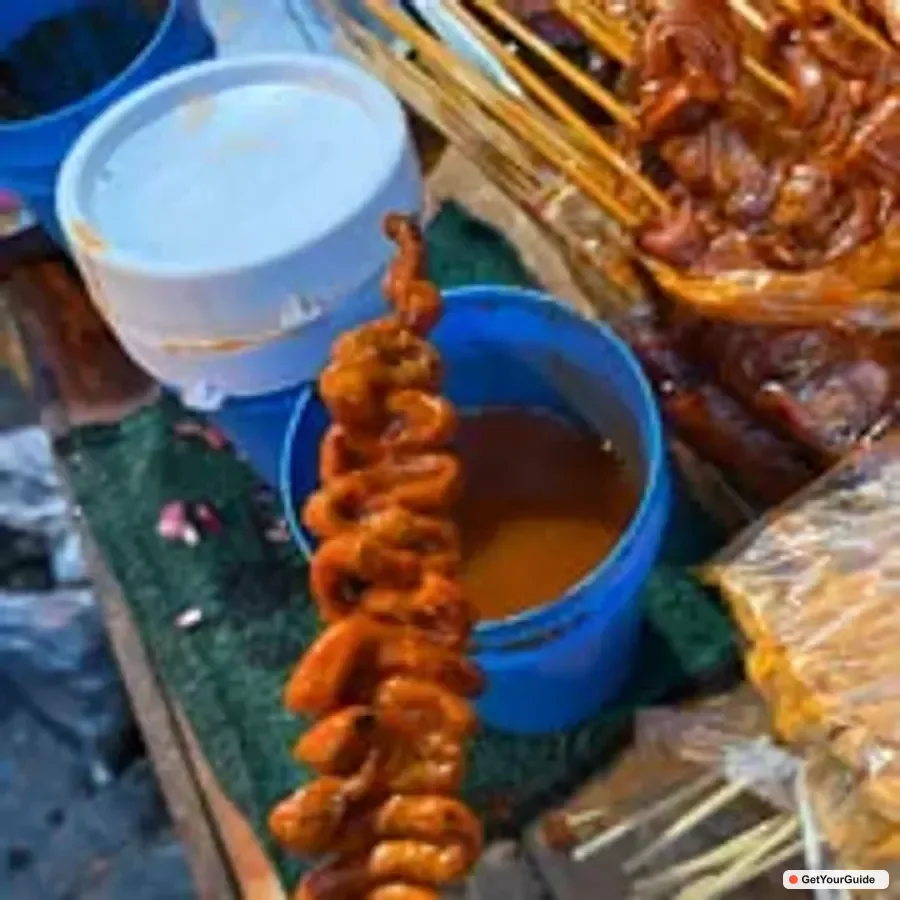
What it is: Chicken intestines (isaw ng manok) or pig intestines (isaw ng baboy) cleaned, marinated in soy-garlic sauce, threaded onto skewers in tight coils, and grilled over charcoal until charred and chewy. The smell of isaw grilling is one of the great street-food aromas of Philippine cities.
Where to find it: Night markets, near universities and schools (isaw is a legendary study-session snack), and street BBQ carts from about 4pm onwards. Quiapo, Divisoria, Taft Avenue, and every university belt in Manila.
Safety note: The marination and thorough grilling handle most concerns. Eat from vendors with a high turnover — you want isaw that has been on the grill recently, not sitting.
5. Betamax — ₱10 per skewer
What it is: Coagulated pig or chicken blood, cut into neat rectangles (the shape resembles a Betamax cassette tape, hence the name), skewered, and grilled. The texture is firm and slightly crumbly, the flavour mild and metallic-savoury, improved enormously by the sweet-spicy dipping sauce.
Where to find it: Same BBQ and isaw carts, usually sold alongside. Common in Manila, Cebu, and the Visayas; less common in Muslim-majority Mindanao areas.
6. Banana Cue / Camote Cue — ₱10–20
What it is: Saba bananas (a starchy cooking banana, not the sweet dessert kind) or camote (sweet potato) deep-fried in oil with brown sugar until caramelised into a dark, sticky, intensely sweet coating. Served on a bamboo skewer.
Where to find it: Morning and afternoon snack time, near schools, markets, and jeepney terminals. The caramelised sugar smell is impossible to miss.
Safety note: Freshly fried = excellent. Sitting in a tray from two hours ago = gummy and sad. Watch the fryer; buy when a fresh batch comes out.
7. Taho — ₱15–20
What it is: Silken tofu (the softest, most delicate you have ever eaten) layered with arnibal — a thick brown sugar syrup fragrant with vanilla — and sago pearls (tapioca). Served warm from a large aluminium container carried on a shoulder pole by the magtataho vendor.
Where to find it: Morning only, typically 6–10am. The vendor walks through residential neighbourhoods calling "Taaaaho!" in a long, musical shout. In BGC and Makati, some vendors also appear near office buildings at breakfast time. If you hear the call from your guesthouse window, get outside immediately — the good vendors sell out fast.
Safety note: One of the safest street foods in the Philippines. The tofu is fresh daily, the syrup is cooked, and the vendor's containers keep everything at the right temperature. A consistent favourite for visitors who are nervous about street food.
8. Dirty Ice Cream (Sorbetes) — ₱15–25 per scoop
What it is: Filipino artisanal ice cream sold from colourful pushcarts, served in small cups or on pandesal rolls (yes, ice cream sandwiched in bread — try it). The "dirty" nickname is unfair and historical; the ice cream is perfectly safe. Flavours include ube (purple yam), cheese, mango, langka (jackfruit), chocolate, and avocado.
Where to find it: Parks, plazas, near churches after Sunday mass, SM Mall entrances. Ube and cheese are the quintessential Filipino flavours; order both in a cup.
9. Puto — ₱10–15 each
What it is: Steamed rice cakes, fluffy and slightly sweet, traditionally eaten as a snack or alongside dinuguan (pork blood stew) — the pairing sounds odd but works perfectly. Come in white, pandan green, and ube purple varieties.
Where to find it: Markets, fiesta food stalls, alongside kakanin (native cake) sellers. Ubiquitous across all regions.
10. Bibingka — ₱50–80 (Christmas season especially)
What it is: A traditional rice cake baked in clay pots lined with banana leaves, topped with salted egg, fresh cheese (kesong puti), and butter. The charcoal-top-and-bottom baking method gives it a faintly smoky, caramelised exterior and a tender, steaming interior. Peak season is the Christmas Simbang Gabi (dawn mass) season from December 16–24, when bibingka vendors set up outside churches in the early morning darkness.
Where to find it: Church plazas during December dawn masses, year-round at Barangay Kapitolyo in Pasig (Metro Manila's food hub) and at stalls in Intramuros. Some markets sell it year-round, but the atmosphere of eating bibingka outside a church at 4:30am during Christmas season is irreplaceable.
11. Buko Pie — ₱50 per slice
What it is: Young coconut (buko) pie — a pastry shell filled with tender strips of young coconut in a light cream filling. The Laguna province town of Los Banos and the surrounding area is the buko pie capital of the Philippines. Every bakeshop along the highway south of Manila sells it; the quality varies enormously.
Where to find it: Along the Manila-Los Banos highway (Laguna), pasalubong shops near provincial bus terminals, some Manila supermarkets. Best eaten the day it is baked.
12. Chicharon — ₱20–50 per bag
What it is: Deep-fried pork skin (or pork belly, or chicken skin, or even fish), puffed to a crisp. Philippine chicharon is a national obsession and comes in a dizzying range of qualities. The best — large, airy, not too salty, served warm — is genuinely extraordinary. Bulacan province is considered the chicharon capital.
Where to find it: Everywhere, from convenience store bags (C2 and generic brands) to dedicated chicharon stalls in markets. Balut-and-chicharon is a common late-night pairing. Try it with spiced vinegar dip.
13. Turon — ₱15–25
What it is: Saba banana (and often jackfruit strips) wrapped in a lumpia (spring roll) wrapper with brown sugar, deep-fried until golden and the sugar caramelises into a crackling shell. One of the most universally loved Filipino snacks.
Where to find it: Markets, merienda carts, and school canteens everywhere in the country. Buy hot — a warm turon with crisp caramelised exterior is one of life's small pleasures.
14. Halo-Halo — ₱50–100
What it is: The Philippines' greatest dessert and one of the most complex shaved-ice creations in the world. A tall glass or bowl layered with: shaved ice, evaporated milk, ube halaya (purple yam jam), leche flan, macapuno (coconut sport), red beans, white beans, nata de coco, kaong (sugar palm fruit), sago pearls, jackfruit, and often a scoop of ube ice cream on top. The name means "mix-mix" — you stir everything together before eating.
Where to find it: Everywhere from carinderia to Jollibee to dedicated halo-halo shops (Razon's of Guagua is the most famous chain). Best eaten in the midday heat as a cooling survival mechanism.
15. Pork / Chicken BBQ Stick — ₱25–40
What it is: Pork or chicken marinated in a sweet-soy-calamansi mixture, threaded onto bamboo sticks, and grilled over charcoal. The Filipino BBQ marinade leans sweet — notably different from the soy-heavy versions in other Southeast Asian countries. Served with spiced vinegar dip.
Where to find it: Evening BBQ carts from 4pm everywhere. The Mang Larry's BBQ chain has locations across Manila; independent BBQ stalls cluster near schools, churches, and market areas.
16. Arroz Caldo — ₱30–60
What it is: Filipino rice congee (lugaw) with chicken, ginger, toasted garlic, spring onions, and calamansi. The ginger gives it a warming, therapeutic quality that makes it the default Filipino hangover cure, sick-day comfort food, and cold-weather staple.
Where to find it: Early morning carinderia and lugawan stalls, open before 7am. In Manila, the Quiapo and Baclaran areas have excellent lugawan stalls. Best on a cool Baguio morning or a rainy Cebu City afternoon.
17. Pancit Canton — ₱30–50
What it is: Stir-fried egg noodles with pork, shrimp, and vegetables in a savoury soy-based sauce. One of the core carinderia dishes and an everyday Filipino meal. The birthday association (long noodles = long life) means it appears at every Filipino celebration.
Where to find it: Any carinderia (local cafeteria-style eatery) in the country. Look for the tubs of pre-cooked dishes displayed behind glass — pancit canton is almost always among them.
18. Longganisa — ₱50–80 breakfast
What it is: Philippine-style pork sausage, distinctly different from Spanish chorizo — shorter, fatter, and either sweet (Pampanga style, hamonado) or garlicky-sour (Vigan style, de recado). Served at breakfast alongside sinangag (garlic fried rice) and a fried egg — the combination called longsilog.
Where to find it: Carinderia, tapsihan (breakfast joints), and every province has its own local longganisa style. Vigan longganisa (Ilocos Sur), Lucban longganisa (Quezon), and Pampanga longganisa are considered the gold standards.
19. Nilagang Baka — ₱50–80 per bowl
What it is: Beef boiled in a clear broth with potatoes, cabbage, pechay (Chinese cabbage), and corn. Simple, restorative, and deeply comforting. The broth is the star — light but rich from slow-cooked beef bones.
Where to find it: Carinderia across the country, lunch and dinner service. Order with plain steamed rice and fish sauce on the side.
20. Kare-Kare at the Carinderia — ₱80–150
What it is: Oxtail (or tripe, or pork) slow-cooked in a rich peanut-based stew with banana blossom, eggplant, and long beans, traditionally served with fermented shrimp paste (bagoong) on the side. The peanut sauce is thick, golden, and intensely savoury-sweet. This is one of the great Filipino dishes and surprisingly affordable at carinderia.
Where to find it: Sit-down carinderia serving full meals. Not true street food (requires a plate and fork) but easily the best value upscale dish you can eat for under ₱150. Kapampangan restaurants (Pampanga cuisine) serve the definitive version.
Street Food Safety: The Real Rules
The golden rule is heat. Food that is freshly fried, freshly grilled, or just boiled is safe. Food sitting at ambient tropical temperature for hours is not. Watch the vendor's pace of turnover — a busy cart cycles through its stock quickly and the oil and ingredients stay fresh. A quiet cart with oil that has been sitting since morning is a different matter.
Sauces and dips: The communal dipping sauces at fishball carts (the bowls everyone reaches into) are the highest-risk element of Philippine street food. If your stomach is sensitive, dip your own skewer rather than double-dipping into a communal bowl with a spoon. Or simply skip the sauce entirely — fishballs and kwek-kwek are fine without it.
Water: Tap water in the Philippines is not safe to drink. All the street foods listed here are cooked, so water safety is not a direct concern — but wash your hands before eating, carry hand sanitiser, and drink only bottled or filtered water with your street food meals.
Your gut adjustment: If you have just arrived in the Philippines, give yourself a day or two before aggressively exploring street food. Your gut microbiome needs time to adjust to a new food environment. Start with the lower-risk items (taho, banana cue, halo-halo, bibingka) and work up to isaw and balut once your system has settled.
Frequently Asked Questions
Is Philippine street food safe for foreigners to eat?
Yes, with some awareness. The key is to eat food that is freshly cooked and hot, buy from vendors with high turnover (busy carts = fresh food), and skip communal dipping sauces if your stomach is sensitive. Millions of foreigners eat Philippine street food without incident every year. Taho, halo-halo, banana cue, turon, pork BBQ sticks, and bibingka are the lowest-risk starting points. Isaw, balut, and betamax are higher adventurousness picks but are safe when freshly cooked.
What is balut and should I try it?
Balut is a fertilized duck egg incubated for 16–18 days, boiled, and eaten in the shell. The embryo is visible and edible. The flavour is rich, eggy, and slightly gamey — think the most intensely flavoured hard-boiled egg you have ever eaten, with added broth. Whether to try it is entirely personal. If you eat organ meats, adventurous seafood, or are generally an unfussy eater, balut is genuinely delicious and worth trying. If you are squeamish about the visual, know that closing your eyes and drinking the broth first is a perfectly honourable strategy.
Where is the best street food in the Philippines?
Manila's street food density is highest in Quiapo, Divisoria, Binondo (Chinatown), and the Taft Avenue university belt. Cebu's Carbon Market and Colon Street area are excellent. Davao's Bankerohan Market is superb for Mindanao specialties. For the most adventurous street food scene, try the night market along Roxas Avenue in General Santos City or the Aldevinco Shopping Centre food stalls in Davao.
How much money do I need for a day of street food eating in the Philippines?
A full day of serious street food exploration — breakfast taho, mid-morning kwek-kwek and fishball, lunch at a carinderia (arroz caldo + pancit), afternoon halo-halo, evening isaw and BBQ sticks — will cost you PHP 300–500 total. That is roughly USD 5–9. Philippine street food is among the cheapest quality eating experiences in Southeast Asia.
What is the difference between a carinderia and a restaurant?
A carinderia (from the Spanish "carinderia") is a Filipino cafeteria-style eatery where pre-cooked dishes are displayed in tubs or pots and you point to what you want, which is then plated with rice. It is cheap (₱60–150 per meal with rice), fast, and the food is authentically Filipino home cooking. A restaurant has table service, a menu, and higher prices. Most Filipinos eat at carinderia for daily meals. As a visitor, eating at a carinderia is one of the most authentic food experiences in the Philippines — do not be deterred by the informal setting.

PANA.PH Editorial Team
Philippines travel desk
The PANA.PH travel desk researches, books and re-checks Philippines travel logistics — fares, ferry schedules, government fees and permit rules — and publishes what it can verify.
🏡 Real local stays (book direct)
Hand-picked homestays and guesthouses — book direct, no markup.
Browse all local stays →


🌊 Popular activities (book instantly)
Island hopping, canyoneering, whale sharks — real Klook/GetYourGuide options.
View all activities →