The wind at Boracay's Bulabog Beach arrives at 9am and doesn't quit until sunset. It comes from the northeast — steady, predictable, averaging 15 to 20 knots through the amihan season — and it turns the eastern shore of this small island into one of the best kitesurfing venues in Asia. While the famous White Beach on the opposite side of the island fills with sunbathers and Instagram photographers, Bulabog is a different universe entirely: kites in every color filling the sky, boards carving across flat green water, instructors shouting corrections over the wind, the smell of salt and sunscreen and adrenaline.
Kitesurfing in the Philippines: Boracay Bulabog & Beyond (2026 Complete Guide)
Trip.com
Search on Trip.comHotels in Philippines
Compare live prices via Travelpayouts — targeted for this guide.
If you have ever wanted to learn to kitesurf, the Philippines is the place to do it. Here is everything you need to know.
Bulabog Beach: Asia's Kitesurfing Capital
Bulabog Beach on Boracay's eastern shore hosts the Asian Kiteboarding Championship and has been drawing kite enthusiasts since the early 2000s. The beach stretches for about two kilometers and is reserved during amihan season almost exclusively for kitesurfing and windsurfing — swimming is technically possible but the kite lines make it inadvisable and locals will redirect you to White Beach.
The conditions at Bulabog are nearly perfect for both beginners and advanced riders:
Trip.com
See all tours in Philippines on Trip.comSurfing lessons in Philippines
Hand-picked experiences in Philippines — book on Trip.com with instant confirmation.
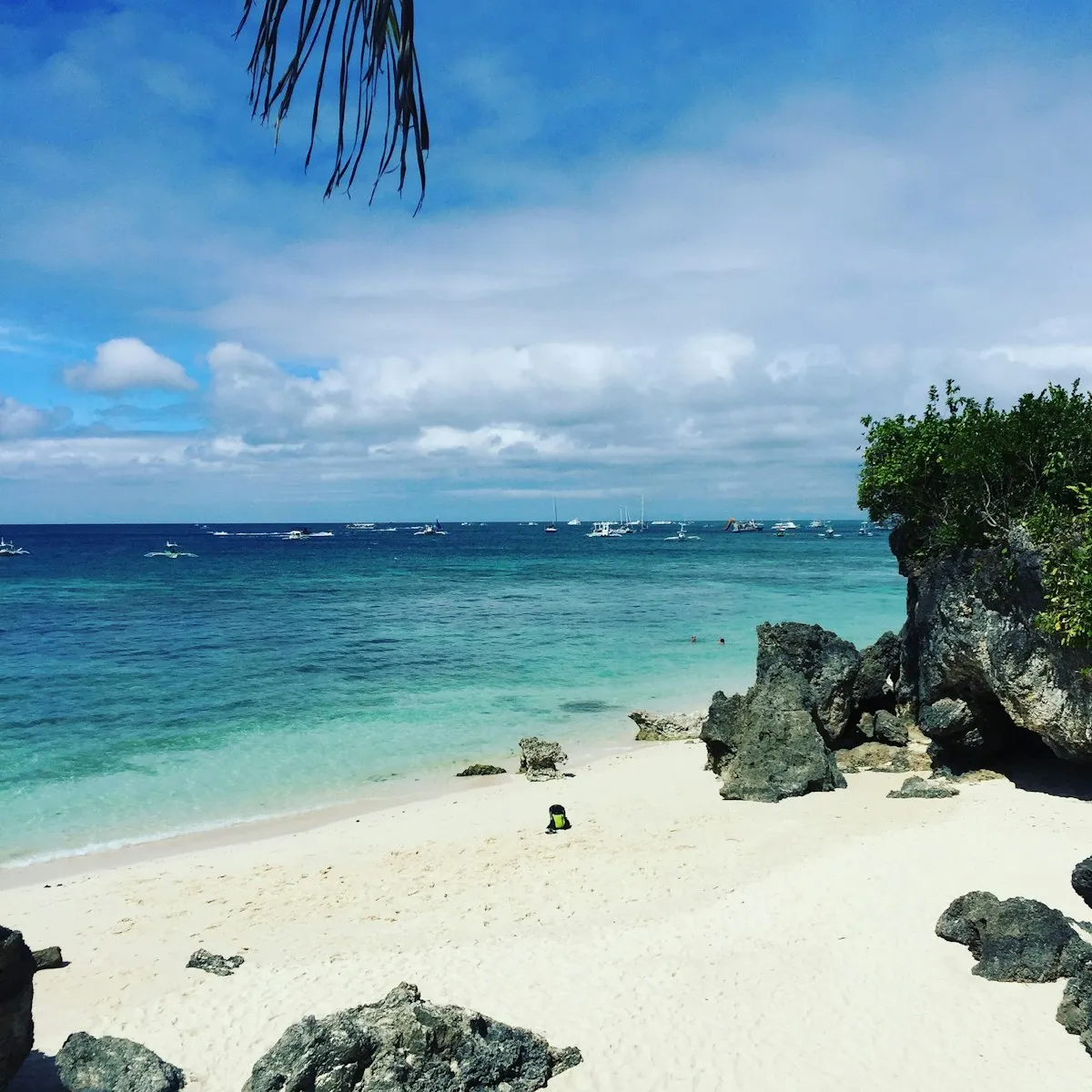
- Wind: Consistent northeast amihan trade winds, 15–25 knots, from November through May. The wind is side-to-side-onshore (blowing across the beach rather than straight at it), which is ideal for learning — you launch heading downwind across the water with the beach as a safety backstop.
- Water: Shallow and flat inside the reef (knee to waist depth for 100 metres out), protected by a reef that breaks the swell. Beginners don't have to worry about waves while learning body dragging and board control.
- Water temperature: A constant 27–29°C — no wetsuit required, just a rash guard for sun protection.
The beach itself is a far cry from the manicured resort strip of White Beach. Bulabog is working — bangka boats hauling kite students out to the launch area, kite schools with their gear laid out on the sand, a string of casual restaurants and bars serving cold San Miguel and Filipino food. It is unpretentious and energetic and most kitesurfers prefer it to the selfie crowds of White Beach.
Learning to Kitesurf in Boracay
Boracay is an exceptional place to learn kitesurfing, and here is why beyond the wind conditions: IKO-certified instruction is abundant, English-speaking, and affordable compared to equivalent schools in Europe or Australia.
The Standard Course Structure
Most IKO (International Kiteboarding Organization) certified beginners' courses in Boracay are structured as follows:
- Day 1 (4 hours): Kite theory and safety, kite control on the beach with a trainer kite, body dragging in the water (learning to use kite power without a board)
- Day 2 (4 hours): Body dragging upwind, board handling in water, first attempts at water starts
- Day 3 (4 hours): Water starts, first rides, riding upwind basics
A 3-day beginner course (approximately 9–12 hours of instruction) costs PHP 15,000–20,000 depending on the school and season. This includes all equipment (kite, board, harness, helmet, impact vest), instruction, and a boat standing by for safety. After completing the course, most students can ride downwind independently and are issued an IKO certification card valid worldwide.
Top Kite Schools at Bulabog
Kite Club Boracay is one of the longest-established schools on Bulabog, with multiple IKO-certified instructors and a well-organized lesson structure. They have student kites of various sizes suited to wind conditions and student weight. Private lessons (one instructor to one student) run PHP 3,500–4,500/hour; group lessons are cheaper but progress more slowly.
Hangin Kiteboarding is popular with intermediate and advanced riders for its equipment rental and downwinder trips. They also run beginners' courses but have a reputation as the spot for more experienced kiters looking to push their skills. Board rental for certified kiters is PHP 1,500–2,000 per hour including equipment.
Freestyle Academy Boracay specializes in advanced freestyle techniques — jumps, unhooked tricks, wakestyle — and runs clinics and camps during peak season. Not for beginners, but excellent for intermediate kiters wanting to progress.
Equipment: Rent, Bring, or Buy?
Beginners
Bring nothing. The schools provide everything for the course. Focus on the learning, not the gear. After completing your IKO Level 1 and 2, you can rent equipment independently for PHP 1,500–2,000/hour. This is the right approach for your first Philippine kitesurfing trip.
Intermediate and Advanced Kiters
Bringing your own gear on a budget airline is painful (kites check in as oversized baggage, boards require a board bag, fees can run PHP 2,000–5,000 extra per flight segment). Renting at Bulabog for PHP 1,500–2,000/hour is often more economical for a one or two week trip. That said, for a month-long stay or if you're particular about your equipment, bring your own. A complete kite setup (kite, bar and lines, board, harness) costs PHP 50,000–150,000 new; decent second-hand setups can be found at the schools for PHP 30,000–60,000.
Wind Forecasting and Season
The amihan (northeast monsoon) is Boracay's prime kitesurfing season: November through May, with December through March being the most consistent. The wind typically picks up around 9–11am, peaks in the early afternoon at 18–25 knots, and fades by 5–6pm.
For forecasting, kiters in Boracay rely on Windguru (windguru.cz) and iKitesurf (iKitesurf.com/Windy). The Windguru spot for Boracay is well-calibrated and accurate 3–5 days out. Wind below 12 knots is marginal for beginners; 15–20 is ideal; above 25 becomes an advanced-only day. During habagat (June–October), the wind reverses to come from the southwest — this actually creates kitable conditions on White Beach side, and some kiters specifically come for the habagat season to enjoy less crowded riding.
Bulabog vs. White Beach: Two Different Islands
This distinction trips up first-time visitors to Boracay. The two sides of the island are separated by a 15-minute walk through the village and are utterly different experiences.
White Beach (west side): The famous 4km powder-sand strip lined with resorts, restaurants, fire dancers at night, and sunset crowds. Calm during amihan, rough during habagat. The Instagram version of Boracay. Where you sleep and eat dinner.
Bulabog Beach (east side): The working beach for wind sports. No luxury resorts, but excellent cheap food and cold beer. Windy, occasionally choppy, populated by sun-baked kiters and windsurfers. Where you spend your days from November to May.
Most kitesurfers stay on the Bulabog side during the day (kite school pickup and dropoff is beach-based) and walk over to White Beach for dinner and nights out. Accommodation on the Bulabog side (PHP 1,500–3,500/night for solid rooms) is cheaper than comparable rooms on White Beach.
Other Kitesurfing Spots in the Philippines
Boracay is the headline, but it is not the only kite spot in the Philippines:
- San Fernando, La Union: The flatwater lagoon near San Fernando is a beginner's dream — completely protected, shallow, and consistent north winds. Less developed than Bulabog with fewer school options, but excellent if you want a quieter learning environment.
- Pagudpud, Ilocos Norte: Strong consistent winds and beautiful white sand, but remote and infrastructure is limited. More for adventurous self-sufficient kiters.
- Dasol, Pangasinan: An emerging spot with shallow flats and good wind in the amihan season, popular with Manila-based kiters for weekend trips.
None of these approach Bulabog's combination of consistent wind, quality instruction, equipment availability, and after-kite infrastructure. Boracay remains the clear first choice.
Frequently Asked Questions
How long does it take to learn kitesurfing in Boracay?
Most students complete the IKO Level 1 beginner course (9–12 hours instruction over 3 days) and can ride independently in one direction. Getting truly comfortable — riding upwind, water-starting consistently, basic control in varied conditions — takes an additional 10–20 hours of practice. Budget a week total for your first kitesurfing trip: 3 days of lessons plus 3–4 days of practice sessions.
Is kitesurfing in Boracay safe for beginners?
Yes, at IKO-certified schools with proper instruction and safety protocols. The shallow Bulabog reef provides a natural backstop, boats stand by during lessons, and qualified instructors teach the essential safety systems (quick-release mechanisms, self-rescue) on Day 1 before anything else. Do not attempt to self-teach or buy gear and go without instruction — kitesurfing has a genuine risk of serious injury when practiced without proper training.
When is the kitesurfing season in Boracay?
Peak kitesurfing season is November through May (amihan / northeast trade wind season). The most consistent months are December through March. June through October (habagat / southwest monsoon) has wind but it comes from the opposite direction, creating sessions on the White Beach side rather than Bulabog; this period is less crowded and many experienced kiters specifically enjoy the habagat season for this reason.
Can I kitesurf at Boracay without a certification?
No legitimate school or rental operator will allow you to fly a kite independently on Bulabog without an IKO card or equivalent proof of training. This is both a safety regulation and a practical necessity — the beach is crowded with other kiters and inexperienced riders are genuinely dangerous to others. If you have kited before but don't have a card, most schools offer a 1–2 hour skills assessment before issuing rental equipment.
How much should I budget for a kitesurfing trip to Boracay?
For a complete beginner's first trip (one week): PHP 15,000–20,000 for the 3-day course, PHP 6,000–10,500 for 3 additional half-day rental sessions (PHP 2,000–3,500/session), PHP 7,000–15,000 for 6 nights accommodation near Bulabog, and PHP 2,000–3,500 for flights from Manila (Cebu Pacific promos to Kalibo or Caticlan). Total budget: PHP 30,000–50,000 for a week including the course. After your first trip, just budget for accommodation, flights, and rental sessions.

PANA.PH Editorial Team
Philippines travel desk
The PANA.PH travel desk researches, books and re-checks Philippines travel logistics — fares, ferry schedules, government fees and permit rules — and publishes what it can verify.
🏡 Real local stays (book direct)
Hand-picked homestays and guesthouses — book direct, no markup.
Browse all local stays →
🌊 Popular activities (book instantly)
Island hopping, canyoneering, whale sharks — real Klook/GetYourGuide options.
View all activities →