If you had to name Asia's most underrated food destination, the Philippines deserves to be at the top of the list — and it is baffling that it is not already. While Thailand, Vietnam, and Japan dominate international food conversations, Filipino cuisine quietly delivers some of the most complex, soulful, and just plain delicious food on the continent. Spanish colonization left a deep imprint on the flavour palette. Chinese traders brought wok techniques, noodles, and soy-based sauces centuries before any restaurant chain arrived. And beneath it all runs a rich indigenous tradition of fermented pastes, root vegetables, tropical fruits, and whole-animal cooking that makes every meal feel genuinely local.

What to Eat in the Philippines: 25 Dishes You Must Try (+ Where to Find Them)
Trip.com
Search on Trip.comHotels in Philippines
Compare live prices via Travelpayouts — targeted for this guide.
This guide covers 25 dishes you absolutely must try, where to find the best versions, what to pay, and how to eat like you live here — not like you are on a two-week itinerary. By the time you finish reading, you will be booking a flight with a meal plan in hand.
Street Food You Cannot Skip
Filipino street food is its own universe. Every barangay has a cart or two, every wet market has a row of grills, and every school gate has vendors who have been perfecting the same recipe for twenty years. Bring coins. Bring an appetite. Bring no fear.
Fishball and Squidball (₱10–20 per skewer). These are the gateway drug. Bite-sized balls of processed fish or squid are deep-fried on a flat griddle and served on bamboo skewers. The real ritual is the sauce station: a pot of sweet-spicy sauce, a pot of vinegar, and sometimes a third of spicy garlic. You dip, you dunk, you repeat. It costs almost nothing and tastes unreasonably good at midnight outside a 7-Eleven.
Trip.com
See all tours in Philippines on Trip.comFood tour in Philippines
Hand-picked experiences in Philippines — book on Trip.com with instant confirmation.
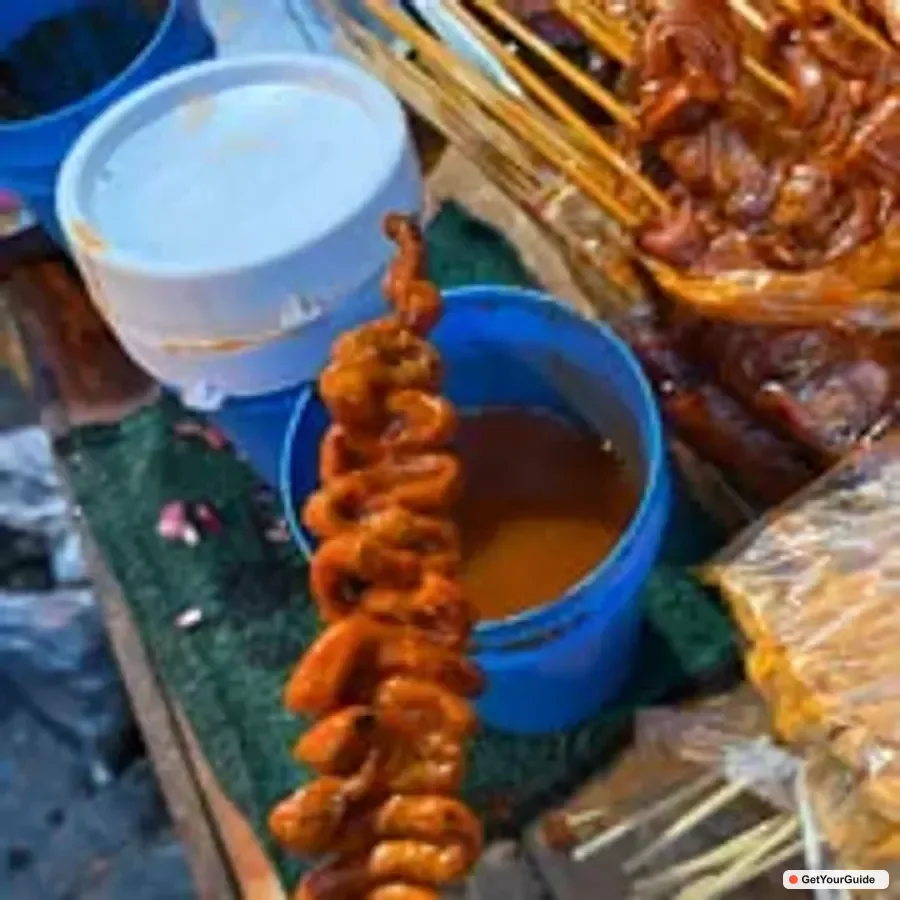

Isaw (₱10–15 per stick). Grilled chicken intestines, marinated and threaded onto bamboo skewers, charcoal-cooked until they are lightly charred on the outside and chewy inside. Paired with a bright vinegar-garlic dipping sauce, isaw is addictive in a way that is difficult to explain and impossible to stop. It is a fixture outside universities, markets, and jeepney terminals across the country.
Balut (₱20–30 each). This one is for the brave. Balut is a fertilized duck egg, boiled just before the duckling develops enough to be visible, then salted and eaten directly from the shell. You crack a hole in the top, season with a pinch of salt or a splash of vinegar, sip the broth, and eat the contents. Street vendors call out "balut!" in the evenings, and the experience of eating one under a lamp post is quintessentially Filipino. It is protein-rich, surprisingly mild in flavour, and absolutely worth trying at least once.
Kwek-kwek (₱15–25 per order). Hard-boiled quail eggs are coated in a bright orange batter made with annatto seeds and deep-fried until crispy. They look festive, they taste great dunked in spiced vinegar, and they disappear fast. You will find them at the same carts selling fishballs, which makes it easy to build a full street-food meal for under ₱60.
Banana Cue and Camote Cue (₱10–20 per stick). Saba bananas or sweet potato wedges are threaded on skewers, coated in brown sugar, and fried until caramelised and sticky. They are sweet, filling, and perfect as a mid-afternoon snack. The sugar shell cracks when you bite through it, and the warm starchy interior is pure comfort food.
Halo-Halo (₱60–150). Translated literally as "mix-mix," halo-halo is the Philippines' answer to summer and it is magnificent. A tall glass is packed with shaved ice, sweetened beans, coconut strips, nata de coco, jackfruit, ube halaya (purple yam jam), leche flan, and a scoop of ice cream on top — usually ube flavoured. You mix everything together (the clue is in the name), then eat it all at once. Chowking and Jollibee do solid versions, but the best halo-halo you will ever eat will be from a tiny neighbourhood shop with a hand-cranked shaver and secret family toppings.
The Essential Dishes Every Visitor Must Know
Lechon
The crown jewel of Filipino celebration food. A whole pig — stuffed with lemongrass, spring onions, and garlic — is slow-roasted over charcoal for several hours until the skin crisps to a shattering mahogany crackle. Cebu lechon is considered the gold standard, seasoned with herbs from within so intensely flavourful it does not even need sauce (though lechon sauce, made from vinegar and liver, is always on the table). Budget ₱350–500 per kilo at a dedicated lechon shop. For a full experience, visit Rico's Lechon or CNT Lechon in Cebu City.
Adobo
If the Philippines had one dish to represent the entire nation, it is adobo. Chicken or pork (sometimes both together) is braised in a combination of vinegar, soy sauce, garlic, bay leaves, and black peppercorns until the meat is fork-tender and the sauce reduces into an intensely savoury glaze. Every family has its own version — some add coconut milk, some use more vinegar, some fry the chicken after braising for crispier skin. You will find adobo in every carinderia, every home, and on every Filipino table from Batanes to Tawi-Tawi.
Sinigang
Sour, warming, and deeply comforting: sinigang is a tamarind-based soup that ranks as one of the great broths in all of Asian cuisine. Pork ribs, shrimp, or fish simmer in the tangy broth alongside kangkong (water spinach), radish, eggplant, and long beans. The sourness is the point — it wakes you up, balances the richness of the meat, and makes you want another bowl immediately. Pork sinigang with bone-in ribs is the classic; shrimp sinigang is arguably more elegant. Order it anywhere.
Kare-Kare
This is a dish that rewards patience and generosity. Oxtail, tripe, and banana blossom are slow-cooked in a thick, golden peanut sauce made with toasted ground peanuts and coloured with annatto oil. The stew is rich, nutty, and mellow — and it absolutely requires bagoong alamang (fermented shrimp paste) on the side. The salty, pungent bagoong cuts through the richness of the peanut sauce in a way that seems almost scientific. Kare-kare is Manila comfort food at its most generous. The best versions come from Pampanga, widely considered the culinary capital of the Philippines.
Crispy Pata
A whole pig knuckle — pata — is braised until tender, then deep-fried at high heat until the skin bubbles and blisters into a glassy, crackling shell that shatters when you tap it with a fork. The meat inside stays moist and gelatinous. You eat it with a dipping sauce of soy sauce, vinegar, crushed garlic, and sliced chillies. It is one of the most satisfying textures in Filipino cooking, and it is available at virtually every Filipino restaurant worth its salt.
Sisig
Sisig was born in Pampanga — invented by the legendary Lucia Cunanan — and has since conquered the entire country. Pig cheeks, pig ears, and liver are boiled, then grilled or chopped and sizzled on a cast-iron plate with onions, calamansi juice, and chillies. A raw egg is cracked on top tableside and mixed through as the residual heat cooks it. The result is crispy, fatty, tangy, and deeply savory. It is the perfect pulutan (bar snack) with ice-cold San Miguel beer, and it is available as chicken, tuna, or even tofu for lighter eaters.
Bulalo
Drive up to Tagaytay — the cool highland city overlooking Taal Volcano — and you will see bulalo restaurants lining every road. Bulalo is a slow-cooked beef shank soup where the marrow melts into the broth over hours, creating a liquid that is simultaneously light and deeply rich. The bone marrow itself, scooped out with a tiny spoon, is the prize. Corn, cabbage, and pechay round out the bowl. The cold air of Tagaytay and a steaming pot of bulalo is a combination that every Filipino knows and most visitors never forget.
Liempo
Grilled pork belly, marinated in soy sauce, calamansi, garlic, and sometimes a touch of banana ketchup, then cooked over charcoal until caramelised and slightly charred at the edges. Liempo is turo-turo staple food: available at ₱150–200 for a generous slab with rice, ready to be pointed at and grabbed within thirty seconds. It is humble food done with real skill, and the best versions have a smokiness that no restaurant kitchen oven can replicate.
Pancit
Noodles arrived in the Philippines with Chinese traders and stayed forever. Pancit bihon uses thin rice noodles stir-fried with vegetables, pork, and shrimp in a soy-based sauce. Pancit canton uses egg noodles for a heartier version. Pancit sotanghon uses glass noodles in a chicken broth. Pancit is traditionally eaten on birthdays because the long noodles symbolise long life — but you do not need to wait for a birthday to order it. It is everywhere, always good, and always served with a wedge of calamansi.
Pinakbet
The vegetable dish that proves Filipino food is not all pork and frying. Pinakbet is a stew of bitter melon, eggplant, squash, okra, and long beans cooked with bagoong (fermented shrimp or fish paste) and sometimes pork or shrimp for body. The bagoong seasons the vegetables deeply, and the bitterness of the ampalaya (bitter melon) balances the saltiness beautifully. It is the signature dish of the Ilocos region but eaten across the entire country.
Seafood: The Philippines Is an Archipelago
With over 7,600 islands, the Philippines has some of the best seafood in Southeast Asia, and much of it is priced in a way that makes the rest of the region feel expensive by comparison.
Grilled Fish (₱200–400). Tilapia, tanigue (Spanish mackerel), maya-maya (red snapper), and the prized lapu-lapu (grouper) are the stars. Whole fish are marinated in garlic, soy, and calamansi, then grilled over charcoal and served with sawsawan — your chosen dipping sauce. At a paluto restaurant or a beachside grill stall, a whole grilled lapu-lapu is genuinely one of the great meals you can eat in this country.
Kinilaw (₱150–300). The Filipino ceviche. Fresh raw fish — tanigue, tuna, or shrimp — is "cooked" in a marinade of cane vinegar or coconut vinegar, ginger, onion, chillies, and sometimes coconut cream. The acid denatures the fish proteins in minutes, leaving the flesh silky and bright. Kinilaw is best eaten ultra-fresh, within an hour of preparation, which is why it thrives in coastal towns and seafood markets rather than city restaurants. Cebu and Davao do exceptional versions.
Sugpo — Giant Prawns (₱400–700). Sugpo are enormous freshwater prawns that can reach the length of your forearm. Grilled with minimal seasoning and a side of garlic butter or vinegar dip, they are exceptional. The heads contain a burst of briny, sweet prawn liquid that is eaten by squeezing directly into the mouth — a Filipino ritual that visitors quickly master and never stop doing. Find them at paluto restaurants in Pampanga, Laguna, and any major seafood market.
Taba ng Talangka (₱80–150 per jar). Tiny river crabs are mashed and cooked with their fat into a rich orange paste that gets spooned generously over hot steamed rice. It is salty, oceanic, fatty, and utterly irresistible. A small jar from Pampanga is one of the best food souvenirs you can bring home, and eating it fresh at a Kapampangan restaurant ruins you for other rice condiments forever.
Regional Specialties Worth Travelling For
Cebu is the lechon capital, full stop. The pigs here are seasoned from the inside with lemongrass and herbs, producing meat that is flavourful without any sauce. Pochero, a tomato-based meat and vegetable stew with saba banana and chickpeas, is also a Cebu staple worth tracking down.
Pampanga — the culinary capital of the Philippines — is where kare-kare and sisig were both invented. A day trip from Manila to Angeles City or San Fernando for lunch at a Kapampangan restaurant is one of the best food decisions you can make on any Philippines trip.
Ilocos in northern Luzon is the home of bagnet (double-fried crispy pork belly that makes lechon skin look modest), the original pinakbet made with proper bagoong Ilocano, and the Ilocos empanada — a deep-fried orange pastry filled with egg, longganisa sausage, and bean sprouts, eaten with a splash of sukang Iloko vinegar.
Batangas gives the world bulalo and lomi — thick eggy noodles in a rich pork broth with liver slices and chicharon, a dish so aggressively comforting that Batangenos eat it for breakfast. Kapeng barako, the bold liberica coffee grown in Batangas, belongs in this same conversation.
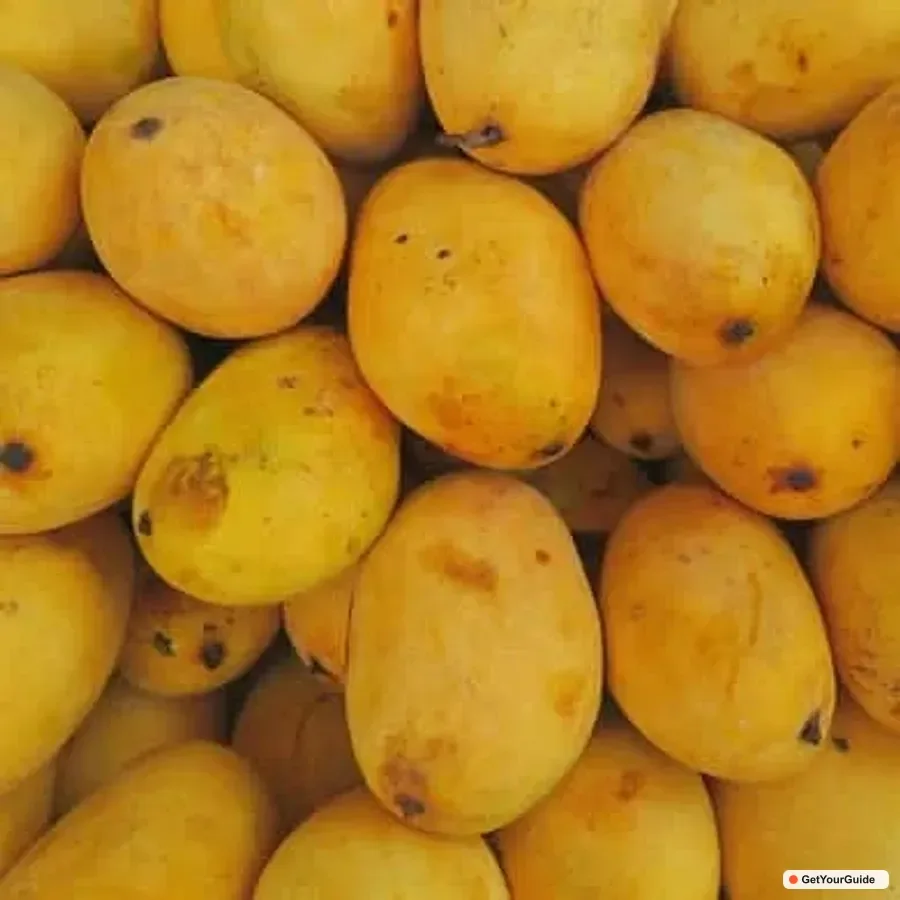
Davao and Mindanao bring tropical fruit to levels that seem almost fictional: durian so pungent that it is banned on public transport, pomelo the size of a small basketball, sweet tuna (yellowfin is caught daily in nearby waters), and the best mangoes in a country already famous for mangoes.
Where to Eat: A Practical Breakdown
Carinderia / Turo-Turo. This is where you eat if you want to eat like a local. A carinderia is a small eatery with steam trays of pre-cooked dishes behind a glass display. You point at what you want (turo-turo means "point-point") and it is served over rice in under a minute. A full meal of two viands and rice costs ₱60–120. The quality varies but the best carinderias — found in wet markets, near construction sites, and on side streets — are as good as anything you will eat in Manila. No menus. No waiting. Eat and go.
Paluto Restaurants. At a paluto restaurant, you walk through a seafood display, pick your raw ingredients by weight, then choose how you want them cooked — grilled, steamed in ginger broth, cooked in garlic butter, or stewed in coconut milk. You pay the market price for the seafood plus a small cooking fee (₱50–100). This system delivers extraordinary value and exceptional freshness. Dampa in Macapagal, Manila, and Bacolod's Manokan Country are among the most famous paluto strips in the country.
Mall Food Courts. Every major Philippine mall — SM, Ayala, Robinsons — has a food court with clean facilities, air-conditioning, and a range of Filipino fast-casual chains. Jollibee (the nation's beloved fast food chain, notable for its fried chicken and spaghetti in sweet tomato sauce), Mang Inasal (grilled chicken with unlimited rice), and Chowking (Chinese-Filipino) all live here. Budget ₱150–300 for a full meal. Reliable, convenient, and genuinely good.
Fine Dining. The Philippines has a growing fine dining scene that takes Filipino flavours seriously. In Manila, BGC (Bonifacio Global City) concentrates the best restaurants in the country: Toyo Eatery, Metronome, Gaita, and Gallery by Chele have all received international recognition. In Cebu, the IT Park and Ayala Center area has excellent options. Budget ₱500–1,500 per person for a proper fine dining experience, and book ahead for the most sought-after tables.
Drinks
San Miguel Beer is the national beer and the default answer to "what are you drinking?" Light, crisp, and served ice-cold everywhere from beach shacks to hotel bars, it costs ₱50–80 for a bottle. San Miguel Pale Pilsen is the classic; Red Horse is the stronger version for those who want the evening to get interesting faster.
Buko Juice is fresh young coconut water, served straight from the coconut with a straw and a spoon for scraping the soft jelly inside. It is ₱30–60 at any market or roadside stand, deeply refreshing in the heat, and one of the genuinely perfect drinks on earth.
Taho is the morning drink-slash-snack that vendors carry through neighbourhoods in two large metal buckets before 8 AM. Silken tofu is ladled into a plastic cup, then topped with arnibal (sweet brown sugar syrup) and sago pearls. It is warm, soft, sweet, and deeply comforting first thing in the morning. Listen for the vendor's call — "taho!" — it will become the sound of the Philippines for you.
Kapeng Barako is a bold liberica coffee from Batangas with a deep, almost smoky flavour that has nothing in common with the mild arabica most of the world drinks. It is traditionally brewed strong and sweetened with raw sugar, and it hits differently from anything in a specialty coffee shop. Buy a bag at a Batangas market and you will understand why Filipinos are not worried about third-wave coffee culture.
A Note for Vegetarians
Filipino food is meat-forward, and navigating it as a vegetarian takes some effort — but it is absolutely possible. Pinakbet can be made without pork. Kare-kare vegetables without the oxtail are available at some restaurants on request. Pancit bihon is frequently made with just vegetables. Tokwa't baboy (tofu and pork) can be ordered as tokwa only. Markets and carinderias almost always have a plain vegetable option. Buddhist restaurants in Manila's Chinatown and a growing number of vegan-friendly spots in BGC, Makati, and Cebu IT Park make plant-based eating increasingly comfortable. Just be aware that bagoong and patis (fish sauce) are invisible flavour agents in many dishes, so asking questions before ordering is always a good idea.
Frequently Asked Questions
Is Filipino food spicy? Generally, no — Filipino food is not inherently spicy the way Thai or Sichuan cuisine is. Chillies are available as condiments and some dishes (like kare-kare's bagoong, or grilled meats with chilli vinegar) have heat, but most mainstream Filipino dishes are mild and rich rather than fiery. If you want heat, ask for sili (chilli) on the side.
What is the best way to eat rice in the Philippines? By the enormous bowlful, ideally with multiple viands piled on top. Filipino meals are almost always built around rice — "may kanin ka na ba?" ("have you eaten rice yet?") is a common greeting because rice equals eating a proper meal. At carinderias you can ask for dagdag na kanin (extra rice) and it usually costs ₱10–15 more. Mang Inasal offers unlimited rice with their grilled chicken sets, which is one of the better deals in Philippine fast food.
How much should I budget for food per day? If you eat at carinderias and street food stalls, ₱300–500 per day covers three full meals. If you mix in some sit-down restaurants and the occasional mall food court, ₱700–1,200 is comfortable. Fine dining in Manila adds up quickly, but even the best restaurants in BGC rarely cost more than ₱2,000 per person with drinks. The Philippines is genuinely one of the most affordable countries in Asia for food.
Is it safe to eat street food in the Philippines? Yes, with basic precautions. Eat from busy stalls with high turnover — if the cart is crowded, the food is fresh. Stick to cooked items rather than uncooked salads or sauces that have been sitting out. Wash your hands before eating. Bring your own bottled water. Millions of Filipinos eat from street carts every day without incident, and most travellers who approach street food with reasonable judgment have no problems at all.
What Filipino dish should I try first? Adobo. It is universally available, deeply representative of the cuisine, affordable at any level of restaurant, and almost impossible to dislike. Once you have eaten good adobo — ideally from a home kitchen or a long-running carinderia — you will understand the logic behind all other Filipino food: the balance of acid and salt, the patience of slow cooking, and the generosity of serving more than enough.
Filipino food is not a trend. It is not a cuisine that needs discovery — Filipinos have known how good it is for centuries. It is a cuisine that rewards curiosity, punishes timidity, and guarantees that if you eat your way honestly through any Philippine destination, you will leave better fed and more grateful than when you arrived. Start eating. The Philippines is waiting.

PANA.PH Editorial Team
Philippines travel desk
The PANA.PH travel desk researches, books and re-checks Philippines travel logistics — fares, ferry schedules, government fees and permit rules — and publishes what it can verify.
🏡 Real local stays (book direct)
Hand-picked homestays and guesthouses — book direct, no markup.
Browse all local stays →


🌊 Popular activities (book instantly)
Island hopping, canyoneering, whale sharks — real Klook/GetYourGuide options.
View all activities →