The Philippines is one of the most budget-friendly countries in Southeast Asia — if you know what you're doing. If you don't, it can chew through money surprisingly fast: overpriced tours, tourist-trap restaurants, convenience stores instead of local markets, and domestic flights that rival budget European airlines. This guide cuts through the noise. Here is exactly how to travel the Philippines well for around EUR 50 per day (roughly PHP 3,000–3,200) in 2026, including where to go, what to eat, and how to move between islands without burning your budget.
The EUR 50/Day Breakdown: What It Actually Covers
Let's be honest about what EUR 50 buys you in the Philippines right now:
- Accommodation: EUR 8–15 (PHP 500–900 for a clean dorm bed, or PHP 800–1,400 for a basic private room in cheaper destinations)
- Food: EUR 8–12 (PHP 500–750 — three full meals from local eateries plus a coffee)
- Transport: EUR 5–10 (PHP 300–600 — tricycles, jeepneys, habal-habal)
- Activities: EUR 10–18 (PHP 600–1,100 — a snorkelling trip or tour day)
- Buffer (SIM, water, small extras): EUR 3–5
- Total: EUR 34–60/day
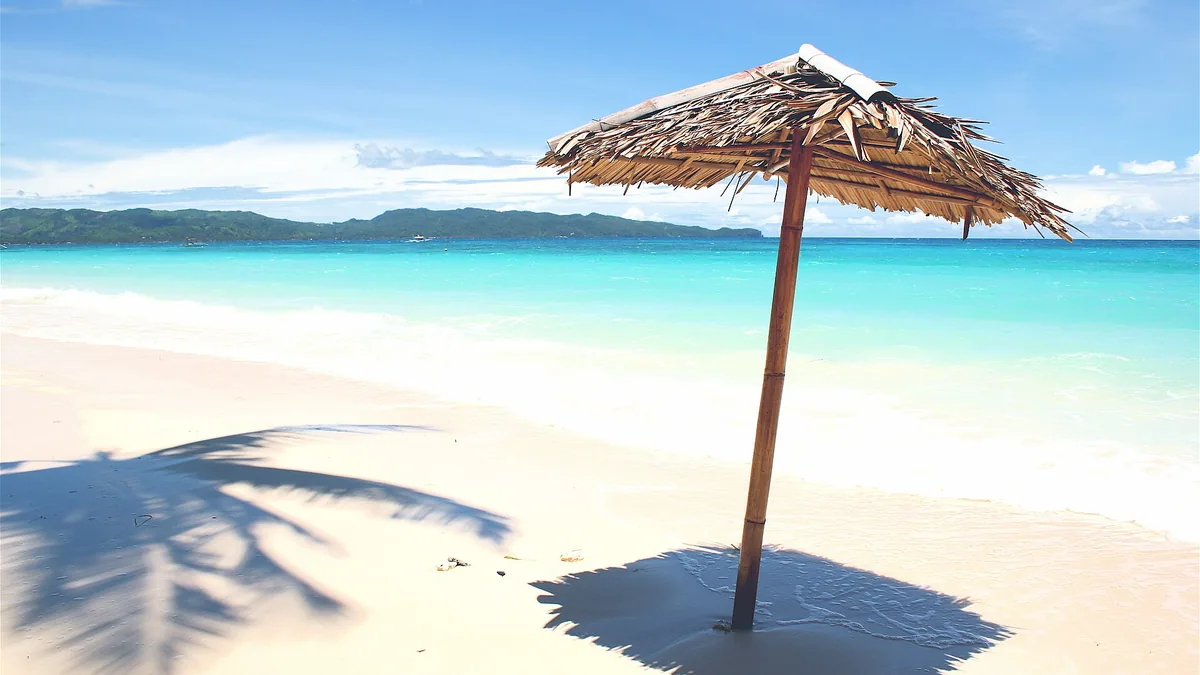
EUR 50/day works comfortably on the cheapest islands and gets tight in El Nido or Boracay, which have gone up in price significantly since 2022. The key is choosing the right islands and eating and sleeping like a local.
✈️Find the cheapest flights to the Philippines
Compare Cebu Pacific, AirAsia, Philippine Airlines and more in one search — prices from ₱3,892.
Compare flights →
The Cheapest Islands in the Philippines (2026)
Siquijor — The Cheapest Gem
Siquijor is consistently the cheapest island for travellers in the Visayas. It's small (you can loop the whole island on a scooter in 2 hours), beautiful, and almost entirely free of the tourist markup that hits Cebu or Boracay. The beaches — particularly Salagdoong Beach and Paliton Beach — are spectacular. Accommodation: PHP 350–700 for dorms, PHP 800–1,500 for private rooms. You get here via a ferry from Cebu, Dumaguete or Bohol (PHP 200–350 depending on route). Daily budget on Siquijor: easily EUR 30–40/day.
Camiguin — The Island Born of Fire
Camiguin in Mindanao has volcanoes, waterfalls, hot springs, a sunken cemetery and some of the friendliest locals you'll meet anywhere in the Philippines — and almost no crowds. It's tiny (only 64,000 people), has no ATM fees on Globe wallets, and everything is cheap because it hasn't been tourist-developed. Accommodation: PHP 400–800 dorm, PHP 1,000–2,000 private. Getting there: fly to Cagayan de Oro or Cebu, then take a connecting ferry (PHP 200–400). Daily budget: EUR 35–45.
Moalboal — Budget Diving Capital
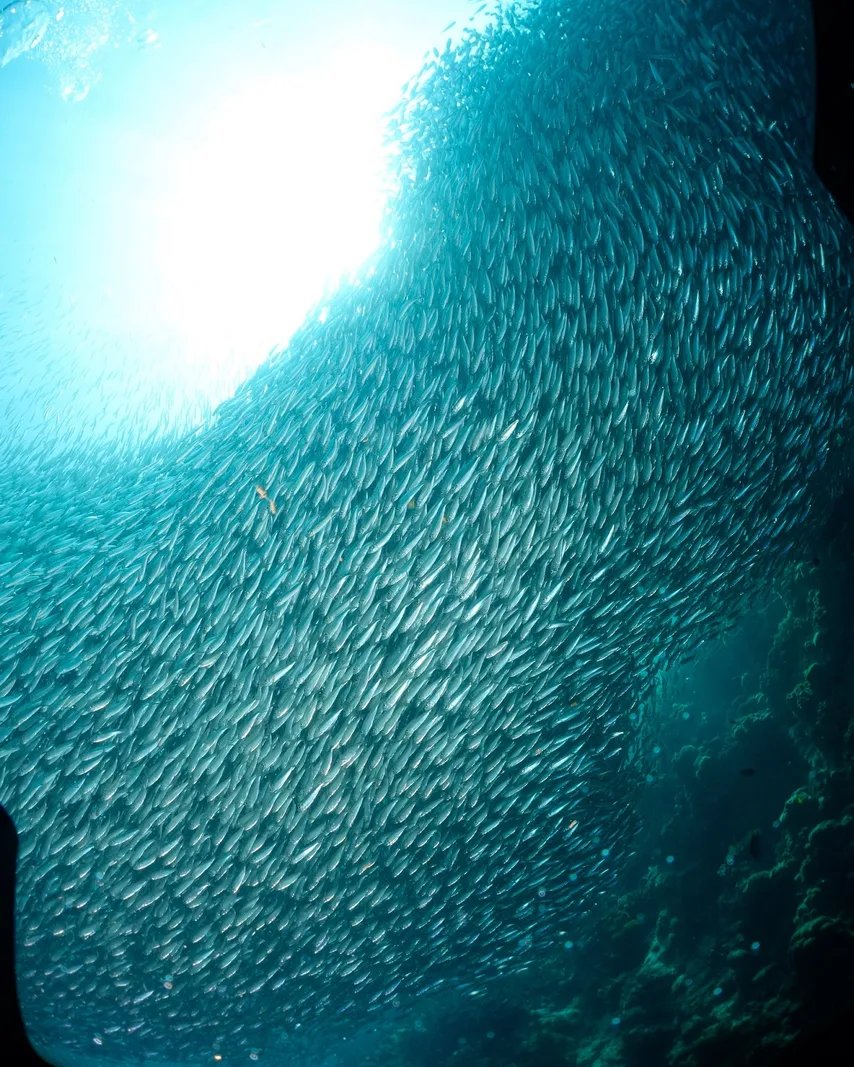
Moalboal on the southwest coast of Cebu is the best-value dive destination in the Philippines. A shore dive with equipment runs PHP 900–1,200 — you literally walk in from the beach and the sardine run (tens of millions of sardines in a swirling ball) is 10 metres offshore. Accommodation in Panagsama Beach is cheap: dorms PHP 350–600, private rooms PHP 800–1,500. Scooter rental PHP 350/day to explore Kawasan Falls and the rice terraces inland. Daily budget with 2 dives: EUR 45–55.
Dumaguete — Budget City Base
Dumaguete is a university town with cheap food, a lively local scene and easy access to Siquijor (30 minutes by ferry) and Apo Island (one of the best diving spots in Asia — turtle sanctuary, PHP 800 for a boat trip + dive). Accommodation in Dumaguete: PHP 350–700 dorm, PHP 800–1,500 private. Sunset Boulevard has local restaurants where a full meal with rice costs PHP 120–200. Daily budget: EUR 30–40 without diving.
General Luna, Siargao (Non-Peak Season)
In peak surf season (September–November), Siargao prices jump. But from March to July, it's quiet and cheap. Dorm beds drop to PHP 400–600, restaurants become affordable again, and you have the waves mostly to yourself. The island is beautiful year-round. If your dates are flexible, off-season Siargao is outstanding value.
How to Save on Domestic Flights
Internal flights are the biggest variable cost in the Philippines budget. Here is how to keep them low:
- Book domestic flights at the same time as your international ticket. Prices are lowest 6–10 weeks out on popular routes (Manila–Cebu, Manila–Siargao, Manila–El Nido). Waiting until you're in the country almost always means paying 2–3x more.
- Use Cebu Pacific's seat sales. Sign up for email alerts at cebupacificair.com. The airline regularly runs piso fare sales where base fares are PHP 1. With taxes, you'll pay PHP 299–800 — still excellent value for a 1-hour flight.
- Fly early morning. The 6am and 7am departures are almost always cheapest because demand is lower. Plus you gain a full day at your destination.
- Consider ferries for short routes. Manila to Cebu by overnight ferry (SuperCat or 2GO) costs PHP 1,200–2,500 including a cabin bunk — cheaper than flying once you factor in luggage fees on budget airlines. It's also an experience.
- Avoid El Nido airport (ENL). The AirSWIFT flights to El Nido are the priciest domestic routes in the country (PHP 3,500–6,000). Flying to Puerto Princesa (PPS) is 2x cheaper and you take a shared van to El Nido for PHP 700 (5 hours) or a private transfer for PHP 5,000–7,000.
Hostels Worth Booking: Real Recommendations
The hostel scene in the Philippines has improved dramatically. Some standouts for budget travellers:
- Manila — Mango Red Hostel (Malate): PHP 450–650/dorm, clean, social, good location near transport. Roof terrace.
- Cebu City — Hop Hostel: PHP 420–600/dorm in Lahug. Rooftop bar, pool, social atmosphere. PHP 1,200–1,800 for private rooms.
- Moalboal — Quo Vadis Dive Resort: PHP 350–500/dorm, right on the beach, dive packages bundled with accommodation. Unbeatable for divers on a budget.
- El Nido — Happiness Hostel: PHP 550–800/dorm in El Nido town. Close to tour boats, great social scene, decent breakfast add-on.
- Siargao (General Luna) — Bravo Hostel: PHP 450–700/dorm, near the main strip, surfboard storage, clean bathrooms.
- Siquijor — Coco Grove area guesthouses: No major hostel chains, but family-run guesthouses consistently offer clean private rooms for PHP 800–1,200.
Street Food Guide: Eat Like a Local
Filipino street food is delicious, safe (stick to busy stalls with high turnover) and cheap. Here is what to order and what it costs:
- Isaw: Grilled chicken or pork intestines on a stick. PHP 10–15 each. Sounds scary, tastes like a well-seasoned BBQ skewer. A must-try.
- Fishball/Kwek-Kwek: Fried fish balls or deep-fried quail eggs in orange batter with vinegar dipping sauce. PHP 5–10 each. The classic merienda (snack).
- Taho: Soft tofu with brown sugar syrup (arnibal) and sago pearls, sold by vendors from buckets. PHP 10–20 per cup. Breakfast staple.
- Balut: The famous fertilised duck egg. PHP 15–25. Required eating for the brave. It's actually milder than people expect.
- Siomai: Steamed pork dumplings, heavily adapted from Chinese dim sum. PHP 10–15 each.
- Carinderias (local canteens): The real budget move. Point at what you want from behind the glass (rice + viand/main = PHP 70–120). Adobo, sinigang, kare-kare, pinakbet — deep, complex flavours for almost no money.
- Jolly Hotdog at Jollibee: PHP 55. When you're tired and just need something familiar. No judgement.
Free and Low-Cost Activities
- Snorkelling most reefs: PHP 150–300 for mask and fins rental. Many of the best snorkelling spots are a short swim from the shore.
- Waterfalls: PHP 30–100 entrance fee. Kawasan (Cebu), Tinago (Iligan), Cambugahay (Siquijor), Tumalog (Oslob) — most are under PHP 100 to visit.
- Hiking: Usually free or nominal (PHP 50–150 guide fee on some peaks).
- Historical sites: Intramuros in Manila (free to walk around, PHP 100–200 for museum entry), Chocolate Hills viewpoint in Bohol (PHP 50).
- Beach hopping: Many public beaches are completely free. Bring your own food and water from town.
Money Tips: Avoiding Fees and Scams
- Use a Wise or Revolut card to avoid foreign transaction fees. Withdraw from ATMs using a fee-free card — Philippine ATM fees from local banks run PHP 200–250 per withdrawal.
- Withdraw larger amounts less often to minimise ATM fees. PHP 10,000–20,000 at a time.
- Avoid airport money changers (terrible rates). Change money at Bayad Centers or SM Money changers in town for better rates.
- Don't fall for tricycle overcharging. Always ask the price before you get in, or agree on a metered Grab if available. The standard tricycle rate for short distances is PHP 10–20 for locals; tourists get quoted PHP 50–150. Negotiate calmly.
FAQ
Is EUR 50/day realistic for the Philippines?
Yes, on most islands outside of peak season. In El Nido in December or Boracay in peak season, EUR 50 will be tight unless you're strictly dorm beds and street food. On Siquijor, Camiguin or Moalboal, you can live well for EUR 35–40/day.
What are the cheapest islands in the Philippines?
Siquijor, Camiguin and Moalboal consistently offer the best value. Dumaguete as a city base is also excellent value. Avoid El Nido and Boracay if budget is your primary concern.
How much do internal flights cost in the Philippines?
PHP 999–2,500 one way on most Cebu Pacific routes if booked 4–8 weeks ahead. The Manila–El Nido route on AirSWIFT is the exception at PHP 3,500–6,000 one way. Always compare flying to Puerto Princesa (PPS) instead.
Is street food safe to eat in the Philippines?
Yes, if you follow basic rules: eat at busy stalls with high turnover, avoid anything that's been sitting out in the heat for hours, and be cautious with raw shellfish. Millions of Filipinos eat street food daily — the risk is low at established stalls.
What is the best budget route for a 2-week Philippines trip?
Manila (1 night) → Cebu (2–3 nights, use as a base for Moalboal) → Siquijor (3 nights) → Dumaguete (2 nights) → fly to El Nido if budget allows, or back to Cebu. This Visayas loop keeps ferry/flight costs minimal and puts you in some of the cheapest and most beautiful parts of the country.