In 2026, AUD 50 per day in Australia barely covers a pub lunch and a train ticket. In the Philippines, it covers a private room, three meals, a couple of cold beers, a day's beach activity or transport between islands, and still leaves a few dollars for a coconut on the way home. The Philippines remains one of the genuinely great budget travel destinations in the world — and for Australians, the short flight time and no-visa-required entry make it uniquely accessible. Here is exactly how the money works.
Philippines Backpacker Guide for Australians: How Far Does $50 AUD a Day Go?
Trip.com
Search on Trip.comHotels in Philippines
Compare live prices via Travelpayouts — targeted for this guide.
The AUD 50 Daily Budget: Exactly How It Breaks Down
Let's be specific. At mid-2026 exchange rates of approximately 40 PHP per 1 AUD, your AUD 50 is PHP 2,000. Here is a realistic daily allocation:
- Accommodation (private room, aircon, en suite in a budget guesthouse): PHP 600-1,000 = AUD 15-25
- Breakfast (carinderia or local cafe): PHP 80-150 = AUD 2-4
- Lunch (local restaurant or canteen): PHP 120-200 = AUD 3-5
- Dinner (slightly better restaurant or fresh seafood stall): PHP 200-400 = AUD 5-10
- Transport (tricycle, jeepney, or habal-habal within an island): PHP 50-200 = AUD 1-5
- Activities (snorkeling, waterfall visit, beach entry): PHP 100-400 = AUD 2-10
- Two San Miguel beers at a bar: PHP 140-240 = AUD 4-6
- Incidentals (sunscreen, water, SIM data): PHP 100-150 = AUD 3-4
Realistic daily total on AUD 50: Absolutely achievable with a private room in a budget guesthouse, three local meals, basic transport, one activity, and a beer or two. You will not be staying in luxury, but you will have privacy, comfort, and an excellent time.
Drop to AUD 35 per day if you take dorm beds and stick to carinderia food exclusively. Spend AUD 70-80 if you want a nicer private room with a pool and a Western meal here and there. The Philippines gives you genuine flexibility across the budget range.
Trip.com
See all tours in Philippines on Trip.comTours & activities in Philippines
Hand-picked experiences in Philippines — book on Trip.com with instant confirmation.
The Cheapest Islands Ranked in AUD
Not all Philippine islands are equal on price. Here is a rough cost ranking from cheapest to most expensive for a backpacker's daily spend:
- Siquijor: The Philippines' "mystical island" is also its cheapest mainland tourist destination. Budget guesthouses from AUD 12-20/night, local meals under AUD 3, almost zero tourist markup. The beaches are excellent, the waterfalls are free, and the island is small enough to circumnavigate by scooter in half a day. This is where you stretch your budget furthest.
- Camiguin: Tiny volcanic island off northern Mindanao. Budget rooms from AUD 15-25/night, local food cheap, and the cold springs (Ardent Hot Spring included), sunken cemetery boat trip, and waterfalls are all low-cost activities.
- Dumaguete (base for Apo Island): A university city with genuine local life and student prices. Rooms from AUD 18-30/night, meals from AUD 3, and the infrastructure for visiting Apo Island and Manjuyod sandbar is excellent.
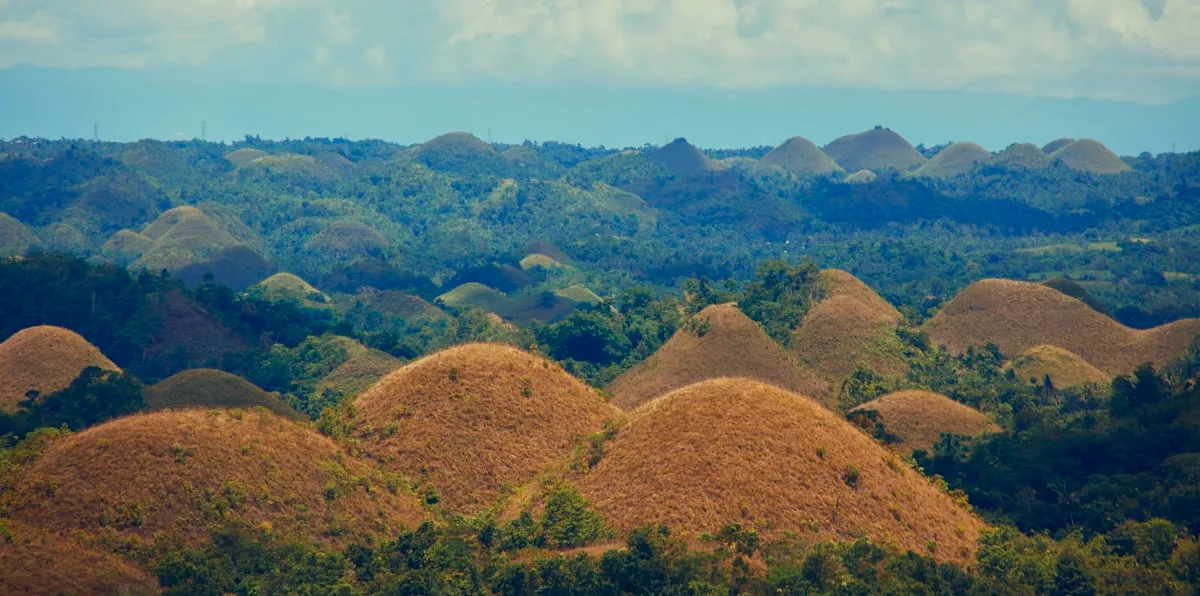
- Bohol: Tagbilaran city and Panglao Island are the backpacker bases. Slightly pricier than Siquijor or Dumaguete but the Chocolate Hills, Loboc River, and tarsier sanctuaries make it essential on a Visayas itinerary. Budget AUD 22-40/night for a decent room on Panglao Beach.
- Siargao: Has gotten more expensive but budget accommodation exists. Dorm beds from AUD 12-18/night, budget rooms from AUD 25-40/night. Food in General Luna ranges from AUD 2 at a carinderia to AUD 15 at a proper restaurant. The surf is free.
- El Nido: The most expensive budget destination in the Philippines. Dorm beds AUD 12-20/night, private rooms from AUD 28-50/night, and tours running AUD 28-45/person. Still excellent value by Australian standards but budget it carefully.
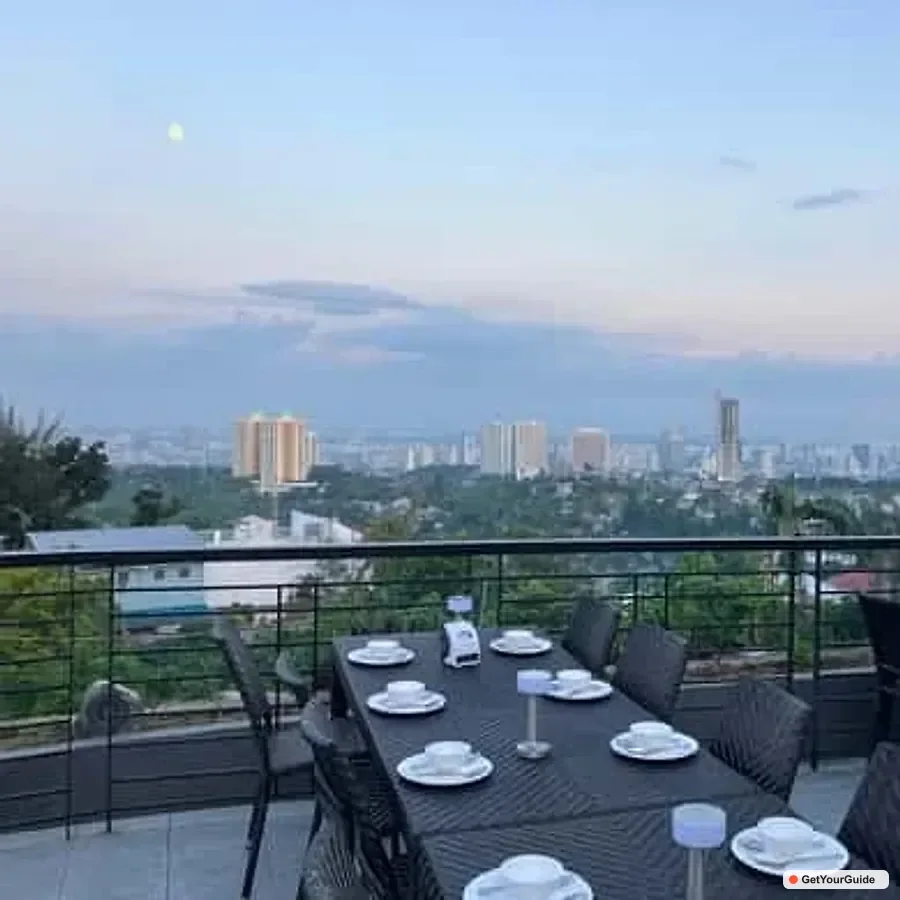
- Cebu/Metro Cebu: The city is cheap for accommodation and food, but nearby tourist spots (Oslob whale sharks, Kawasan Falls) have inflated tourist pricing. Budget AUD 20-35/night for a decent guesthouse in Cebu City.
Where to Stay: Hostels and Budget Dorms
The Philippines has a growing hostel scene in all major backpacker destinations:
El Nido: Dorm beds in El Nido town run PHP 450-800/night (AUD 12-20). Notable hostel-style properties include mid-range backpacker houses in the town center, mostly accessible without pre-booking outside December-March peak. Bring your own padlock for lockers.
Siargao: General Luna has multiple surf camps with dorm options at PHP 500-750/night (AUD 12-18). Many include surfboard storage and a social common area. The surf camp dorm scene is where most Aussie backpackers land and where the social connections happen — you will meet a disproportionate number of Australians in these places.
Cebu City: The best value hostel accommodation in the Philippines. Dorm beds from PHP 380-650 (AUD 10-16), with good air-conditioning, lockers, and proximity to transport hubs for onward travel. Cebu is the logical transit hub for any Visayas itinerary.
Puerto Princesa (Palawan): Budget accommodation from PHP 500-900 (AUD 13-23) for private rooms. A good base for organising El Nido transfers and the Puerto Princesa Subterranean River tour.
Eating Cheap: Carinderia Culture
The carinderia is the Filipino equivalent of a canteen or turo-turo ("point-point") eatery — a counter of pre-cooked dishes you point at and the server serves over rice. This is where Filipinos eat daily and where your money goes furthest. A full carinderia meal — rice, one protein dish (adobo chicken, sinigang pork, or fried fish), a vegetable side, and a soft drink — costs PHP 80-150 (AUD 2-4).
Standout carinderia staples to try:
- Adobo — chicken or pork braised in vinegar, soy, and garlic. The Filipino national dish. Everywhere, always cheap, always good.
- Sinigang — sour tamarind soup with pork or fish. Comforting, filling, and about PHP 80 at a carinderia.
- Tinola — ginger chicken soup with green papaya. Light and excellent.
- Lechon — whole roasted pig. A special occasion dish but found at market stalls and Cebu lechon shops (Zubuchon in Cebu is world-famous) for PHP 150-300 for a full meal portion.
- Kinilaw — raw fish cured in vinegar and citrus, equivalent to Filipino ceviche. Fresh from the coast and very cheap in fishing villages.
A solid budget strategy: eat carinderia breakfast and lunch (AUD 2-4 each), and treat yourself to a proper local restaurant dinner (AUD 6-12, fresh seafood). Total daily food spend: AUD 12-20 including drinks.
Getting Around: Jeepney, Tricycle, and Habal-Habal
Philippine public transport is cheap, characterful, and completely accessible with zero Tagalog — routes are generally marked in English and locals are happy to point you in the right direction:
- Jeepney: The iconic Filipino extended jeep used as shared public transport. A typical jeepney ride in a city or between towns costs PHP 13-25 (AUD 0.35-0.65). The minimum fare was standardised nationally but varies slightly by route. Load up, shout your destination, and pass your fare forward to the driver through other passengers — a uniquely Filipino experience.
- Tricycle: A motorbike with a sidecar, the main short-distance transport in smaller towns and island communities. Short trips cost PHP 20-50 (AUD 0.50-1.25) for shared rides, PHP 50-150 for private hire across a town. Always clarify if the price is per person or for the whole tricycle.
- Habal-habal: A single motorbike used as a taxi in rural areas and on islands without roads wide enough for vehicles. Essential on Siargao, Camiguin, and many smaller islands. PHP 30-100 depending on distance (AUD 0.75-2.50). Wear the helmet provided — it is thin but better than nothing on unsealed roads.
- Bangka (outrigger boat): The main inter-island transport in island groups. Shared bangka between nearby islands cost PHP 50-200 (AUD 1.25-5). Private hire runs PHP 500-2,500 (AUD 13-63) depending on distance and boat size. The island-hopping tour boats are bangkas — book these through tour operators rather than chartering privately unless you know the routes well.
Booking Cebu Pacific Flights in AUD
Cebu Pacific is the Philippines' primary budget domestic carrier, operating a route network that covers virtually every major island. For Australian backpackers, understanding how to book Cebu Pacific correctly saves real money:
Book in AUD or PHP? When booking on Cebu Pacific's website from Australia, you can toggle the currency. The PHP price converted at a real exchange rate is usually marginally cheaper than the AUD display price (which includes a currency conversion margin). Use a Wise card and book in PHP for the best effective rate.
Cebu Pacific seat sales: The airline runs regular seat sales (often announced on their social media) with fares as low as PHP 499-999 one-way (AUD 13-25) for popular domestic routes. These sales require flexibility on dates — usually apply to travel 2-4 months out. Follow @CebuPacificAir on social media or sign up for email alerts.
Typical domestic fares without a sale: Manila to Siargao runs PHP 1,500-4,500 (AUD 38-113), Manila to Puerto Princesa PHP 1,200-3,800 (AUD 30-95), Cebu to Siargao PHP 800-2,500 (AUD 20-63). These are good value compared to equivalent Australian domestic fares and make island hopping genuinely cheap over a 2-3 week itinerary.
Baggage: Cebu Pacific sells baggage allowance as an add-on. For a typical backpacker with a 20-25L daypack and checked bag, buy the 20kg checked baggage allowance at booking (PHP 600-900, AUD 15-23) — it is significantly cheaper when pre-purchased than at the airport.
Banking Smart: Wise, Revolut, and ATM Fees
Your banking setup is one of the most practically important decisions for an Australian backpacker in the Philippines:
Wise card (highly recommended): Load AUD to your Wise account, convert to PHP at the mid-market rate (the real exchange rate, with a small transparent fee of approximately 0.5-0.7%), and spend from the PHP balance using your Wise debit card. No hidden currency conversion margins. Wise also allows you to make free ATM withdrawals up to AUD 350 per month before a small fee applies. This is the single best tool for managing money in the Philippines as an Australian.
Revolut: Similar functionality to Wise. Good mid-market exchange rates on weekdays (weekend rates can be slightly worse — avoid large conversions on Saturday/Sunday). Revolut also allows fee-free ATM withdrawals up to a monthly limit on standard plans (AUD 350/month free on the Standard plan).
ATM fees in the Philippines: Philippine banks charge a local ATM fee for foreign card withdrawals. Current fees as of 2026 range from PHP 200-300 per transaction (AUD 5-7.50). Metrobank and BDO tend to have slightly lower foreign transaction fees than other local banks — specifically, Metrobank charges PHP 200 flat per withdrawal where some banks charge PHP 250-300. Withdraw larger amounts less frequently to minimise the per-transaction fee — take out PHP 10,000-15,000 (AUD 250-375) per withdrawal rather than PHP 2,000-3,000 at a time.
Australian bank cards: Standard Big Four bank cards (ANZ, CommBank, Westpac, NAB) work at Philippine ATMs but charge both the local ATM fee (PHP 200-300) and a foreign transaction fee from your home bank (typically 3% of the transaction). On a PHP 10,000 withdrawal, you are losing PHP 300 local fee + approximately PHP 1,200 in bank margin and foreign transaction fee = PHP 1,500 dead loss (AUD 37.50) on every withdrawal. A Wise or Revolut card eliminates the home bank's margin entirely and reimburses some ATM fees.
Free Activities: The Philippines on Zero Budget
Many of the Philippines' best experiences cost nothing:
- Beaches: Almost all Philippine beaches have free public access. White sand, clear water, no entry fee. Nacpan Beach (El Nido), White Beach (Port Barton), the beaches of Malapascua, and dozens of island beaches have no gate or charge.
- Sunset watching: Every island, every evening, completely free. Siargao's General Luna sunset from the main bridge or a coconut palm beach is extraordinary and costs nothing.
- Waterfall trails: Many of the Philippines' famous waterfalls — Tinago Falls (Iligan), Asik-Asik Falls (North Cotabato), and the waterfalls of Camiguin — charge small entry fees (PHP 30-100, AUD 0.75-2.50) or nothing at all. The hikes to reach them are free.
- Church visits and festivals: Philippine Catholic churches are open and free to enter. The Sinulog Festival in Cebu (January), Kadayawan in Davao (August), and dozens of local fiestas throughout the year involve street dancing, music, and parades — all free public events.
- Market exploration: Philippine public markets (palengke) are free to wander and one of the best cultural experiences in any destination. Buying fresh fruit, watching the fish auction at a coastal market, or sampling street food from market vendors costs almost nothing.
- Rice terraces (Batad, Banaue): The Ifugao rice terraces in the Cordillera highlands are a UNESCO World Heritage Site accessible for a small guide fee. The hiking trails between terrace amphitheaters at Batad cost PHP 200-300 guide fees (AUD 5-7.50) — extraordinary value for one of Asia's most spectacular landscapes.
Aussie Backpacker Communities in the Philippines
Australians are among the most numerous Western backpackers in the Philippines in 2026. You will find your people:
- Siargao: General Luna's surf camp scene has a particularly strong Australian presence — the waves, the affordability, and the direct flight connections make it a natural destination. Siargao's Facebook groups (search "Siargao Travellers" and "Siargao Surf Camp") are active and useful for accommodation recommendations and ride-sharing.
- El Nido: The backpacker hostels in El Nido town are where Aussies cluster. The El Nido Backpackers Facebook group and the main hostel common rooms are where day-tour groups form organically.
- Cebu City: Multiple Facebook groups ("Expats in Cebu", "Travellers in the Philippines") with active Australian membership. Cebu's IT Park area and the Lahug neighborhood have Australian-friendly bars and cafes.
- Online before you go: The Philippines Backpackers Australia Facebook group (search it specifically — it has several thousand members as of 2026) is the best pre-trip resource for current prices, visa tips, and finding travel companions for island routes.
Realistic 14-Day AUD 50/Day Itinerary
What does AUD 50/day actually look like across two weeks in the Philippines? A sample routing:
Days 1-2: Manila transit. Intramuros, Rizal Park, street food along Ongpin Street. Budget hotel near the airport (AUD 20-30/night). Use this as a restock stop — withdraw cash at Metrobank, get a Globe SIM card.
Days 3-5: Fly to Cebu (AUD 25-50 one-way on Cebu Pacific). Base in Cebu City. Day trip to Malapascua for snorkeling (AUD 35-55 return transfer and boat), Kawasan Falls (AUD 15-25 including canyoneering basic). Carinderia meals throughout.
Days 6-8: Ferry to Tagbilaran, Bohol. Chocolate Hills viewpoint (AUD 3 entry), Loboc River lunch cruise (AUD 15-25), Panglao Beach accommodation (AUD 22-35/night private room).
Days 9-11: Fast ferry to Siquijor. Rent a scooter for a day (AUD 8-12) and circumnavigate. Cambugahay Falls (free), Paliton Beach (free), cheap accommodation (AUD 12-20/night).
Days 12-14: Return via Dumaguete, fly to Manila for departure. Apo Island day trip if budget allows (AUD 60-80 including two dives) or snorkeling at AUD 30-40.
Total estimated cost for this 14-day itinerary on an AUD 50/day budget: AUD 700 in-country (accommodation, food, transport, activities) + AUD 700-900 flights from Sydney. Total holiday: AUD 1,400-1,600 from Australia. That is genuinely remarkable value for 14 days in a stunning archipelago.
Frequently Asked Questions
Is AUD 50 per day realistic for backpacking the Philippines in 2026?
Yes, genuinely and comfortably. AUD 50 at 2026 exchange rates (approximately PHP 2,000) covers a private room in a budget guesthouse (PHP 600-900), three local meals (PHP 300-500 total), basic transport (PHP 50-150), a beach activity or entry fee (PHP 100-300), and a couple of beers (PHP 140-200). You will not be in luxury but you will have privacy, comfort, and an excellent experience. Drop to AUD 35-40/day if you take hostel dorm beds and eat exclusively at carinderias. Budget AUD 70-80/day for occasional nicer rooms and Western meals.
Which Philippine islands are cheapest for Australian backpackers?
Siquijor and Camiguin are the cheapest overall — both small islands with minimal tourist markup, free beach access, and cheap local accommodation. Dumaguete is the cheapest city base. Bohol and Siargao are middle tier. El Nido is the most expensive backpacker destination in the Philippines, though still excellent value by Australian standards. In general, moving away from headline Instagram destinations reduces costs significantly — the Philippines has hundreds of beach islands where the scenery is world-class and the tourism infrastructure is still local-priced.
What is the best banking setup for Australian backpackers in the Philippines?
Use a Wise card as your primary tool — load AUD, convert to PHP at mid-market rates, and spend directly or withdraw from ATMs. The Wise card gets the real exchange rate with minimal fees, saving you the 3-5% margin that Australian bank cards lose on foreign transactions. For ATM withdrawals, use Metrobank when possible (lower local fees at PHP 200/withdrawal). Withdraw larger amounts less frequently to minimise per-transaction costs. Always carry PHP 5,000-10,000 in cash when heading to remote islands where ATMs do not exist.
How do I book cheap Cebu Pacific flights from Australia?
Book at cebupacificair.com directly. Set the currency to PHP and pay with a Wise card for the best effective rate. To catch seat sales (PHP 499-999 one-way on popular routes), follow @CebuPacificAir on Instagram and Facebook — sales are announced there before the website updates. Sales typically apply to travel 2-4 months out and require flexible dates. For same-week travel, prices are significantly higher. The AirAsia Philippines app also has regular seat sales worth monitoring for routes between the main hubs.
Is it safe for Australian backpackers to travel solo in the Philippines?
Yes, in the main tourist destinations. Solo travellers — including solo women — travel throughout Cebu, Bohol, Siargao, El Nido, and Dumaguete without incident in very large numbers. Basic precautions apply: keep valuables secured, use registered transport apps (Grab is the Philippine equivalent of Uber and is safe and reliable in cities), avoid displaying expensive electronics in crowded areas, and avoid the Sulu Archipelago and flagged Mindanao areas per DFAT advice. The Filipino people are genuinely hospitable to solo travellers and the backpacker community is active enough that you will almost never feel truly alone — other Aussie backpackers are everywhere.
Book tours, hotels & stays in Philippines
Top tours
- Boracay UFO Ride Water Adventure — PHP 858 · 5★
- California Breeze Campsite — PHP 891 · 5★
- Caliah Homes — PHP 1065 · 5★
- Home in Pagadian City near airport — PHP 1267 · 5★
- Dreamwave Hotel Polangui — PHP 1423 · 5★
- Manila All-Access Bar Crawl, Club and Rooftop Tour — PHP 1511 · 5★
Top hotels
- Ocam Ocam Casadyan Inn — PHP 715/night · 5★
- California Breeze Campsite — PHP 891/night · 5★
- Caliah Homes — PHP 1064/night · 5★
- Cabrera Haven Residences — PHP 1230/night · 5★
- Home in Pagadian City near airport — PHP 1267/night · 5★
Top stays
- California Breeze Campsite — PHP 891/night · 5★
- Caliah Homes — PHP 1065/night · 5★
- Home in Pagadian City near airport — PHP 1267/night · 5★
- Fnt Transient House Near Hundred Islands — PHP 1322/night · 5★
Sources
Primary references for the figures and rules in this guide. Fees and schedules change — check the source before you travel.

PANA.PH Editorial Team
Philippines travel desk
The PANA.PH travel desk researches, books and re-checks Philippines travel logistics — fares, ferry schedules, government fees and permit rules — and publishes what it can verify.
🏡 Real local stays (book direct)
Hand-picked homestays and guesthouses — book direct, no markup.
Browse all local stays →
🌊 Popular activities (book instantly)
Island hopping, canyoneering, whale sharks — real Klook/GetYourGuide options.
View all activities →