Two weeks sounds like a lot. In a country with 7,641 islands, it is not. The Philippines will eat your itinerary alive if you try to see everything — the flights alone will consume three or four of your fourteen days if you are not careful. The travellers who come home raving about the Philippines are almost always the ones who picked three or four destinations and went deep. The ones who look exhausted picked seven.
The Perfect 2-Week Philippines Itinerary (For First-Timers + Repeat Visitors)
Trip.com
Search on Trip.comHotels in Philippines
Compare live prices via Travelpayouts — targeted for this guide.
This guide gives you the classic 2-week route that has been refined by tens of thousands of travellers, plus three alternative routes built around specific travel styles. It includes actual costs in Philippine peso, honest logistics advice, and the booking timing that keeps you from overpaying or missing out. Read it end to end before you open any airline booking tab.
How to Think About a 2-Week Philippines Trip
The Philippines is not a country you road-trip. There are no roads between islands — only flights and ferries. Every destination change costs you half a day minimum: airport transfers, check-in, the flight itself, getting to your accommodation on the other side. Factor this in early. Three destination changes across 14 days is manageable. Five is a grind.
The sweet spot is three to four destinations with three to five nights each. That gives you one full day of travel per move and two to four proper days at each place. You will actually rest, actually explore, and actually remember what you did.
Trip.com
See all tours in Philippines on Trip.comTours & activities in Philippines
Hand-picked experiences in Philippines — book on Trip.com with instant confirmation.
The best time to visit is November through May, when the northeast monsoon keeps most of the archipelago dry. December to February is peak season — book everything further in advance and expect higher prices. March and April are hot but beautiful and less crowded than the Christmas window. June to October brings the typhoon belt, which does not mean the whole country is off-limits, but it does mean more weather risk and some ferry routes closing unpredictably.
The Classic Route: Manila → El Nido → Coron → Cebu → Siargao → Manila
This is the itinerary that has produced the most "best trip of my life" testimonials from first-time visitors. It covers the Philippines' four most celebrated destinations in a logical geographic sequence that minimises backtracking. It is not the cheapest route and it is not the most relaxed, but it is the one that gives you the most variety — colonial history, world-class lagoons, lake diving, waterfalls, and surfing — in fourteen days without feeling completely destroyed at the end.
Day 1–2: Manila
Almost every international flight into the Philippines lands at Ninoy Aquino International Airport in Manila. Rather than treating Manila as a layover city to escape as quickly as possible — a mistake many first-timers make — give it two days. It earns them.
Day 1 is for recovery and the historic core. Intramuros, the 16th-century walled city built by the Spanish, is a half-day walk on its own. Fort Santiago, where national hero Jose Rizal was imprisoned before his execution, costs ₱75 to enter and is genuinely moving. The Manila Cathedral and San Agustin Church (a UNESCO World Heritage site) are both inside the walls. Hire a bamboo bike rental from one of the vendors near the fort entrance — ₱150 for an hour and it covers the walled city in a way walking does not.
Day 2 is for the modern Manila that surprises most visitors. BGC (Bonifacio Global City) and Makati are clean, walkable neighbourhoods with a food scene that is legitimately excellent. Poblacion in Makati, concentrated around Rada Street and Burgos Circle, has some of the best bars and small restaurants in Southeast Asia — budget ₱800–₱1,500 for a proper dinner. Market! Market! in BGC has a food hall where you can eat your way through Filipino regional cuisine for ₱200–₱400 a dish.
Accommodation: Budget ₱1,500–₱3,000/night for a solid mid-range hotel in Makati or BGC. The area around Ayala Avenue is walkable to everything and has a Metro Rail Transit station for the rest of the city.
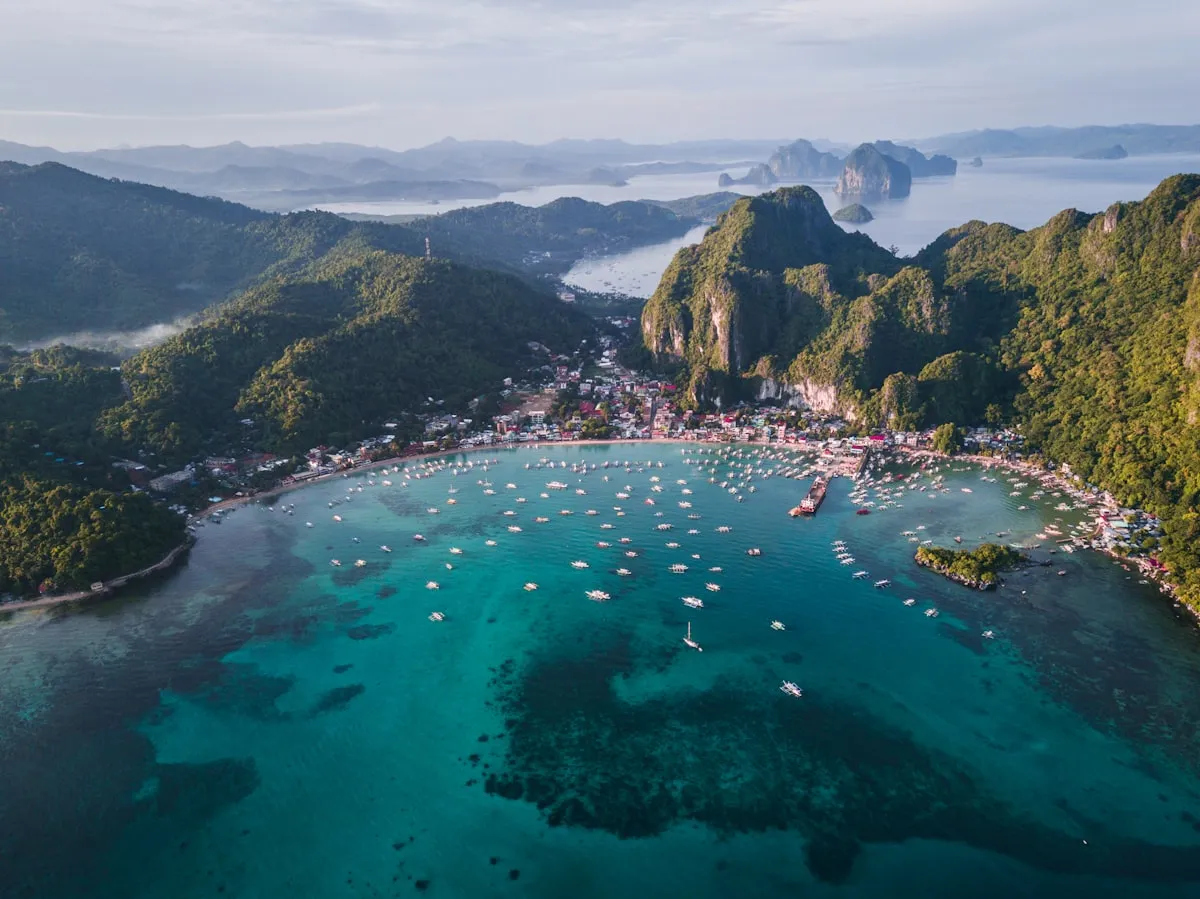
Day 3–5: El Nido, Palawan
Fly from Manila to El Nido (Lio Airport) or to Puerto Princesa then transfer by van. Direct Lio flights on Air Swift take 70 minutes; the Puerto Princesa option takes 5–6 hours total but is cheaper. Budget airlines (Cebu Pacific, AirAsia Philippines) serve Puerto Princesa for ₱1,800–₱3,500; Air Swift to Lio runs ₱4,000–₱7,000.
Three days in El Nido is the minimum to feel like you have seen it. Do Tour A on your first full day — this is the classic lagoon route covering the Big Lagoon, Small Lagoon, Secret Lagoon, and Shimizu Island for snorkelling. Cost: ₱700–₱1,200 for a group tour plus ₱800 for the environmental fee if you are a foreign tourist. The fee covers all island-hopping tours during your stay, so keep the receipt.
Day 4 is for Tour C, the most dramatic route that reaches Matinloc Shrine, Hidden Beach, and Secret Beach — the last two accessible only by swimming through narrow gaps in cliff faces. It is the most photogenic day of the entire trip for most people.
Day 5 morning: Nacpan Beach. This is a 4-kilometre stretch of sand north of El Nido town that most group tours skip. Take a tricycle (₱300–₱500 each way) or rent a scooter (₱500/day) and spend the morning there before your afternoon transfer to Coron. The beach is uncrowded by 8 a.m. and looks like a desktop wallpaper nobody ever used because it seems too perfect to be real. End your El Nido stay with dinner and drinks at one of the rooftop bars overlooking the bay — the sunset here is a legitimate event.
Day 6–7: Coron, Palawan
Getting from El Nido to Coron: either fly (via Puerto Princesa, 2 stops, ₱4,000–₱6,000 total) or take the direct bangka ferry which runs seasonally and takes 4–6 hours (₱1,500–₱2,500). The ferry is an experience in itself but check sea conditions — anything above 1.5-metre swells makes it rough. Book the ferry directly at the El Nido port, not through hotel resellers.
Coron in two days is tight but doable if you focus. Day 6 is for the island-hopping loop that covers Kayangan Lake (often called the cleanest lake in Asia), Twin Lagoon, and Skeleton Wreck for snorkelling. Group tours run ₱1,800–₱2,200 all-in. Go at 7 a.m. — Kayangan Lake with no other visitors is an entirely different experience from the mid-morning crowd scene.
Day 7 is optional diving if you are certified. The Japanese WWII wrecks in Coron Bay are rated among the top 10 dive sites in the world — Olympia Maru, Kogyo Maru, and Irako are the most accessible for recreational divers. Two dives including equipment rental run ₱3,500–₱5,000 through any of the dive shops on the main strip. Non-divers can use Day 7 for Coron town itself: the Korean Bell, Maquinit Hot Springs (₱200 entrance, natural saltwater pools), and the night market.
Day 8–9: Cebu City and Surroundings
Fly from Coron to Cebu (via Manila usually, or direct on some routes) — budget ₱2,500–₱4,500. Cebu is a proper city and your base for two of the Philippines' most famous experiences.
Day 8 is for Kawasan Falls canyoneering in Badian, 3 hours south of Cebu City. The activity involves jumping off cliffs, sliding down natural rock chutes, and swimming through turquoise canyons fed by the same water that drops into the falls at the end. It costs ₱1,500 per person including guide, wetsuit, and life jacket — book directly at the Badian Canyoneering Association booth or through an operator in Cebu City. Depart by 5 a.m. to arrive early and avoid the longest queues at the bigger drops.
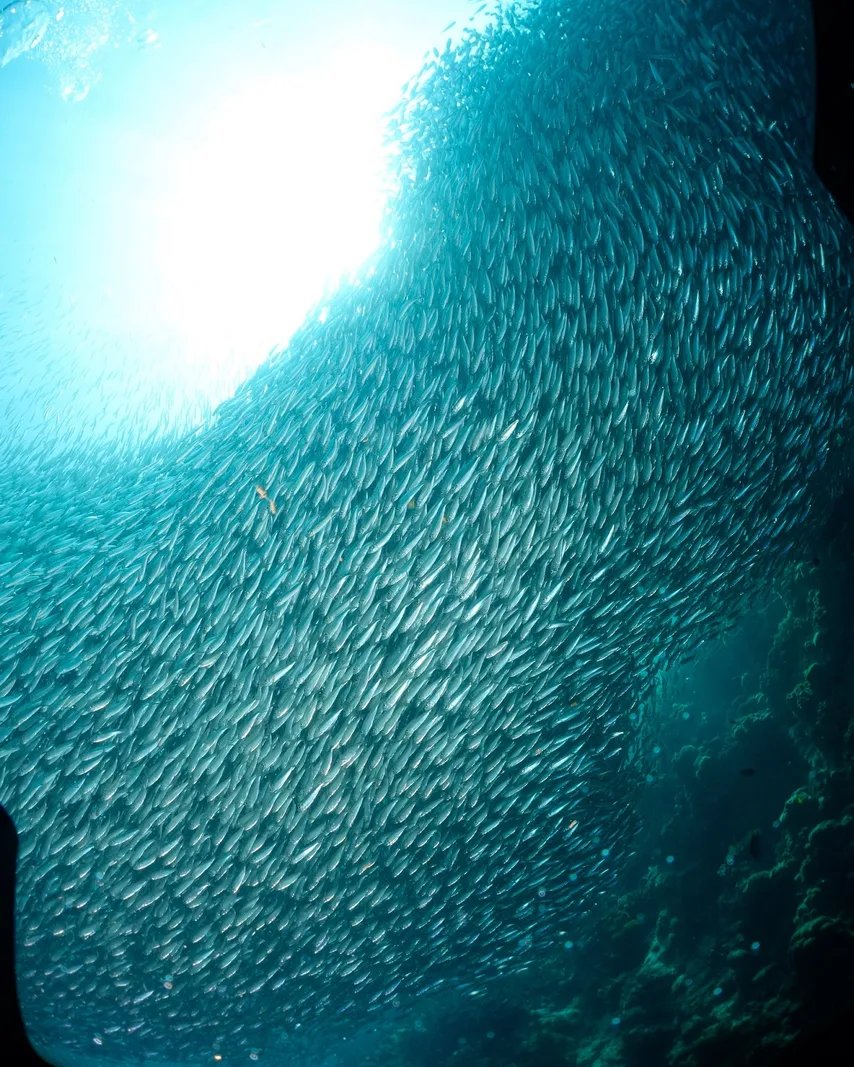
Day 9 is for Oslob whale sharks. Controversial among marine biologists (the sharks are fed by handlers to keep them in position, which alters their behaviour), but for many travellers it remains a once-in-a-lifetime encounter — you are in the water next to a 7-metre filter-feeder that is entirely indifferent to your presence. The experience costs around ₱1,000 including the boat and snorkel gear. Arrive before 6 a.m. to register; the feeding stops at 12 p.m. and crowds build fast after 8 a.m. Pair Oslob with a stop at Tumalog Falls on the way back — 20 minutes from the whale shark site, free, and consistently beautiful.
Day 10–12: Siargao
Fly from Cebu to Siargao (Sayak Airport) — direct flights on Cebu Pacific run around ₱2,000–₱3,500. The island is small, tight, and completely different in character from everything that came before it. Siargao runs on surf time. The energy is slower, the accommodation is cheaper, the food is better than it has any right to be for such a remote island, and the community of travellers who wash up here tends to stay longer than planned.
Day 10: Check in and head to Cloud 9. If you surf, you already know why. The break is a right-handed reef wave that barrels perfectly during the October–November swell peak, but it produces rideable waves most of the year. Non-surfers watch from the famous boardwalk and multi-level viewing deck — it is a full afternoon of entertainment without getting wet. First-time surfers can take a lesson at one of the surf schools along the beach for ₱800–₱1,200 including board and instructor for two hours.
Day 11: Island hopping and Sugba Lagoon. The three-island trip (Naked Island, Daku Island, Guyam Island) is the standard tour and costs ₱800–₱1,200 per person. Add Sugba Lagoon to the itinerary — a vast, turquoise inland lagoon surrounded by mangroves with a swing, a diving board, and kayaks for rent (₱500 for 30 minutes). The combined boat trip including Sugba runs ₱1,500–₱2,000 per person.
Day 12: Rest, eat, and explore. General Luna town has improved dramatically in recent years — the food scene now includes Japanese, Italian, and proper Filipino restaurants that would hold their own in Manila. Renting a scooter (₱400–₱500/day) and riding the north road past the coconut plantations and mangrove channels is one of the better free experiences in the Philippines.
Day 13–14: Return via Manila or Direct Home from Siargao via Cebu
Most international departures will route you back through Manila or Cebu. Cebu Pacific flies Siargao → Cebu → Manila daily. If your international connection allows it, a Siargao → Cebu stopover of a few hours for a last meal in Cebu is easy to arrange. If you fly directly from Siargao to Manila, you have Day 13 night in Manila for last shopping and a final Filipino dinner before your departure on Day 14.
Classic Route: Total Estimated Budget
| Category | Budget (₱) | Mid-Range (₱) |
|---|---|---|
| Inter-island flights (5 legs) | 18,000 | 28,000 |
| Accommodation (13 nights) | 15,000 | 26,000 |
| Food and drink | 7,000 | 12,000 |
| Tours and activities | 10,000 | 16,000 |
| Transport (trikes, taxis, transfers) | 3,000 | 5,000 |
| Total (per person) | ₱53,000 | ₱87,000 |
These are in-country costs only and do not include international flights to/from the Philippines.
Alternative Route 1: Beach Focus (Boracay + El Nido + Siargao)
If you came to the Philippines primarily for beaches and you want to minimise city time, skip Manila and fly into Caticlan (the gateway to Boracay) directly from your home country via a Manila connection.
Day 1–4: Boracay
White Beach on Boracay's west coast is one of the most famous stretches of sand in Asia and, since the government-mandated rehabilitation closure in 2018, it has recovered significantly. The water is genuinely clear now, the beach is maintained, and the strip has been organised enough that it no longer feels like a construction site. Four days here is not too long.
Day 1: Settle in and walk the full length of White Beach (4 kilometres). Watch the paraw sailboat sunset — traditional outriggers go out specifically for the 5:30 p.m. golden hour and a 2-hour ride costs ₱1,000–₱1,500 per person. Day 2: Water sports. Boracay has the best kitesurfing in the Philippines at Bulabog Beach on the eastern side — lessons run ₱3,000–₱4,500 for a 2-hour introduction with an IKO-certified instructor. Day 3: Island hopping to Crystal Cove (₱150 entrance, two sea caves, good snorkelling) and Puka Shell Beach on the northern tip. Day 4: Recovery, a massage on the beach (₱500–₱800 for an hour from the licensed therapists on the sand), and an early evening flight to El Nido via Manila or Puerto Princesa.
Day 5–9: El Nido
Five days in El Nido lets you do all four tours (A, B, C, D), take a day at Nacpan Beach, and have one unscheduled day for whatever the boatman recommends off-script. This is the most complete El Nido experience within a single trip.
Day 10–14: Siargao
Five days on Siargao is the sweet spot for this island. You can do the island hopping and Sugba Lagoon, take two or three surf lessons, ride the north road, eat through the General Luna restaurant scene, and still have a day with nothing planned. That last day — with no agenda, a scooter, and a full tank — is often the one people remember most.
Estimated total (beach route): ₱55,000–₱85,000 per person in-country.
Alternative Route 2: Bohol + Cebu + Palawan
This route is for travellers who want culture and nature in roughly equal measure, and who want to include Bohol's Chocolate Hills — one of the Philippines' most surreal landscapes — alongside Palawan's coastline.
Day 1–2: Manila
Same as the classic route. Intramuros, BGC, Makati. Let Manila surprise you.
Day 3–5: Cebu and Bohol
Fly Manila to Cebu (₱1,500–₱2,500 on Cebu Pacific or AirAsia). Take the fast ferry from Cebu's Pier 1 to Tagbilaran, Bohol (2 hours, ₱500–₱800). Bohol's Chocolate Hills — 1,776 perfectly cone-shaped mounds that turn brown in the dry season — are a 90-minute drive from Tagbilaran. The standard Bohol day tour also covers the Philippine Tarsier Sanctuary (the world's smallest primates, genuinely extraordinary up close) and the Loboc River cruise, where lunch is served on a floating restaurant while a local band plays. Full tour package: ₱2,000–₱2,500 per person.
Return to Cebu and use a day for Kawasan Falls canyoneering (see classic route above) or Oslob whale sharks if you skipped them on the classic route. Both are world-class activities and earn their spot in any Cebu stopover.
Day 6–10: Palawan (Puerto Princesa + El Nido)
Fly Cebu to Puerto Princesa (₱1,500–₱3,000). Puerto Princesa is the gateway to the Underground River — a UNESCO World Heritage site where you paddle a kayak into a 24-kilometre cave system carved by a river that flows entirely underground. Tours run ₱1,500–₱2,000 per person including the boat from Puerto Princesa and the underground kayak inside the cave. Book in advance — the daily visitor cap means permits sell out during peak season.
Transfer north to El Nido by van (5 hours, ₱700–₱900) and use the remaining three or four days for Tours A and C, Nacpan Beach, and a rest day. The van ride itself is part of the experience — Palawan is the one place in the Philippines with long, scenic overland routes.
Day 11–14: Return via Manila
Fly El Nido (Lio Airport) or Puerto Princesa back to Manila. Use any remaining Manila time for shopping at Greenbelt or the Salcedo Saturday Market in Makati, then depart home.
Estimated total (Bohol + Cebu + Palawan route): ₱50,000–₱78,000 per person in-country.
Alternative Route 3: Slow Travel (El Nido + Siargao Only)
For travellers who want to actually stop moving and spend real time in a place rather than logging destinations, two weeks across two islands is a legitimately different kind of trip — and often a better one.
Week 1: El Nido
Seven days in El Nido is enough to see all four island-hopping tours, do a private charter day with a boatman who will take you to spots the accredited tours skip, spend two full mornings at Nacpan Beach, kayak the mangrove channels behind the town, and still have an evening or two with nothing planned except a beer at a beach bar watching the sun disappear behind the limestone karsts. You will feel the island in a way three-day visitors never do.
Week 2: Siargao
Seven days on Siargao has a similar effect. By Day 4, the surf instructors know your name. By Day 5, you have a regular breakfast place and a favourite evening bar. By Day 7, you are having the conversation every long-stay Siargao visitor has: "I could stay another week." You cannot, but the fact that you are having the conversation is the point.
This slow-travel route involves only two flights within the Philippines (Manila → El Nido, Siargao → Manila or Siargao → Cebu → Manila) and eliminates most of the logistical stress. It costs less than any multi-destination route. It is harder to justify on paper when you have two weeks and a long flight to get here, but the travellers who do it almost universally say they would do it again.
Estimated total (slow travel route): ₱35,000–₱55,000 per person in-country.
Practical Logistics
When to Book Flights
Cebu Pacific and AirAsia Philippines release seat sales frequently. The sweet spot for domestic booking is 3 to 6 weeks before departure for reasonable prices. More than 8 weeks out, prices are often higher than necessary. Less than 2 weeks out, available seats at base fares are mostly gone. If you are travelling peak season (December to April), book domestic flights when you book your international flight — El Nido and Siargao routes fill fast.
Air Swift, which operates the Lio Airport route to El Nido, is more expensive than the budget carriers but saves you the 5-hour van transfer from Puerto Princesa. If your time is limited, the price premium is often worth it.
The Manila Layover Question
Is Manila worth a day? Yes, but not for the reasons many travellers expect. Manila is not a beautiful city in the conventional sense — traffic is real, poverty is visible, and the urban sprawl can feel overwhelming. But Intramuros is a genuine historical treasure, the Makati food scene is world-class, and starting your trip with a buffer day in the capital means a delayed international flight does not cause you to miss a boat in El Nido. Give it two days on arrival, not zero.
Ferry vs. Flight Between Islands
As a rule of thumb: fly if the journey takes more than 4 hours by ferry, or if sea conditions are uncertain. The El Nido to Coron ferry is borderline — 4 to 6 hours depending on conditions, scenic when calm, genuinely rough when the trade winds pick up. The Cebu to Bohol fast ferry (2 hours) is comfortable and reliable. The Batangas to Puerto Galera ferry is short enough to be a non-issue. Always check weather forecasts on Windy or Windguru before booking a longer ferry in advance.
Accommodation Booking Strategy
El Nido books up 2 months ahead during December through April peak season. If you are visiting in this window, lock accommodation before you book flights. Siargao accommodation in General Luna has more options but the best-value guesthouses (₱800–₱1,500 for a fan room) still fill fast for weekends. Boracay is large enough that you can usually find something a week out, though White Beachfront rooms disappear first. Manila and Cebu have enough hotel inventory that last-minute booking is usually fine.
What to Pack for 2 Weeks
The single most liberating decision you can make for a Philippines trip is to fit everything into one carry-on. Domestic flight luggage fees add up fast, and luggage carousels at smaller airports (Siargao, El Nido) add time you do not want to spend. Here is the actual short list:
- Reef-safe sunscreen — Mineral-based zinc oxide. Bring enough from home; reef-safe options are limited and expensive in the Philippines.
- Rashguard or thin long-sleeve — More effective than sunscreen alone for full-day boat trips.
- Dry bag (10L) — Sells for ₱300–₱500 in surf shops near any beach. Everything gets wet.
- Universal adapter — The Philippines uses US-style flat two-pin plugs. European plugs need an adapter.
- Light layer for evenings — Air-conditioned restaurants and overnight flights can be cold. One thin hoodie covers all situations.
- Quick-dry swimwear and shorts — You will be wet most of the day. Cotton takes too long to dry.
- Waterproof sandals — For boats, beaches, and wet cave walking. Reef shoes double as island-hopping footwear.
- Portable charger — Power is reliable in cities, patchy on smaller islands. A 10,000 mAh battery covers two days.
- Snorkel mask — Rental quality varies wildly. If you plan to snorkel more than twice, your own mask makes a real difference.
- Local SIM card — Buy a DITO, Smart, or Globe SIM at the Manila airport (₱50–₱100) and load ₱499 for a 30-day data plan. LTE is available at every destination on this itinerary. Do not rely on hotel Wi-Fi.
Frequently Asked Questions
Do I need a visa for the Philippines?
Most nationalities — including US, UK, EU, Australian, Canadian, and most Asian passport holders — receive a free 30-day visa on arrival at Philippine airports. This is extendable to 59 days at Bureau of Immigration offices for around ₱3,000. Check the Bureau of Immigration website for your specific nationality before you travel, as the list does change.
How much cash should I bring?
Budget ₱5,000–₱8,000 in cash for your first day covering transport from the airport, a SIM card, and the first night. After that, ATMs (BancNet, BDO, Metrobank, BPI) are widely available in all major cities and tourist hubs. El Nido and General Luna in Siargao both have ATMs, but they run out of cash during peak weekends — arrive with a buffer. Visa and Mastercard are accepted at mid-range hotels and larger restaurants, but smaller guesthouses, boat operators, and market stalls are cash only.
Is it safe to travel the Philippines solo?
Yes. The Philippines is a very welcoming country for solo travellers, and the tourist destinations on this itinerary are well-travelled and safe. The standard urban precautions apply in Manila (do not flash expensive items, use reputable taxis or Grab instead of unmarked cabs). Outside of Manila, petty crime is rare and locals are often genuinely curious and helpful toward foreign visitors. Solo female travellers are well-represented throughout El Nido, Siargao, and Boracay — the community vibe at these destinations is friendly and socially active.
How do I get from Manila airport to the city?
Use Grab (Southeast Asia's Uber equivalent) from the airport — flat-rate metered rides to Makati run ₱300–₱500. Yellow taxis at the airport are metered and legitimate (look for the official yellow livery and the meter), but Grab is more transparent on pricing. The new Metro Manila Subway and MRT-3 are not yet directly connected to the airport terminals but a short Grab ride connects you to the nearest rail station if you prefer rail for the rest of the city.
What is the biggest mistake first-time visitors make?
Trying to see too many islands. It is almost universal. You land in Manila, you look at a map with 7,641 islands and start building an itinerary that includes Palawan, Bohol, Siargao, Batanes, Camiguin, and Sagada. Then you spend 30% of your trip in transit and come home having seen everything at 20% depth. The Philippines rewards the traveller who slows down. Pick three destinations. Go deep. You will leave having actually been somewhere — and you will already be planning when to come back for the rest.
The Philippines is not a country you finish in two weeks. It is a country you start in two weeks. Plan accordingly.

PANA.PH Editorial Team
Philippines travel desk
The PANA.PH travel desk researches, books and re-checks Philippines travel logistics — fares, ferry schedules, government fees and permit rules — and publishes what it can verify.
🏡 Real local stays (book direct)
Hand-picked homestays and guesthouses — book direct, no markup.
Browse all local stays →
🌊 Popular activities (book instantly)
Island hopping, canyoneering, whale sharks — real Klook/GetYourGuide options.
View all activities →