There is no city in the Philippines quite like Cebu. Manila has the chaos and the commerce; Palawan has the jaw-dropping limestone karsts; Siargao has the surf and the cool-kid energy. But Cebu City — the Queen City of the South — has everything, stacked on top of each other, squeezed onto a long narrow island in the heart of the Visayas. It is the oldest city in the Philippines (founded 1565, a full 36 years before Manila), home to the country's second-busiest international airport, and ground zero for the single greatest roast pig in the entire archipelago. It is also, crucially, one of the best travel hubs in Southeast Asia. Fly in, eat lechon for breakfast, swim with whale sharks by noon, and be on a boat to Bohol by sunset. That is Cebu.
Cebu City Travel Guide: Heritage, Lechon & The Gateway to the Visayas (2026)
Hotels in Philippines
Compare live prices via Travelpayouts — targeted for this guide.
This guide covers everything: the history, the food, the day trips, the nightlife, the logistics, and the budget numbers. By the end, you will understand why experienced Philippines travelers always route through Cebu.
Getting There: Cebu Mactan International Airport
Cebu Mactan International Airport (IATA: CEB) sits on Mactan Island, connected to Cebu City by two bridges. It handles more than 10 million passengers a year and is one of the most well-connected airports in Southeast Asia. Direct international routes include:
- Singapore (SIN): 3 hours, served by Cebu Pacific and Scoot. Fares from SGD 60–120 one-way.
- Hong Kong (HKG): 2.5 hours, Cebu Pacific and Cathay Pacific. Fares from HKD 500–900 one-way.
- Seoul (ICN/GMP), Tokyo (NRT/KIX), Osaka, Taipei, Doha, Dubai, Kuala Lumpur: All direct or one-stop via Cebu.
- Manila (MNL): 1 hour, roughly 40+ daily flights from Cebu Pacific, Philippine Airlines, and AirAsia. Fares range from PHP 1,500–4,000 one-way — book 3–6 weeks out for the best prices, or grab a seat sale for PHP 699–999.
From the airport to Cebu City proper, the easiest option is a Grab (Philippine Uber) — expect PHP 150–250 to IT Park or downtown, 20–40 minutes depending on traffic. Airport taxis run PHP 300–500. The Cebu South Road Properties (SRP) expressway has improved journey times considerably from the southern part of the island.
Whale shark watching in Philippines
Hand-picked experiences in Philippines — book on Trip.com with instant confirmation.
Understanding Cebu: Province, Island, and City
First-timers get confused: "Cebu" refers to three overlapping things — the province (one of the most populous in the Philippines), the island (about 225 km long and 40 km wide), and Cebu City itself (the provincial capital and urban core). When most travelers say "Cebu," they mean Cebu City and its immediate surroundings. Here are the key zones to know:
Cebu City Proper (Downtown)
The historical and commercial heart. This is where you find Colon Street — the oldest street in the Philippines, laid out by the Spanish in 1565. Carbon Market (the sprawling public market, chaotic and brilliant), heritage churches, and the densely-packed old quarter. Accommodation here is cheapest, and the atmosphere is authentically Filipino rather than tourist-polished. Worth spending at least a morning here even if you base yourself elsewhere.
Lahug and Cebu IT Park
Lahug is the urban residential and dining district north of downtown. Cebu IT Park is a modern business park that has transformed into the city's best eating and nightlife strip over the past decade. Dozens of restaurants, craft beer bars, co-working spaces, and rooftop bars cluster here. If you want convenience, good food, and a lively atmosphere, base yourself in or near IT Park. Most mid-range hotels in this area run PHP 2,000–3,500/night.
Mactan Island
Connected to Cebu City by the Marcelo Fernan Bridge and the older Mactan-Mandaue Bridge, Mactan is where the airport is — and where the resort strip runs along the eastern coast. International hotels like Shangri-La, Crimson, and Plantation Bay sit here, many with private beaches, infinity pools, and direct sea access. If relaxation is the priority, Mactan is your base. It is 30–45 minutes from downtown Cebu in normal traffic.
Historical Highlights: Walking Cebu's Spanish Past
Cebu City punches above its weight historically. The Spanish established their first permanent settlement in the Philippines here in 1565, and the colonial imprint is still visible on nearly every street corner. Half a day of heritage walking covers the essentials.
Magellan's Cross
In April 1521, Ferdinand Magellan planted a wooden cross here to mark the baptism of Rajah Humabon and his wife — the first mass baptism in the Philippines. The original cross is supposedly encased inside the larger cross on display today, inside a small octagonal chapel beside the Basilica. Admission is free. The ceiling mural above the cross is dramatic and worth a look. Note: Magellan was killed on this same island shortly after, at the Battle of Mactan, by the chieftain Lapu-Lapu — which is why Filipinos celebrate Lapu-Lapu as a national hero and Magellan gets a cross but not much else.
Basilica del Santo Nino
The Basilica Minore del Santo Nino de Cebu is the oldest Roman Catholic church in the Philippines, built in 1565 on the site of the original wooden church established by Magellan's expedition. It houses the Santo Nino — a statue of the infant Jesus believed to be the original image given by Magellan to Rajah Humabon's wife, Hara Amihan (baptized Juana), at the 1521 baptism. The image is the most venerated in the Philippines and draws millions of pilgrims during the Sinulog Festival every January. Even for non-religious visitors, the atmosphere inside during morning mass is genuinely moving. Free to enter; donations appreciated.
Fort San Pedro
Built in 1738 by the Spanish (replacing an earlier wooden fort from 1565), Fort San Pedro is the oldest and smallest fort in the Philippines. The triangular fort sits on the waterfront and has been remarkably well-preserved. Inside, there is a small museum covering the Spanish colonial period and Philippine-American War. Entrance fee: PHP 30. Worth an hour, especially combined with a walk through the adjacent Plaza Independencia and the old port area.
Heritage of Cebu Monument
This large bronze tableau in the Parian district — the old Chinese quarter — depicts key moments in Cebu's history in intricate sculptural detail, from the pre-colonial period through the Spanish era and beyond. It is free to visit, and the surrounding Parian neighborhood retains some of the city's best-preserved Spanish-era architecture. Come in the morning for better light and cooler temperatures.
Colon Street
The oldest street in the Philippines, Colon (pronounced KO-lon) is now a chaotic, vibrant commercial strip. Do not come expecting a manicured heritage walk — this is street-level Cebu: jeepneys, ukay-ukay (second-hand clothing) shops, fast food, and noise. But that energy is authentic, and the street has historical signage marking key colonial-era sites. Walk it in the morning before the heat and crowds build.
Day Trips from Cebu City: The Real Reason People Come
Here is the truth about Cebu City: the city itself is interesting for a day or two, but the surrounding province is extraordinary. Within three hours of the city center, you can be canyoneering through turquoise gorges, swimming with the largest fish in the ocean, or diving through a tornado of ten million sardines. No other city in the Philippines gives you this range of experiences this quickly.
Kawasan Falls and Canyoneering (3 hours south)
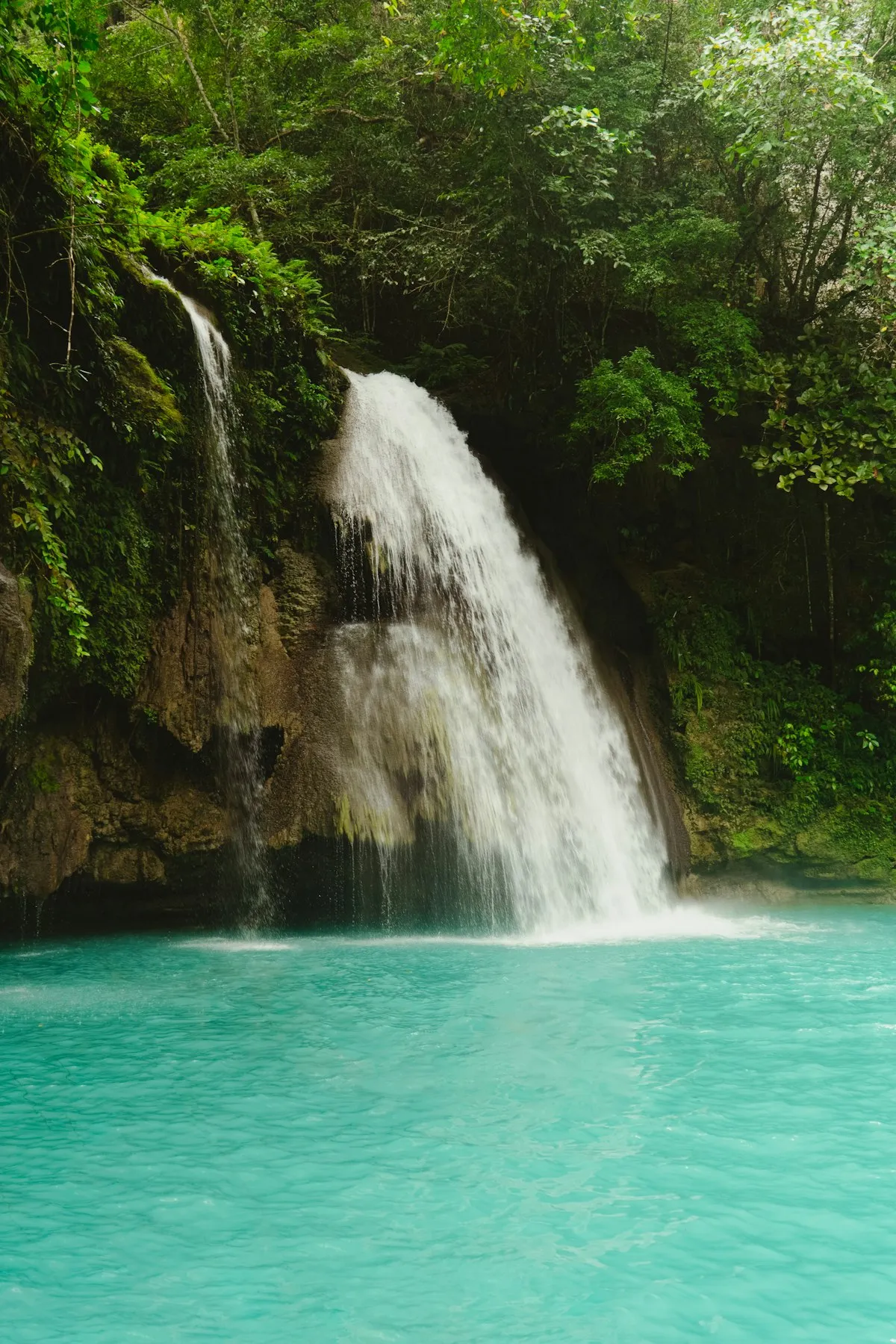
Kawasan Falls in Badian is the most iconic image in Cebu — those tiered turquoise pools fed by a spring-cold waterfall. The falls alone are worth the trip, but the canyoneering route from Matutinao to Badian — a 4–5 hour adventure of cliff jumps, river swims, and rappels — is one of the best outdoor experiences in the Philippines. Tours run PHP 900–1,500 per person from Cebu City including transport, guide, and gear. Book through a reputable operator to ensure safety standards. See our dedicated Kawasan guide for full details.
Oslob Whale Sharks (3 hours south)
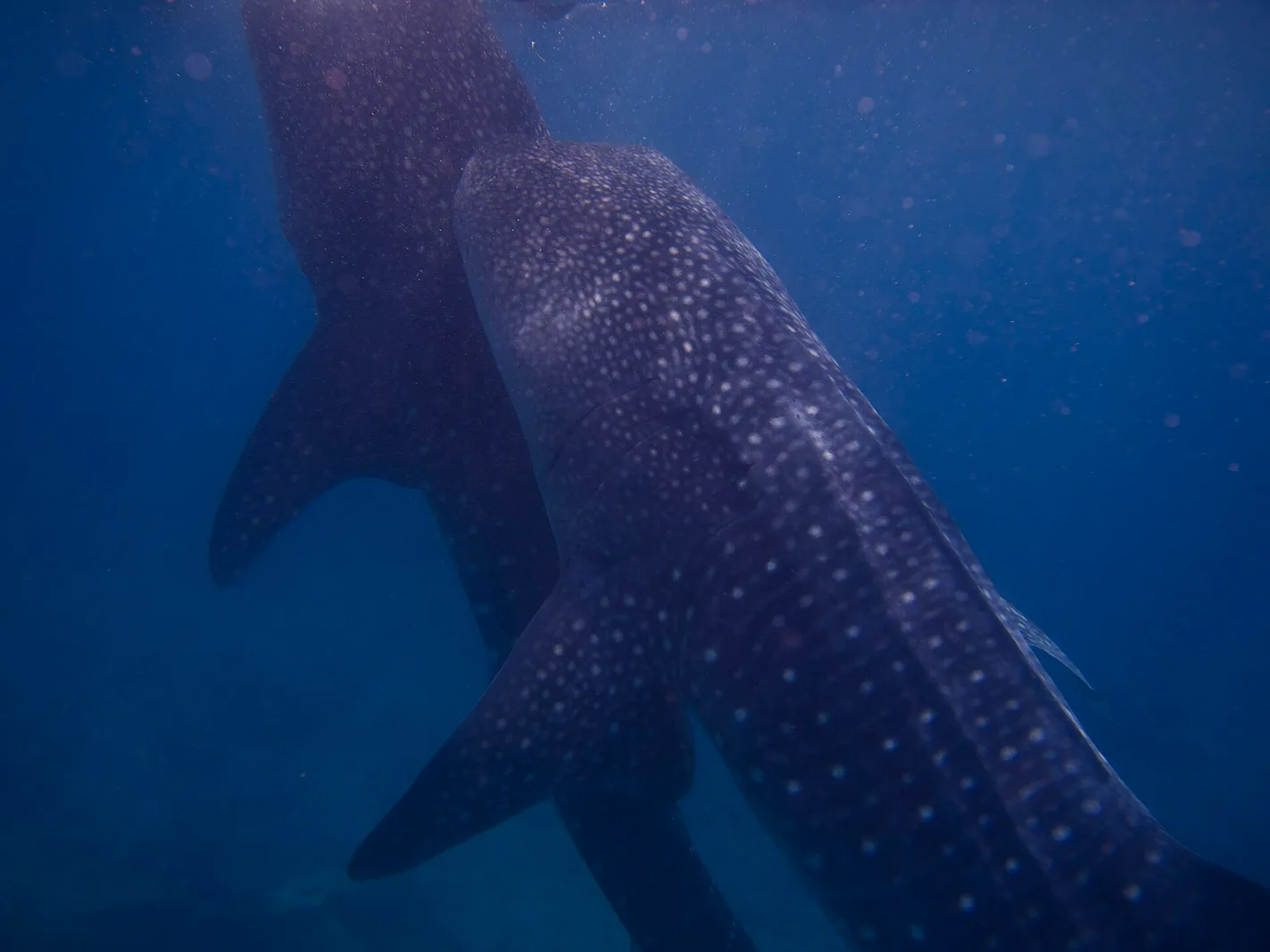
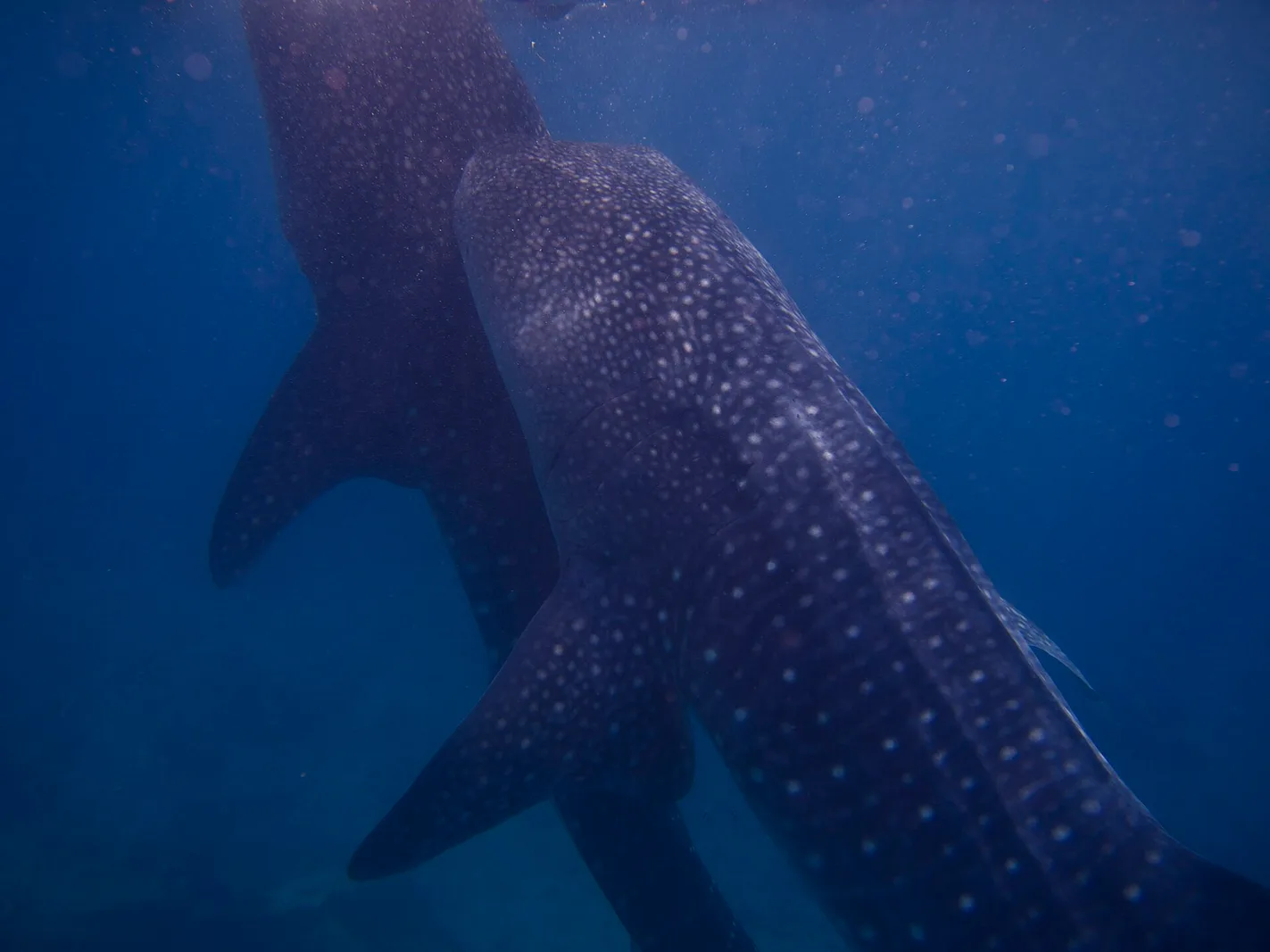
Oslob is where you can swim with whale sharks — the largest fish in the world, growing up to 12 metres — in the open ocean. The experience is extraordinary: you wade into the water, fins on, and within minutes a whale shark the size of a school bus glides past within arm's reach. Interaction fee: PHP 1,000 (snorkeling) or PHP 1,500 (diving). Tour packages from Cebu City combine Oslob whale sharks with a Kawasan Falls visit in a single day (depart 2–3am, back by evening) for PHP 2,500–3,500 all-in. Note: the feeding of sharks to keep them near the site is controversial among marine biologists — educate yourself and decide if it aligns with your values before booking.
Moalboal: Sardine Run and Pescador Island
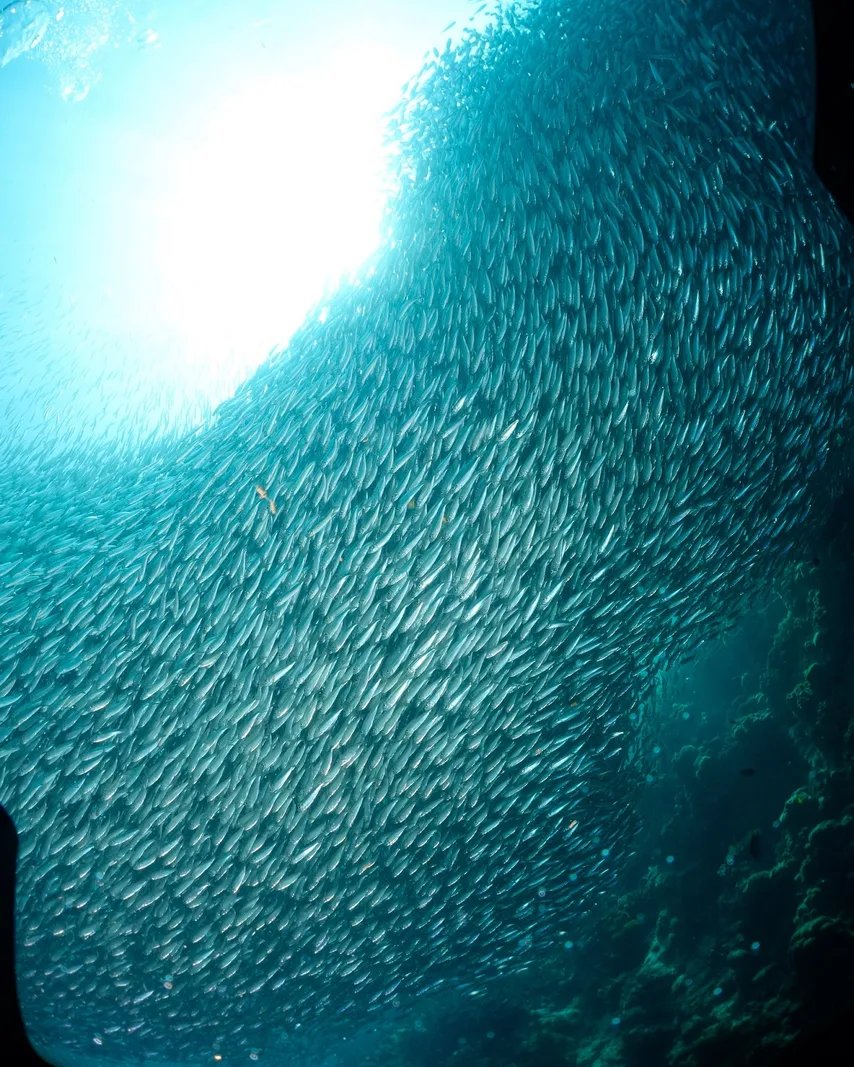
Moalboal, 2.5 hours southwest of Cebu City, hosts one of the most surreal dives on Earth: a resident school of tens of millions of sardines that moves as a single shimmering entity through the water. You can snorkel it from the beach (no boat needed — the sardines are just offshore). Pescador Island, a short bangka ride away, is a world-class dive site with a cathedral cave, sea turtles, and strong wall diving. Moalboal is a full day trip or a comfortable overnight.
Bantayan Island (3 hours north + 1 hour ferry)
Bantayan is what Boracay used to be before the resorts arrived: powder-white beaches, shallow turquoise water, fishing boats pulled up on the sand, and a laid-back pace that makes three days feel like a week. Take the bus north to Hagnaya port, then the ferry to Santa Fe on Bantayan Island. Budget PHP 400–600 for the ferry round-trip. Accommodation ranges from PHP 600 fan-cooled rooms to PHP 2,500 for a beachfront cottage. Bantayan is best as a 2-night side trip from Cebu.
Malapascua Island (4 hours north + 45-minute ferry)
Malapascua is known globally for a single reason: thresher sharks. These deep-water sharks, with their scythe-like tails, rise to a shallow cleaning station at Monad Shoal every morning just before dawn. Diving with thresher sharks is a bucket-list experience for serious divers. The island itself is small and quiet, with white sand beaches and a growing cluster of dive resorts. Budget PHP 2,000–4,000/night for a dive resort package including dives.
Cebu Lechon: The Best Roast Pig in the Philippines (Possibly the World)
Cebu lechon is not just food — it is an identity statement. Anthony Bourdain called it "the best pig, ever." Filipinos from Manila make special trips to Cebu purely to eat it. The question is not whether you will eat lechon in Cebu — you will — but where and how much.
What makes Cebu lechon different from its Manila counterpart? The technique: a whole pig is stuffed with lemongrass, garlic, onions, leeks, and local herbs, then slow-roasted over charcoal on a spit for 4–5 hours. The result is crackling skin so impossibly crispy it shatters when you bite through it, and meat that is aromatic and juicy all the way through. Manila lechon has a good crispy skin but often dips into liver sauce for flavor. Cebu lechon needs no sauce. It is complete.
Where to Eat Lechon in Cebu
CnT Lechon is the pilgrimage destination — a no-frills hole-in-the-wall on Leon Kilat Street that has been serving lechon since 1968. No ambiance, plastic stools, fluorescent lighting. PHP 350–500 per portion (roughly 200g of meat and skin). Get there before noon; it sells out. This is the one locals recommend when visitors ask, and it consistently delivers.
Rico's Lechon has multiple branches across the city (IT Park, Nivel Hills, SM Seaside) and is the consistent performer for visitors who want reliable quality without the hunt. The skin is excellent; the portions are generous. PHP 400–550 per order. The branch at IT Park is convenient if you are based in that area.
Casa Verde is the sit-down restaurant option — air-conditioned, full menu, good for a proper meal rather than a street-food experience. The lechon is excellent, and the house-made sauces (including a spicy lechon sauce) are worth trying alongside the plain meat. Budget PHP 600–900 for a full meal with drinks.
Cebu Food Beyond Lechon
Lechon gets all the press, but Cebu's broader food scene is genuinely excellent — and considerably more affordable than Manila.
Sutukil
Sutukil is an acronym: su for sugba (grilled), tu for tula (stewed), kil for kilaw (raw/ceviche-style). In practice, it is the Cebuano approach to fresh seafood: you pick your fish or shellfish from a display, then choose your preparation method. The best Sutukil is at the Mactan fishing village of Maribago or the informal stalls at Carbon Market. Budget PHP 300–500 per person for a full seafood spread.
Ngohiong
Ngohiong is Cebu's take on the spring roll, with Chinese-Filipino origins — a crispy fried roll filled with spiced pork and jicama (singkamas), served with a sweet-vinegary dipping sauce. You find it at street stalls throughout the city for PHP 15–20 per piece. Buy five.
Danggit
Danggit — dried rabbitfish — is Cebu's beloved breakfast fish. Dried to a crisp, fried in minimal oil until it shatters, served alongside garlic rice, fried egg, and vinegar dip. The best danggit comes from Carbon Market, where you can buy bags to take home as pasalubong (gifts). Budget PHP 150–250 for a kilo of good danggit.
Tops Lookout
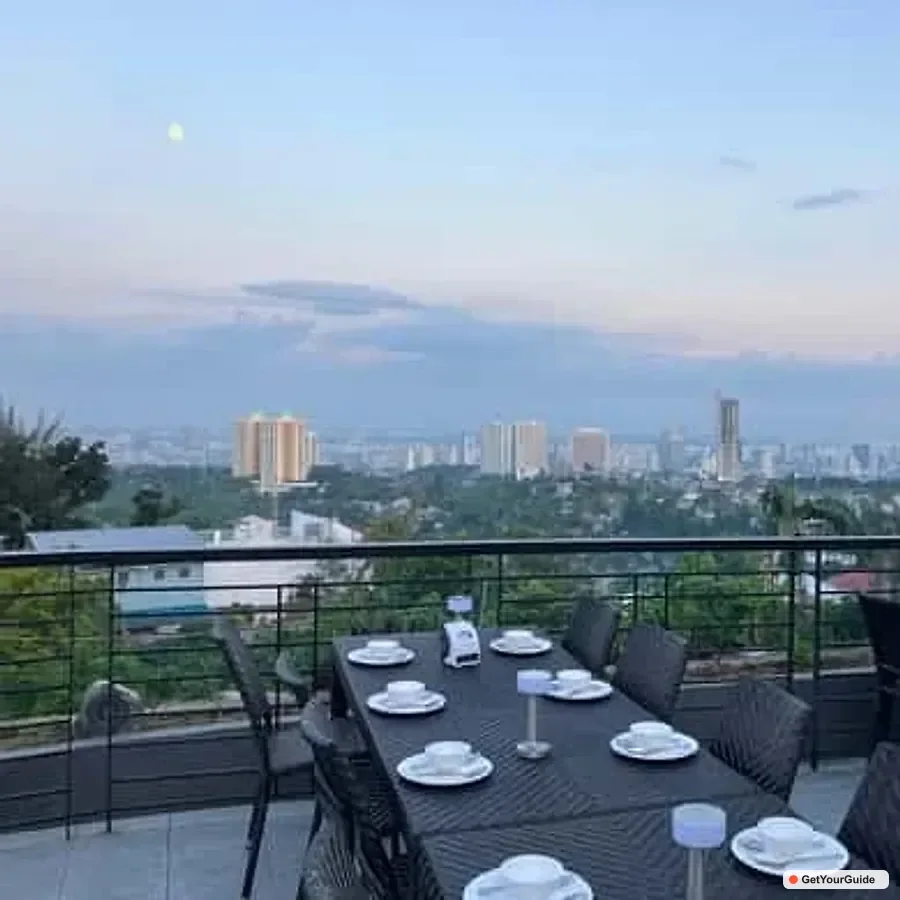
Not food, but go here for dinner views: Tops Lookout on Busay Hill, 650 metres above sea level, gives you a panoramic view of Cebu City, Mactan, and the surrounding Visayan islands. PHP 100 entrance fee. The restaurant serves Filipino food and snacks at reasonable prices. Sunset here is spectacular — arrive 45 minutes early to get a good spot.
Nightlife: Cebu After Dark
Cebu has a legitimate nightlife scene built around the young professional crowd from the IT Park business district.
Cebu IT Park is the epicenter: Ayala Center Cebu, a dozen craft beer bars, cocktail lounges, and late-night food stalls all within walking distance of each other. The crowd is local-heavy and Filipino professional rather than backpacker-focused, which makes it a more authentic experience than many tourist nightlife strips.
Mango Square (General Maxilom Avenue) is the traditional backpacker nightlife hub: louder, cheaper, more chaotic. Bars with live music, karaoke venues, and the usual Southeast Asian tourist strip energy. Fine for a night; not something to seek out unless that is exactly what you want.
Waterfront Hotel and Casino on the southern waterfront has a casino complex and several hotel bars that run until the early hours. The view over the harbor from the upper-floor bar is worth the slightly elevated drink prices.
Accommodation: Where to Stay
Cebu City has a wide range of accommodation, and the right choice depends entirely on what you are here to do.
Budget (PHP 600–1,500/night): The Colon and Carbon Market area has the most backpacker-friendly guesthouses and cheap hotels — fan-cooled rooms, shared bathrooms, communal common areas. Walk to heritage sites, Carbon Market, and street food. Noisy and atmospheric in equal measure.
Mid-range (PHP 2,000–3,500/night): The IT Park and Lahug area is the sweet spot for most travelers. Air-conditioned, clean, with good Wi-Fi, walking distance to the best restaurants and nightlife, and 20–30 minutes by Grab to downtown heritage sites or the malls.
Resort (PHP 4,000–10,000/night): Mactan Island is where international resort-standard accommodation concentrates. Shangri-La Mactan, Crimson Resort, Plantation Bay, and Maribago Bluewater all deliver infinity pools, private beaches, and full-service amenities. If you are combining a city stay with beach relaxation — and you have the budget — two nights in the city, two nights on Mactan works beautifully.
Using Cebu as a Hub: The Visayas in One Trip
The most efficient Philippines itinerary often begins and ends in Cebu. Here is a framework that experienced travelers use:
- Day 1: Fly into CEB. Heritage walk (Magellan's Cross, Basilica, Fort San Pedro). Lechon dinner at CnT.
- Day 2: Early departure for Oslob whale sharks + Kawasan Falls canyoneering (depart 2–3am, back by 7–8pm). Exhausted but euphoric.
- Day 3: Fast ferry to Tagbilaran, Bohol (2 hours, PHP 450–550). Chocolate Hills, tarsiers, Loboc River.
- Day 4–5: Fast ferry from Bohol to Siargao via Cebu, or fly Cebu–Siargao (1 hour, PHP 1,500–2,500). Cloud 9, Sugba Lagoon, island life.
- Day 6–7: Fly Siargao–Cebu–home, or continue to Camiguin or Dumaguete.
The key insight: Cebu's airport and fast-ferry connections make it a genuine regional hub. Bohol, Dumaguete, Siquijor, Ormoc (for Leyte), and even Cagayan de Oro are all accessible by ferry from Cebu's Pier 1 or the Pier 4 SuperCat terminal. You can route an entire Visayas circuit through Cebu without backtracking through Manila.
Budget: What Cebu City Costs
Cebu is meaningfully cheaper than Manila for accommodation and transport, roughly on par for food (arguably better value given the quality).
- Budget traveler: PHP 2,500–3,500/day. This covers a basic but clean guesthouse, street food and market meals (including lechon), local transport by habal-habal (motorcycle taxi) and jeepney, and entrance fees.
- Mid-range traveler: PHP 3,500–5,500/day. A decent IT Park hotel, restaurant meals, Grab transport, and one cultural activity per day.
- Day trips: Add PHP 1,500–3,500 on top of daily base for Oslob whale sharks, Kawasan canyoneering, or a Moalboal diving day. Budget accordingly.
- Resort traveler (Mactan): PHP 6,000–12,000/day including accommodation, resort activities, and meals.
Cash is king at markets, street food stalls, and smaller restaurants. ATMs are widely available; GCash (Philippine mobile wallet) is accepted almost everywhere. Grab (app-based transport) is reliable and eliminates taxi fare negotiations entirely.
Frequently Asked Questions
How many days do I need in Cebu City?
Two full days in the city itself covers the heritage sites, markets, food scene, and IT Park nightlife comfortably. Add two to three more days for day trips: one day for Oslob whale sharks and Kawasan Falls, one day for Moalboal, and a third for Bantayan Island or Malapascua if diving is your priority. A five-day Cebu itinerary is the sweet spot before you start feeling like you should be moving on to Bohol or Siargao.
Is Cebu City safe for tourists?
Yes. Cebu City is one of the safer major cities in the Philippines for tourists. The main tourist areas — IT Park, the heritage sites, Mactan resort strip — have a visible security presence and steady tourist foot traffic. Standard urban precautions apply: do not flash expensive camera gear in dense markets, use Grab instead of flagging random taxis, and avoid poorly-lit streets in the Colon area late at night. The city has far fewer petty crime incidents targeting tourists than Manila does.
When is the best time to visit Cebu?
January through May is peak season and has the best weather: dry, hot, and sunny across the island. January is particularly good — Sinulog Festival in the third week of January is one of the great street festivals in Asia (book accommodation months in advance if traveling during Sinulog week). June through November sees more rain but Cebu remains largely accessible; the southern day trips (Oslob, Kawasan) can be disrupted by rough weather, but the city itself is fine. Avoid Cebu City around Holy Week (March–April) if you want mobility — massive domestic travel crowds make getting around difficult.
What is the Sinulog Festival and should I go?
Sinulog is a massive street festival in the third week of January commemorating the Santo Nino — the same image brought by Magellan in 1521. The main parade runs through downtown Cebu on the third Sunday of January and draws two to three million people onto the streets. It is genuinely extraordinary: drums, dancing, elaborate floats, and a citywide party that runs for days. If you have never been to a major Filipino festival, Sinulog is the one to see. Book accommodation at least three to four months in advance; the entire city fills up and prices triple. For the festival itself, budget an extra PHP 500–1,000/day for festival crowds, transport delays, and the inevitable street food binge.
How do I get from Cebu City to Bohol?
Fast ferry from Pier 1 Cebu City (or the newer Pier 4 SuperCat terminal) to Tagbilaran City, Bohol. Journey time: approximately 2 hours. Operators include Oceanjet, SuperCat, and 2GO Travel. Fares run PHP 450–600 one-way for economy class (air-conditioned cabin with assigned seating). There are roughly 8–10 sailings daily from early morning to mid-afternoon. Book through the operator's website or at the pier. Alternatively, there is a cheaper but slower RO-RO ferry from Cebu North Bus Terminal to Tubigon, Bohol (roughly 2–2.5 hours, PHP 200), which some budget travelers prefer.
The Bottom Line
Cebu City earns its title as the Queen City of the South. It is where Philippine history began — and where one of the world's great food obsessions, lechon, reaches its absolute peak. But the city is only the beginning. Within a three-hour radius of the Cebu City downtown, you can access whale sharks, canyoneering, world-class diving, pristine islands, and ferry connections to a dozen more extraordinary destinations across the Visayas.
Fly into Cebu. Eat the lechon. Go deeper.

PANA.PH Editorial Team
Philippines travel desk
The PANA.PH travel desk researches, books and re-checks Philippines travel logistics — fares, ferry schedules, government fees and permit rules — and publishes what it can verify.
🏡 Real local stays (book direct)
Hand-picked homestays and guesthouses — book direct, no markup.
Browse all local stays →
🌊 Popular activities (book instantly)
Island hopping, canyoneering, whale sharks — real Klook/GetYourGuide options.
View all activities →