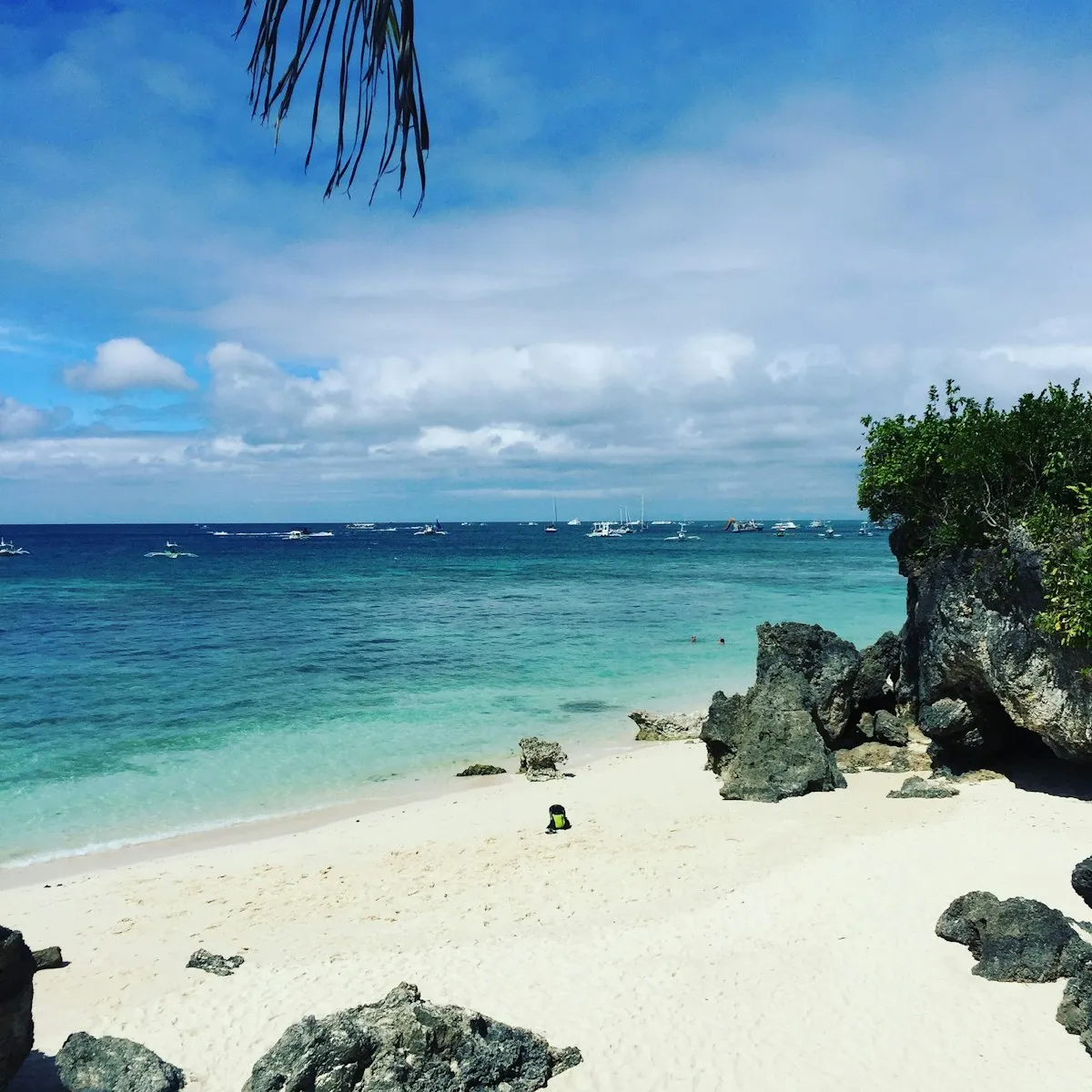
Ask any Korean or Japanese traveller who has been to the Philippines which island they visited first, and the answer is almost always Boracay. The island has built its reputation over decades on a single, extraordinary asset: White Beach. Four kilometres of powdered white coral sand, a graduated turquoise sea that goes from wading-shallow to swimming-deep in thirty metres, and a sunset that turns the sky shades of orange and purple that will make you stop mid-sentence. Combined with a well-developed tourist infrastructure, a concentration of Korean and Japanese restaurants and services, and world-class water sports, Boracay has become the default first Philippine destination for East Asian travellers — and many keep coming back.
Boracay 2026: Complete Guide for Korean & Japanese Travellers
Trip.com
Search on Trip.comHotels in Boracay
Compare live prices via Travelpayouts — targeted for this guide.
This guide covers everything Korean and Japanese travellers need: how to get there from Seoul and Tokyo, which airport to use, which part of the beach to stay on, what to eat, what activities are worth the price, and how to navigate Boracay in 2026.
Getting There: Flights from Seoul and Tokyo
From Seoul (ICN)
There is no direct commercial flight from Seoul to Boracay — the gateway airports are Caticlan (MPH) or Kalibo (KLO), both requiring a connection through Manila or Cebu. The most common routing for Korean travellers:
- Seoul ICN → Manila MNL → Caticlan MPH — fly Manila to Caticlan with Cebu Pacific or Philippine Airlines (approximately 1 hour), then 10 minutes by tricycle to Caticlan Jetty Port and a 15-minute bancal (outrigger boat) crossing to Boracay's Cagban Jetty. Total journey time door-to-island: 6–8 hours.
- Seoul ICN → Cebu CEB → Caticlan MPH — Philippine Airlines and Cebu Pacific run Cebu to Caticlan connections. Useful if you are combining Boracay with a Cebu stop.
- Seoul ICN → Kalibo KLO — some budget charter packages use Kalibo, which is cheaper but adds approximately 2 extra hours of road transfer (Kalibo is 70 km from Caticlan vs. 2 km from the Caticlan jetty). If price is the priority, Kalibo works. If convenience matters, pay the extra for Caticlan.
From Tokyo (NRT/HND)
Routing is similar: Tokyo to Manila, then Manila to Caticlan. Philippine Airlines runs the Tokyo-Manila leg daily with onward connections. During peak Japanese travel periods (Golden Week, Obon, New Year), Japanese travel agencies (JTB, H.I.S.) sometimes sell Boracay package deals with charter arrangements to Kalibo — worth checking if you prefer all-in pricing.
Trip.com
See all tours in Boracay on Trip.comTours & activities in Boracay
Hand-picked experiences in Boracay — book on Trip.com with instant confirmation.
Caticlan vs. Kalibo Airport: The Definitive Comparison
This is the question Korean and Japanese travel forums debate most about Boracay logistics. Here is the honest answer:
| Factor | Caticlan (MPH) | Kalibo (KLO) |
|---|---|---|
| Distance to jetty | 2 km (5 min tricycle) | 70 km (90 min–2 hr van) |
| Availability | Smaller planes (ATR 72), limited seats | Full-size jets, more flights |
| Fare premium | PHP 300–800 more vs Kalibo | Cheaper flights |
| Luggage | 15–20 kg limit on small aircraft | Standard international limit |
| Transfer cost | PHP 80–150 (tricycle) | PHP 250–400 (shared van) |
| Best for | Short trips, convenience priority | Budget trips, heavy luggage |
Recommendation: If you are staying 3–5 days and value time, Caticlan is worth the extra cost. If you are on a tight budget and bringing significant luggage, Kalibo is fine — the van ride is scenic and the extra 90 minutes is manageable once.
The Three Stations: Which Beach Zone Is Right for You?
White Beach is divided into three sections (stations) numbered from north to south. Each has a distinct character that appeals to different East Asian traveller profiles:
Station 1 (Northern End) — Upscale, Preferred by Korean and Japanese Visitors
This is where the high-end resorts cluster: Discovery Shores, Shangri-La (a short ride north), and boutique properties with their own beachfront. The sand at Station 1 is the finest and least walked. Water is calm, shallow, and clear. Korean and Japanese travellers — particularly couples, families, and those on organised tour packages — overwhelmingly prefer Station 1. Korean restaurants, Japanese-speaking hotel staff, and well-maintained beach are concentrated here. Expect to pay PHP 5,000–15,000+ per night for beachfront or near-beachfront accommodation.
Station 2 (Middle) — Central Buzz, Best for Activity and Nightlife
D'Mall — Boracay's main shopping and dining strip — sits at the top of Station 2. This is the island's social and commercial centre: Korean BBQ restaurants, Japanese food, international chains, souvenir shops, tour booking offices, massage parlours, and the jumping-off point for most water sports. White Beach at Station 2 is busiest but also most vibrant, with beach bars and music in the evenings. Young Korean and Japanese travellers (university age, solo or small groups) tend to enjoy Station 2 most. Accommodation runs PHP 2,500–8,000/night at mid-range.
Station 3 (Southern End) — Budget, Local Atmosphere
Station 3 has the most local character, with smaller guesthouses, budget accommodation (PHP 1,200–3,000/night), and fewer package tourists. The beach narrows slightly and gets some seaweed during certain months. Suited to very budget-conscious travellers or those who want a quieter, less polished experience.
Korean and Japanese Restaurants on White Beach
Boracay's restaurant scene for East Asian travellers is genuinely impressive for an island of its size:
Korean Options
Korean BBQ restaurants line the area around D'Mall and Station 1's beach path. Samgyeopsal (grilled pork belly), galbi (short ribs), and Korean fried chicken are widely available. Many Korean-owned restaurants have Hangul menus alongside English and Filipino. Quality varies — look for places with visible Korean customers (locals know local). Korean ramen, bibimbap, and kimchi jjigae are standard across multiple establishments. Prices are slightly elevated compared to Korea but far below Seoul restaurant prices: expect PHP 600–1,200 per person for a BBQ dinner.
Japanese Options
Japanese restaurants in Boracay have improved significantly as the Japanese tourist market has grown. Ramen shops, sushi bars, and izakaya-style establishments can be found near D'Mall and Station 1. Quality is not Tokyo-level but is competent and familiar. Some Japanese-owned operations serve authentic preparations. Japanese breakfast options (rice, miso soup, grilled fish) are available at several hotels that cater to the Japanese market.
Filipino Food Worth Trying
Do not spend your entire Boracay trip eating Korean or Japanese food. Seafood in Boracay is excellent and remarkably affordable: fresh grilled tuna, prawns, and squid at beachfront restaurants cost PHP 400–900 per dish. Chicken inasal (Ilonggo-style grilled chicken), sinigang (tamarind sour soup), and kare-kare (oxtail peanut stew) are worth exploring. The Talipapa wet market at the north end of White Beach lets you choose live seafood and have it cooked at adjacent restaurants — a popular activity that Korean and Japanese tourists particularly enjoy for its interactive quality.
Water Sports: Price Guide 2026
Boracay's water sports industry is highly organised and East-Asian-tourist-friendly. Prices are posted (negotiate slightly but do not expect deep discounts at established operators):
- Helmet Diving (no certification required): PHP 2,500. Walk-in at multiple beach operators. You walk on the seabed in a weighted helmet with air supply — fish feed around you. This is the most popular activity for Korean and Japanese tourists who are not certified divers. Duration: approximately 20 minutes underwater.
- Parasailing: PHP 1,500 (single) / PHP 2,200 (tandem). A 10–15 minute flight with views of White Beach from above. Safe, well-operated, no skill required.
- Jet Ski: PHP 1,000 for 30 minutes. Patrol-supervised zone off the beach.
- Banana Boat: PHP 350–500 per person. Group activity, 10 minutes.
- Kitesurfing Lesson (Bulabog Beach, east side of island): PHP 2,500–4,000 for a 2-hour beginner session. Bulabog Beach faces east and has consistent wind — it is Boracay's kitesurfing hub and has a completely different atmosphere from the White Beach side.
- Island Hopping (Puka Shell Beach, Crystal Cove, snorkeling stops): PHP 1,200–1,800 per person. Half-day tour on a bangka.
- PADI Scuba Diving (discover diving, no certification): PHP 2,800–3,500 per dive with instructor.
- Sunset Sailing (paraw — traditional outrigger): PHP 700–1,000 per person. A Boracay classic — 1 hour on a paraw sailboat as the sun sets behind the Mindoro mountains.
D'Mall: Shopping and Social Hub
D'Mall is not a conventional mall but rather an open-air cluster of shops, restaurants, tour operators, money changers, and souvenir stalls in the middle of Station 2. For Korean and Japanese tourists it serves as the island's social centre. Money changers in D'Mall offer competitive rates for KRW and JPY — better than hotel desks. Tour packages for every island activity are bookable at D'Mall from competing operators (compare prices across 2–3 stalls before booking). The Ministop and 7-Eleven near D'Mall sell Korean snack imports.
Willy's Rock: The Icon at Sunset
At the northern end of Station 1, Willy's Rock is a volcanic formation rising out of the shallows, topped with a small shrine to the Virgin Mary. At low tide you can walk to it. At sunset, it becomes one of the most photographed spots in the Philippines — the silhouette against the orange sky over the Sibuyan Sea is exactly what every Boracay promotional image shows. Arrive 30 minutes before sunset for position. During peak season (December–April), this spot fills up fast. Korean and Japanese visitors almost universally make this stop.
Nightlife for East Asian Travellers
Boracay's nightlife scene is one of the liveliest in the Philippines outside of Manila. The beach path at Station 2 turns into a social strip after 9 PM — fire dancers perform on the beach, beach bars set up tables in the sand, and music ranges from live acoustic to electronic. Korean and Japanese travellers generally gather at mid-energy beach bars rather than the loudest nightclubs. Summer Place (Station 1 end) and Epic (near D'Mall) are popular with a young East Asian crowd. Boracay's nightlife does not officially shut down until 2 AM or later during high season.
Note: The 2018 government rehabilitation of Boracay cleared out many illegal beach vendors and restored the sand, but nightlife has fully recovered and is currently more regulated and cleaner than pre-rehabilitation.
Best Time to Visit
For Korean and Japanese travellers planning Boracay, timing matters:
- December–April (Amihan/dry season): The ideal window. White Beach is calm, clear, and at its most beautiful. Peak period December–March means higher prices and crowds — book accommodation 4–8 weeks ahead.
- May: Transition month, still good, prices beginning to soften.
- June–October (Habagat/wet season): Avoid Boracay during this period. The southwest monsoon turns White Beach rough and grey, with choppy conditions that make water sports dangerous. Many resorts discount heavily but the beach experience is genuinely poor. Siargao or Davao are far better options if travelling in these months.
- November: Boracay begins recovering. Prices drop to shoulder-season levels before the Christmas rush and conditions are improving. A good value month if you can tolerate occasional rain.
Practical Notes
No motorised private vehicles are permitted on Boracay — all transport is by tricycle (PHP 10–50 per person depending on distance), e-trike, or walking. This keeps the island quiet and walkable. Luggage transport from the jetty to your hotel is handled by tricycle porter for PHP 150–250 per trip.
Environmental fee: PHP 150 per person, collected at the jetty on arrival. This was introduced during the rehabilitation period and funds beach and reef maintenance.
Sunscreen restrictions: Reef-safe sunscreen is required for water activities. Check your sunscreen before arrival — oxybenzone-based products are banned. Many Korean and Japanese sunscreen brands are mineral-based and compliant, but verify before packing.
Frequently Asked Questions
Is Boracay safe for Korean and Japanese solo travellers?
Yes. Boracay is one of the safest tourist environments in the Philippines due to its small size (7 km long, no motorised traffic), concentrated tourist infrastructure, and heavy tourism authority presence. The island has a tourist police station and regular patrols on White Beach. Standard precautions apply — do not leave valuables on the beach unattended, use ATMs inside establishments rather than freestanding ones, and use your hotel safe. Solo Korean and Japanese female travellers report feeling comfortable on the island, particularly at the Station 1 and D'Mall areas during the day.
Can I use Korean Won or Japanese Yen directly in Boracay?
Some resorts and Korean-owned restaurants accept KRW informally, but the standard currency is Philippine Peso (PHP). Money changers in D'Mall and at the Caticlan jetty exchange KRW and JPY at reasonable rates. Bring some PHP from Manila if arriving late at night (D'Mall money changers close by 9–10 PM). Most hotels and larger restaurants accept Visa/Mastercard.
How many days should I spend in Boracay?
Three to five days is the sweet spot for most Korean and Japanese travellers. Three days covers the core experience: White Beach, sunset at Willy's Rock, one day of water sports, D'Mall dinner, and one island-hopping half-day. Five days allows you to add Bulabog Beach kitesurfing, a Puka Shell Beach visit, and genuinely relaxing beach time without feeling rushed. Beyond five days, you will have seen most of what the island offers — at that point it is a lifestyle choice (many Korean students on break from Cebu English schools do exactly this: 5 days Boracay, back to school).
Is Boracay good for families with children?
Yes — Station 1 in particular is well-suited for families. The water at the northern end is extremely shallow and calm for hundreds of metres, making it safe for young children. Korean and Japanese family groups are common at Station 1 resorts. Helmet diving is popular with older children (minimum age varies by operator, typically 7–8 years old). The tricycle-only transport makes the island less stressful for families with young children than a city environment.
What is the difference between White Beach and Bulabog Beach?
They are on opposite sides of the island. White Beach (western side) is calm, shallow, and faces the sunset — it is the iconic swimming and beach-relaxing side. Bulabog Beach (eastern side) is exposed to the trade winds, making it rougher but ideal for kitesurfing and windsurfing. Most tourists stay on the White Beach side; Bulabog is a day trip for kite/wind sports. The two beaches are about 1.5 km apart across the island's narrow waist — a pleasant 20-minute walk through the interior road.

PANA.PH Editorial Team
Philippines travel desk
The PANA.PH travel desk researches, books and re-checks Philippines travel logistics — fares, ferry schedules, government fees and permit rules — and publishes what it can verify.
🏡 Real local stays (book direct)
Hand-picked homestays and guesthouses — book direct, no markup.
Browse all local stays →
🌊 Popular activities (book instantly)
Island hopping, canyoneering, whale sharks — real Klook/GetYourGuide options.
View all activities →