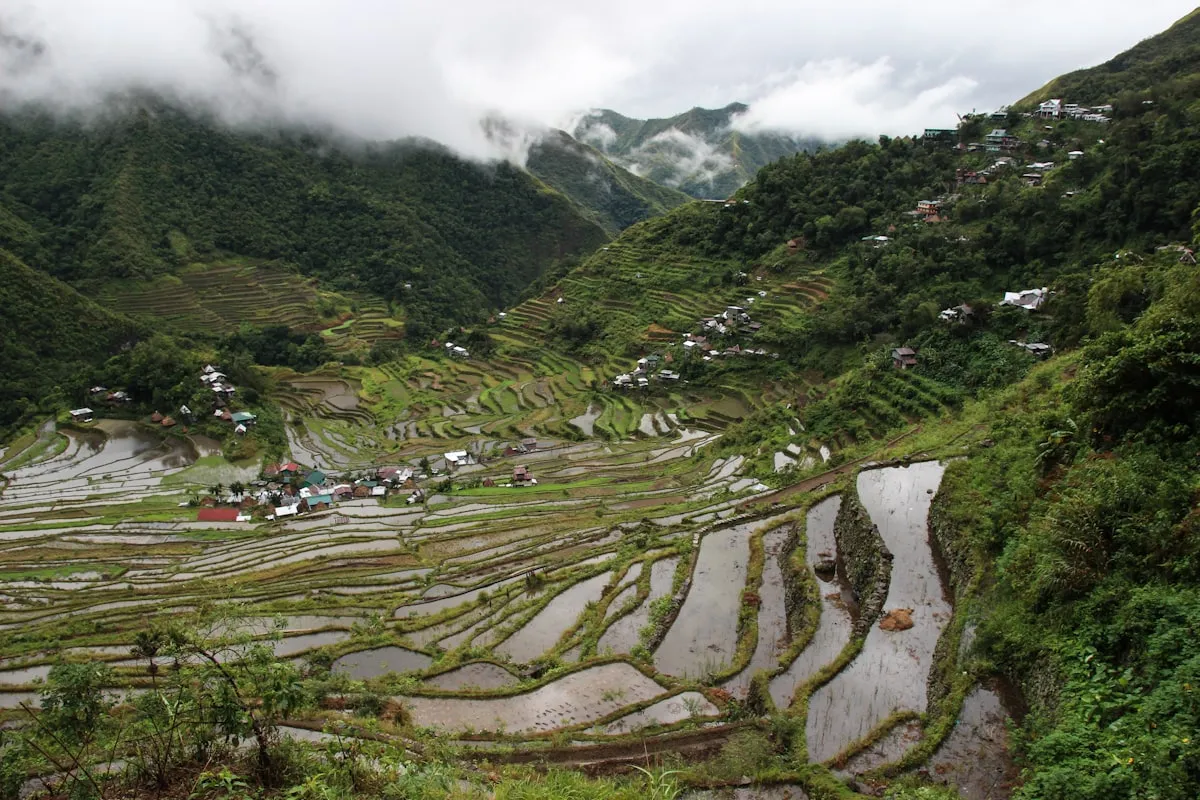
Carved into the Cordillera mountains of northern Luzon more than 2,000 years ago, the rice terraces of Ifugao are often called the "Eighth Wonder of the World" - vast green amphitheatres of hand-built stone-and-mud paddies climbing impossibly steep mountainsides. The terraces around Banaue, and especially the spectacular amphitheatre at Batad, are a UNESCO World Heritage cluster and one of the great non-beach experiences in the Philippines. This guide covers how to get there from Manila, the Batad trek, where to stay, costs, and when to go for that emerald-green view.
Banaue & Batad Rice Terraces: Trek, Transport & Guide
Diving & adventure#Banaue rice terraces#Batad rice terraces#Ifugao#Cordillera trekking#Luzon mountains
Trip.com
Search on Trip.comHotels in Manila
Compare live prices via Travelpayouts — targeted for this guide.
Banaue vs Batad: What's the Difference?
Banaue is the gateway town with the famous roadside viewpoints (including the scene on the old PHP 1,000 bill) - easy to reach and see without trekking. Batad, about an hour away by road plus a hike, is the jaw-dropping highlight: a natural amphitheatre of terraces wrapped around a valley, with the Tappiya Falls at the bottom. If you only have time for one proper experience, Batad's amphitheatre is the one to make the effort for. Most travelers base in Banaue and day-trip or overnight to Batad.
How to Get There from Manila
There is no airport at Banaue - you go overland from Manila, and the classic method is the overnight night bus:
- Direct night bus - operators like Ohayami Trans and Coda Lines run direct services from Manila (near Sampaloc/Lacson area) to Banaue, departing in the evening and arriving early morning after about 8 to 9 hours. Fares are roughly PHP 750 to 1,200.
- Via Banaue to Batad - from Banaue, take a jeepney or hired tricycle/van toward the Batad junction/saddle, then walk down into Batad (the final stretch is on foot).
Book the night bus a day or two ahead, especially on weekends and holidays.
Trip.com
See all tours in Manila on Trip.comHiking tour in Manila
Hand-picked experiences in Manila — book on Trip.com with instant confirmation.
The Batad Trek
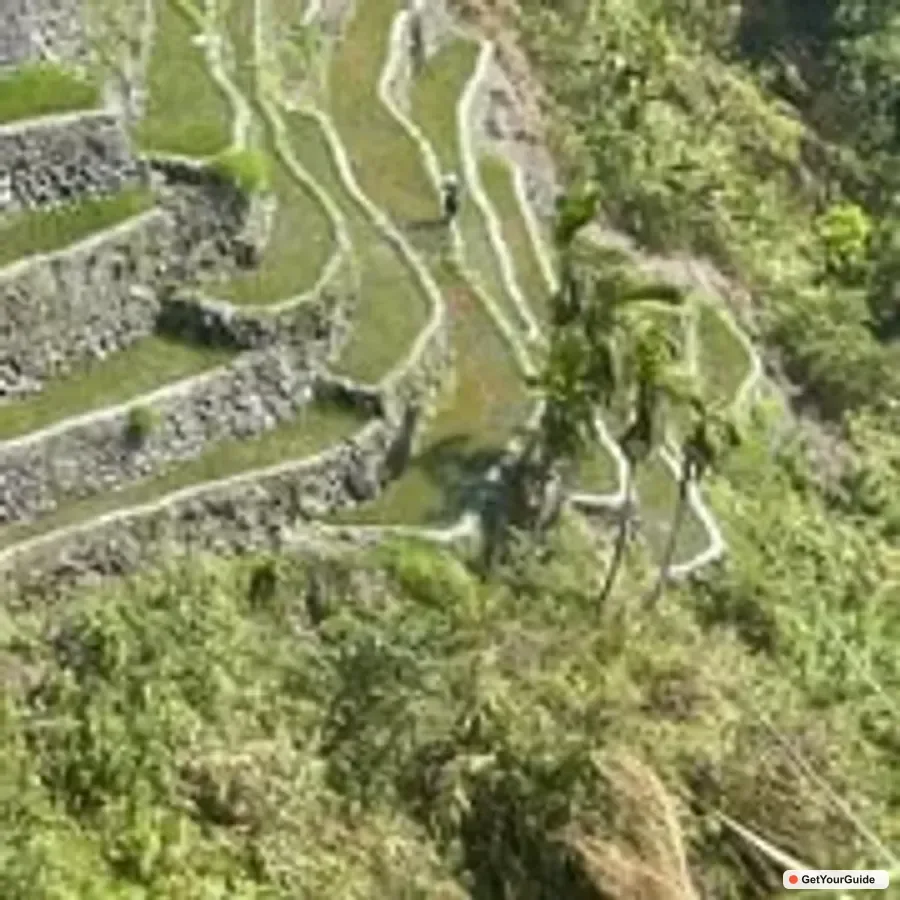
From the Batad saddle (the road end), it is a downhill hike of roughly 20 to 45 minutes into Batad village and the amphitheatre viewpoint. To reach Tappiya Falls at the valley floor, add a steeper trek of around one to two hours each way through the terraces - rewarding but demanding, with lots of steps and uneven ground. A local guide (around PHP 800 to 1,500 depending on the route and group size) is recommended and supports the community; for longer terrace-to-terrace treks or village-to-village routes, a guide is essential. Wear proper shoes - the terrace walls are narrow and slippery when wet.
Where to Stay
You can stay in Banaue town (more amenities, viewpoints nearby) or in simple guesthouses in Batad right at the amphitheatre - the latter is magical for sunrise and sunset over the terraces, though facilities are basic and you carry your bag down the trail. Browse options on our stays page. An overnight in Batad lets you enjoy the terraces without the day-trip rush and is highly recommended.
Best Time to Visit
The terraces look different through the year:
- Lush green: roughly February to April (after planting) is when the paddies are at their vivid emerald best - the classic postcard view.
- Golden harvest: around May to June the rice turns golden before harvest.
- Avoid peak typhoon months of the rainy season for trekking, as trails get slippery and views cloud over, and landslides can disrupt mountain roads.
Mornings are clearest before clouds build over the mountains.
Combine with Sagada
Many travelers pair Banaue with Sagada, the nearby mountain town famous for its hanging coffins, caves and pine scenery, reached by a few hours of winding jeepney/van from Banaue. A common loop is Manila to Banaue/Batad, across to Sagada, then back via Baguio. Plan the route with our trip planner and read more North Luzon guides on our blog.
The History and Culture of the Terraces
The rice terraces are not just scenery - they are a living cultural landscape built and maintained by the Ifugao people for some two thousand years, entirely by hand, using stone and mud walls and an ingenious irrigation system that channels mountain spring water down through the tiers. UNESCO inscribed the terraces as a World Heritage Site precisely because they represent a harmonious, sustainable relationship between people and their environment passed down through generations of indigenous knowledge. When you visit, you are walking through working farmland that families still tend, so treat it with respect: stay on the paths, ask before photographing people at work, and consider buying local crafts or hiring local guides, whose fees directly support the communities maintaining this fragile, labour-intensive heritage. Understanding this context transforms the view from a pretty photo into something genuinely moving.
What to Pack and Practical Tips
The mountains are cooler than the lowlands, so pack layers - it can be chilly in the early mornings and evenings, especially in Sagada, and you will want a light jacket. Bring proper walking or hiking shoes with grip, as the terrace walls and trails are narrow, uneven and slippery when wet, plus a rain jacket given mountain weather can change fast. Carry cash, as ATMs are scarce and unreliable in the mountains and most guesthouses and guides are cash-only. A reusable water bottle, sunscreen, a hat and insect repellent round out the kit. Phone signal can be patchy, so download offline maps. Finally, build in buffer time: mountain roads are winding and occasionally affected by landslides in the wet season, so do not plan tight onward connections. With the right gear and a flexible mindset, the Ifugao terraces are one of the most rewarding non-beach experiences in the country - plan the trip with our trip planner.
Combining Banaue, Batad and Sagada
Most travellers fold the terraces into a wider North Luzon mountain loop, and the classic circuit is well worth the effort. A popular route: take the night bus from Manila to Banaue, spend a day or two on the Batad amphitheatre and Banaue viewpoints, then travel a few winding hours across to Sagada for its hanging coffins, Sumaguing Cave, Echo Valley and pine-clad scenery and famously cool air. From Sagada you can descend to Baguio (the "Summer Capital") and bus back to Manila, completing the loop. Allow around four to six days for a comfortable version. Each stop has a distinct character - Banaue/Batad for the terraces, Sagada for caves and mountain culture, Baguio for cool-climate city comforts - and together they make one of the most rewarding overland adventures in the Philippines, a complete contrast to the beaches the country is famous for.
Where to Stay in the Terraces
Accommodation in the region is simple but characterful. In Banaue town you will find guesthouses and small inns, many with terrace views and easy access to the viewpoints and onward transport - the practical base with the most amenities. For something more memorable, stay in a basic guesthouse right in Batad, perched at the edge of the amphitheatre: facilities are minimal (limited electricity, simple rooms, and you carry your bag down the trail), but waking to mist lifting off the terraces and watching the light change at sunrise and sunset is genuinely unforgettable. In Sagada, cosy mountain lodges and inns suit the cool climate. Book ahead in the peak green-season and holiday periods, bring cash as cards are rarely accepted, and pack layers for the chilly mountain nights. Browse options on our stays page and read more North Luzon guides on the blog.
Ancient, vast and hand-built over two thousand years, the Ifugao rice terraces are one of the most extraordinary sights in the Philippines and a complete contrast to its beaches. Take the night bus, hire a local guide, time it for the green season, and pair it with Sagada for one of Asia's great mountain journeys.
Frequently Asked Questions
How do you get from Manila to Banaue?
Take an overnight direct night bus - operators like Ohayami Trans and Coda Lines run from Manila to Banaue in about 8 to 9 hours, departing in the evening and arriving early morning, for roughly PHP 750 to 1,200. There is no airport at Banaue.
How do you get to the Batad rice terraces?
From Banaue, take a jeepney, tricycle or van toward the Batad junction/saddle, then hike down about 20 to 45 minutes into the village and amphitheatre. Reaching Tappiya Falls at the valley floor adds a steeper one-to-two-hour trek each way.
Do you need a guide for the rice terraces?
A local guide (around PHP 800 to 1,500) is recommended for the Batad amphitheatre and Tappiya Falls and essential for longer terrace-to-terrace or village-to-village treks. Hiring one also supports the local Ifugao community.
When is the best time to see the rice terraces green?
The terraces are at their lush emerald best from roughly February to April after planting, turning golden around May to June before harvest. Avoid the peak typhoon months of the rainy season, when trails are slippery and views cloud over.
Can you visit Banaue and Sagada together?
Yes, they pair well. Sagada, famous for its hanging coffins and caves, is a few hours by jeepney or van from Banaue. A popular loop runs Manila to Banaue/Batad, across to Sagada, then back via Baguio.

PANA.PH Editorial Team
Philippines travel desk
The PANA.PH travel desk researches, books and re-checks Philippines travel logistics — fares, ferry schedules, government fees and permit rules — and publishes what it can verify.
🏡 Real local stays (book direct)
Hand-picked homestays and guesthouses — book direct, no markup.
Browse all local stays →
🌊 Popular activities (book instantly)
Island hopping, canyoneering, whale sharks — real Klook/GetYourGuide options.
View all activities →