Boracay in 2026: The Complete Picture
Boracay has one of the more remarkable stories in Southeast Asian tourism: from paradise to cautionary tale of overtourism, through a government-mandated closure and rehabilitation in 2018, and back to a version of itself that has genuinely learned from its mistakes. In 2026, it stands as one of the region's best-managed resort islands and still one of the most beautiful beaches in the world.
This guide covers everything you need to know before you arrive — the logistics, the money, the weather, and the honest trade-offs of choosing Boracay for your Philippines adventure.
Getting to Boracay
Via Caticlan Airport (MPH)
The closest airport to Boracay. Multiple airlines fly direct from Manila (55 minutes) and some routes from Cebu. From Caticlan, take a short tricycle ride to the jetty port, then a 10-minute bangka boat crossing to Boracay's Cagban Jetty. Total transfer time from airport to beach: about 45 minutes.
Via Kalibo Airport (KLO)
Larger airport with more international connections (Hong Kong, Korea, China). From Kalibo, take a 2-hour air-conditioned bus or van transfer to Caticlan, then the boat crossing. This route is slower but often cheaper and serves visitors coming from outside the Philippines.
Getting Around Boracay
Private motorbikes and tricycles are banned on the island — a key post-rehabilitation rule that has dramatically improved the beachfront experience. The main transport options are:
- E-trikes (electric tricycles): The official island transport. Flag them down anywhere or call through your accommodation. Metered or flat fare (PHP 20-50 for most routes).
- Walking: White Beach's main path runs 4km from Station 1 to Station 3. Most of the island's attractions are reachable on foot.
- Hired vans: For transfers to Bulabog Beach (east coast) or longer island explorations.
Best Areas to Stay
Station 1 (North)
Quietest and most upscale section. The sand here is finer and whiter, the crowds thinner, and the resort strip more exclusive. Best for: couples, honeymooners, those wanting tranquility.
Station 2 (Middle)
The buzzing center of island life. D'Mall shopping and restaurant area is here, along with the densest concentration of restaurants, bars, tour operators, and people. Best for: first-timers who want maximum convenience and energy.
Station 3 (South)
More local in character, with smaller guesthouses, better value accommodation, and the Sunday market nearby. A bit further from the tourist hub. Best for: budget travellers and those who prefer a quieter, more authentic neighborhood feel.
What to Do
White Beach
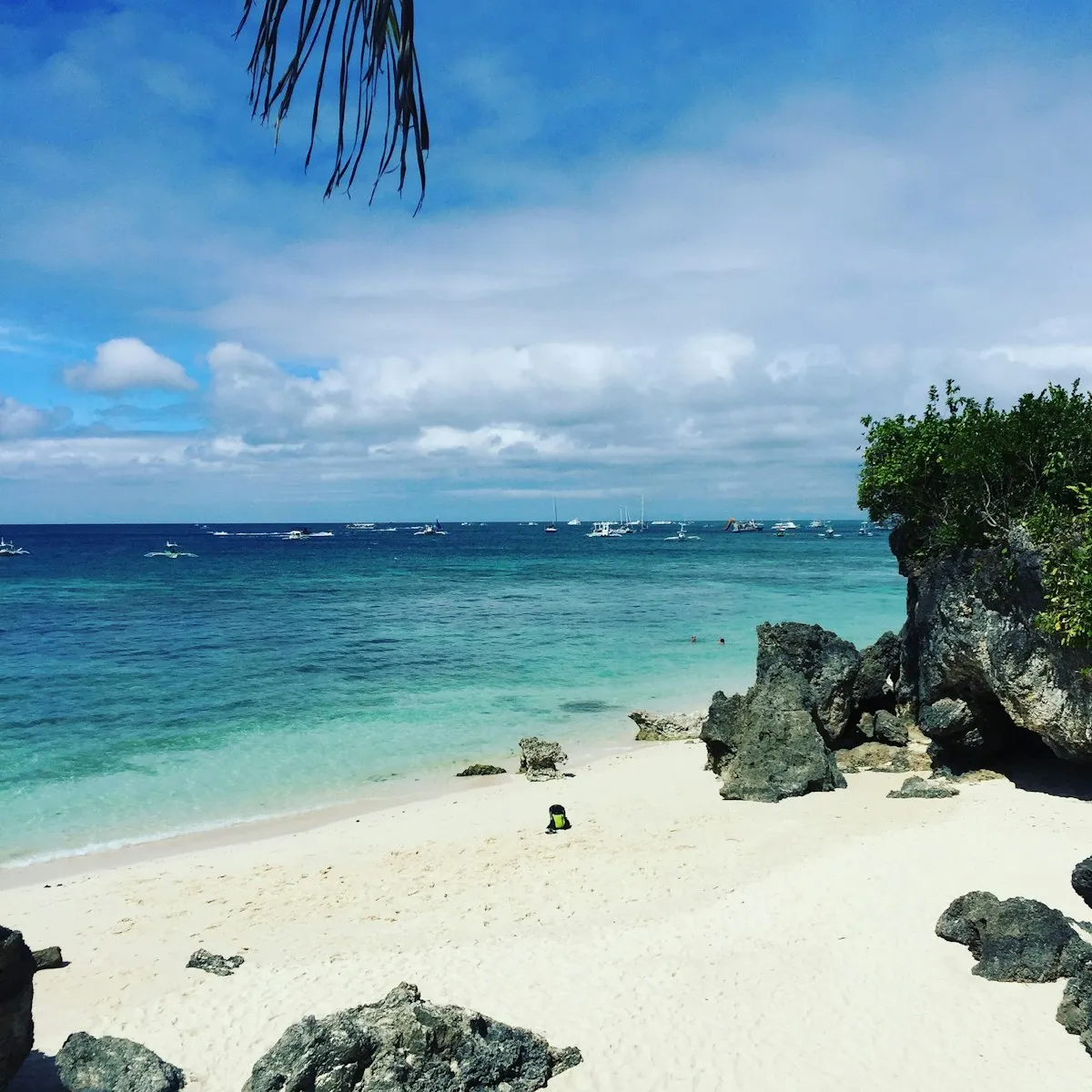
The 4km of powdery white sand is the primary attraction and reason enough to come. Swimming, sunbathing, watching the sunset, and strolling the beachfront path are free and deeply satisfying. Read our full White Beach guide for the honest assessment.
Paraw Sunset Cruise
The iconic experience. Sail on a traditional outrigger boat as the sun drops into the Sulu Sea. Everything you need to know about the paraw cruise.
Island Hopping and Snorkeling
The waters around Boracay have excellent snorkeling at Crystal Cove and Tambisaan Reef. Book a Boracay island hopping and snorkeling tour for a full-day exploration of the best sites.
Ariel's Point
The adventure day trip — cliff diving, kayaking, snorkeling, and open bar on a private island. Full Ariel's Point guide here.
Kiteboarding and Windsurfing
Bulabog Beach on the east coast is a world-class windsports destination during amihan season (October-March). Schools offer lessons for all levels; the conditions are genuinely excellent.
Costs
- Budget: PHP 2,000-3,500/day (guesthouse, local food, self-arranged activities)
- Mid-range: PHP 4,000-8,000/day (hotel, mix of restaurants, some tours)
- Splurge: PHP 10,000+/day (beachfront resort, fine dining, private tours)
Note: Environmental fees (PHP 300/person) are collected at the port. Budget for these on arrival.
Best Time to Visit
Peak season (November-May) offers dry, sunny weather and the northeast trade winds that make Boracay's sailing and windsports so good. Christmas and Holy Week are the most crowded periods. Off-season (June-October) brings afternoon rain, lower prices, smaller crowds, and greener scenery. The beach is beautiful year-round.
Practical Tips
- Pay environmental fees on arrival — keep your receipt for inspection checkpoints
- Book popular tours (paraw sunset, Ariel's Point) by noon to guarantee spots
- ATMs are available but can run out during peak season — arrive with sufficient cash
- Sunscreen: the beach rules require reef-safe formulas in the water
- The night market near D'Mall runs nightly and is the best budget food option on the island
Final Word
Boracay in 2026 delivers on its reputation. The rehabilitation has created a cleaner, better-managed version of one of the world's most beautiful beach destinations. Come for the sand and the sunsets; stay for the surprisingly good food scene, the water sports, and the social energy that only comes from a place where thousands of people from around the world have converged with the same simple intention: to be on a beautiful beach.