Svenska

Intramuros Manila: Complete History and Visitor Guide

PANA.PH · 5 juni 2026 · 3 min

Intramuros Manila: Complete History and Visitor Guide

Intramuros - Latin for Within the Walls - is the original walled city of Manila, built by the Spanish colonial administration beginning in 1571 and completed over the following decades into one of the most sophisticated fortified cities in all of colonial Asia. Standing within its 6-kilometer-perimeter stone walls today, walking the battlements above the Pasig River, and exploring the baroque churches and colonial plazas that survived centuries of earthquakes, foreign invasions, and the catastrophic Battle of Manila in 1945 is one of the most historically rich experiences in all of Southeast Asia.

A Brief History of Intramuros

When Governor-General Miguel Lopez de Legazpi established Manila as the capital of the Spanish East Indies in 1571, he recognized the strategic value of the land at the mouth of the Pasig River where it meets Manila Bay. The first palisade walls were built in 1574. Over the following decades, the fortifications were rebuilt in stone, expanded, and reinforced against threats from Chinese pirates, Dutch naval attacks, and British invasion. At its height, Intramuros covered 64 hectares within massive basalt walls up to 10 meters high and 40 meters wide, with a moat fed by the Pasig River. It was the exclusive domain of the Spanish colonial elite - Filipinos and Chinese were generally prohibited from living within the walls.

The Battle of Manila and Its Aftermath

The Battle of Manila in February-March 1945 was the most destructive urban battle of World War II in Asia after the Battle of Stalingrad. American forces fighting to liberate Manila from Japanese occupation exchanged artillery fire with Japanese defenders who had taken refuge in Intramuros with 4,000 Filipino civilians as hostages. When the battle ended, over 100,000 Filipino civilians had been killed and virtually every historic building in Intramuros had been destroyed or gutted. The only significant colonial-era building to survive largely intact was San Agustin Church, whose massive stone construction withstood the bombardment.

Intramuros Today: What to See

San Agustin Church and Museum

San Agustin Church (UNESCO World Heritage, built 1571-1606) is the oldest stone church in the Philippines and one of the most significant buildings in the entire country. The interior with its trompe-l'oeil painted ceiling, ornate retablo (altarpiece), and collection of religious art spanning four centuries is extraordinary. The San Agustin Museum beside the church contains some of the finest Spanish colonial religious artifacts in Southeast Asia.

Fort Santiago

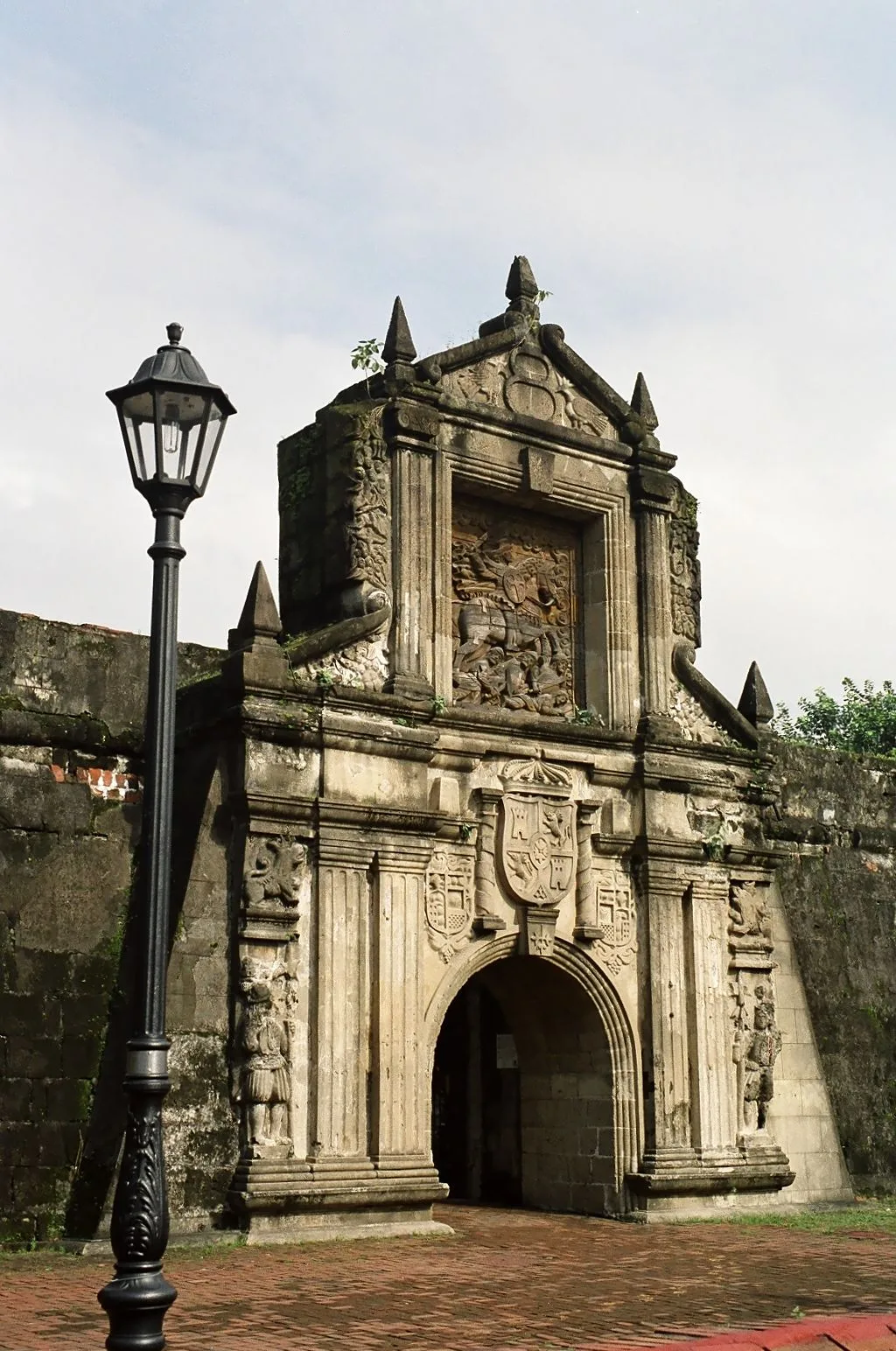
Fort Santiago (built 1593) at the northern tip of Intramuros overlooking the Pasig River was the military headquarters of the Spanish colonial administration and later the Japanese occupation. The dungeons where prisoners were executed by the Japanese (including hundreds of American prisoners of war) are accessible. The Rizal Shrine within Fort Santiago marks the cell where national hero Jose Rizal spent his final hours before his execution on December 30, 1896.

Casa Manila Museum

Casa Manila Museum is a faithful reconstruction of a 19th-century colonial house, fully furnished with period antiques. It provides the most vivid visualization of elite colonial Manila life available anywhere in the Philippines.

Baluarte de San Diego and the Walls

The restored sections of the Intramuros walls and the Baluarte de San Diego bastion offer views over Manila Bay, the Pasig River, and the modern city beyond. Horse-drawn calesa rides along the walls are a classic Intramuros experience particularly enjoyed by families with children.

Practical Visitor Information

Intramuros is accessible by Grab from any Manila hotel. Fort Santiago opens daily from 8am to 8pm (P90 entrance fee). San Agustin Church is open for visitors outside of mass hours (check the mass schedule). Walking tours of Intramuros take 2-3 hours for the main sites. Free licensed tour guides are available at the Intramuros Administration office near Fort Santiago. Explore Manila cultural and historical tours including guided Intramuros heritage walks.

PANA.PH

Intramuros Manila: Complete History and Visitor Guide | PANA.PH