Sardine Run Moalboal: Swimming Through a Tornado of Fish
On the southwestern coast of Cebu, in the small town of Moalboal, something extraordinary happens every day of the year. Just a few hundred metres from the shore, in water that is often less than 10 metres deep, a school of sardines numbering in the tens of millions gathers along the reef. This is not a seasonal migration or a temporary aggregation. This school has been present at Panagsama Beach in Moalboal for years, and it shows no sign of leaving.
Divers and snorkellers enter the water and find themselves surrounded by a living wall of fish that extends from the surface to the sand below. The school responds to divers by flowing around them like a liquid, creating formations and spirals that catch the sunlight and produce one of the most visually spectacular underwater experiences available anywhere in the Philippines.
The Sardine Phenomenon: Why Are They Here?
The sardines at Moalboal are Sardinella lemuru, a species that typically forms open-water schools in the Cebu Strait. Marine biologists believe the school has taken up permanent residence near Panagsama Beach due to a combination of factors: upwelling currents that bring nutrient-rich water from depth, the structure of the reef wall that provides some shelter, and the presence of local fishing restrictions that have inadvertently created a safe zone for the school.
What makes the Moalboal sardine school unique globally is its permanence. Sardine runs in other destinations, such as South Africa's famous sardine run, are seasonal and highly unpredictable. At Moalboal, the school is present every single day of the year. It may shift location along the reef wall, and its precise movements vary with current and time of day, but it is always there.
What the Sardine Run Looks Like
Words struggle to capture the experience, but here is the closest approximation. You enter the water from the beach or a boat and begin swimming toward the reef edge. As you approach the wall, you notice the water ahead beginning to darken. What looks at first like a shadow or cloud resolves into individual fish as you get closer. Then, suddenly, you are surrounded.
The sardines form a column that extends from near the surface to the sandy bottom at 20 to 25 metres. The column is alive, constantly moving, the millions of fish shifting and flowing in a coordinated response to currents, predators, and each other. When sunlight penetrates the school from above, each individual fish reflects the light differently, creating a shimmering, prismatic effect that looks like a living gemstone. When a predator passes through, the school divides and reforms in spectacular split-second choreography.
The predators are part of the show. Trevally dart in from the edges at speed, scattering the school into temporary explosions of silver. Tuna make high-speed passes. Dolphins and thresher sharks have been recorded hunting the school, though these are less common encounters. Even from above the surface, snorkellers can see the dramatic formations clearly.
Snorkelling vs Diving the Sardine Run
Uniquely among Philippine dive highlights, the Moalboal sardine run is almost as impressive for snorkellers as for divers. The school often extends to within a few metres of the surface, and the high visibility means that snorkellers can see the full depth of the school from above. If you are not a diver, do not let that stop you from experiencing Moalboal.
Divers get the additional perspective of being fully inside the school at depth, which is unquestionably spectacular, but snorkellers who hang at the surface directly above the school can witness the same formations, the same predator interactions, and the same extraordinary light effects. This is one of the few world-class marine life encounters that does not require scuba certification.
Book our Moalboal sardine run and turtle watching tour which includes both the sardine school and dedicated turtle snorkelling in the same trip.
The Sea Turtles of Moalboal
Moalboal has a second marine attraction that rivals the sardines: a substantial population of sea turtles that feed on the sea grass and algae along the shallow reef. Green sea turtles are the most common species, and they are genuinely abundant here. On a typical snorkel or dive at Panagsama reef, you will encounter multiple turtles, often within a few minutes of entering the water.
The turtles at Moalboal are habituated to human presence and move about their business with serene indifference to divers and snorkellers. They graze, rest, and cruise along the reef while photographers hover nearby. The shallow depth of the turtle habitat makes this an ideal encounter for snorkellers and beginner divers alike.
Combining the sardine school with the turtle population in a single session gives Moalboal a unique double headline that few marine destinations anywhere in the world can match.
Diving Beyond the Sardines
While the sardine run is Moalboal's signature attraction, the surrounding reef has much more to offer. The wall that runs south from Panagsama Beach has good coral coverage and a variety of fish life. Macro photographers find nudibranchs, ghost pipefish, and frogfish on the rubble and coral at the base of the wall.
About 10 kilometres south of Moalboal, Pescador Island is a small uninhabited island surrounded by excellent reef. The island features a dramatic cavern called the Cathedral, similar in character to Balicasag's cavern site, and the outer walls have good coral coverage with sea fans and diverse fish life. A half-day trip to Pescador can be combined with the morning sardine dive for a full-day Moalboal experience.
Getting to Moalboal
Moalboal is located approximately 90 kilometres south of Cebu City and is easily reached by bus from the South Bus Terminal in Cebu City. The journey takes about two to three hours. Many dive resorts also arrange transfers for guests. The drive south from Cebu City passes through beautiful mountain scenery in the interior of Cebu before descending to the coast at Moalboal.
Cebu City is one of the Philippines major hubs, with frequent flights from Manila, and international connections to Seoul, Hong Kong, Singapore, and other Asian cities via Mactan-Cebu International Airport.
Where to Stay in Moalboal
Panagsama Beach, the small beach adjacent to the sardine run site, has a concentration of dive resorts and guesthouses ranging from budget rooms to small boutique operations. Most divers stay for two to four nights, enough to do the sardine run on multiple occasions and explore Pescador Island and the turtle sites. The town of Moalboal proper is a short tricycle ride from the beach.
Combining Moalboal with Kawasan Falls
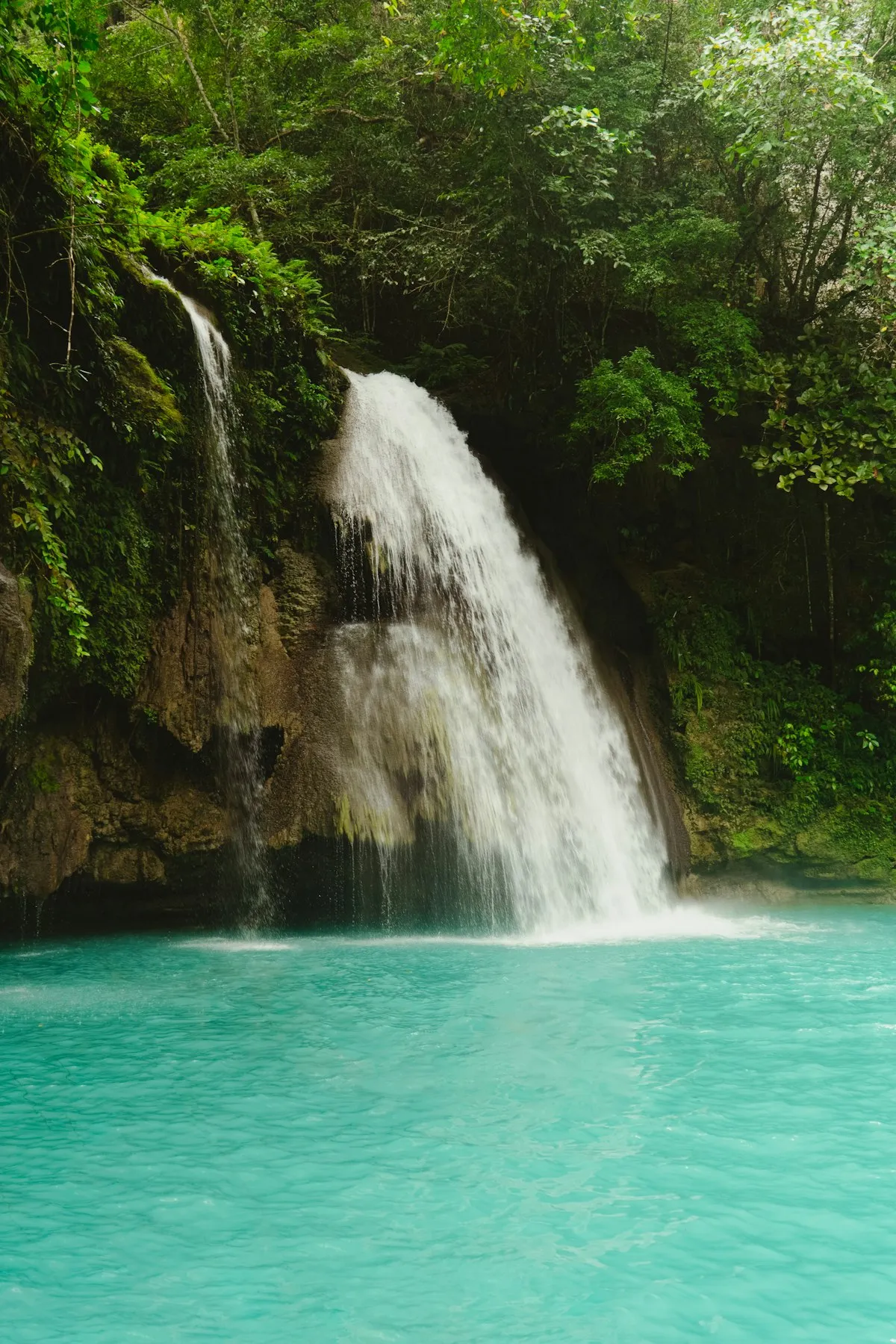
One of Cebu's most famous natural attractions, Kawasan Falls, is located just 15 kilometres north of Moalboal. The falls are a series of turquoise-coloured cascades in a lush canyon, accessible via a short hike from the road. Many visitors combine a morning sardine dive with an afternoon at Kawasan Falls, making for a full and varied day. This combination of underwater and above-ground natural spectacles is part of what makes the Moalboal area so rewarding as a destination.
Best Time to Visit
The sardines are present year-round, so there is no seasonal constraint on visiting Moalboal for this specific attraction. Sea conditions are generally calmest from November to May, with the best visibility occurring in the dry season months of December through April. The southwest monsoon from June through October can bring rougher seas and reduced visibility, but the sardine school remains accessible throughout because it is close to shore and in relatively sheltered water.
Tips for the Best Experience
- Arrive early. The sardine school is typically most concentrated and most active in the morning. By mid-afternoon, day-trippers from Cebu City have often dispersed and conditions can be less ideal.
- Bring a wide-angle lens if you are diving with a camera. The school is best captured with a wide field of view that conveys the scale of the aggregation.
- Stay at least two nights. The sardine school moves along the reef and behaves differently at different times of day. Multiple sessions give you a much better chance of a perfect encounter.
- Do not chase the turtles. Let them approach you. Turtles that are harassed by tourists lose their habituation and become more skittish over time, degrading the experience for future visitors.
- Consider a night dive. The reef at Moalboal transforms completely at night, with hunting octopus, sleeping fish, and nudibranchs moving in the open.
Final Thoughts
Moalboal's sardine run is one of those experiences that photographs cannot adequately capture. The scale, the movement, the light effects, and the sense of being immersed inside something alive and vast: these are qualities that only first-hand presence conveys. It is, quite simply, one of the most extraordinary things you can experience in Philippine waters, and it is available to snorkellers and divers alike, every day of the year.
Book your Moalboal sardine run and turtle watching tour with PANA.PH and see it for yourself.