Camiguin
The island born of fire · Northern Mindanao
Tiny Camiguin — barely 60 km around — packs more geological drama per square kilometre than almost anywhere in the Philippines. Seven volcanoes, waterfalls, hot and cold springs, a cemetery claimed by the sea after a 1871 eruption, and a bare white sandbar that appears and disappears with the tide. It’s the Philippines’ best-kept secret, and the travellers who go there tend to guard that status jealously.
Things to do in Camiguin
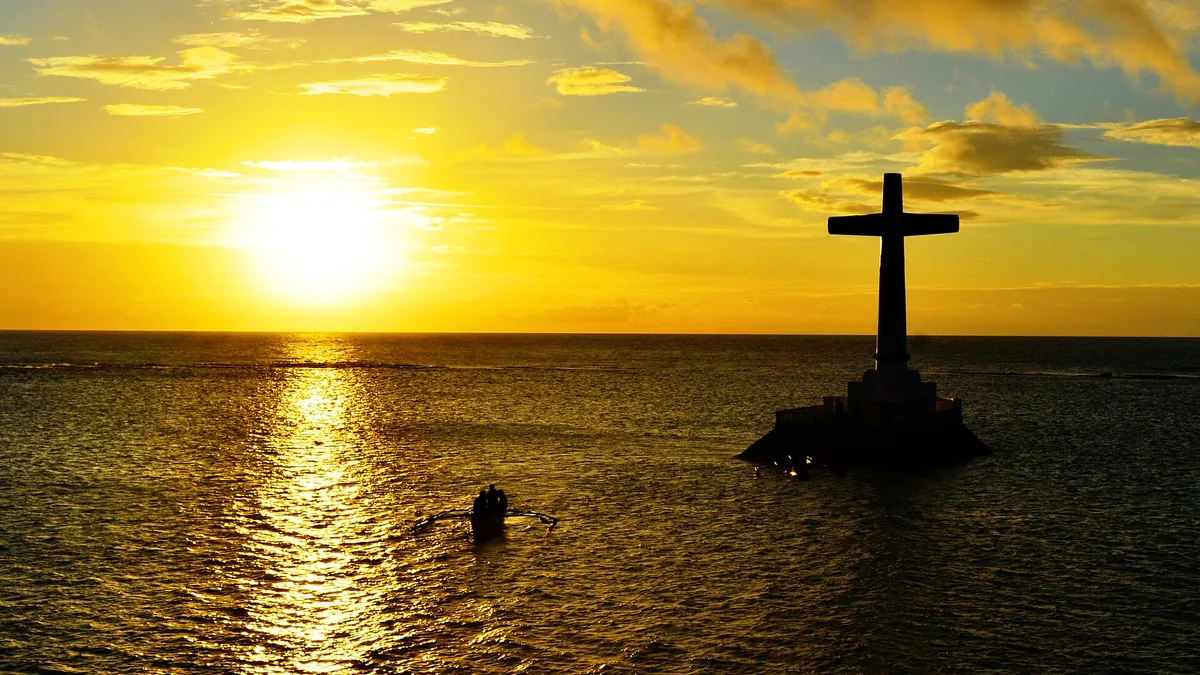
⛪ Sunken Cemetery & Cross
A large cross stands in the sea offshore — it marks a cemetery swallowed by a volcanic eruption in 1871. The cross is visible from the beach at low tide; snorkel out to see the underwater graves. Free to visit; hire a bangka from Bonbon (₱100–200 return).
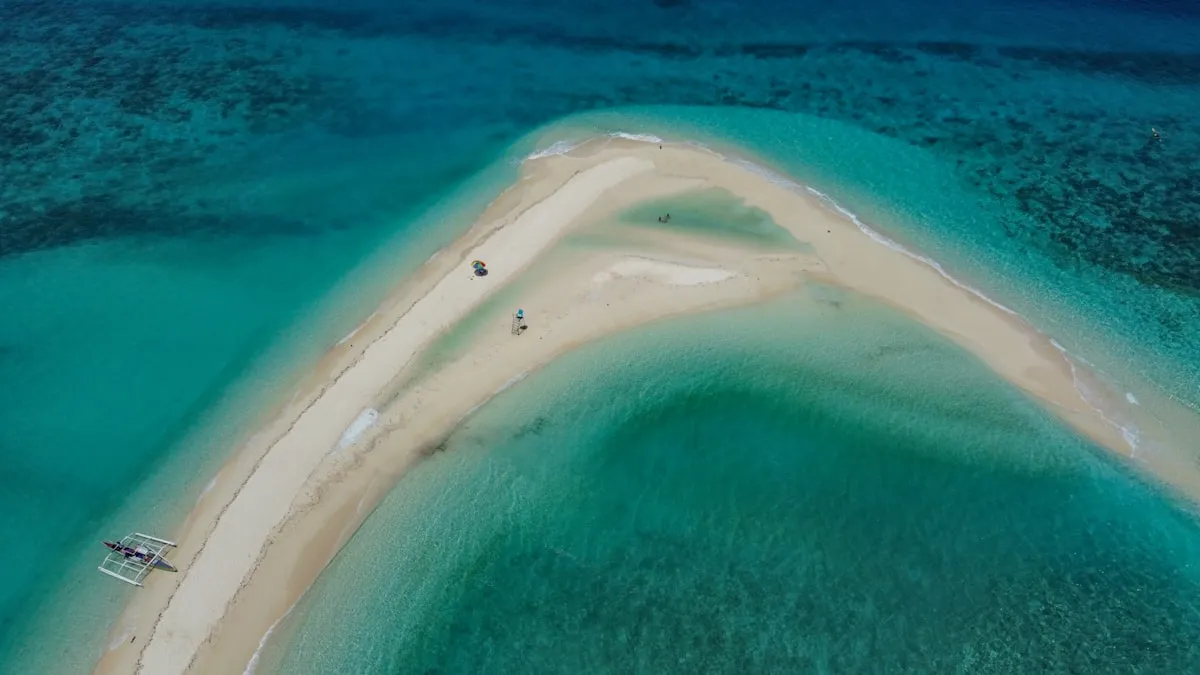
🏖️ White Island sandbar
A bare white arc of sand with volcano views on one side and open ocean on the other. It changes shape with the tide — go at low tide for the full strip. Bangka from Yumbing Beach: ₱300–400 return. Arrive at sunrise for the best light and zero tourists.
💧 Katibawasan & Tuasan Falls
Two jungle waterfalls on the south side of the island, both good for swimming. Katibawasan is taller and more dramatic (₱30 entry); Tuasan is cooler and less visited. Both reachable by rented scooter in under an hour from the main road.
♨️ Ardent hot spring & Sto. Niño cold spring
Soak in the Ardent thermal pool after a day of sightseeing (₱80 entry, evenings are coolest and most atmospheric), then cool off at Sto. Niño cold spring on the other side of the island. The temperature contrast is surprisingly effective.
Photos of Camiguin
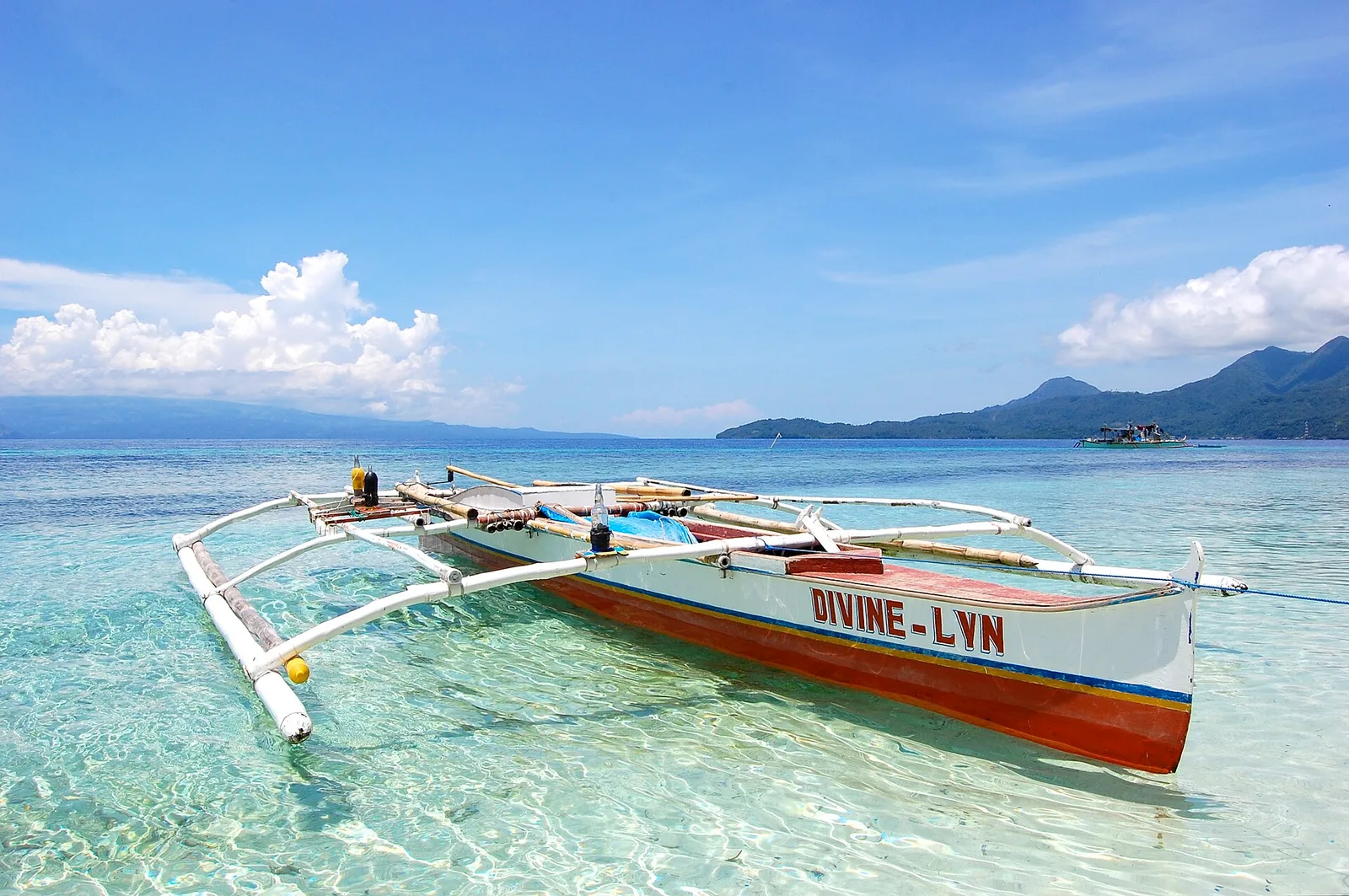
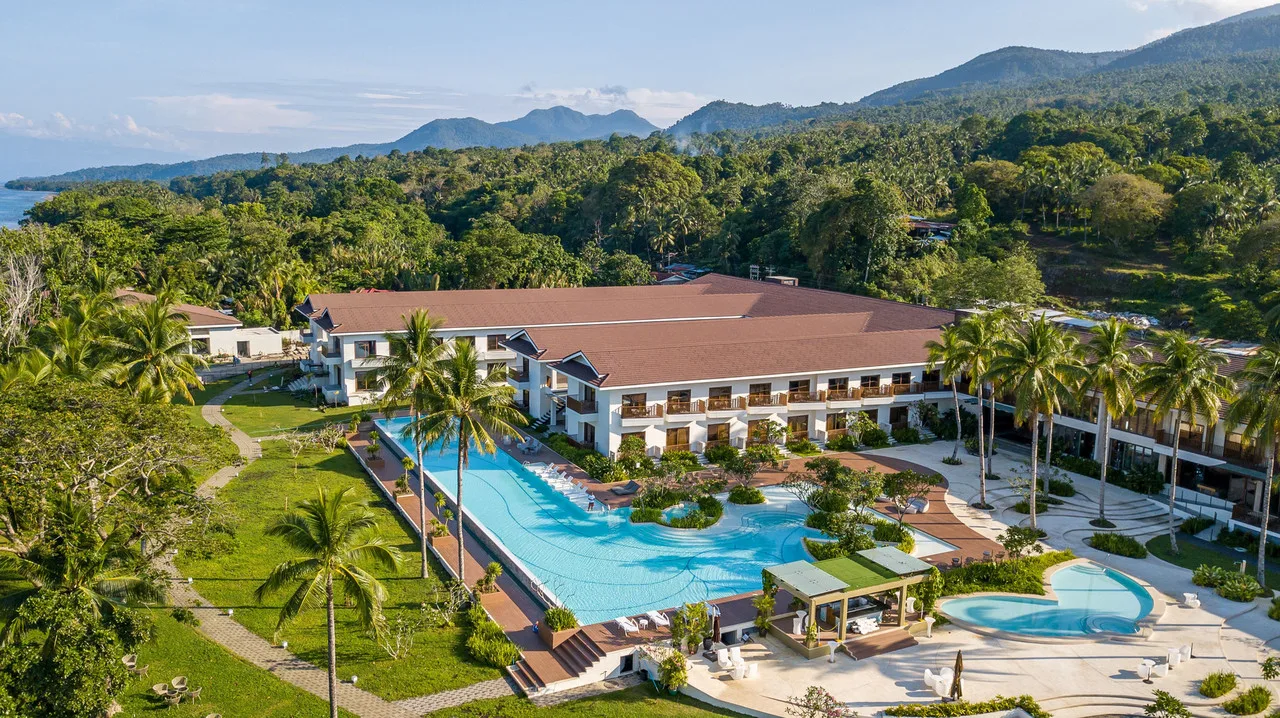
A visual taste of Camiguin before you go.
Ready to book?
Book your Camiguin trip now
Hotels, tours and transfers — compare live prices and book securely through trusted partners. Prices update daily.
Affiliate links — we earn a small commission at no extra cost to you. Prices shown are live from our partners.
🗓️ Best time to visit Camiguin
March to June (dry, clear skies, calm seas). October brings the Lanzones Festival — the island’s harvest celebration, worth timing your trip around. December–February is the wet season; trails can be muddy and the sandbar sometimes disappears.
✈️ How to get to Camiguin
Option 1: Fly Cebu (CEB) to Camiguin (CGM) — under 1 hour, cheapest and easiest. Option 2: Fly or bus to Cagayan de Oro (CDO) on Mindanao, then a 2-hour bus to Balingoan port, then a 1-hour ferry to Camiguin (₱190). Option 3: From Bohol, ferry from Jagna to Benoni (₱350, 4 hrs). A scooter is the only sensible way to get around once you’re there — rent for ₱350–450/day.
Plan your Camiguin trip
Compare hotels and tours — booked through trusted partners. Use the planner on /plan to turn this guide into a full day-by-day itinerary.
🗓️ Use this guide in your plan
Build a Camiguin trip directly. The planner combines it with real flights, stays and tours into one day-by-day itinerary.
✨ Open Trip PlannerOne of 215+ destinations covered. Explore more at /guides and /blog.
Frequently asked questions — Camiguin
How many days do I need in Camiguin?
Three days is enough to circle the island, see White Island, the Sunken Cemetery, the main falls and the springs without rushing. Four or five days lets you slow down and really enjoy the place. It’s small enough to do everything, but relaxed enough to make you want to stay longer.
Is Camiguin safe to visit?
Yes — it’s one of the safest islands in the Philippines. Crime is very low. The biggest hazard is typhoons (June–November) and the island’s volcanic activity, which is monitored. Check PHIVOLCS alerts before visiting Mount Hibok-Hibok if you plan to hike.
Can I hike the volcano in Camiguin?
Mount Hibok-Hibok (1,552 m) can be climbed with a guide, but the trail is steep, dense and requires a full day (start before 4am). Register with the tourism office and hire a registered guide (₱1,500–2,000). Not recommended during wet season or active volcanic periods.
Is there good diving around Camiguin?
Yes — the volcanic island creates interesting underwater topography with black sand slopes, coral gardens and a submerged volcanic crater you can dive into. Best sites: Medina Fish Sanctuary, Jigdup Wall and the White Island sandbar reef. Visibility is best March–May.
How do I get from Bohol to Camiguin?
Take the ferry from Jagna (Bohol) to Benoni (Camiguin) — about 4 hours, ₱350 per person, usually one sailing per day in the morning. Check the schedule with Jagna port office the day before as it sometimes changes. Alternatively, fly Cebu – Camiguin (direct, under 1 hr) for more reliability.
💬 Ask Locals about Camiguin
No questions about Camiguin yet — be the first to ask.
Ask the community →💡 Traveller tips for Camiguin
Local-knowledge from other travellers. Got a tip? Share it.
Loading tips…
📝 Your notes & photos for Camiguin
Loading…
First time in Camiguin?
Quick essentials so you can hit the ground running.
Visa-free 30 days for most passports. The nearest Bureau of Immigration for extensions is in Cagayan de Oro — about 2 hours from Camiguin by ferry and bus.
Philippine Peso (PHP). 1 USD = ~57 PHP, 1 EUR = ~62 PHP, 1 SGD = ~42 PHP. Camiguin is one of the most affordable islands in the Philippines — budget ₱2,000–3,000/day is very comfortable.
No mandatory vaccines. Camiguin is a volcanic island — check PHIVOLCS alerts if you plan to hike Mount Hibok-Hibok. Bring mosquito repellent. Tap water is not safe to drink.
Very few ATMs on the island (Mambajao town, sometimes unreliable). Withdraw enough PHP before you arrive from Cagayan de Oro or Cebu. Card acceptance is minimal — almost everything is cash-only.
One of the safest islands in the Philippines. Very low crime. The volcanic terrain means some trails are steep and slippery — wear proper footwear for waterfall hikes and do not approach active volcanic vents.
Local Stays in Camiguin
Hand-picked homestays and guesthouses — book direct with local hosts. Add them to your trip plan.
Top Experiences in Camiguin
Island hopping, diving, surfing and more — book instantly. Add them to your trip plan.