PHPANA.PH Team · Philippines travel teamPublished June 4, 2026 · 6 min read
Vigan Food Guide: Longganisa, Empanada & Everything You Must Eat
Every great Philippine city has a dish that defines it. Cebu has its lechon. Pampanga has its sisig. Batangas has its lomi. Vigan — the UNESCO heritage city of Ilocos Sur — has not one but several dishes that are so distinctively Ilocano, so utterly unlike anything you will find elsewhere in the Philippines, that food alone is reason enough to make the journey north.
The Ilocano culinary tradition is characterised by intensity: bold fermented flavours (bagoong, the shrimp paste that appears in or alongside nearly every meal), aggressive garlic, vinegar, and a willingness to preserve and ferment that reflects the province's history as a land that could not always rely on fresh ingredients. The result is a cuisine that rewards adventurous eaters and stays in the memory long after the cobblestones of Calle Crisologo have faded.
Vigan Longganisa: The Non-Negotiable
If you eat only one thing in Vigan, make it the longganisa. Vigan longganisa is a pork sausage — but calling it merely a sausage is like calling a cathedral merely a building. It is plump, mahogany-coloured, bursting with garlic and vinegar, with a natural casing that crisps and blisters in the pan, releasing juices that fill the kitchen with a smell so compelling it should probably be bottled as a fragrance.
Unlike the sweet longganisa of other regions (Lucban, Guagua), Vigan longganisa is distinctly garlicky and slightly sour — a profile that reflects the Ilocano preservation tradition. Served with sinangag (garlic fried rice), a fried egg, and vinegar dip, it constitutes the Vigan breakfast that local hotel guests line up for every morning.
Where to eat it: Virtually every eatery in Vigan serves longganisa for breakfast. The silong (ground floor) of many heritage houses along Calle Crisologo has been converted to small breakfast spots. Café Leona (facing Plaza Salcedo) serves a reliable version; so does Kusina ni Nanay.
You can also buy cured longganisa to take home — several shops along Crisologo and Liberation Boulevard sell vacuum-packed links that travel well. It is the most popular pasalubong (homecoming gift) from Vigan, outselling all other options.
Vigan Empanada: The Street Food King
The second essential Vigan food is the empanada — and Vigan empanada is nothing like its Spanish ancestor or the flaky pastry versions sold elsewhere in the Philippines. It is a deep-fried crescent of orange dough (coloured with achote and made from rice flour, giving it a distinct crunch), stuffed with a filling of egg, Vigan longganisa, and green papaya.
The result is a pocket of contradictions that somehow works perfectly: the shell shatters crisply, releasing steam and the rich aroma of longganisa and egg. The green papaya provides texture and subtle bitterness. A splash of vinegar dip brings the whole thing into balance. You will eat one, immediately want another, and spend the rest of your Vigan visit planning when to come back for a third.
Empanada is sold from stalls near the Vigan Plaza and along the heritage zone — look for the wooden griddles over charcoal and the small queue of locals. The Empanada Row on Libertad Street is the most concentrated spot, with several vendors competing for the title of best in town. Order hot; eating an empanada that has cooled is a diminished experience.
Bagnet: Ilocano Lechon Kawali
Bagnet is the Ilocano version of lechon kawali — pork belly deep-fried until the skin achieves a crunch that can be heard across a restaurant. Unlike Tagalog versions, Ilocano bagnet typically goes through two frying stages (cooked, cooled, then fried again), resulting in skin that is almost impossibly crispy and an interior that remains juicy rather than leathery.
It is served as a main dish or used as the meat component in other dishes (most famously dinengdeng — see below). On its own with a dish of bagoong (fermented shrimp paste) for dipping and a bowl of rice, bagnet is a meal of uncomplicated and enormous satisfaction.
Dinengdeng: The Ilocano Soul Food
Dinengdeng is one of the most important dishes in Ilocano cuisine — a vegetable stew that uses bagoong (fermented fish or shrimp paste) as its primary flavouring liquid. The vegetables vary by season and household but typically include squash blossoms, bitter melon, string beans, eggplant, and moringa leaves. Bagnet or grilled fish is often added as protein.
The result is a deeply savoury, slightly funky broth with vegetables cooked to yielding tenderness — the kind of dish that Ilocano people identify as the taste of home. It pairs perfectly with rice and serves as a complete meal that costs very little and nourishes substantially. Try it at any turo-turo (point-point cafeteria) in Vigan for an authentic, affordable taste.
Sinanglao: Tripe Soup for the Brave
Sinanglao is Vigan's famous beef tripe soup — a sour, intensely flavoured broth with tender tripe, vegetables, and the acidic punch of batuan or vinegar. It is emphatically not for the timid, but adventurous eaters who lean into the fermented, funky flavour profile of Ilocano cuisine will find it one of the most rewarding dishes in the region.
It is most commonly eaten as a breakfast or early morning dish — a warming, sustaining bowl that sets you up for a day of walking cobblestones. Café Leona serves a well-regarded version.
Tupig and Pinakbet
Tupig is a grilled rice cake wrapped in banana leaves — sticky, slightly sweet, perfumed with the char of the grill. It is sold by street vendors and makes a satisfying snack between empanadas.
Pinakbet, the famous Ilocano vegetable dish, appears across the Philippines but tastes different in Vigan — earthier, funkier, with more bagoong than the Tagalog versions. The bitter melon is more prominent, the shrimp paste more aggressive. It is better here than anywhere.
Where to Eat in Vigan
- Café Leona — Heritage house setting, full Ilocano menu, consistent quality. A reliable choice for visitors wanting a proper sit-down Ilocano meal.
- Kusina ni Nanay — Family-style cooking, excellent bagnet and dinengdeng.
- Street stalls near Plaza Salcedo — Best for empanada and tupig; local, fast, cheap.
- Turo-turo along Liberation Blvd — Canteen-style, daily specials, very affordable.
Vigan Food + Heritage: The Perfect Pairing
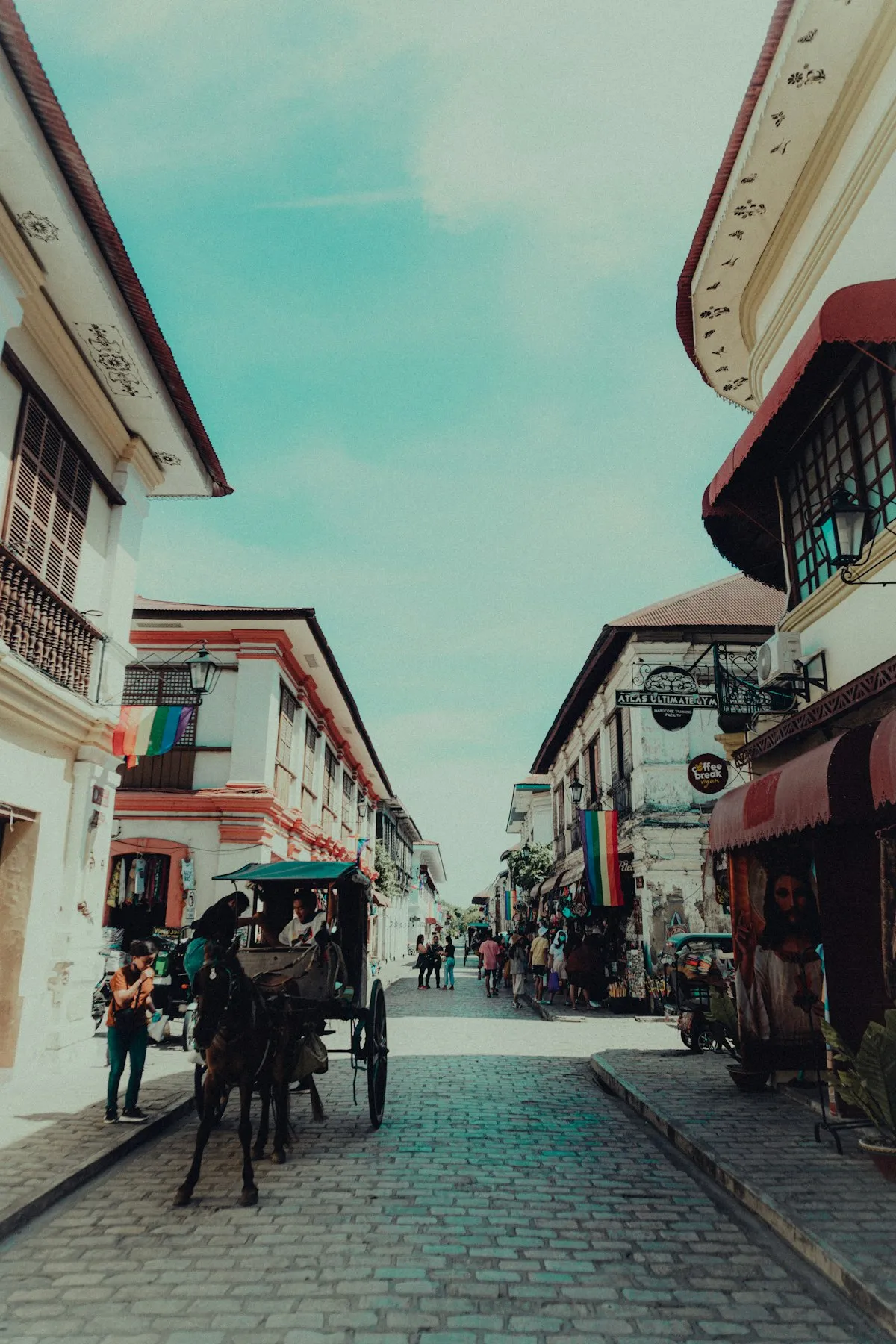
Food and architecture are inseparable in Vigan. The best way to experience both is to pair a morning walk through the heritage district (starting at Crisologo at dawn) with breakfast longganisa, a midday empanada break, a proper Ilocano lunch at a sit-down restaurant, and a late afternoon tupig from a street stall. Visit the Vigan Heritage City Walk & Kalesa Ride to cover the sights, then let the food be your afternoon agenda.
Vigan rewards hungry travellers. Come with an appetite — and leave with a suitcase full of longganisa.