PHPANA.PH · Philippines travel teamPublished June 5, 2026 · 2 min read
The World in One Country
The Philippines has 183 living languages -- not dialects, but distinct languages, many mutually unintelligible. It is the 4th most linguistically diverse country on Earth. A nation this fragmented maintains coherent identity through Filipino (based on Tagalog), English co-officialdom, and the bayanihan community spirit.
The Language Landscape
8 major regional languages each with millions of speakers: Tagalog, Cebuano, Ilocano, Hiligaynon, Waray, Bicolano, Kapampangan, and Pangasinan. Cebuano arguably has more native speakers than Tagalog, making the choice of Tagalog as national language basis historically contentious. English is co-official and taught from Grade 1 -- the Philippines has the 3rd largest English-speaking population globally.
Bayanihan
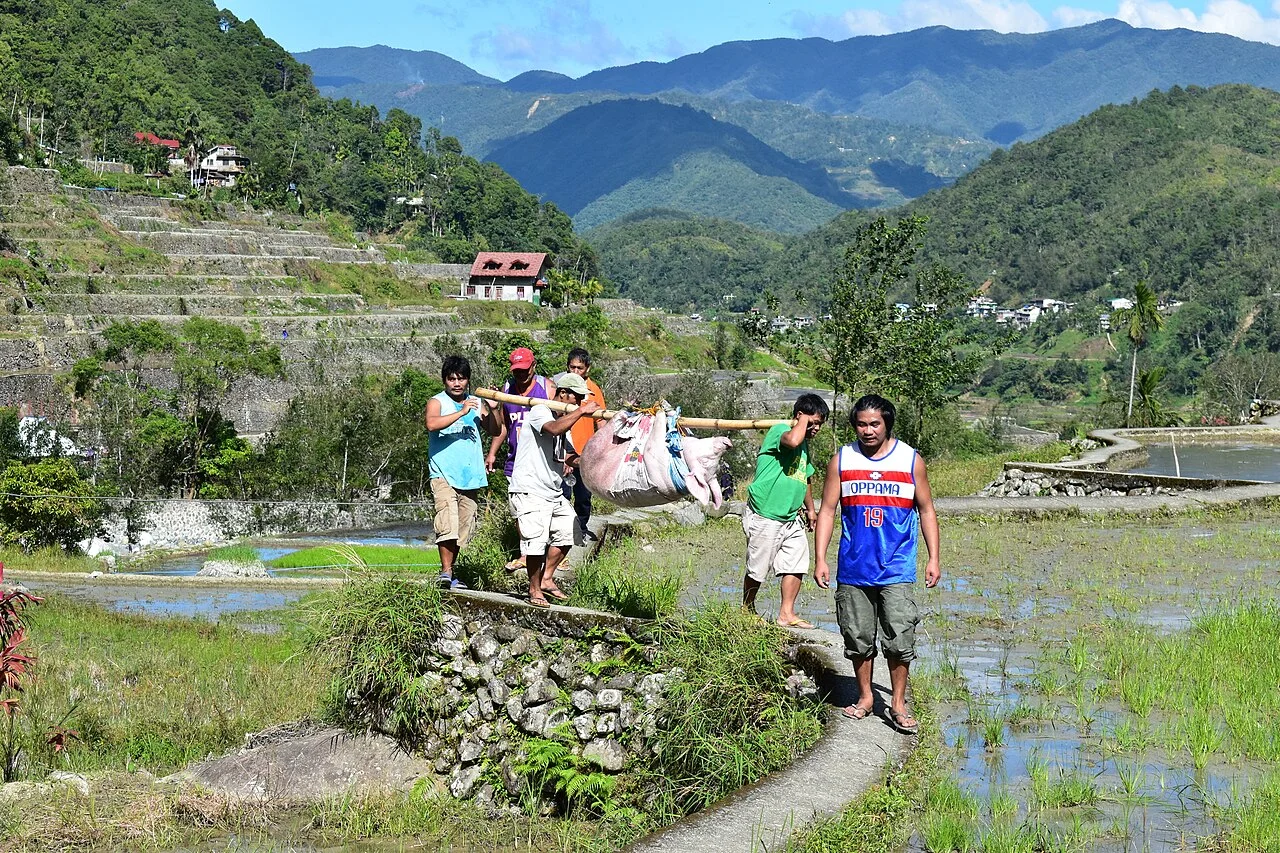
Bayanihan -- neighbours carrying a house together when someone moves -- became a metaphor for Filipino community solidarity. It appears in typhoon disaster response (famously community-driven), in OFW remittances, and in the warmth extended to travellers.
Book Philippines tours & activities
Island hopping, whale shark watching, canyoneering and more. Best prices on GetYourGuide & Klook.
Religion and Festivals
The Philippines is the only predominantly Christian country in Asia: 80% Catholic, 10% other Christian, 6% Muslim (concentrated in Mindanao and BARMM). Catholic influence appears in fiestas in every barangay, the Quiapo Black Nazarene procession (one of the worlds largest religious gatherings), Simbang Gabi (9 dawn masses before Christmas), and Sinulog in Cebu (3 million attendees).
Food as Cultural Identity
Filipino cuisine is the intersection of Malay, Chinese, Spanish, and American traditions. Adobo: meat braised in vinegar, soy sauce, garlic, and bay leaves -- every family has its own version. Sinigang: tamarind-soured soup that varies completely by region. Lechon: whole roasted pig at every major celebration. Chinese influence: pancit, lumpia, halo-halo. Spanish influence: caldereta, mechado, afritada.
Social Customs for Travellers
- Mano po: pressing an elder hand to your forehead -- a gesture of respect
- Indirect communication: Siguro (maybe) often means no
- Hospitality: Being invited home means you will be fed
Regional Identities
Cebuanos and Tagalogs have a gentle rivalry. Ilonggos from Iloilo are considered the most courteous. Ilocanos are known for frugality. Davaoenos identify with Mindanao over Manila. Travelling across the Philippines means encountering genuinely different cultures.
For cultural immersion experiences, check our tours section.
Plan your Philippines trip with PANA.PH
Compare hotels and local stays across all 7,641 islands.