Coron WW2 Wreck Diving: The Best Wreck Dives in Asia
On 24 September 1944, American aircraft launched a devastating surprise attack on a Japanese fleet sheltering in Coron Bay, Palawan. In the space of a few hours, 24 Japanese naval vessels were sunk. Today, those wrecks rest on the seafloor of Coron Bay, encrusted with coral and teeming with marine life, forming one of the greatest wreck diving destinations in the world.
Coron is not just the best wreck diving destination in the Philippines. It is widely considered the best in all of Asia, and it ranks comfortably among the top five wreck diving locations on the planet. This guide covers everything you need to know to dive Coron's wrecks: the history, the sites, the marine life, the logistics, and how to get the most from your visit.
The History: Why the Wrecks Are Here
In late 1944, the Imperial Japanese Navy was using Coron Bay as a strategic anchorage and resupply point. The natural geography of the bay, surrounded by dramatic limestone karst islands, provided shelter from both storms and observation. What the Japanese commanders did not account for was the intelligence-gathering capabilities of American forces in the Philippines.
When US Navy Task Force 38 aircraft arrived from carriers on the morning of 24 September, the attack achieved near-total surprise. Within hours, the Japanese fleet in Coron Bay was destroyed. The wrecks settled at depths ranging from 10 to 43 metres, close enough for recreational diving, yet deep enough to have been largely left alone for decades after the war.
American and Filipino divers began exploring the wrecks in the 1980s, and today the site is protected as an official dive sanctuary. The wrecks are no longer just war graves; they have been transformed by 80 years of marine colonisation into extraordinary artificial reefs.
The Best Wreck Sites in Coron
Okikawa Maru
The Okikawa Maru is the largest wreck in Coron Bay, a massive oil tanker that sits between 15 and 47 metres. The sheer scale of the wreck is staggering; you can spend an entire dive exploring just one section. The main deck is covered in a forest of hard and soft corals, sea fans, and crinoids, while the cavernous engine room and cargo holds invite careful penetration. Lionfish hover motionless in the shadows. Giant groupers patrol the stern. The Okikawa is also one of the most accessible wrecks, making it a good starting point for first-time Coron divers.
Irako
Many experienced wreck divers consider the Irako the most beautiful wreck in Coron. This refrigerator supply ship sits upright and largely intact at 42 metres, her bow pointing toward the surface at a dramatic angle. The depth puts much of the wreck in advanced territory, but the reward is extraordinary: pristine deep-water corals, enormous sea fans, and clouds of glassfish that billow through the interior passages. Barracuda school in the midwater above the wreck, and lionfish congregate on the railings.
Akitsushima
The Akitsushima was a seaplane tender, and its most famous feature is the salvage crane that still stands on the stern, now encrusted with magnificent coral growth. The wreck lies between 25 and 40 metres and offers a combination of dramatic exterior scenery and complex interior spaces. The crew quarters and engine room are popular penetration points. Marine life here is exceptional: the wreck regularly hosts banded sea kraits, octopus, and large schools of snapper and fusilier.
Kogyo Maru
The Kogyo Maru is a cargo ship lying between 24 and 40 metres, and it is particularly prized for the war materials still visible in its holds. Spare parts, machinery, ammunition casings, and the remnants of military equipment lie undisturbed on the cargo deck, preserved by the cold, still water at depth. This is as close as recreational divers get to a genuine time capsule. Turtle sightings are common on the shallower sections of the wreck.
Olympia Maru
Sitting at a manageable 22 to 30 metres, the Olympia Maru is ideal for Open Water divers or those newer to wreck diving. The ship lies on its starboard side, and the coral growth on the exposed surfaces is amongst the most impressive in Coron Bay. Scorpionfish blend perfectly into the coral encrustation, and blue-ringed octopus have been spotted in the crevices, making this a favourite with macro photographers.
Skeleton Wreck
The Skeleton Wreck, also called the East Tangat Gunboat, is the shallowest of the main Coron wrecks, lying between 10 and 22 metres. The upper sections are exposed to strong sunlight and are carpeted in colourful soft corals and sea anemones. The name comes from the skeletal appearance of the hull, which has been almost completely stripped of plating, leaving the rib-like structural frames exposed. Snorkellers can even see the upper parts of this wreck, making it the most accessible dive in Coron for all levels.
Marine Life on the Coron Wrecks
What transforms Coron from a historical curiosity into a world-class dive destination is the extraordinary marine life that has colonised the wrecks over eight decades. These artificial reefs now host a density of marine species that rivals the best natural reefs in the Philippines.
Look for lionfish and scorpionfish camouflaged against the coral, giant groupers lurking in the engine rooms, sea turtles resting on the decks, blue-ringed octopus in small crevices, and banded sea kraits hunting in the interior spaces. Schools of snapper, fusilier, batfish, and jackfish are present on virtually every wreck. The deeper wrecks host elegant sea fans and black coral trees that can only grow in deeper, cooler water.
The Twin Lagoons and Kayangan Lake
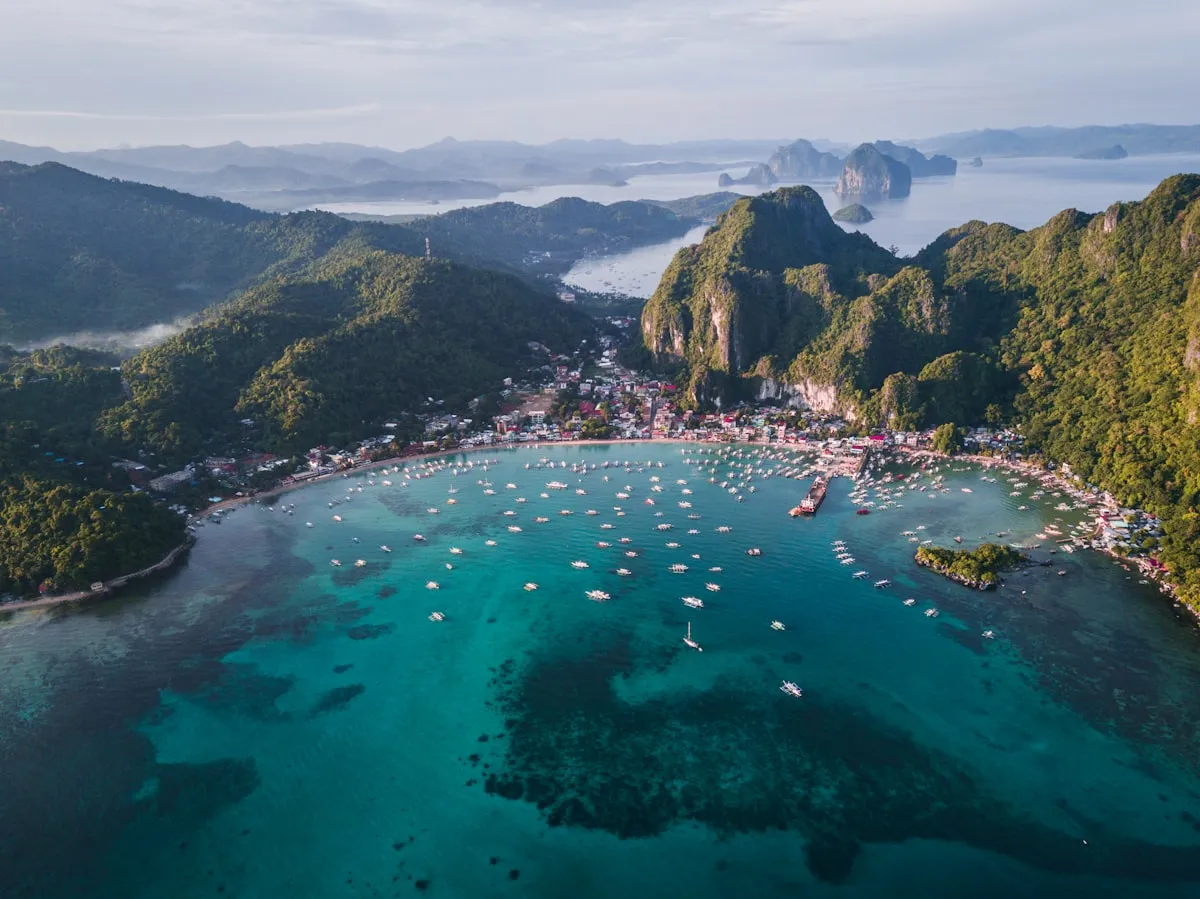
Coron is not just about wreck diving. The same dramatic limestone karst landscape that protected the Japanese fleet also creates some of the most beautiful above-water scenery in the Philippines. Kayangan Lake, reached by a short climb over a limestone ridge, is widely regarded as one of the cleanest lakes in Asia. You can snorkel in the lake's crystal-clear water, which sits above a layer of ancient marine sediment.
The Twin Lagoons are connected by a narrow passage you can swim through at low tide, revealing two contrasting lagoons of different depths and colours. These are typically included in wreck diving day-trip itineraries and provide a perfect surface-interval activity.
Diving Logistics in Coron
Most visitors base themselves in Coron Town and join daily boat trips to the dive sites. A typical day covers two to three wreck dives with surface intervals spent exploring the lagoons or taking lunch on the boat. Rental equipment is widely available, though bringing your own regulator and computer is always advisable.
The dive sites are spread across Coron Bay, with boat transfers ranging from 20 minutes to over an hour depending on the site. The Okikawa Maru and Skeleton Wreck are the closest to town; the Irako and Akitsushima require longer boat rides but the extra time is worth it.
Best Time to Dive Coron
Coron is diveable year-round, but the best conditions occur from November to May. December through April offers the calmest seas, the best visibility at 15 to 25 metres, and the most comfortable diving weather. June through October brings the southwest monsoon, which can bring choppier conditions and reduced visibility on some sites, though diving never stops entirely.
How to Book
Ready to explore Asia's most famous wrecks? Book our Coron WW2 wreck diving tour for a guided experience that covers the best sites with expert local dive masters. Combine your Coron trip with a Palawan liveaboard to experience the full range of Palawan's extraordinary marine environments, from the wrecks of Coron Bay to the coral gardens of El Nido.
Skill Level and Certification
Most of the Coron wrecks are accessible to Open Water divers on the shallower sections. For the deeper wrecks like the Irako and Akitsushima, Advanced Open Water certification is recommended. Wreck penetration of any of the interior spaces requires a Wreck Specialty or similar qualification plus appropriate equipment including redundant lights and line.
Practical Information
- Fly to Francisco B. Reyes Airport in Busuanga from Manila. The airport serves Coron Town, which is about 45 minutes away by road.
- Accommodation ranges from budget guesthouses to boutique resorts. Book ahead during peak season from December to April.
- Dive operators are clustered around the main pier in Coron Town. Compare packages and look for operators who employ certified local dive masters with extensive wreck knowledge.
- Bring an underwater torch even for day dives. The wreck interiors are dark, and a light reveals details you would otherwise miss.
- Respect the wrecks as war graves. Do not remove any artifacts, and be careful with buoyancy to avoid disturbing the sediment inside the wrecks.
Conclusion
Coron delivers a diving experience that is genuinely unlike anything else. Where other destinations offer coral reefs or pelagics or marine life, Coron offers all of that wrapped in a layer of history that makes every dive feel like an act of discovery. The wrecks are not just debris on the seafloor; they are time capsules, ecosystems, and memorials simultaneously.
For any diver with a sense of adventure and an appreciation for history, Coron is an essential destination. Book your Coron wreck diving experience today with PANA.PH and dive into the most compelling underwater story in Asia.