Philippines Liveaboard Diving: All Routes Compared
A liveaboard is a dive vessel where you live aboard for the duration of your trip, waking each morning directly on the dive site. In the Philippines, where the most spectacular diving is often far from any island resort, liveaboards unlock destinations that are simply impossible to access any other way. Tubbataha Reef, the Sulu Sea atolls, the remote outer islands of Palawan: these are places you reach only by liveaboard, and the isolation is precisely what makes them extraordinary.
This guide compares every major liveaboard route in the Philippines, explaining what each offers, who it suits, when to go, and what to expect on board.
Why Choose a Liveaboard in the Philippines
Philippine liveaboards offer several advantages over land-based diving. First, access: some of the country's best diving, most notably Tubbataha, is physically impossible to reach any other way. Second, immersion: living on the boat allows four to five dives per day, including night dives, creating a total diving experience that cannot be replicated from a land base. Third, range: a liveaboard can cover distances in a single day that would require multiple land transfers and boat trips if approached from a resort.
The trade-off is cost. Philippine liveaboards range from budget options at around USD 200 per person per night to luxury vessels at USD 500 or more. The all-inclusive nature (accommodation, food, multiple dives, nitrox on most boats) makes the price more digestible, but a week-long Tubbataha liveaboard represents a significant investment.
Route 1: Tubbataha Reef
Season: Mid-March to mid-June only
Base port: Puerto Princesa, Palawan
Duration: 7 to 10 nights
Best for: Experienced divers seeking world-class shark and pelagic diving
Tubbataha is the crown jewel of Philippine liveaboard diving. The overnight crossing from Puerto Princesa takes 10 to 12 hours, arriving at the North Atoll or Jessie Beazley Reef in the morning. Most itineraries spend three to four days on the North Atoll, two days on the South Atoll, and a final day at Jessie Beazley on the return crossing.
The diving at Tubbataha is technical in character: strong currents, open-water blue-water diving, depths that reward nitrox use, and the kind of pelagic encounters that require divers to be comfortable hovering in midwater while watching hammerhead sharks below them. Sites like Amos Rock, Washing Machine, and the South Atoll walls are genuinely world-class.
This is the most expensive Philippine liveaboard route and the one with the most restrictive booking requirements. Plan 6 to 12 months ahead. Our Palawan liveaboard page can help you find suitable vessels.
Route 2: Palawan North (Coron to El Nido)
Season: November to May
Base ports: Coron (Busuanga) or El Nido
Duration: 5 to 8 nights
Best for: Divers who want a mix of wrecks, reefs, and scenery
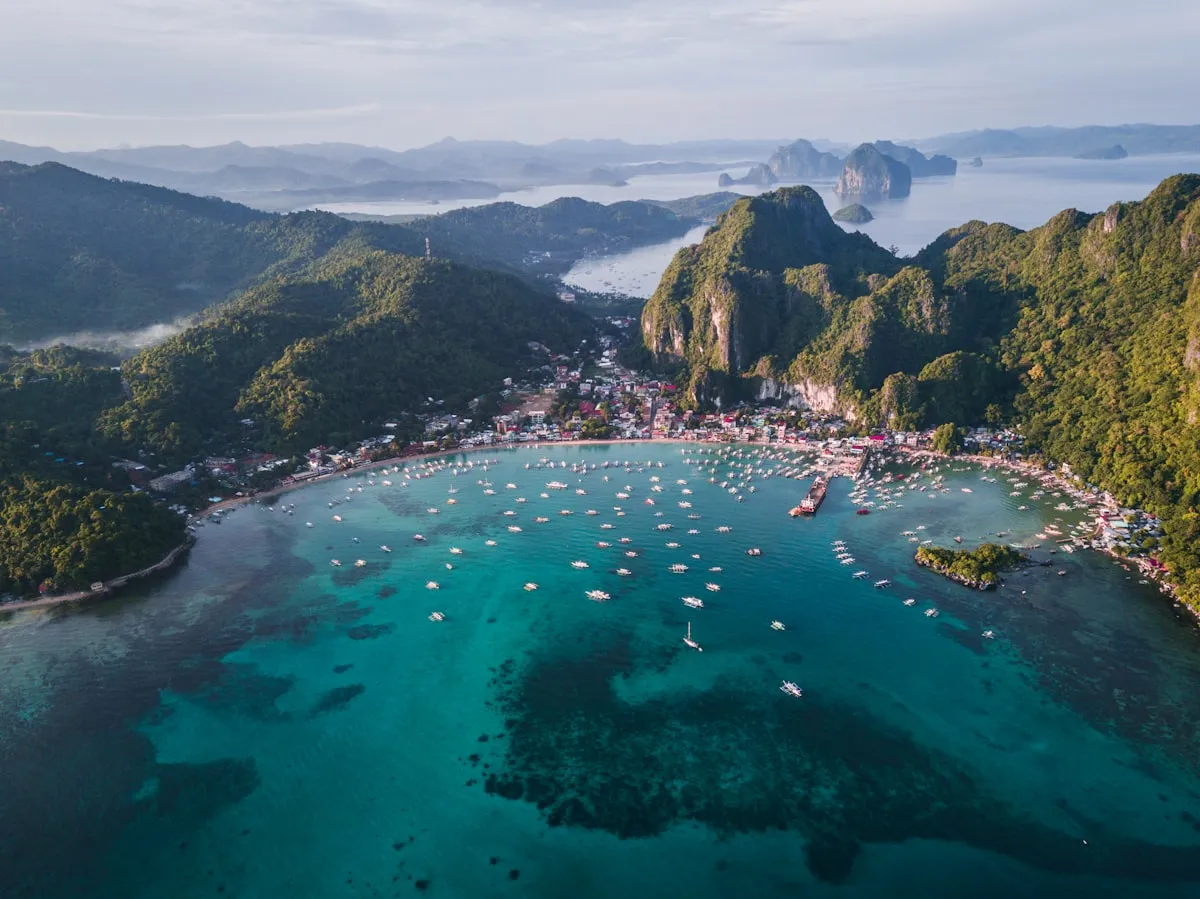
The Palawan north route connects Coron Bay with El Nido, passing through one of the most spectacular island landscapes in the world. Coron Bay itself provides multiple days of wreck diving on the Japanese fleet sunk in 1944. As the liveaboard moves north toward El Nido, it explores the outer reef systems of the Calamian Islands, which include pristine coral walls and some excellent sites that receive very few visitors from land-based operations.
This route is ideal for divers who want to combine the historical excitement of wreck diving with reef diving in spectacular scenery. The above-water landscape of limestone karst islands, clear lagoons, and white beaches rivals anything in Southeast Asia.
Book our Palawan liveaboard from Coron to El Nido for this iconic route.
Route 3: Visayas Circuit
Season: Year-round, best November to May
Base ports: Cebu City, typically
Duration: 5 to 10 nights
Best for: Divers who want maximum variety in marine environments
The Visayas circuit covers the central island group and typically includes some combination of Cebu, Bohol, Siquijor, Negros Oriental, and occasionally Leyte or Samar. The diversity of environments along this route is remarkable: from the whale shark aggregations off Oslob to the thresher sharks of Malapascua, the sardine run at Moalboal, the walls of Balicasag, and the community-managed sanctuary at Apo Island.
A Visayas liveaboard can be constructed to emphasise macro photography (focusing on Dauin, Dumaguete, and Bohol's muck sites), big animal encounters (Malapascua for threshers, Apo for turtles), or a balanced mix of everything. Our Visayas liveaboard covering Cebu, Bohol, and Siquijor captures the essential highlights.
Route 4: Sulu Sea and Cagayancillo
Season: March to June
Base port: Puerto Princesa or Iloilo
Duration: 10 to 14 nights
Best for: Technical divers and hardcore pelagic enthusiasts
The extended Sulu Sea route combines Tubbataha with the remote Cagayancillo municipality and occasionally Jessie Beazley Reef. This is the longest and most demanding Philippine liveaboard route, requiring extended open-water crossings and generally rough Sulu Sea conditions. The reward is access to reefs that receive perhaps only a handful of visiting liveaboards per season.
This route is not offered by all operators and is generally reserved for experienced technical divers. Contact liveaboard operators directly for availability during the narrow season.
What to Look for in a Philippine Liveaboard
Choosing a liveaboard requires weighing several factors beyond price:
- Vessel size and style: Larger vessels (20+ divers) are more stable in rough crossings but less intimate. Smaller vessels (8 to 14 divers) offer a more personal experience and better access to sites.
- Dive equipment: Does the price include tanks, weights, and BCDs? Is nitrox included or an additional charge? What compressors and nitrox analysers are onboard?
- Dive guides: The ratio of guides to divers matters enormously in the Philippines where currents and site complexity require expert local knowledge.
- Safety equipment: Oxygen unit, first aid, defibrillator, and emergency protocols should all be present and current. For Tubbataha, emergency evacuation protocols are especially important given the distance from medical facilities.
- Food and accommodation: Cabin size, air conditioning, hot water, and food quality vary widely between budget and premium vessels.
Packing for a Philippine Liveaboard
Space on liveaboards is limited. Pack efficiently. Essential items include your personal dive equipment (regulator and computer at minimum), reef-safe sunscreen, seasickness medication for the open-water crossings, appropriate clothing for cool evenings and sun-exposed deck time, and adequate storage for camera equipment if you are bringing an underwater photography setup.
Soft-sided bags are far preferable to hard luggage on liveaboards. Most vessels have limited space for rigid cases.
Combining Liveaboard and Land-Based Diving
Many divers book a liveaboard as the centrepiece of a longer trip and add land-based diving at the start and end. A typical combined itinerary might begin with two days diving in Puerto Galera or Anilao near Manila, then a flight to Puerto Princesa for a Tubbataha liveaboard, followed by a return flight to Manila or an onward connection to Cebu for Visayas diving. This structure maximises the range of experiences without every dive requiring a liveaboard budget.
Booking Your Philippine Liveaboard
Browse our Palawan liveaboard and Visayas liveaboard packages for current availability and pricing. For Tubbataha specifically, we recommend booking 6 to 12 months in advance, particularly for the peak April and May season.