Davao City Travel Guide: The Safest City in the Philippines
There is a moment, somewhere between your third cup of barako coffee and your first bite of durian ice cream, when Davao stops feeling like a destination and starts feeling like a secret only a handful of travelers have figured out. That is the magic of this city — the largest in the Philippines by land area, the cleanest, and by every metric that matters, the safest.
Davao City sits at the southeastern tip of Mindanao, flanked by the towering silhouette of Mount Apo and lapped by the warm waters of the Davao Gulf. It is a city that grew up around agriculture — coffee, cacao, pomelo, and the infamous durian — and that agricultural pride has shaped a culture that is orderly, warm, and fiercely protective of its environment.
Why Davao Is the Safest City in the Philippines
For years, Davao topped Southeast Asia safety rankings compiled by the Numbeo Crime Index. Locals attribute this to a combination of strict ordinances (no firecrackers, no smoking in public, no liquor after 1 a.m.), a highly visible police presence, and a community culture that genuinely looks out for its neighbors. Barangay watch groups patrol every street. CCTV cameras cover every major junction. Visitors routinely report being surprised by how relaxed they feel walking at night — something rare in large Philippine cities.
None of this means you should abandon common sense. But it does mean that first-time visitors to Mindanao who arrive in Davao usually leave with a completely different picture of the island than what headlines had led them to expect.
Getting to Davao
Francisco Bangoy International Airport (DVO) is well-connected to Manila (1.5-hour flight, multiple daily departures from Cebu Pacific, Philippine Airlines, and AirAsia) and Cebu (55 minutes). From the airport, a metered taxi to the city center costs around PHP 200-300. Grab is widely available and often cheaper. There is no train system, so roads are your main transport option once in the city.
The Philippine Eagle Center: Davao's Crown Jewel
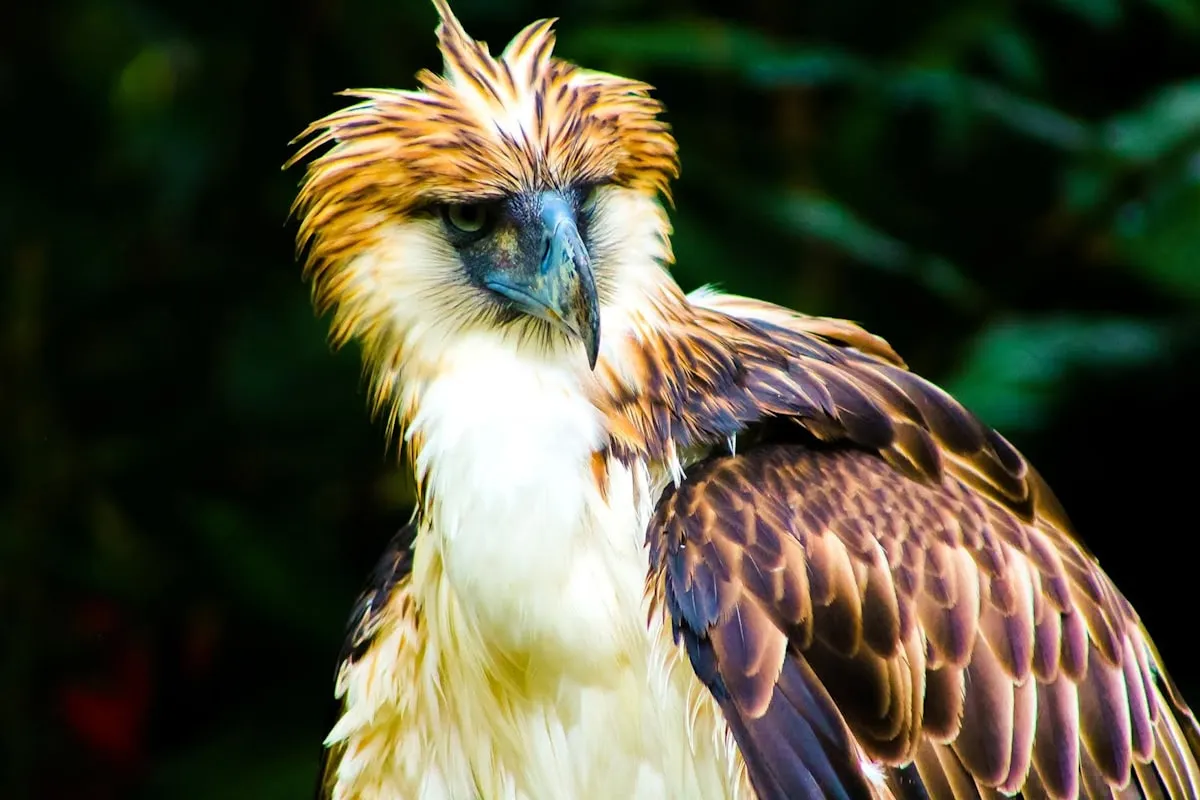
If you do one thing in Davao, make it a visit to the Philippine Eagle Center. Nestled in the foothills of Mount Apo within the Malagos area, this 8.4-hectare sanctuary is home to the world's largest eagle — a creature so magnificent that the Philippine government declared it the national bird and made harming one punishable by twelve years in prison.
The Pithecophaga jefferyi — to use its scientific name — stands nearly a meter tall, with a wingspan of up to 2.2 meters and eyes that fix you with an intelligence that feels unsettling in the best possible way. The center runs a successful breeding program and also shelters hornbills, Philippine deer, and other endemic wildlife. Plan two to three hours, arrive early to avoid the midday heat, and book your Philippine Eagle Center tour in advance during peak months (December-February).
Eden Nature Park: Cloud Forest Above the City
Drive 45 minutes into the hills south of the city and the temperature drops a noticeable five degrees as you enter Eden Nature Park. Perched at 1,000 meters above sea level, this privately run eco-resort and adventure park offers strawberry picking, trout fishing, nature trails, and one of the best views of Davao Gulf you will find without hiking a volcano. The Eden Nature Park day tour pairs perfectly with an afternoon at the Eagle Center — book them together and your Davao day is complete.
Samal Island: 10 Minutes by Ferry, a World Away
From Santa Ana Wharf in downtown Davao, a short pump boat crossing brings you to Samal Island — officially the Island Garden City of Samal — where white sand beaches, crystal water, and a fraction of the tourist crowds you would face in Boracay await. Hagimit Falls, Maxima Aquafun, and the Japanese Tunnel are local favorites, but most visitors simply plant themselves on one of the resort beaches and let the Gulf do its work. A Samal Island day trip from Davao is among the easiest half-day escapes in Philippine travel.
Food: Davao's Greatest Argument for Staying Longer
Davao eats well. The city is the durian capital of the Philippines — the fruit is everywhere, from roadside stalls to airport shops, and locals will tell you (correctly) that Philippine durian is sweeter and less pungent than its Thai counterpart. Beyond durian, look for:
- Pomelo — the Davao variety is famously sweet and seedless
- Grilled tuna — Davao Gulf tuna is served at every fiesta table
- Kinilaw — raw fish cured in vinegar and calamansi, Mindanao-style
- Tablea — thick, rich drinking chocolate made from native cacao
For restaurants, Ilustrado in Poblacion, the night market along Magsaysay Park, and the Aldevinco Shopping Center food stalls are reliable starting points.
Practical Travel Tips for Davao
- Best time to visit: March to May (dry season); Kadayawan Festival in August is spectacular
- Currency: Philippine Peso. ATMs widely available; major cards accepted at hotels
- Getting around: Grab app, taxis, and jeepneys
- Connectivity: 4G is solid across the city; most hotels offer free Wi-Fi
- Safety tip: Observe local ordinances — no public smoking, no firecrackers
Day Trips from Davao
Davao is the logical gateway to the rest of Mindanao. From the city you can reach Mount Apo (the Philippines highest peak), Camiguin Island (4 hours by bus and ferry), Cagayan de Oro (3.5 hours by bus), and Tinuy-an Falls (3 hours east). Each of these deserves its own trip — but all are accessible from Davao as a base.
Final Word
Davao City does not shout for attention the way Boracay or El Nido do. It does not need to. It earns your affection slowly — through a plate of kinilaw shared with strangers at the night market, through the impossible stillness of a Philippine Eagle fixing you with its gaze, through the realization that you have been here three days and have not once felt unsafe or unwelcome. That is Davao's pitch. And it works every time.