Baguio City: The Complete Travel Guide to the Philippines' Summer Capital
At 1,500 meters above sea level, Baguio exists in a different climate than the rest of the Philippines. While Manila swelters at 35 degrees Celsius, Baguio hovers between 16 and 23 degrees. Pine trees outnumber coconut palms. Strawberries grow in hillside gardens. On cool evenings, residents actually wear jackets, a novelty in a tropical country. The Americans established Baguio as a hill station in 1900, modeled on the British practice of retreating to the mountains during hot season. It became the Summer Capital of the Philippines, and 120 years later that identity still holds.
Today Baguio is a city of 350,000 people, a university town, an arts hub, and the gateway to the Cordillera highlands. Baguio still has something Manila cannot offer: altitude, atmosphere, and a distinct culture forged by the Ibaloi and Kankanaey peoples who have lived in these mountains for millennia.
Getting to Baguio
Baguio is 250 kilometers north of Manila. Victory Liner, Genesis, and Partas operate comfortable air-conditioned coaches from terminals in Cubao, Pasay, and Sampaloc. Travel time is 5 to 6 hours depending on traffic. Night buses are popular so you sleep and wake up in Baguio. New expressways including NLEX and TPLEX have cut driving time to 4 to 5 hours by car.
Session Road: The Heart of the City
Session Road is Baguio's main commercial street with coffee shops, restaurants, and bookstores. It closes to vehicles on Sunday mornings for the popular Sunday Market where local farmers sell vegetables, strawberries, flowers, and crafts. Walking Session Road on a Sunday morning with a cup of Benguet coffee surrounded by mountain produce and cool air is one of the better urban experiences in the Philippines.
Strawberry Fields in La Trinidad
Fifteen minutes north of Baguio, the valley of La Trinidad grows the Philippines' finest strawberries. From December through May, the farms open for strawberry picking. Freshly picked strawberries eaten warm from the sun are incomparably better than anything transported to Manila markets. Strawberry taho, warm silken tofu with syrup and tapioca, is a local variation on the classic Filipino street breakfast that should not be missed.
Camp John Hay
The former American military recreation facility is now a mixed-use leisure complex. The Historical Core preserves the original American-era buildings, white clapboard structures with wide porches. The pine forest trails within Camp John Hay are the best easy hiking in Baguio. The golf course is excellent.
Day Trips from Baguio
- Sagada is 4 hours by bus with hanging coffins, cave systems, and mountain landscapes
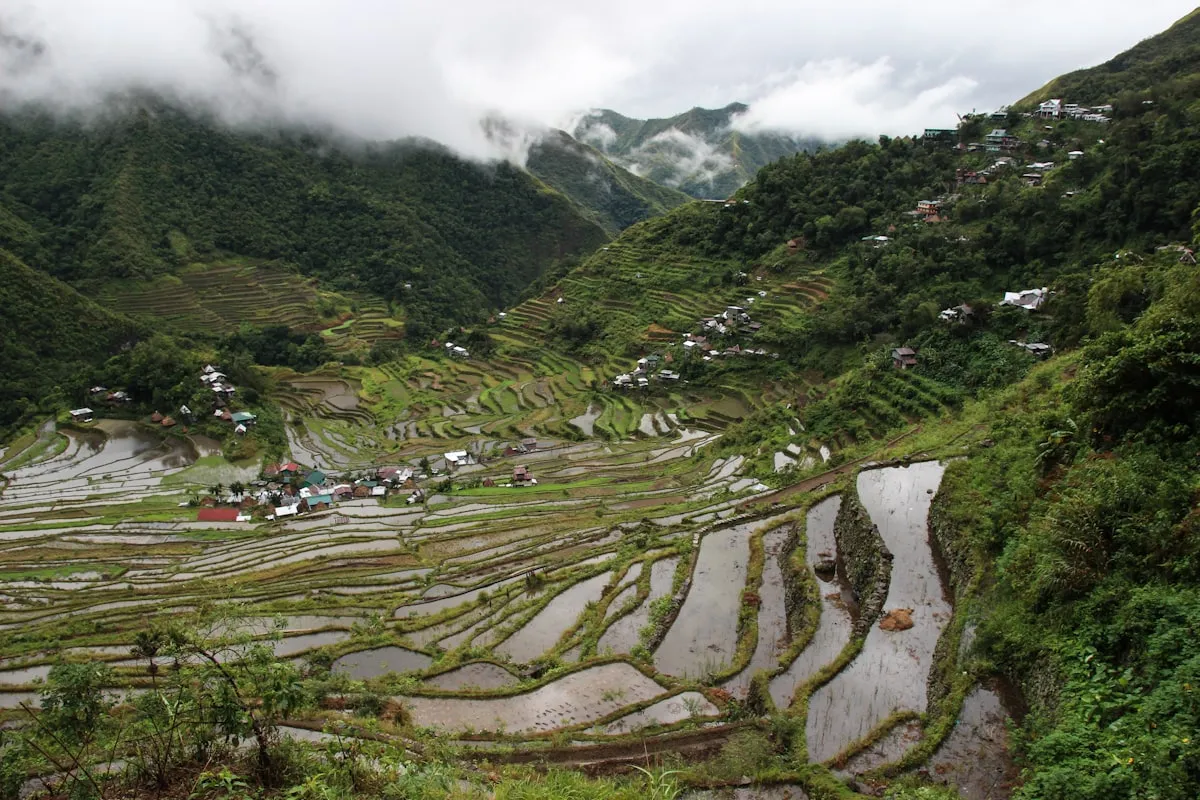
- Banaue is 5 to 6 hours with UNESCO rice terraces
- La Trinidad is 15 minutes with strawberry farms and Cordillera craft workshops
Practical Information
Best time to visit is December to February for the coolest weather and the Panagbenga Flower Festival in February. Pack layers as a light jacket suffices for most of the year but a warm jacket is needed for December to January nights. Jeepneys and taxis connect most parts of the city. Some visitors experience mild altitude effects for the first few hours so drink water and take it easy on arrival.
Baguio has a stronger indigenous presence than most Philippine cities. The Ibaloi people are the original inhabitants of the Baguio basin. Their presence is visible in traditional weaving sold at craft markets and in the Tam-awan Village artist colony that reconstructs traditional Cordillera architecture.