PHPANA.PH Team · Philippines travel teamPublished June 4, 2026 · 4 min read
Sunken Cemetery Camiguin: Diving a One-of-a-Kind Historical Site
In 1871, Mount Vulcan Daan, one of Camiguin's seven volcanoes, erupted with enough violence to sink a portion of the island's coastline, including the town of Catarman and its Spanish-era cemetery, beneath the Bohol Sea. A century and a half later, those graves are still there, at 5 to 10 meters depth, the tombstones and markers draped in coral, surrounded by tropical fish, and visible to anyone willing to put on a mask and fins. It is one of the most singular underwater experiences in the Philippines, and it requires no dive certification whatsoever. Snorkeling is sufficient.
The History Beneath the Water
The cemetery that sank in 1871 had served Catarman, then a significant settlement on Camiguin's western coast, since the Spanish colonial period. The graves reflect that era: stone crosses, Catholic iconography, Spanish-style markers. The sea floor here is composed largely of volcanic rock from the 1871 eruption, which gives the site an otherworldly character unlike typical Philippine reef diving. The dark lava rock provides contrast against the white coral and vivid fish that now colonize it. The cemetery occupies a relatively small area, perhaps 40 meters across, but within that space you can find tombstone fragments, cross shapes, and the unmistakable geometric regularity of human burial arrangement beneath the organic chaos of coral growth.
The Memorial Cross
Above the water, a large white cross mounted on a floating platform marks the location of the Sunken Cemetery. The cross is visible from the Camiguin ferry as it approaches port, and it serves as the landmark for all island-hopping boats in the area. The cross was erected as a memorial to those buried in the old cemetery. Locals observe it with quiet reverence. This is a place of genuine historical and spiritual significance to the island's community, not merely a tourist attraction.
🎫Book Philippines tours & activities
Island hopping, whale shark watching, canyoneering and more. Best prices on GetYourGuide & Klook.
Snorkeling the Sunken Cemetery
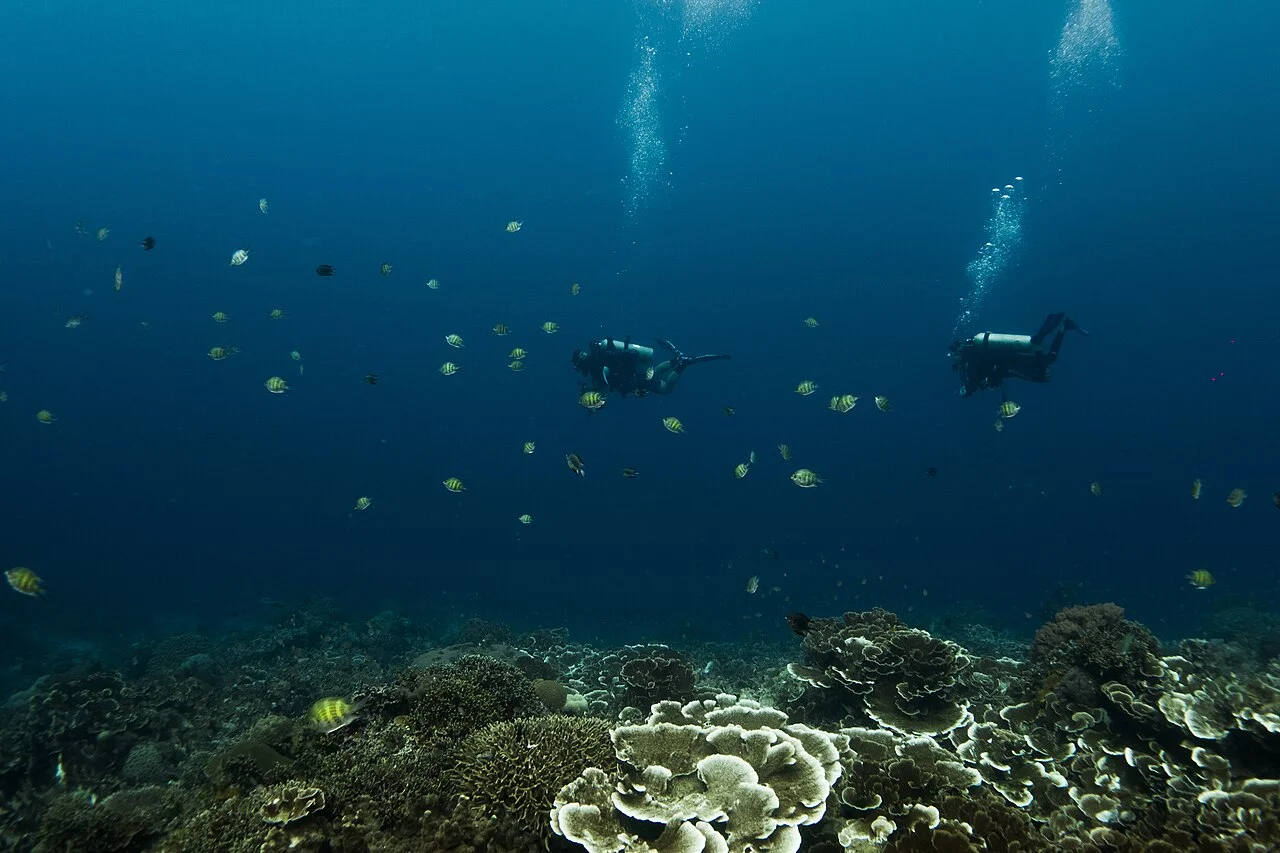
Snorkeling is accessible to anyone who can swim and use basic equipment. The site is relatively shallow (5-10 meters maximum), the water is generally calm in the morning, and visibility on good days reaches 10-15 meters. You will see tombstone fragments and crosses at the sea floor encrusted with hard coral, schools of damselfish, wrasse, and surgeonfish weaving between the markers, occasional sea turtles resting on the flat lava rock areas, and the distinctive volcanic rock terrain darker and more jagged than typical Philippine reef environments.
A Camiguin island hopping tour includes the Sunken Cemetery as a standard stop and provides basic snorkeling equipment. If you are a certified diver, local dive shops offer guided dives that cover the deeper periphery of the cemetery area and adjacent underwater landscape.
Diving the Sunken Cemetery
For certified divers, the Sunken Cemetery is an entry-level dive, maximum depth of about 15 meters, suitable for Open Water divers. The main site is augmented by a larger underwater landscape including the Old Volcano with dramatic volcanic formations, a submerged black coral garden at 12-18 meters hosting nudibranchs and shrimp, and lava flow tunnel and arch formations colonized by soft coral. Local dive operators in the Mambajao area run daily dive trips to the cemetery and surrounding sites.
How to Visit
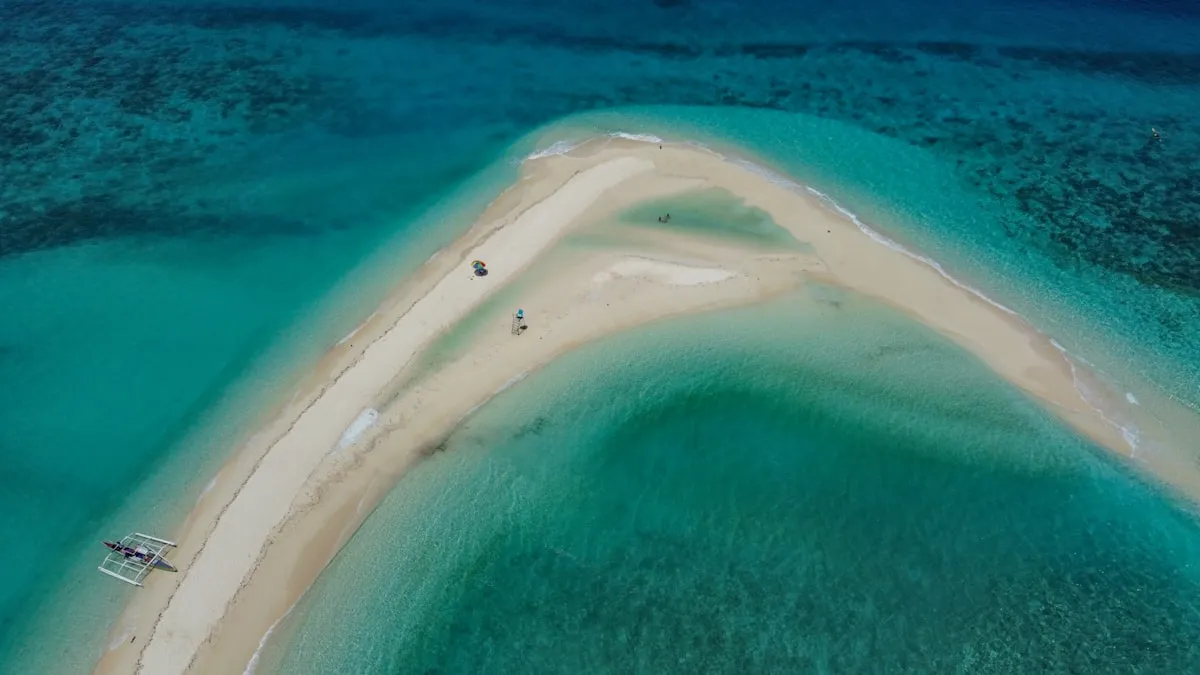
The most common way to visit is as part of a Camiguin island hopping package combining White Island, Sunken Cemetery, Old Volcano snorkeling, and an optional stop at Mantigue Island. The package typically runs from 8-9 a.m. to noon and costs PHP 500-700 per person for shared boats. Boats depart from Agoho Beach or Mambajao Pier.
Practical Tips
- Bring your own mask: Rental quality varies significantly. Your own mask ensures comfort and clarity
- Reef-safe sunscreen only: Chemical sunscreens damage coral. Use mineral-based or wear a rash guard instead
- Morning is best: Sea conditions are typically calmer in the morning, visibility is better, and you avoid midday boat traffic
- Respect the site: Do not touch the tombstones or coral. Do not take any fragments. This is an active historical site with deep cultural significance
The Broader Context: Camiguin's Volcanic Heritage
The Sunken Cemetery is one expression of the volcanic forces that have shaped every aspect of Camiguin. The hot springs at Ardent, the waterfalls fed by volcanic groundwater, the fertile soil that produces exceptional lanzones, the dramatic ridgeline of Hibok-Hibok, all of these are products of the same geological energy that sank a cemetery in 1871. Visiting the Sunken Cemetery is, in a sense, visiting the island's biography. A place shaped by catastrophe and extraordinary natural force, now domesticated by time and coral into something beautiful and strange. That is Camiguin in miniature.
Put on your mask. Drop below the surface. Say hello to the past.
Plan your Philippines trip with PANA.PH
Compare hotels and local stays across all 7,641 islands.