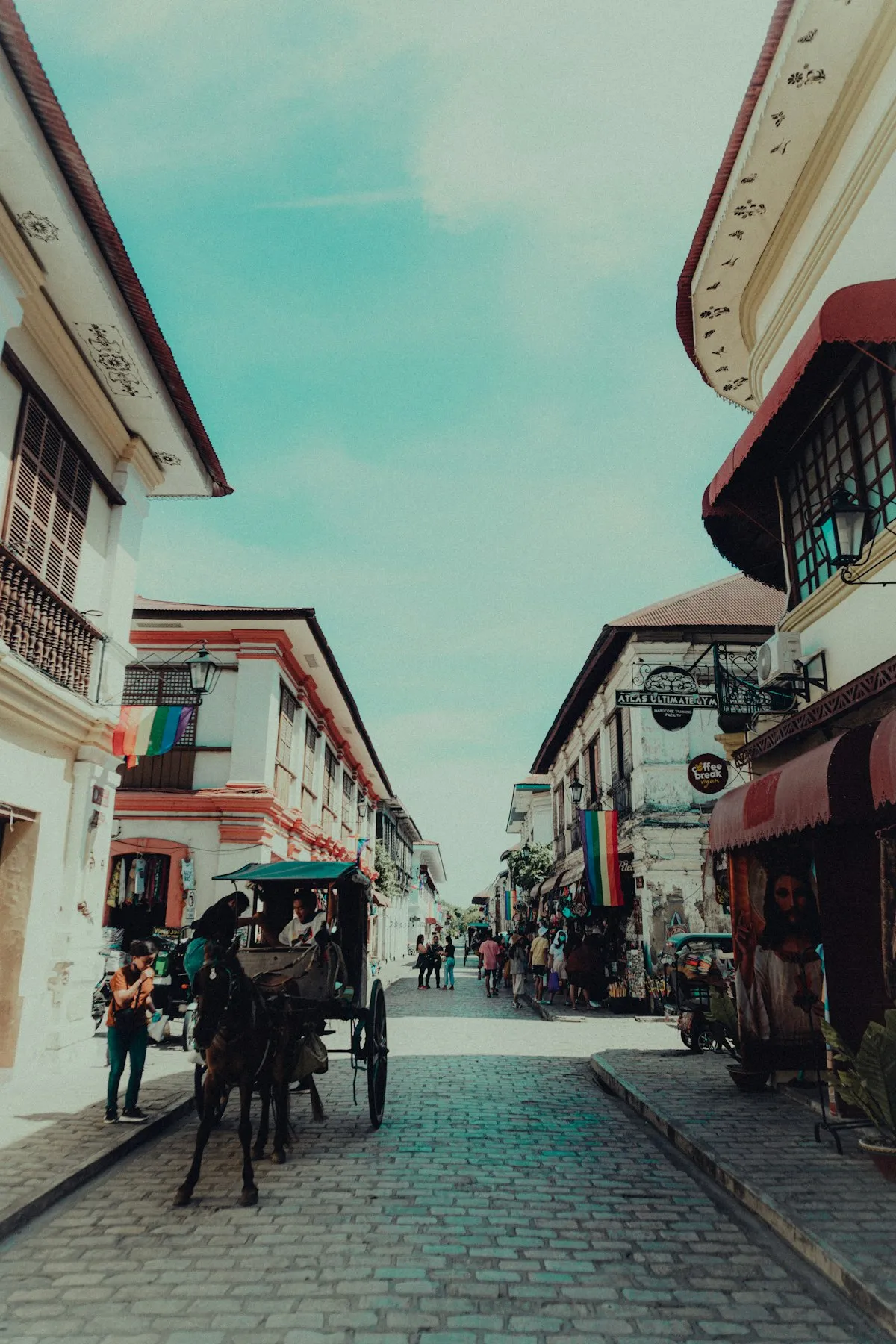
There's no other place in Southeast Asia quite like Vigan. While other colonial towns in the Philippines were destroyed by war, earthquakes, or development, Vigan's historic core survived largely intact. Walking down Calle Crisologo -- the main cobblestone street -- feels genuinely different. The houses have been standing for 200 years. The kalesa (horse-drawn carriage) clip-clopping past isn't a tourist gimmick; it's how people have moved through these streets for generations.
UNESCO recognized what Vigan is in 1999 by listing it as a World Heritage Site. In 2026, it remains one of the most rewarding destinations in the Philippines for travelers who want something beyond beach and surf.
Where Is Vigan and How to Get There
Vigan is the capital of Ilocos Sur province in northwestern Luzon, about 400 km north of Manila. It's not a weekend jaunt from the capital -- the journey takes commitment -- but that's also why it stays less crowded than Boracay or Palawan.
From Manila by Bus
The most common option. Several bus lines (Partas, Dominion, Philippine Rabbit) run overnight buses from Cubao and Pasay terminals in Manila to Vigan. Journey is 8 to 10 hours. Tickets PHP 600 to 900 one way. Book in advance for holiday periods. Overnight bus means you arrive in the morning ready to explore.
From Manila by Plane
The closest airport is Laoag International Airport in Ilocos Norte, about 90 km north of Vigan. Cebu Pacific and Philippine Airlines fly from Manila. Flight is 1 hour. From Laoag, take a bus or van to Vigan (1.5 to 2 hours, PHP 150 to 200). If you're combining Vigan with Pagudpud beach in Ilocos Norte, flying into Laoag makes sense.
The Historic District: What to See
Calle Crisologo
The heart of Vigan's heritage zone. A 300-meter cobblestone street lined with ancestral houses featuring their distinctive Ilocano-Spanish-Chinese architectural mix -- capiz shell windows, grand wooden doors, tiled roofs. Walk it in the morning when the light is soft and vendors are just setting up. At night the street is lit with lanterns and the ambiance becomes almost surreal.
Syquia Mansion
The childhood home of Philippine President Elpidio Quirino, preserved as a museum. It gives the best interior look at how Vigan's ilustrado (educated elite) class lived in the 19th and early 20th centuries. Entrance PHP 35. Worth 45 minutes of your time.
Mestizo District (Barrio Pagburnayan)
Where the famous burnay pottery is made. Burnay is distinctive Ilocano earthenware fired in a traditional kiln using rice husks. You can watch potters work, buy pieces directly, and learn the process. A large burnay jar costs PHP 500 to 2,000 depending on size.
Vigan Cathedral (Metropolitan Cathedral of the Conversion of St. Paul)
Built in the 18th century, this is one of the oldest earthquake baroque churches in the Philippines. The bell tower stands separately from the church -- a design quirk common in the Philippines because bell towers were used as watchtowers. Free entry. Mass still held daily.
Plaza Salcedo and Plaza Burgos
The two main plazas anchor the historic district. Plaza Salcedo has a fountain and sound-and-light show in the evenings (free). Plaza Burgos is surrounded by restaurants and is the social heart of the town at night.
What to Eat in Vigan
Ilocano cuisine is some of the most distinct in the Philippines. Don't leave without trying:
- Vigan longganisa: Garlicky, slightly sour local sausage. PHP 30 to 50 per skewer at street stalls. Breakfast staple and irresistible.
- Bagnet: Deep-fried crispy pork belly. The Ilocano answer to lechon. Rich, crunchy, and worth every calorie. PHP 300 to 500 for a half kilo in restaurants.
- Okoy: Shrimp fritters made with small river shrimps and vegetables. Eaten with sukang Iloko (Ilocano vinegar). PHP 15 to 20 each.
- Pinakbet: The national vegetable dish but the Ilocano version uses fermented fish sauce (bagoong) that's more pungent and complex than the Tagalog version.
- Tupig: Grilled rice cake wrapped in banana leaf. Street food snack available throughout the Ilocos region. PHP 10 to 15 each.
Best spots: Cafe Leona on Calle Crisologo (upscale, tourist-friendly), Kusina Felicitas (local prices, authentic food), and the public market for early morning longganisa breakfast.
Day Trips from Vigan
Paoay Church, Ilocos Norte
About 45 km north of Vigan, Paoay Church is arguably the most dramatic earthquake baroque church in the Philippines. Its massive buttresses make it look like something between a cathedral and a fortress. UNESCO-listed and genuinely awe-inspiring. Hire a tricycle or van for the day from Vigan.
Pagudpud Beach, Ilocos Norte
The so-called 'Boracay of the North' -- a white sand beach with strong wind that makes it a kite-surfing destination. About 2 hours north of Vigan. Best combined with a Laoag flight arrival or departure.
Bantay Church and Bell Tower
Just 4 km south of Vigan, Bantay is a small town with a historic bell tower that was used as a lookout and signal post during colonial times. Climb to the top for views over the Ilocos plains. Free entry.
Practical Information
Best time to visit: November to April is dry season and most pleasant. January has the Vigan Festival of Arts and the Longganisa Festival (February). December is beautiful but accommodation books up fast.
How long to spend: 2 full days minimum to see the historic district properly. 3 days if you want day trips to Pagudpud or Paoay.
Accommodation budget: Guesthouses in the historic district start at PHP 800 to 1,200 for a room. Villa Angela and Grandpa's Inn are popular heritage house accommodations (PHP 2,000 to 4,000). Mid-range hotels outside the district run PHP 1,500 to 2,500.
Getting around: Kalesa (PHP 100 to 150 for a circuit of the historic district) or walk -- the core area is small. Tricycles for longer distances.
Frequently Asked Questions
Is Vigan worth visiting if I'm mainly interested in beaches?
Vigan is a cultural and heritage destination, not a beach town. The nearest beaches are in Ilocos Norte (Pagudpud) about 2 hours away. If you're combining Vigan with a beach stop in Pagudpud, the trip is absolutely worth it. Purely beach travelers might prioritize their limited time differently.
Is Vigan safe for solo travelers?
Vigan is one of the safest destinations in the Philippines for solo travel. The historic district is compact, well-lit at night, and heavily visited. Petty crime is minimal. Solo female travelers report feeling comfortable here.
Can I visit Vigan in one day from Manila?
Technically possible if you fly to Laoag and take a van south, but you'd have very little time in Vigan itself. One day is barely enough to see Calle Crisologo and eat a proper meal. Two days minimum is strongly recommended.
Do I need to hire a guide in Vigan?
The historic district is easy to navigate independently. A guide adds context about specific buildings and history, which enriches the experience, but it's not necessary. The Vigan City Tourism Office offers guide services at PHP 300 to 500 for a 2-hour walk.
What are the must-buy souvenirs from Vigan?
Burnay pottery, abel cloth (hand-woven Ilocano fabric), Vigan longganisa (vacuum-packed for travel), empanada (Ilocano style with egg and longganisa inside), and sukang Iloko (Ilocano vinegar). The Calle Crisologo area has many souvenir shops but buying directly from craft families in the Mestizo district gives you better prices and a better story.