The Philippines with kids is not just possible — it is genuinely fantastic. Filipinos absolutely love children, staff at restaurants and hotels go out of their way to help families, and the country has some of the calmest, warmest, safest beaches in Southeast Asia. But not every island is equally family-friendly. Some require long bangka crossings in open water, some have no paediatricians within hours, and some are genuinely too remote for a traveling family to manage comfortably. This guide tells you which islands work best with kids, what to expect, and what a realistic family vacation actually costs in 2026.
Why the Philippines Works Brilliantly for Families
A few things make the Philippines particularly good for family travel:
- The beaches are genuinely calm. During Amihan season (November-April), the west-facing coasts of most major islands have mirror-flat, bath-temperature water. Kids can splash in knee-deep water for hours. No surf, no rips, no drama.
- Filipinos are famously child-friendly. In most restaurants, staff will come play with your toddler while you eat. Kids get extra attention everywhere. This makes logistics much less stressful than in countries where children are tolerated rather than welcomed.
- The food is mild and varied. Rice, grilled chicken, fresh fish, pancit noodles — Filipino food is unfussy and most children eat it happily. You will never be far from fried chicken (Jollibee counts as a local institution) or plain rice if you have a picky eater.
- Medical care exists in the main tourist areas. Boracay, Cebu, and Bohol all have hospitals or clinics capable of handling common childhood emergencies. This matters when traveling with young children.
Best Island #1: Boracay (Ages 3+)
Boracay's White Beach is possibly the best family beach in the Philippines. Here is why:
Find the cheapest flights to the Philippines
Compare Cebu Pacific, AirAsia, Philippine Airlines and more in one search — prices from ₱3,892.
- The water is completely calm on the west side during Amihan season — a gentle 1-2 degree slope into waist-deep water that goes on for 50 meters before getting deep. Perfect for young children.
- E-trikes make getting around the island easy with strollers or tired small legs.
- The island has genuine medical facilities (a clinic near D'Mall, Boracay Pamilya Hospital).
- Activities for kids: island hopping, parasailing (ages 7+ depending on weight), helmet diving (fun and completely safe for kids 6+), and the D'Talipapa seafood experience where children can see and touch live crabs.
Best area for families: Station 1 (quieter, calmer section of White Beach) or the northern end near Puka Beach.
Family accommodation tip: Discovery Shores Boracay has excellent family rooms and a kids' club. For budget families, many Station 3 guesthouses have family rooms (2 adults + 2 kids) from ₱3,500-₱5,000/night.
One caution: Boracay's nightlife is concentrated around Station 2. Stay at Station 1 or Station 3 to avoid noise after 10 PM.
Best Island #2: Bohol (All Ages)
Bohol is the ideal family island for the traveler who wants more than just beach. It combines the best beach in the Visayas (Panglao Island's Alona Beach) with genuinely unique wildlife and landscape experiences.
Why kids love Bohol:
- Tarsiers. The Philippine tarsier is the world's smallest primate — a nocturnal creature the size of a child's fist with enormous saucer eyes. The Philippine Tarsier Sanctuary near Corella has them in a semi-wild environment. Children are invariably fascinated and delighted. ₱100 entrance, quiet and respectful environment.
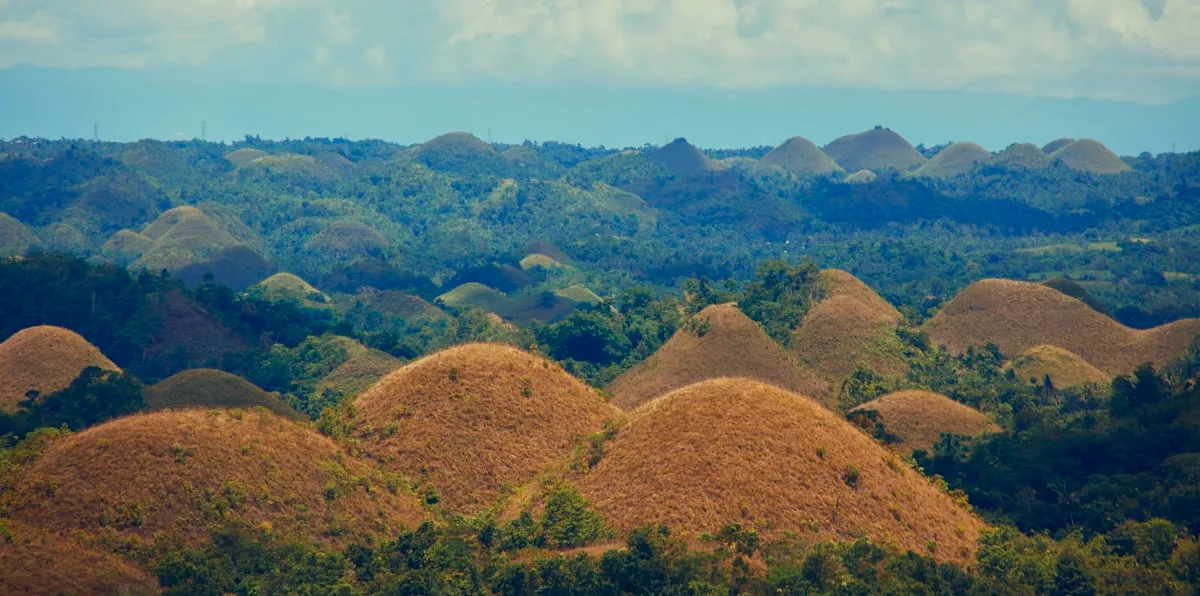
- Chocolate Hills. More than 1,200 perfectly cone-shaped grass-covered hills spread across a 50km valley. At the viewing deck, children genuinely do not believe this is natural. Neither do most adults. ₱50 entrance.
- Loboc River cruise. Floating bamboo restaurant drifting down a jungle river while a local band plays. Children love the experience. ₱500/person including buffet lunch.
- Panglao beach. Calmer and less developed than Boracay. Alona Beach has good snorkeling right from the shore — children can see clownfish and parrotfish without a boat. White sand, gentle waves.
Family accommodation in Bohol: Bohol Beach Club in Panglao is the classic family resort — large pool, beach frontage, kids' activities, room rates ₱8,000-₱15,000/night. Budget option: various family cottages on Panglao from ₱2,000-₱4,000/night.
Best Island #3: Cebu (Good Hub for Families)
Cebu City is the best hub for a family traveling the Philippines — it has an international airport, a large children's hospital (Cebu Children's Hospital on Don Gil Garcia St), malls with every possible supply you might need, and great connectivity to Bohol (45-minute ferry) and Dumaguete.
Family activities in and around Cebu:
- Whale shark watching at Oslob: Children 6+ can snorkel with (or just watch from the boat) the world's biggest fish. Whale sharks are gentle, completely harmless filter feeders. The experience is life-defining for many children. ₱1,000/person from Cebu City as a day tour.
- Kawasan Falls: Multi-tiered waterfalls with natural pools. The main pool is calm enough for children to swim in. The half-day canyoneering trip is appropriate for kids 10+ with some confidence in water.
- Mactan Island beach resorts: Cebu's Mactan Island (connected by bridge to the city) has a cluster of full-service beach resorts with kids' pools and activities. Shangri-La Mactan is the flagship family resort — expensive (₱20,000+/night) but genuinely exceptional for families.
Best Island #4: Palawan (El Nido) — for Older Kids (10+)
El Nido and Palawan generally are stunning but require more travel effort than Boracay or Bohol. Small planes, boat crossings, and remoter infrastructure make it more suitable for families with children 10 and older who can handle full days of island hopping without needing emergency facilities nearby.
Puerto Princesa is the most accessible Palawan destination for families — it has a proper hospital, easy accommodation, and the Underground River is a genuinely mind-blowing experience for kids. The cave tour is safe and well-managed.
Practical Tips for Family Travel in the Philippines
- Travel during Amihan season (November-April). Calm seas, minimal rain, perfect beach conditions. Holy Week (usually March/April) is the only time to avoid — the entire country travels and accommodation prices triple.
- Book accommodation with pools. Even on the best beach days, young children often prefer a pool. Most mid-range Philippine resorts have pools.
- Bring reef-safe sunscreen. Regular sunscreen is banned on many Philippine beaches and reefs. Stock up on reef-safe brands before arrival — they are expensive and hard to find locally.
- Book family rooms explicitly. Many Philippines hotels charge per room regardless of occupancy. A family room (typically 2 double beds) usually costs the same as or only slightly more than a standard double. Always ask.
- Dengue awareness. Use insect repellent at dawn and dusk, especially inland and in garden settings. Beaches are generally low-risk but dengue is present. Pack mosquito repellent with DEET for children.
- Pack snacks for transit days. Flying from Manila to Boracay takes 3.5 hours door-to-door with a young child. Pack familiar food for the journey — snack options at smaller airports are limited.
Family Budget Estimate (4 days, 2 adults + 2 children, Boracay)
- Flights from Manila return (4 people): ₱12,000-₱20,000
- Family room accommodation (3 nights at ₱5,000/night): ₱15,000
- Food (4 days at ₱3,000/day for family): ₱12,000
- Island hopping tour x2 (adults ₱1,500 each, kids under 12 often half-price): ₱5,000
- Sunset paraw + other activities: ₱3,000
- Total approximate: ₱47,000-₱55,000 for a 4D3N family trip
Frequently Asked Questions: Philippines Family Travel
What age is suitable for Philippines island hopping with kids?
Island hopping in calm conditions is fine for children 4 and older on the shorter tours (2-3 hours on the water). For full-day 6-8 hour tours, children 7+ generally manage well. The boats have shade and life jackets are provided. If your child gets seasick, skip island hopping during Habagat season when the sea is rougher.
Is it safe to bring babies or toddlers to the Philippines?
Yes, with preparation. Stick to islands with medical facilities (Boracay, Cebu, Bohol for Panglao). Bring all medications you might need — rural pharmacies have limited stocks. The heat is manageable with shade and hydration. Filipinos are extraordinarily kind to babies and will help you in every restaurant and hotel.
Are kids' clubs available at Philippine resorts?
The larger resorts have them — Discovery Shores Boracay, Amanpulo, Shangri-La Mactan and Boracay. Most mid-range resorts do not. Plan your own activities rather than relying on resort-managed kids' programming unless you are specifically booking a luxury property.
Which island is easiest for families traveling from Singapore or Australia?
Boracay is the most accessible from Singapore (via Manila or direct Kalibo charter flights). From Australia, Cebu via Sydney-Cebu direct flights (Philippine Airlines) is the simplest routing — Cebu then gives you easy access to Bohol by ferry. Both work excellently for families.
What is the best beach in the Philippines for young children?
Boracay's Station 1 on White Beach is widely considered the best family beach for young children — calm, clean, warm, with gentle entry and no currents. Panglao Beach in Bohol and Dumaluan Beach on Panglao Island are excellent quieter alternatives with similarly calm conditions.