The Philippines sits at the heart of the Coral Triangle — the most biodiverse marine region on the planet. Over 2,000 species of fish, more than 500 species of coral, and encounters with thresher sharks, whale sharks, pygmy seahorses, and manta rays that you simply cannot guarantee anywhere else in Asia. I've dived across this archipelago and these are the ten sites that genuinely deserve the flights and the planning to get there.
1. Tubbataha Reef (Palawan) — The Philippines' Greatest Dive Site
Tubbataha is a UNESCO World Heritage Site in the middle of the Sulu Sea, 180 kilometers southeast of Puerto Princesa, accessible only by liveaboard. It is as remote as it sounds, and the diving reflects that. Because almost no one goes there — the park limits liveaboards strictly — the reef walls are pristine, the fish life is staggering in volume and variety, and you regularly share the water with grey reef sharks, hammerheads, tiger sharks, manta rays, and enormous schools of barracuda and jack.
Season: March to June only. The park is closed the rest of the year. Liveaboard trips from Puerto Princesa run 7-10 days and cost USD 3,000-4,500+ per person. Expensive and logistically demanding — and worth every peso and effort if diving is your primary reason for traveling to the Philippines.
Certification required: Advanced Open Water at minimum. The diving includes some current-swept passes and walls that drop 2,000 meters.
2. Coron Wrecks (Palawan) — Best Wreck Diving in Asia
On September 24, 1944, US aircraft sank twelve Japanese Imperial Navy supply ships in a single day in Coron Bay. The wrecks now rest at 10-40 meters depth, densely covered in hard and soft coral, swarming with lionfish, grouper, barracuda, and reef sharks. These are considered among the top ten wreck dives in the world.
Best wrecks:
- Akitsushima: A 118-meter seaplane tender at 24-38 meters, massive structure, excellent penetration for experienced divers.
- Irako: 147-meter supply ship, the biggest wreck in Coron, lying at 20-40 meters. Intact and impressive in scale.
- Olympia Maru: 132-meter cargo ship at 10-30 meters, shallower profile, excellent for photographers.
- Lusong Gunboat: The most accessible — a small patrol boat lying in only 3-10 meters of crystal-clear water, completely coral-covered. Spectacular for snorkelers too.
Access: Fly to Busuanga (USU) then 45-minute van to Coron town. Dozens of dive shops in town offer two-dive wreck packages for ₱3,500-₱4,500 including equipment. No liveaboard required.
3. Malapascua Island (Cebu) — Thresher Sharks Every Morning
Malapascua is a small island off Cebu's northern tip, and it holds a distinction unique in the diving world: it is the only reliably accessible place on Earth to dive with thresher sharks. These pelagic sharks — recognizable by their extraordinarily long upper tail fin — come up from 200+ meter depths to a shallow cleaning station at Monad Shoal every morning at sunrise.
You dive in the dark, hit the sandy slope at 25-30 meters by 6 AM, and wait. The threshers drift up from the abyss, circle the cleaning station in slow arcs, and drop back down. They are large (2-4 meters), completely non-threatening, and genuinely otherworldly. This is one of the world's great wildlife diving encounters.
Best season: Year-round, but visibility is best February to May. Monsoon season can restrict access during rough weather.
Access: 3-4 hours north of Cebu City by bus to Maya port, then 45-minute outrigger ferry to Malapascua. Accommodation on the island from ₱1,200-₱3,500/night. Two-dive packages from ₱2,500.
4. Tulamben (Via Cebu or Flights) — Wait, Wrong Country. Let's Do Moalboal.
4. Moalboal Sardine Run (Cebu) — The Ocean's Greatest Spectacle
Moalboal on Cebu's west coast hosts a permanent resident school of billions (literally billions) of sardines. This dense bait ball hangs in the water just off the beach and creates one of the most visually overwhelming diving experiences in the world. The school moves in unison, parts around you as you enter it, and creates kaleidoscopic patterns in the light. You can also snorkel it straight from the beach for ₱50 equipment rental.
Alongside the sardines: resident sea turtles that have been here for years, white-tip reef sharks, and good coral at 5-20 meters. A single morning of diving at Moalboal rewards you with three completely different experiences without moving much.
Access: 2 hours south of Cebu City by bus (₱100). Guesthouses from ₱800-₱2,500/night. Multiple dive shops with competitive rates (₱1,200-₱1,800 per dive).
5. Apo Island (Negros Oriental) — Marine Sanctuary Done Right
Apo Island near Dumaguete has been a strictly protected marine sanctuary since 1982. The result, four decades later, is a reef system in extraordinary health: walls covered in sea fans and black coral, enormous Napoleon wrasse that have never been fished, green and hawksbill turtles everywhere. The island is tiny (0.3 square kilometers) and has just a handful of dive operators.
The turtle encounters here are among the Philippines' most reliable. The resident population of green turtles treats divers as unremarkable obstacles and goes about their business 30 centimeters from your mask.
Access: 30-minute outrigger boat from Dauin, south of Dumaguete. Fly to Dumaguete (DGT) from Cebu or Manila. Day trips from ₱1,500-₱2,000 including two dives.
6. Verde Island Passage (Batangas) — Closest World-Class Diving to Manila
The Verde Island Passage between Luzon and Mindoro has been called by scientists the center of the center of marine biodiversity — more marine species per square kilometer than almost anywhere on Earth. Anilao in Batangas is the jumping-off point, 2.5 hours from Manila.
Why divers come here: Muck diving. The sand and silt slopes around Anilao's reefs are home to an extraordinary density of strange, rare, and camouflaged creatures — pygmy seahorses (5mm long), mimic octopus, blue-ringed octopus, frogfish, ghost pipefish, and nudibranchs in forms that look like alien beings. Underwater photographers regularly consider this one of the world's best critter diving destinations.
Access: Drive from Manila (2.5-3 hours to Anilao town). Resort packages with full diving from ₱3,500-₱6,000/night all-in. Popular for Manila-based divers on weekends.
7. El Nido (Palawan) — Outstanding Coral in an Iconic Setting
El Nido is famous for island hopping but the diving is exceptional and less crowded than the snorkeling tours. The Bacuit Bay's protected status means coral coverage is high and fish populations are strong. Dive sites including South Miniloc, Lagen Island Wall, and North Rock have healthy hard coral at 5-25 meters with regular sightings of Napoleon wrasse, barracuda, and reef sharks.
Access: Fly to El Nido via AirSWIFT from Manila or Cebu (from ₱2,500). Multiple dive operators in El Nido town, two-dive packages from ₱3,000.
8. Donsol (Sorsogon) — Whale Sharks Without the Feeding
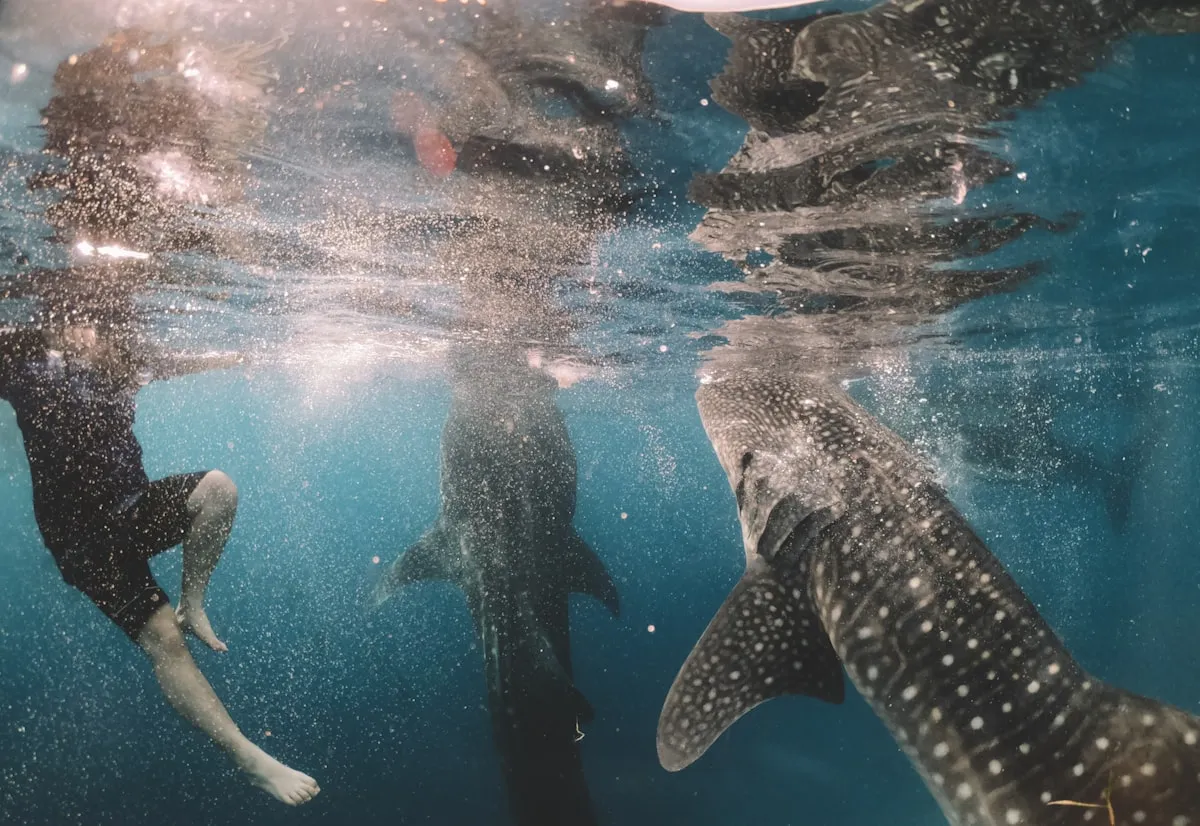
Donsol is where you see whale sharks in their natural behavior — not being fed by fishermen (as at Oslob) but genuinely aggregating in rich plankton blooms. This is widely considered the more ethical encounter and the whale sharks here are typically larger than Oslob's. The experience involves snorkeling from a small boat, spotters watch from the bow, and when a whale shark is sighted you are given 30 seconds to enter the water and swim alongside.
Season: November to June, peak season February to May when whale shark density is highest. Some months produce 10-15 sightings in a single morning.
Access: Fly to Legazpi (LGP) from Manila or Cebu (55 minutes), then 1-hour van to Donsol. Accommodation modest but adequate. Boat hire ₱1,000-₱1,500/person for a 3-4 hour interaction.
9. Balicasag Island (Bohol) — Turtles, Walls, and Easy Access
A 45-minute boat ride from Panglao Beach in Bohol, Balicasag is a marine sanctuary with vertical reef walls dropping 40+ meters, excellent hard coral coverage, and the densest sea turtle population in the Visayas. Divers regularly encounter 5-8 turtles per dive. Green turtles, hawksbill turtles, and large schools of jackfish schooling against the wall.
Balicasag is ideal for divers who are already based in Bohol for the other sights (Chocolate Hills, tarsiers) — it is a convenient half-day add-on that delivers serious diving without major logistics.
Access: From Panglao Beach, boat hire approximately ₱1,500-₱2,000. Dive operators on Panglao offer Balicasag two-dive packages from ₱2,500.
10. Siargao (Surigao del Norte) — Underdived Gem
Siargao is famous for surfing but its diving deserves far more attention. The sites around Daco Island and Del Carmen have strong coral coverage in the 10-25 meter range, substantial fish life, and — crucially — almost no other divers. The combination of small visitor numbers and warm, clear water makes this the Philippines' most uncrowded quality dive destination.
Not as technically impressive as Coron or Tubbataha, but for a dive trip where you want to combine surfing, island life, and good underwater exploration without the planning of a liveaboard, Siargao is exceptional value.
Access: Fly to Siargao (IAO) from Manila or Cebu. Two-dive packages from ₱2,800. Equipment rental available from dive shops in General Luna.
Planning Your Philippines Dive Trip: Key Logistics
- Certification: Most sites require Open Water minimum. Advanced Open Water opens up deeper sites (Coron wrecks, Tubbataha). Technical diving (Trimix, CCR) is available at a few specialist operators.
- Best overall season: November to May. Visibility across most sites peaks in the dry season. Tubbataha is March-June only.
- Liveaboard vs shore diving: Tubbataha requires a liveaboard. Most other sites on this list are best done from shore-based accommodation, which is more comfortable, flexible, and affordable.
- Dive operators: Always check current reviews. Philippine dive shops vary significantly in equipment maintenance standards and guide quality. Look for PADI or SSI-affiliated shops and ask about nitrox availability if you're doing multiple dives per day.
Frequently Asked Questions
Is the Philippines better for diving than Thailand or Indonesia?
For marine biodiversity and the variety of encounters (whale sharks, threshers, mantas, pygmy seahorses, pristine wrecks), the Philippines is arguably the best diving destination in Southeast Asia. Indonesia has Komodo and Raja Ampat for comparable experiences. Thailand's diving is more convenient but less spectacular. The Philippines has more remote, less dived sites than either.
What is the best beginner dive site in the Philippines?
Moalboal in Cebu is excellent for beginners — you can literally snorkel the sardine run from the beach before your first dive. Anilao in Batangas is another good beginner base, close to Manila with calm conditions most of the year. Both have multiple dive schools with daily training options.
Do I need travel insurance for diving in the Philippines?
Yes, and specifically diving insurance. DAN (Divers Alert Network) membership is strongly recommended — it covers hyperbaric chamber treatment if needed. The nearest recompression chambers to most dive destinations are in Manila and Cebu. DAN Asia-Pacific membership costs approximately USD 75/year and is worth every dollar.
What is the water temperature for diving in the Philippines?
Warm year-round. Surface water temperature ranges from 27-30°C. A 3mm wetsuit is comfortable for multiple dives per day. Some divers use just a 1.5mm shorty. You will not feel cold in the Philippines even on a 5-dive day.
Can non-divers learn to dive in the Philippines?
Yes — the Philippines is one of the best places to learn. The warm, clear water, abundant marine life, and dozens of quality PADI dive schools make learning here far more memorable than in a cold-water training pool. PADI Open Water certification takes 3-4 days and costs ₱15,000-₱25,000 depending on location. You leave certified to dive to 18 meters anywhere in the world.